Why Iowa Park Plastics and Rubber Dischargers Face Heightened Scrutiny in 2026
The City of Iowa Park's wastewater treatment plant suffered a major mechanical failure in late 2025, with council-level reporting indicating repair costs may exceed $1 million (S3) and a six-month temporary treatment plant could add another $3 million before the permanent fix is commissioned (S5). When a receiving POTW is operating under a temporary plant and a constrained capital budget, the pretreatment program tightens: industrial users see more frequent inspections, revised local limits, and steeper surcharges for any BOD, TSS, or oil & grease (O&G) that slips past their on-site treatment. For plastics compounding, molding, extrusion, and rubber/tire-related facilities discharging into the Iowa Park collection system, that means "compliant on paper" is no longer the bar — the bar is "comfortably below the local limit on every SMR cycle."
Iowa Park's collection system ultimately flows to the Wichita Falls regional wastewater system, which operates the delegated Texas Pollutant Discharge Elimination System (TPDES) pretreatment program for industrial users in the watershed under TCEQ oversight (Texas Commission on Environmental Quality). That structure means a plastics or rubber discharger in Iowa Park answers to two stacked regulators: the EPA categorical pretreatment standards under 40 CFR (Code of Federal Regulations), and the local limits the Wichita Falls POTW imposes on top of them. Both layers are enforceable; the stricter one always controls the discharge permit.
The Federal Regulatory Layer: 40 CFR Part 437 and Part 428
Plastics and rubber manufacturers in the U.S. categorical pretreatment program fall under two principal 40 CFR parts, and the right one depends on what the facility actually does. 40 CFR Part 437 covers Centralized Waste Treatment (CWT) point sources — the off-site commercial treatment plants that receive plastic and rubber wastewaters for processing — and is structured into subparts for Metals, Oils, and Organics, each with daily maximum and monthly average limits for O&G, total suspended solids (TSS), lead, and pH. 40 CFR Part 428 covers Rubber Manufacturing point sources and is broken into subparts A through M, including tire manufacturing, latex foam, reclaimed rubber, and specialty rubber compounds; each subpart has its own effluent limitation table that the discharger must read against their specific process line (per 40 CFR Part 428).
Every categorical limit in 40 CFR has a dual structure: a daily maximum value and a monthly average value, and both must be met on a continuing basis, not just as a single spot check. A facility that consistently runs at 80% of the daily maximum but blows past the monthly average four times in six months is out of compliance, even if no single value breached the daily max. The numeric limits in these tables were largely promulgated in the 1980s and 1990s and have not been comprehensively revised; 2026 compliance practice still references the same 40 CFR Part 428 subpart tables that have been in force for decades.
| 40 CFR Subpart | Source Category | Applies To | Typical Regulated Parameters |
|---|---|---|---|
| Part 437, Subpart A (Metals) | Centralized Waste Treatment | Off-site CWT receiving metal-bearing wastes | Total metals (Pb, Cu, Zn, Cr, Ni), TSS, O&G |
| Part 437, Subpart B (Oils) | Centralized Waste Treatment | Off-site CWT receiving oily wastes | O&G, TSS, pH |
| Part 437, Subpart C (Organics) | Centralized Waste Treatment | Off-site CWT receiving organic-bearing wastes | COD (chemical oxygen demand), TSS, O&G, pH |
| Part 428, Subpart C | Tire Manufacturing | Tire and inner-tube plants | O&G, TSS, BOD (biochemical oxygen demand), pH, Zn |
| Part 428, Subpart D | Emulsion Crumb Rubber | Synthetic rubber finishing | O&G, TSS, COD, pH |
| Part 428, Subparts E–M | Latex foam, reclaimed, specialty rubber | Miscellaneous rubber products | Subpart-specific O&G, TSS, BOD, Zn, pH |
Designers should always pull the current 40 CFR text for the specific subpart before finalizing a sizing basis; the table above is a navigation aid, not a substitute for the regulation.
Local Limits: TCEQ and the Wichita Falls Regional POTW

TCEQ delegates pretreatment program approval to qualifying Texas POTWs; the Wichita Falls program, which serves the Iowa Park service area, runs the day-to-day industrial-user permitting, sampling, and enforcement under that delegation. Because categorical standards were written as national minimums, the Wichita Falls local limits almost always tighten one or more parameters to protect the receiving plant's biological process and its sludge quality. In practice, that means tighter ceilings on heavy metals — especially zinc from rubber vulcanization accelerators and copper from plastic plating or catalyst residues — a hard pH window of 6.0 to 9.0, surcharge thresholds for BOD and TSS above roughly 250 mg/L, and an SMR (self-monitoring report) submission cycle that most plants file monthly.
The enforcement chain runs from routine POTW inspection to exceedance notice, then to a compliance schedule with milestones, then to an administrative order, and finally to a TCEQ referral that can escalate to federal EPA action if a user remains out of compliance (per EPA pretreatment program guidance). Two 2026 enforcement trends are worth flagging for any plastics or rubber discharger in this watershed: TCEQ-backed POTWs are increasingly adding PFAS (per- and polyfluoroalkyl substances) screening to industrial discharge permits, and several Texas POTW programs have moved total arsenic limits below 0.1 mg/L to protect reuse-quality effluent.
The Standard Process Train for Plastics and Rubber Wastewater
The unit operations a plastics or rubber facility should expect to install, in order, form a recognizable train that any reviewer — TCEQ, EPA, or the customer's own EHS team — will recognize as a compliant baseline. The seven steps below cover the typical Iowa Park-area plastics/rubber discharger; specific flow and load will shift the sizing in each step.
- Coarse screening. A rotary mechanical bar screen for plastics and rubber headworks removes pellets, rags, and floating rubber debris before they reach the lift station. Typical bar spacing is 3–6 mm, with screenings dewatering and disposed as solid waste.
- Flow and pH equalization. An EQ (equalization) basin sized for 8–24 hours of hydraulic retention time (HRT) dampens slug loads from batch rubber mixing or plastic washing; pH probes with caustic/acid dosing keep the basin inside the 6.0–9.0 local-limit window.
- Dissolved air flotation (DAF). An industrial DAF system for plastics and rubber FOG removal is the primary FOG and TSS removal step. Micro-bubbles in the 20–80 μm range attach to oil droplets and flocculated solids, lifting them to the surface for skimming. Hydraulic loading rates of 5–20 m³/m²·h are typical for industrial FOG service.
- Biological treatment. Either conventional activated sludge (MLSS (mixed liquor suspended solids) 2,500–4,000 mg/L, F/M ratio 0.1–0.3 day⁻¹, HRT 6–12 h) or an MBR system for BOD polishing in plastics and rubber plants when footprint is tight and effluent must approach reuse quality. An MBR is commonly paired with the troubleshooting practice outlined in a dedicated MBR troubleshooting guide for industrial biological systems.
- Clarification. A high-efficiency sedimentation tank (lamella clarifier) polishes the biological overflow and protects downstream equipment. Inclined-plate surface loading runs 20–40 m³/m²·h.
- Sludge handling. DAF float and biological waste are thickened (often in the DAF itself) and dewatered by a plate and frame filter press for plastics and rubber sludge dewatering to a 20–35% dry solids cake for off-site disposal under a Texas Form 3 industrial waste manifest.
- Disinfection. Where the local limit or the receiving POTW's discharge permit requires it, a chlorine dioxide contact chamber or a UV (ultraviolet) system polishes the clarified effluent before it enters the POTW connection. A packaged automatic chemical dosing system for coagulant and pH adjustment supports this and earlier steps.
Matching Equipment to the Waste: DAF vs. Lamella vs. API Separator

The first pretreatment selection sets the cost and performance ceiling for everything downstream. Engineers should pick the primary separator against the actual waste profile, not against whatever a vendor happens to stock. The three options below cover the realistic range for plastics and rubber streams.
An API (American Petroleum Institute) oil-water separator is a passive, rectangular, gravity device with no moving parts. It handles free oil above 500 mg/L cheaply and with no chemical demand, but it cannot reliably meet a sub-50 mg/L O&G discharge on its own. A DAF uses pressurized air to generate a cloud of micro-bubbles that attach to oil droplets and flocculated solids, lifting them to the surface. It is the workhorse for emulsified or colloidal FOG in polymer latex washwater. A lamella clarifier uses inclined plates to multiply the effective settling area; it is cheap and robust for high-TSS, low-FOG streams, but it struggles when free oil exceeds roughly 50 mg/L unless the oil is pre-separated.
| Separator Type | Best-Fit Influent | Hydraulic Loading | Chemical Demand | Footprint | Typical Effluent O&G |
|---|---|---|---|---|---|
| API oil-water separator | Free oil >500 mg/L, low TSS | ~5–10 m³/m²·h | None | Very large | 50–100 mg/L alone |
| Dissolved Air Flotation (DAF) | Emulsified/colloidal FOG, 100–2,000 mg/L | 5–20 m³/m²·h | Moderate (coagulant + flocculant) | Compact | <30–50 mg/L achievable |
| Lamella clarifier | High TSS, low free oil (<100 mg/L) | 20–40 m³/m²·h | Low (polymer only) | Moderate | Variable; not suited to FOG |
Decision rule for a buyer: if influent O&G exceeds 500 mg/L, run an API ahead of a DAF; if O&G is 100–500 mg/L, a DAF alone is sufficient; if O&G is below 100 mg/L and TSS dominates, a lamella is the cost-effective pick; for latex or finish wastewater specifically, default to DAF with chemical conditioning. The same framework is laid out in a parallel DAF vs. clarifier decision guide for industrial FOG streams for the fabricated metals segment.
2026 Influent vs. Effluent Parameter Targets
Designing against the wrong number is the single most common pretreatment failure. The table below shows representative influent ranges for plastics and rubber plants, the relevant 40 CFR 437/428 categorical limits (which vary by subpart), and the effluent the well-designed train above can actually deliver. Designers should always pull the current 40 CFR text for the specific subpart before final design; the numbers below are engineering reference points, not regulatory citations.
| Parameter | Typical Influent Range | 40 CFR 437/428 Limit Basis (typical) | Achievable Treated Effluent |
|---|---|---|---|
| pH | 5.0–11.0 (batch swings) | 6.0–9.0 (standard) | 6.5–8.5 |
| TSS | 200–1,500 mg/L | Subpart-specific; commonly <30–50 mg/L monthly avg | <30 mg/L |
| O&G | 100–2,000 mg/L | Subpart-specific; commonly <50 mg/L daily max | <25 mg/L |
| COD | 500–5,000 mg/L | Subpart-specific; varies widely | <150 mg/L (after MBR) |
| BOD₅ | 250–1,800 mg/L | Subpart-specific; commonly <25–65 mg/L monthly avg | <20 mg/L (after MBR) |
| Total Zn | 1–20 mg/L | Subpart-specific; commonly 1–3 mg/L daily max | <1 mg/L with precipitation |
| Total Pb | 0.1–5 mg/L | Subpart-specific; commonly <0.5 mg/L | <0.3 mg/L |
| Flow | Site-specific, 5–500 m³/h | POTW permit, often with 4-hr peak cap | Continuous; no surge |
The dual-limit structure (daily maximum and monthly average) is the most-overlooked compliance trap. A plant can hold its monthly average comfortably below the limit and still violate the daily maximum on a single batch upset; both must be managed every day.
CAPEX, OPEX, and 2026 Cost Realities for Iowa Park Plants
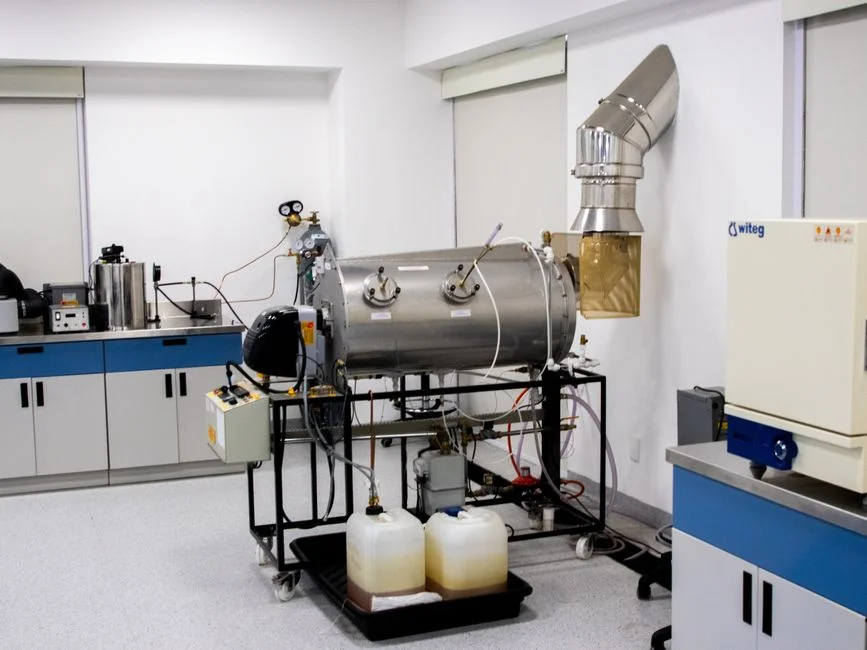
Budgeting a pretreatment project in 2026 Texas dollars breaks into three bands. A small skid system sized for 5–20 m³/h typically lands at $120K–$350K CAPEX (capital expenditure); a mid-range packaged system at 20–50 m³/h runs $180K–$650K; a full custom effluent treatment plant (ETP) above 50 m³/h with biological and sludge-handling steps starts around $800K and routinely exceeds $3M (HydropureWater field data, 2026). Delivery, installation, and the TCEQ-required start-up reporting typically add another 15–25% to the vendor-quoted CAPEX, and that does not include the building, the concrete, or the permitting fees.
OPEX (operating expenditure) is dominated by three line items: coagulant and flocculant chemical consumption, sludge hauling, and biological sludge wasting. For plastics and rubber streams, a working OPEX range is $0.08–$0.35 per kg of treated COD, with the high end of that range typical of latex and finish-waste streams that demand heavy polymer dosing. Surcharge avoidance is where the project usually pays back: the Wichita Falls regional POTW commonly applies a $0.05–$0.40/kg surcharge on excessive BOD and TSS, and for sub-50 m³/h plants a well-designed pretreatment skid routinely pays back inside 18–36 months once surcharges are eliminated (HydropureWater field data, 2026).
Compliance Audit Checklist Before You Discharge
This is the list a TCEQ inspector, a customer's EHS auditor, or your own EHS manager can walk through in a morning. Run it before you sign the discharge permit, and again at every SMR cycle.
- Verify your SIC (Standard Industrial Classification) / NAICS (North American Industry Classification System) code maps to 40 CFR Part 437 or Part 428, and pull the exact subpart for your process line. Different subparts have different limits.
- Confirm your 40 CFR categorical limits against the Wichita Falls local limits. The stricter number always controls the permit.
- Audit your monitoring: 24-hour composite samplers, continuous pH and temperature probes, and a calibrated flow meter are baseline; most Texas POTWs now require monthly SMR submission on a specific form.
- Review chemical storage and your slug-control plan. Pretreatment programs look hard at accidental releases of process chemicals — a single batch dump can take out the POTW's biomass.
- Confirm sludge manifests and disposal are documented under RCRA (Resource Conservation and Recovery Act) non-hazardous industrial waste rules; Texas requires Form 3 for industrial sludge hauling.
- Reconcile the Iowa Park POTW's current operating status against your SMR data — the receiving plant's temporary operation makes it more sensitive to your discharge quality, not less.
Frequently Asked Questions
Which EPA categorical standard applies to a plastics compounding or molding plant in Iowa Park?
Plastics compounding, molding, and extrusion operations that send their own waste off-site for treatment are typically governed by 40 CFR Part 437 (Centralized Waste Treatment) when they are the receiving CWT, and by the receiving POTW's local limits for on-site discharge. Plants that perform only on-site treatment and discharge to the Iowa Park collection system answer primarily to the Wichita Falls POTW's local limits, layered on top of any applicable 40 CFR Part 428 subpart if the plant also runs a rubber process line.
Which EPA categorical standard applies to a tire or rubber manufacturing plant near Iowa Park?
Tire manufacturing is covered by 40 CFR Part 428, Subpart C, with subpart-specific limits for O&G, TSS, BOD, pH, and zinc. Latex foam, reclaimed rubber, and specialty rubber compounds fall under 40 CFR Part 428 Subparts E through M, each with its own effluent limitation table that the discharger must read against the specific process line.
What is the typical O&G limit a plastics or rubber plant must meet before discharging to the Wichita Falls POTW?
Categorical limits under 40 CFR 428 commonly cap O&G at 50 mg/L daily maximum, with the Wichita Falls local limit sometimes tighter. Plants that design for a treated effluent of <25–30 mg/L O&G leave themselves headroom for both daily and monthly average compliance, which is the safer posture during a receiving POTW capacity upset.
How much does a compliant pretreatment system cost for a small plastics or rubber plant in Texas in 2026?
Small skid systems in the 5–20 m³/h range land at $120K–$350K CAPEX, mid-range packaged systems at 20–50 m³/h run $180K–$650K, and full custom ETPs above 50 m³/h start around $800K and can exceed $3M. Add another 15–25% for delivery, installation, and TCEQ start-up reporting in 2026 Texas markets (HydropureWater field data, 2026).
How long does it take for a pretreatment skid to pay back through surcharge avoidance?
For sub-50 m³/h plants discharging to a POTW that surcharges excessive BOD and TSS at $0.05–$0.40/kg, a well-designed pretreatment skid typically pays back inside 18–36 months once surcharges are eliminated. The payback is shorter when the receiving POTW is operating under a temporary plant and tightening enforcement, which is the operating reality for Iowa Park dischargers in 2026.