
What Pretreatment Means for a Lakewood Textile or Dyeing Plant
Textile and dyeing plants near Lakewood, CO operate under a dual obligation: protect the receiving POTW from pass-through and interference, and protect workers and downstream waters from the toxic byproducts that intermediate treatment steps can create. EPA frames both obligations in 40 CFR Part 403. Per 40 CFR 403.3(j), "pretreatment standards" are pollutant discharge limits that apply to industrial users (IUs) of a POTW, while 40 CFR 403.3(k) defines "pretreatment requirements" as the substantive or procedural requirements imposed on those IUs (source: EPA, epa.gov). When a plant discharges something that "passes through" the POTW undiminished into receiving waters — or "interferes" with the biological or sludge-handling processes at the plant — the IU is liable, not just the POTW (source: EPA, epa.gov).
This matters because textile and dyeing wastewater is one of the largest industrial wastewater streams on the planet — roughly 20% of global industrial wastewater by volume according to the World Bank (as cited in a June 2026 UMass Amherst study, phys.org). The combination of high flow, variable pH, refractory COD, intense color, and elevated salts means a single discharge event can knock a municipal biology train sideways or push color and metals past the receiving stream's assimilative capacity. For that reason, most 40 CFR 403.5 general prohibited discharge standards are written as narrative prohibitions rather than numeric limits, which forces every POTW to develop its own numeric local limits under 40 CFR 403.5(c) (source: EPA, epa.gov). Those local limits are the numbers an IU actually has to hit at end-of-pipe.
Where Lakewood's Local Limits Come From
Local limits are site-specific numeric or narrative effluent discharge limits — including BMPs — derived from the receiving POTW's NPDES permit, sludge quality, and the criteria of the receiving water body (source: EPA, epa.gov). For a Lakewood-area textile plant, the controlling authority is typically the local POTW (often a metropolitan sewer district serving the Denver–Lakewood corridor), which sets limits in the IU's individual permit. Standard textile-IU parameters of concern include TSS, BOD/COD, total chromium, sulfides, color (often measured as ADMI or Pt-Co units), pH, and temperature, with oil and grease and total toxic organics showing up on a site-by-site basis.
EPA's local-limits development guidance is published under 40 CFR Part 403.5(c) and walks a POTW through calculating maximum allowable headworks loadings, identifying pollutants of concern, designing numeric or narrative limits, and implementing BMPs (source: EPA, epa.gov). Two procedural points a compliance engineer should know: the POTW must conduct an annual review of its local limits and a periodic reevaluation — meaning numbers can tighten as headworks data accumulates (source: EPA, epa.gov). If your IU permit carries a number that looks unreasonable, you have standing to push back during the public comment or reevaluation cycle by submitting your own headworks-loading analysis or BMP justification.
The 2026 Compliance Baseline: Integrated Process Train
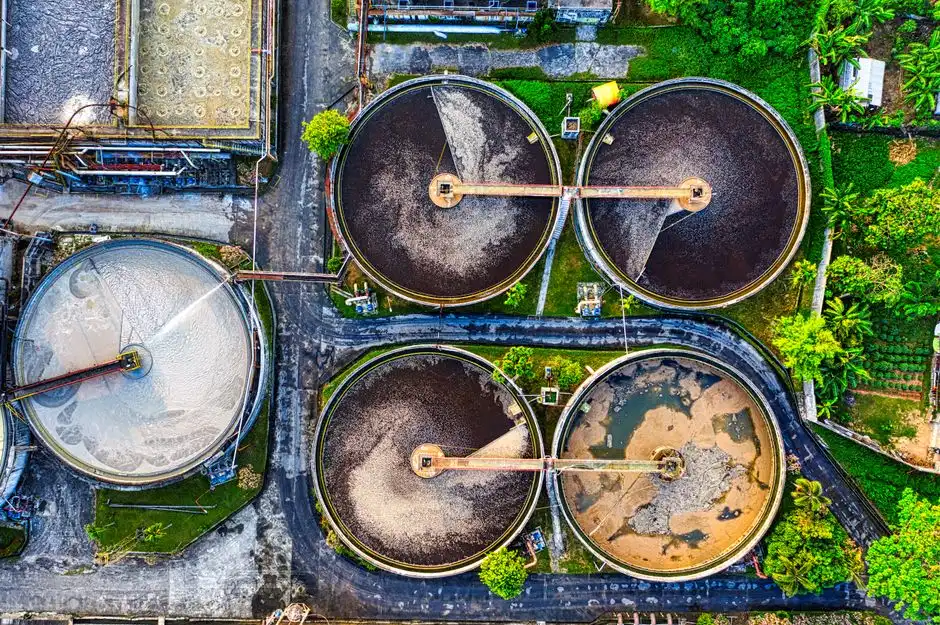
No single unit operation hits every parameter a textile IU has to meet, which is why an integrated train is the defensible 2026 default. The widely adopted configuration runs: screening → equalization → coagulation/DAF → biological treatment (MBBR or ASP) → secondary clarifier → AOP (ozone or Fenton) → UF → RO → reuse or compliant discharge (per GL Environment, 2026). Each stage targets a specific pollutant family so that downstream biology and membranes are not overloaded.
Textile effluent defeats single-process designs because it combines high salts, refractory COD, intense color, and a pH range that swings with each dye batch (per GL Environment, 2026). The typical mapping is: DAF handles suspended solids, FOG, and a fraction of colloidal color; biological treatment removes the bulk of BOD/COD; AOP attacks the chromophores and refractory organics that biology cannot; UF catches biomass and precipitated metals; and RO pulls residual salts, color, and any leftover ions (per GL Environment, 2026). A June 2026 study from UMass Amherst adds a critical constraint: salt-assisted electrochemical polishing of Azo dyes — which represent roughly 50% of the dye market — generated bromoform at 526 ppb and chloroform-class THMs at hundreds of ppb, more than 3x the 80 ppb EPA drinking-water THM limit (per Kuszewski et al., Journal of Hazardous Materials, 2026-06; phys.org). Reliance on salt-assisted electrochemical polishing as a "final polish" is therefore no longer defensible without a separate DBP control or brine routing strategy.
| Stage | Target Pollutants | Typical Removal | 2026 Caveat |
|---|---|---|---|
| Screening / Equalization | Solids >2 mm, flow/load dampening | n/a | Critical for shock-load protection downstream |
| Coagulation / DAF | TSS, FOG, colloidal color, metals | 60–90% TSS, 40–70% color | Validate with jar tests per batch |
| Biological (MBBR/ASP) | BOD, COD (soluble), NH₃-N | 70–95% BOD/COD | Salt >5,000 mg/L inhibits nitrification |
| Secondary Clarifier | Biomass, residual TSS | <30 mg/L TSS target | Sludge recycle back to biology |
| AOP (Ozone/Fenton) | Color, refractory COD | 50–90% color | Fenton sludge handling required |
| UF | Biomass, precipitated metals | <1 NTU turbidity | Pre-filter to protect membrane |
| RO | Salts, color, residual chromium | 95–99% salts; up to 95% recovery | Concentrate disposal per local limits |
Pretreatment vs End-of-Pipe Monitoring: What to Measure and When
Compliance is proven at the end-of-pipe, not on the process flow diagram. The minimum parameter stack a Lakewood-area textile IU should expect to defend is: pH, TSS, COD, color (ADMI or Pt-Co), sulfides, total chromium, temperature, and flow (per GL Environment, 2026). Online monitoring of these parameters is the difference between catching a biology upset at 2 a.m. and explaining a 3-day color breakthrough to a POTW inspector the following Monday.
Real-time data on pH, ORP, conductivity, TSS, and color enables proactive control of coagulant dose, polymer feed, and biological aeration, helping prevent biological upsets, color breakthrough, membrane fouling, and chemical overdosing (per GL Environment, 2026). POTWs typically verify compliance against a 24-hour composite sample taken at the IU's monitoring station, so probe calibration and grab-sample correlation are as important as the chemistry itself. Given the 2026 UMass finding that electrochemical polishing can drive THM formation above 80 ppb, monitoring should also include DBP-relevant parameters where electrochemical steps are in use — residual chlorine, AOX, and ideally TOX or specific THM species (per Kuszewski et al., 2026-06).
| Parameter | Instrument / Method | Location | Driver |
|---|---|---|---|
| pH | Online glass electrode | Post-equalization, post-DAF, end-of-pipe | POTW local limit; biology health |
| TSS | Online optical / photometric | Post-DAF, end-of-pipe | Numeric local limit |
| COD | Online UV254 proxy + lab confirm | Post-biology, end-of-pipe | Numeric local limit |
| Color (ADMI/Pt-Co) | Online UV-vis at 455/620 nm | Post-AOP, end-of-pipe | Numeric or narrative local limit |
| Total Chromium | Lab ICP, weekly grab | End-of-pipe | Numeric local limit; metal discharge |
| Sulfides | Online ion-selective or lab | Post-equalization | Worker safety + local limit |
| Residual Chlorine / AOX | DPD colorimetric; AOX lab | Post-electrochemical step (if used) | DBP control per 2026 UMass finding |
| Flow | Magnetic / ultrasonic meter | End-of-pipe | Mass-loading calculations |
Choosing the Right Headworks and Primary Stage: DAF or Clarifier?

The first big equipment decision is whether to put a dissolved air flotation unit or a lamella clarifier ahead of the biological stage. A dissolved air flotation system in the 4–300 m³/h range is proven in textile pre-treatment for suspended solids, color bodies, and colloidal matter (per HydropureWater DAF product specification). DAF's micro-bubble contact mechanism is well suited to fine color flocs and variable influent because hydraulic retention is short (typically 20–30 minutes) and the floated sludge is dry enough to skip a thickener.
A high-efficiency sedimentation tank (lamella clarifier) typically runs at 20–40 m/h surface loading and can deliver 20–30% lower chemical use, but the slower rise rate means fine color flocs and low-density color bodies can bleed through (per HydropureWater lamella spec). The practical decision logic: high color + high TSS + variable flow → DAF; steady flow + low color + tight chemical budget → lamella. Whichever unit you specify, the output TSS and color must consistently hit the targets the POTW has set in your IU permit, or downstream biology gets shocked and the rest of the train pays for it. For plants planning to dose coagulant and polymer accurately across both modes, a PLC-controlled automatic chemical dosing system keeps jar-test results reproducible in the field.
| Criterion | DAF | Lamella Clarifier |
|---|---|---|
| Flow range | 4–300 m³/h, 13 models | Project-specific, typically <200 m³/h per unit |
| Best influent | High color, high TSS, variable flow | Steady flow, low-to-moderate color |
| HRT | 20–30 min | 60–90 min |
| Chemical use | Baseline | 20–30% lower |
| Color-floc capture | Strong (micro-bubble contact) | Moderate (gravity-driven) |
| Sludge consistency | ~2–4% dry solids, easy to handle | ~1–2%, often needs thickening |
| Footprint | Compact, shallow | Compact but taller |
When to Upgrade to MBR or RO for Reuse-Quality Discharge
Conventional biology hits a wall when salts climb above roughly 5,000 mg/L, color rebounds through the clarifier, or the local-limits letter tightens on BOD/TSS. An integrated MBR membrane bioreactor system with submerged PVDF membranes (<1 μm effluent) delivers near-reuse quality in roughly 60% less footprint than a conventional ASP train and keeps biomass in the system even under salt stress (per HydropureWater MBR specification). MBR is the practical upgrade path when conventional biology is salt-stressed or when the IU permit drops BOD/TSS below what a gravity clarifier can reliably hold.
For plants that need to remove residual salts, color, or specific ions such as chromium, an industrial RO system can deliver up to 95% recovery and produce reuse-quality permeate (per HydropureWater RO specification). The 2026 DBP concern reshapes the concentrate story: if the plant operates a salt-assisted electrochemical polishing step, the RO concentrate and any spent brine must be routed to a controlled disposal stream (typically evaporation or licensed off-site) rather than recycled back to the head of the plant, where chloride would re-enter the electrochemical cell and drive THM formation past the 80 ppb benchmark (per Kuszewski et al., 2026-06). For broader control-system integration across MBR, RO, and the upstream train, see this PLC control for textile wastewater plants engineering guide. For comparison with pretreatment at other Colorado-adjacent industrial sites, see how petroleum plants near Carson, CA meet pretreatment limits and how transportation equipment plants near Berkeley meet pretreatment limits.
Frequently Asked Questions
What 40 CFR section governs pretreatment limits for a textile IU near Lakewood, CO?
40 CFR Part 403 governs pretreatment in the United States. Definitions live in 40 CFR 403.3 (including "pretreatment standards" at 403.3(j) and "interference" at 403.3(k)), while 40 CFR 403.5(c) requires each POTW to develop site-specific numeric or narrative local limits (source: EPA, epa.gov).
Why are local limits different at every POTW, and how often do they change?
Local limits are derived from the receiving POTW's NPDES permit, sludge quality, and receiving-water criteria, so they vary by site (source: EPA, epa.gov). POTWs must conduct an annual review and a periodic reevaluation of local limits, which means the numbers in your IU permit can tighten over time as new headworks data accumulates.
What did the 2026 UMass Amherst study find about electrochemical textile wastewater treatment?
Kuszewski et al. (Journal of Hazardous Materials, 2026-06) reported that salt-assisted electrochemical oxidation of Azo dyes generated chloroform-class THMs at hundreds of ppb and bromoform at 526 ppb — more than 3x the 80 ppb EPA THM drinking-water limit — flagging occupational and downstream exposure as a regulatory gap (source: phys.org, 2026-06).
Which unit operations form the standard integrated textile wastewater train in 2026?
The 2026 baseline is screening → equalization → coagulation/DAF → biological (MBBR or ASP) → secondary clarifier → AOP → UF → RO → reuse or compliant discharge (per GL Environment, 2026). MBR replaces the secondary clarifier when footprint, salt tolerance, or tighter BOD/TSS limits are required.
What parameters must a Lakewood-area textile IU monitor at end-of-pipe?
At minimum: pH, TSS, COD, color (ADMI or Pt-Co), total chromium, sulfides, temperature, and flow, with continuous online monitoring where possible (per GL Environment, 2026). If the plant uses electrochemical polishing, residual chlorine and AOX should be added to detect THM formation before it reaches the sewer.
How do I choose between a DAF and a lamella clarifier for textile headworks?
Choose DAF when influent has high color, high TSS, and variable flow, since micro-bubble contact captures fine color flocs reliably. Choose a lamella clarifier when flow is steady, color is low-to-moderate, and chemical cost is the primary constraint — typically 20–30% lower than DAF (per HydropureWater product specifications).
Related Equipment
- industrial RO system — specifications, capacity range, and technical data