
Why Islamabad Hotels Need a 2026-Grade Treatment Train, Not Just a Septic Tank
Hotel wastewater in Islamabad is not "domestic sewage plus a bit of soap." A typical 200–300-room property generates influent at BOD 250–500 mg/L, COD 500–1,000 mg/L, TSS 200–400 mg/L, FOG 50–150 mg/L, and fecal coliform in the 10⁶–10⁷ CFU/100 mL band, with a 3–4× diurnal peaking factor driven by breakfast (07:00–10:00) and dinner service (19:00–22:30) and a second hump from in-house laundry. A baffled septic tank settles maybe 30% of the TSS and virtually none of the FOG, which then re-emulsifies, coats downstream pipework, and pushes BOD through to the municipal I-9 trunk in violation of NEQS-SRI. That is the failure mode a packaged unit replaces, and it is the one a 2026 spec has to be written against.
The harder failure mode is microbial. A 2022 study in Antibiotics (Basel) sampled 240 sewage catchments across Islamabad and found 27% positive for meropenem-resistant E. coli, 100% of isolates multidrug-resistant, 51% extensively drug-resistant, 98% resistant to ampicillin and cefotaxime, and 35% carrying the mobile colistin-resistance gene mcr-1 in summer (source: Antibiotics 2022, PMC9137590). The sampling frame explicitly listed hospitality sites — Ambassador Hotel, Federal Lodge, MNA Hostel — so hotels are a defined stratum, not background noise. With Islamabad's Q3 mean temperature above 30 °C amplifying E. coli survival, a 2026 hotel spec that stops at primary settling is no longer defensible in front of a procurement committee or the EPA ICT Directorate.
The Recommended Process Train: DAF → MBBR → MBR → ClO2
A defensible 2026 train has four non-negotiable stages in series, with a sludge line under it. The reference is the 80,000 GPD (≈300 m³/day) plant at Islamabad Serena Hotel, which combines MBBR with PVA gel carriers and a submerged MBR (source: Serena Hotel project post, 2023).
- Stage 1 — DAF or grease trap. Hotel FOG at 50–150 mg/L is too high for a passive baffle trap; a dissolved air flotation unit targets FOG ≤20 mg/L in the underflow and clarifies the stream for the biology stage. The HydropureWater DAF pre-treatment unit covers 4–300 m³/h, which envelopes every hotel class from 60 m³/day boutique to 1,000 m³/day resort conference block.
- Stage 2 — MBBR with PVA gel carriers. PVA gel is a porous polyvinyl-alcohol hydrogel that immobilizes nitrifying and heterotrophic biomass on the carrier surface, protecting it from the FOG and surfactant shock that would wash out conventional activated sludge. The Serena reference uses PVA gel specifically because kitchen and laundry peaks arrive unpredictably and the carrier-bound biomass recovers within hours rather than days.
- Stage 3 — Submerged MBR. 0.1 µm PVDF flat-sheet or hollow-fibre membranes replace the secondary clarifier entirely. MBR effluent typically runs <1 mg/L TSS, <5 mg/L BOD, and >4-log bacteria removal — the cleanest biologically-conditioned stream you can hand to a polishing step. The HydropureWater MBR membrane bioreactor system and the DF-series membrane module are the typical skid references for this stage.
- Stage 4 — ClO2 or UV polishing. Given the 27% meropenem-resistant E. coli baseline (PMC9137590, 2022), a 0.5–1.0 mg/L chlorine dioxide residual after 20–30 min contact, or UV at ≥40 mJ/cm², is required to break the AMR transmission route. The HydropureWater chlorine dioxide generator range covers 50 g/h to 20 kg/h, sized to the flow band below.
- Sludge line. Wasted biosolids are thickened in a sludge hopper and dewatered on a plate-and-frame filter press to 18–22% dry solids, which keeps hauling off the OPEX.
| Stage | Equipment | Design target | Source / reference |
|---|---|---|---|
| 1. FOG removal | DAF (4–300 m³/h) | FOG ≤20 mg/L out | HydropureWater DAF range, 2026 |
| 2. Organics & nitrification | MBBR + PVA gel, 30–40% fill | BOD ≤30 mg/L, NH3-N ≤5 mg/L | Serena Hotel 80,000 GPD, 2023 |
| 3. Solids & bacteria | Submerged MBR, 0.1 µm PVDF | TSS ≤1 mg/L, >4-log bacteria | Standard MBR engineering refs. |
| 4. Disinfection (AMR polish) | ClO2 generator 50 g/h–20 kg/h | 0.5–1.0 mg/L ClO2 residual, ≥20 min CT | PMC9137590, 2022 |
| 5. Sludge | Plate-and-frame press | 18–22% DS cake | Standard dewatering practice |
2026 Influent and Effluent Targets: Matching NEQS SRI and PCERF Reuse Limits
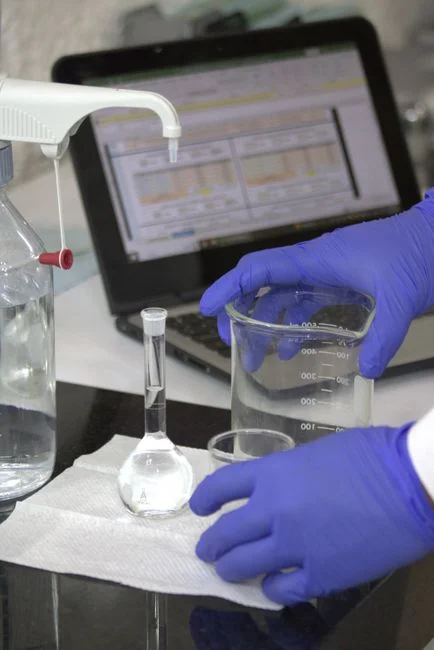
A spec only matters if it is anchored to the limits the regulator actually enforces. For Islamabad hotels, two documents govern: the NEQS-SRI (Sewerage Reference Values) for discharge to a municipal trunk, and the PCERF / S.R.O. 924(2015) reuse guideline for on-site irrigation or toilet flushing. The EPA ICT Directorate administers both, with municipal effluents (NEQS for municipal effluents) applying if the project goes to land disposal or a natural drain rather than the sewer.
| Parameter | Hotel influent (typical) | NEQS-SRI (sewer discharge) | PCERF reuse (irrigation / toilet flush) |
|---|---|---|---|
| BOD (mg/L) | 250–500 | ≤80 | ≤10 |
| COD (mg/L) | 500–1,000 | ≤150 | — |
| TSS (mg/L) | 200–400 | ≤200 | — |
| FOG (mg/L) | 50–150 | ≤10 | — |
| NH3-N (mg/L) | 20–40 | ≤40 | — |
| Fecal coliform (CFU/100 mL) | 10⁶–10⁷ | ≤1,000 | ≤200 |
| Resistant E. coli target | 27% prevalence (Islamabad avg.) | — | ≥3-log reduction beyond standard coliform |
MBR + ClO2 in series delivers <5 mg/L BOD and <1 mg/L TSS, which undercuts every NEQS-SRI number on the table, and the ClO2 polish delivers the additional 3-log inactivation needed to claim the reuse grade. For projects discharging into the I-9 trunk, NEQS-SRI is the contract; for on-site landscape or toilet flushing, the more stringent PCERF line applies, and the MBR/ClO2 train still meets it with margin.
Sizing the System: From Room Count to Membrane Area
The fastest way to lose a procurement committee is to quote membrane area without showing the load behind it. The hydraulic basis that works for Islamabad hotels in 2026 is: 180–250 L per guest per day, plus 50 L per staff per shift, plus 30 L per cover for banquet nights, with a 2.0–2.5× peak factor to absorb the breakfast/laundry/dinner pulses. Below 80 m³/day, a packaged A/O unit such as the WSZ underground integrated sewage treatment skid is defensible; above 100 m³/day — which is the Serena reference band — a custom MBBR + MBR + ClO2 train is preferred.
Worked example: 250-room resort, 70% occupancy = 175 guests + 90 staff = average ≈48 m³/day; with the 2.5× peaking factor, design flow ≈120 m³/day (5 m³/h). MBR sizing at 15 LMH design flux gives membrane area ≈333 m², realisable with four DF-150 modules or an equivalent hollow-fibre cassette; aeration demand is 0.3–0.5 Nm³ air per m² membrane area per hour, which is why the membrane scour blower dominates the power budget. The MBBR reactor takes 30–40% PVA-gel carrier fill, HRT 6–8 hours, with attached biomass of 4,000–6,000 mg/L on the carrier. ClO2 at 0.5–1.0 mg/L residual on 120 m³/day needs roughly 60–120 g/h, well inside the 50 g/h entry of the ClO₂ generator range.
| Parameter | Value / formula | Result for 120 m³/day resort |
|---|---|---|
| Average flow | Guests × 220 L + staff × 50 L | ≈48 m³/day |
| Peak flow | Avg × 2.5 | ≈120 m³/day (5 m³/h) |
| MBR membrane area | Q / design flux (15 LMH) | ≈333 m² → 4 × DF-150 |
| MBBR carrier fill | 30–40% reactor volume | PVA gel, 6–8 h HRT |
| ClO2 dose | 0.5–1.0 mg/L residual, ≥20 min CT | 60–120 g/h → 50 g/h ClO₂ unit, lead-lag pair |
| Sludge yield | 0.15–0.25 kg DS/kg BOD removed | ≈8–14 kg DS/day → plate press, 18–22% cake |
| Parameter | Value / formula | Result for 300 m³/day resort (Serena scale) |
| Average flow | 80,000 GPD reference | ≈300 m³/day |
| Peak flow | Avg × 2.0 | ≈600 m³/day (25 m³/h) |
| MBR membrane area | Q / design flux (15 LMH) | ≈1,670 m² → 8 × DF-200 cassettes |
| ClO2 generator | 0.5–1.0 mg/L residual | 150–300 g/h → 200 g/h ClO₂ unit |
For process design context that complements this worksheet, the IFAS for hotel wastewater engineering guide walks through the attached-growth vs. suspended-growth trade-off, and the Casablanca hotel wastewater guide gives a North-African data point with similar FOG and reuse constraints.
Capex and Opex Envelope for a 100–300 m³/day Islamabad Resort
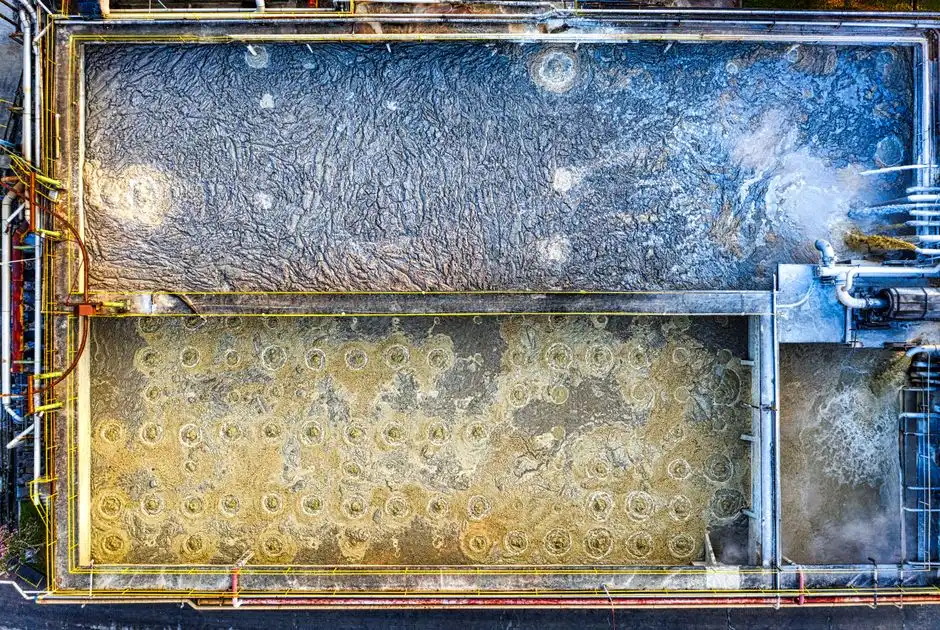
The order-of-magnitude a procurement committee should sanity-check in 2026 is below; civil works are excluded because Islamabad site conditions (rock vs. alluvium, I-9 trunk proximity) swing the number more than the process equipment does.
| Plant size | Scope | Capex (USD) | Opex (USD per m³) |
|---|---|---|---|
| 100 m³/day | DAF + MBBR + MBR + ClO2 + sludge press | 45,000–90,000 | 0.24–0.44 (power + ClO2 + hauling) |
| 300 m³/day (Serena reference scale) | Same train, larger MBR cassette count | 120,000–200,000 | 0.18–0.32 |
Power dominates OPEX: membrane scour air typically accounts for 50–65% of plant power, so a 300 m³/day plant drawing 0.28 kWh/m³ is normal and 0.18 kWh/m³ is a well-tuned ceiling. ClO2 precursor (sodium chlorite + HCl) adds USD 0.04–0.07 per m³, and sludge hauling at 18–22% DS cake adds USD 0.02–0.05 per m³. The cost-vs-reuse tipping point sits around 150 m³/day: above that, on-site reuse for landscape irrigation and toilet flushing typically pays back the incremental ClO2 + filtration CAPEX in 18–30 months because municipal water purchase is avoided. For a broader procurement checklist that includes vendor due-diligence in Pakistan, the package wastewater treatment plants in Pakistan guide is the right next read.
Frequently Asked Questions
What wastewater treatment system does a hotel or resort in Islamabad need in 2026?
A four-stage train: DAF for FOG (target ≤20 mg/L out), MBBR with PVA gel carriers for BOD and nitrification, submerged 0.1 µm PVDF MBR for solids and bacteria, and chlorine dioxide polishing at 0.5–1.0 mg/L residual to break the antimicrobial-resistance transmission route. The Islamabad Serena Hotel 80,000 GPD (≈300 m³/day) plant is the live ICT reference for this train.
What influent and effluent numbers should I size against for an Islamabad hotel?
Size the biological stage for BOD 250–500 mg/L, COD 500–1,000 mg/L, TSS 200–400 mg/L, FOG 50–150 mg/L, and fecal coliform 10⁶–10⁷ CFU/100 mL, with a 2.0–2.5× diurnal peak factor. For sewer discharge, meet NEQS-SRI: BOD ≤80 mg/L, COD ≤150 mg/L, TSS ≤200 mg/L, FOG ≤10 mg/L, fecal coliform ≤1,000 CFU/100 mL. For PCERF reuse (irrigation / toilet flush), tighten to BOD ≤10 mg/L and fecal coliform ≤200 CFU/100 mL.
Why is disinfection mandatory for an Islamabad hotel STP in 2026?
Because 27% of 240 sewage samples across Islamabad carried meropenem-resistant E. coli, 100% were multidrug-resistant, and 35% carried the mobile colistin-resistance gene mcr-1 in summer (source: Antibiotics 2022, PMC9137590). Hotels were an explicit sampling stratum, so a 0.5–1.0 mg/L ClO2 residual or ≥40 mJ/cm² UV is no longer an upgrade — it is the baseline disinfection polish for compliance and AMR stewardship.
What capacity do I need for a 200–300-room Islamabad resort?
Use 180–250 L per guest per day plus 50 L per staff per shift, with a 2.0–2.5× peak factor. A 250-room property at 70% occupancy generates ≈48 m³/day average and ≈120 m³/day peak, which lands in the packaged-to-custom MBBR + MBR band and needs roughly 333 m² of PVDF membrane area at 15 LMH design flux.
What is the 2026 CAPEX and OPEX for a 100–300 m³/day hotel STP in Islamabad?
Capex is USD 45,000–90,000 for a 100 m³/day packaged MBBR + MBR + ClO2 system, and USD 120,000–200,000 for a 300 m³/day system similar to the Serena 80,000 GPD reference. Opex runs USD 0.18–0.32 per m³ at the larger scale, with membrane scour air typically accounting for 50–65% of plant power. Civil works are excluded.