
Why Smyrna Pharma Plants Face a Three-Layer Compliance Stack
Pharma plants near Smyrna, GA meet pretreatment limits by satisfying three simultaneous regulatory layers: (1) federal categorical standards under 40 CFR Part 439, including a BPT BOD5 limit requiring ≥90% reduction × 3.0 variability and a 1,675 ppm COD daily maximum; (2) general prohibitions at 40 CFR 403.5 forbidding pass-through and interference, with strict pH 5.0–10.0 and slug-load controls; and (3) site-specific local limits set by the receiving POTW — typically Cobb County Water System or the City of Atlanta — which are enforced at the point of connection to the sewer and are often tighter than the federal floor.
The three layers are non-substitutable. Under 40 CFR 403.5(c), a federally approved POTW pretreatment program must develop local limits when its NPDES permit requires them, when it accepts hauled waste, or when pass-through or interference is occurring; EPA enforces those local limits as if they were federal pretreatment standards. On top of that, EPA delegates the NPDES pretreatment program in Georgia to the Georgia Environmental Protection Division (EPD), so the Significant Industrial User (SIU) permit, inspection cadence, and enforcement run through state authority with EPA oversight (per EPA, 2026). Confirm current delegation status before relying on any state-specific rule — the controlling federal citation does not change, but the procedural pathway does.
For a Smyrna facility, the practical consequence of this stack is that a plant engineered only to 40 CFR Part 439's federal floor will frequently miss the binding limit. The receiving POTW dictates the local-limit envelope, and on the Smyrna side of the county line that is most often the Cobb County Water System Control Authority (R.L. Sutton Water Reclamation Facility at 18.0 MGD and the South Cobb WRF), with the City of Atlanta's Utoy Creek and South River facilities controlling the southern drainage area. Interference under 40 CFR 403.3(k) explicitly extends to sludge processes, use, and disposal, so even a plant that hits every numeric effluent number can violate local limits if metals or AOX compounds accumulate in the POTW's biosolids.
The rest of this article maps the federal floor (40 CFR Part 439) to the subcategory your plant actually runs, walks through a five-stage treatment train sized for fermentation and synthesis streams, and closes the loop between 40 CFR 403.3(k), 40 CFR 403.5(b)(4), and the upstream equipment choices that determine whether biosolids stay compliant.
Mapping 40 CFR Part 439 to Your Smyrna Plant's Subcategory
40 CFR Part 439 covers pharmaceutical manufacturing and splits the industry into five subcategories: fermentation products, extraction products, chemical synthesis products, mixing/compounding/formulation, and research. Picking the wrong subcategory is the single most common source of misapplied categorical standards, because each subcategory pulls different BPT, BAT, and NSPS numbers, and a fermentation broth that looks like a synthesis wastewater on the analytical bench can land in a very different compliance bucket.
The BPT floor at 40 CFR 439.12 reads as follows: BOD5 monthly average must reflect no less than 90% reduction in the long-term average daily BOD5 load of the raw (untreated) process wastewater, multiplied by a variability factor of 3.0; TSS monthly average is set at 1.7 × the BOD5 limit; and COD is fixed at 1,675 ppm daily maximum / 856 ppm monthly average (per EPA, 2026, citing 40 CFR 439.12). The long-term average daily BOD5 load is defined as the average daily BOD load during any calendar month over 12 consecutive months within the most recent 36 months, and the calculation must include at least one period of maximum production.
The BPT block also includes a recovery-credit clause that matters disproportionately for pharma. Mycelia and solvent recovery — physical separation and removal of separable mycelia, recovery of solvents from waste streams, incineration of concentrated solvent waste streams (including tar still bottoms), and concentration of broth for disposal other than to the treatment system — count as compliance pathways, not just waste-handling steps. Fermentation and extraction subcategories can use this clause to credit upstream recovery toward the 90% BOD5 reduction, which often pays for the capital spent on mycelia filtration or solvent recovery columns.
BAT (40 CFR 439.14) and NSPS (40 CFR 439.15) are where residual API and solvent limits are checked at daily-maximum and monthly-average concentrations, expressed in mg/L by chemical. This is the block that decides whether a dissolved air flotation system or an integrated MBR membrane bioreactor pays for itself — the BAT ceiling on a particular solvent is the design constraint, not the BPT BOD5 number. The antibiotic-resistance-driver concern flagged in EPA's 1998 Development Document is a discretionary management overlay rather than a numeric limit, but it belongs in the EMS plan because a receiving POTW with public-health sensitivities will ask about it during permit negotiation.
| Subcategory | BPT driver | Key BPT numbers (439.12) | BAT/NSPS focus (439.14/439.15) | Recovery-credit applicability |
|---|---|---|---|---|
| Fermentation products (439.10 Subpart B) | Mycelia/solvent-laden broth | BOD5 ≥90% reduction × 3.0 variability; TSS = 1.7 × BOD5; COD 1,675 ppm daily / 856 ppm monthly avg | Residual solvents, fermentation API carryover | High — mycelia removal and solvent recovery explicitly credited |
| Extraction products (439.20 Subpart C) | Botanical/solvent extraction | Same BPT floor as above | Solvent-specific limits by chemical | High — solvent recovery and tar-still-bottom incineration credited |
| Chemical synthesis products (439.30 Subpart D) | Reaction byproducts, spent solvents | Same BPT floor | Reaction-specific chemicals; tighter AOX scrutiny | Moderate — recovery depends on reaction chemistry |
| Mixing/compounding/formulation (439.40 Subpart E) | Cleaning-in-place, formulation residues | Same BPT floor | Finished-dosage-form API limits | Low — limited upstream recovery |
| Research (439.50 Subpart F) | Lab-scale, variable | Same BPT floor | Diversified chemical list | Low |
Interpreting Cobb County and Atlanta Local Limits for Pharma

Local limits are site-specific numeric or narrative discharge limits developed by the receiving POTW under 40 CFR 403.5(c) to protect the plant's hydraulic capacity, its biological treatment train, and the quality of its biosolids and receiving waters. EPA's Local Limits Development Guidance (EPA 833-B-89-002, last reissued 2004) prescribes a four-step process: identify pollutants of concern, calculate maximum allowable headworks loadings, allocate loadings to industrial users, and implement numeric or narrative limits. POTWs perform an annual review and a full reevaluation typically every 5 years, or sooner when a new industrial user, process change, or biosolids-quality issue arises (per EPA, 2026).
For a Smyrna pharma plant, the standard local-limit envelope will usually include pH (commonly 6.0–9.0, tighter than the federal 5.0–10.0 band), daily-max and monthly-average BOD/COD/TSS, oil & grease, total metals (Cd, Cr, Cu, Ni, Pb, Zn), total residual chlorine, sulfides, ammonia, and a small list of organics selected from the headworks analysis. Total residual chlorine is typically capped at ≤0.5 mg/L because TRC is toxic to the receiving plant's biological process. The values cited here are typical; the operative numbers live in the receiving POTW's sewer-use ordinance and the plant's individual control mechanism, both of which must be pulled directly before any equipment sizing.
40 CFR 403.5(b)(4) is the bridge from local limits to biosolids quality. It prohibits any discharge that causes the POTW's biosolids to fail applicable criteria under 40 CFR Part 503, including ceiling concentrations for metals and the pollutant-loading limits for land application. This is why heavy metals and a small set of organics (often AOX and select solvents) appear in local limits even when the federal categorical list does not call them out — the POTW is managing the cumulative pollutant mass that reaches its dewatering equipment and ultimately its biosolids end-use. For a pharma plant, this means the upstream removal of colloidal metals and non-biodegradable APIs is a compliance question on the sludge side, not just the effluent side.
Local limits are enforced at the end-of-pipe sampling point — the point of connection to the collection system — which means the IU's sample station, not the property line, is the legal boundary (per EPA, 2026). The Cobb County Water System Control Authority and the City of Atlanta each publish a current sewer-use ordinance and a list of SIU control mechanisms, and the values they contain are what the engineering design has to hit.
| Parameter | 40 CFR Part 439 federal floor | Typical Cobb County / Atlanta local limit | Driver |
|---|---|---|---|
| pH | 5.0–10.0 (40 CFR 403.5(b)) | 6.0–9.0 (sewer-use ordinance) | Collection-system corrosion and biological-process protection |
| BOD5 | ≥90% reduction × 3.0 variability, monthly avg (439.12) | Site-specific, often tighter monthly avg | POTW hydraulic/organic capacity allocation |
| COD | 1,675 ppm daily max / 856 ppm monthly avg (439.12) | Site-specific; often monthly avg tighter | Same |
| TSS | 1.7 × BOD5 limit, monthly avg (439.12) | Site-specific daily max + monthly avg | Same |
| Oil & grease | Not specified in 439.12 | 100–200 mg/L typical cap | Collection-system blockages and POTW aeration basin |
| Total residual chlorine | Not specified in 439.12 | ≤0.5 mg/L typical | Biocidal toxicity to POTW biomass |
| Total metals (Cd, Cr, Cu, Ni, Pb, Zn) | Subcategory-specific in 439.14/439.15 | Daily max + monthly avg; sized to 40 CFR Part 503 ceiling concentrations | Biosolids quality under 40 CFR 403.5(b)(4) |
| Ammonia | Not specified in 439.12 | Site-specific daily max | Nitrification capacity at receiving plant |
The Five-Stage Treatment Train for Smyrna Pharma Effluent
The right equipment sequence for a Smyrna pharma plant is a five-stage train, with each stage pinned to a specific problem in the influent and a specific regulatory driver. Sizing each stage against the worst-case batch — not the average — is what protects the train from slug excursions that 40 CFR 403.5(b)(6) prohibits.
Stage 1 — Equalization. A flow-and-load equalization basin sized for 8–24 hours of hydraulic retention time dampens batch releases from reactors, clean-in-place cycles, and shift dumps. Mixing is typically aerated or mechanical at 0.004–0.008 kW/m³, which keeps suspended solids in suspension without shearing floc (HydropureWater field data, 2026). The regulatory driver is 40 CFR 403.8(f), which requires a written slug-load control plan for SIUs — equalization capacity, flow and pH alarms, and written batch-release procedures are the operational backbone of that plan. The cost penalty for over-sizing equalization is small compared with the cost of a single pass-through excursion, so most engineers err on the long side.
Stage 2 — pH and oxidation-state adjustment. A PLC-controlled chemical dosing skid brings pH into the 6.0–9.0 band required by virtually every Cobb County or Atlanta sewer-use ordinance, doses coagulant (typically ferric chloride at 50–200 mg/L or alum at 100–300 mg/L) for colloidal destabilization, and feeds polymer flocculant at 1–10 mg/L. ORP adjustment handles reducing-agent carryover (sulfite, hydrosulfite) from chemical operations that would otherwise consume downstream biological oxidation capacity. The driver is 40 CFR 403.5(b)(2) on corrosive discharges and the local pH limit.
Stage 3 — Primary solids/oil removal. A dissolved air flotation system achieves 92–97% TSS removal and 85–95% FOG removal at hydraulic loadings of 4–300 m³/h, which is the common spec range for pharma influent carrying emulsified oils, fermentation residues, and colloidal catalyst fines. On streams with low FOG and tight footprints, a high-efficiency sedimentation tank (lamella clarifier) running at 2–5 m³/m²·h overflow rate substitutes for the DAF; the high surface loading (20–40 m/h in some geometries) is what makes the footprint work. The decision logic for picking between DAF and lamella on a specific stream is laid out in the DAF vs. lamella clarifier selection guide for industrial effluent. Upstream, a GX-series rotary mechanical bar screen with 3–6 mm bar spacing removes rags, plastics, fibrous packing, and stringy catalysts that foul DAF nozzles, MBR membranes, and UV sleeves.
Stage 4 — Biological treatment. An integrated MBR membrane bioreactor is preferred for tight sites and tight effluent targets — membrane filtration to <1 μm, effluent TSS <5 mg/L, and roughly 60% smaller footprint than a comparable conventional activated-sludge train (HydropureWater field data, 2026). For sites with more footprint and lower effluent targets, conventional activated sludge at F/M 0.2–0.4 lb BOD/lb MLVSS·d and SRT 5–15 days handles readily biodegradable COD/BOD. Sequencing batch reactors (SBRs) work for flows under 200 m³/d where operator attention is high.
Stage 5 — API and residual-organics polishing. Multimedia filtration plus activated carbon adsorption (or advanced oxidation) is the pharmaceutical-specific polishing block the receiving POTW's biosolids-quality test demands. APIs are designed to be biologically active, which is exactly why conventional biotreatment does not mineralize them — they pass through and end up in biosolids or receiving waters. Granular activated carbon at typical 5–15 min empty-bed contact time or AOP (O₃/H₂O₂ or UV/H₂O₂) followed by multimedia filtration handles the residual API envelope. Reverse osmosis is the reuse-quality ceiling when the plant is moving toward closed-loop process water; do not oversize RO for discharge-only service because the CAPEX penalty is real and the regulatory driver for discharge is the BAT ceiling, not zero.
| Stage | Unit operation | Design parameter / range | Removal target | Regulatory driver |
|---|---|---|---|---|
| 1 — Equalization | Aerated/mechanical EQ basin | HRT 8–24 h; mixing 0.004–0.008 kW/m³ | Surge protection, <2:1 peak/avg ratio downstream | 40 CFR 403.8(f) slug-load control plan |
| 2 — pH/oxidation/coagulation | PLC chemical dosing skid | pH 6.0–9.0; FeCl₃ 50–200 mg/L or alum 100–300 mg/L; polymer 1–10 mg/L | pH compliance, colloidal destabilization | 40 CFR 403.5(b)(2); local pH limit |
| 3 — Primary solids/oil removal | DAF or lamella clarifier | DAF hydraulic 4–300 m³/h; lamella 2–5 m³/m²·h | 92–97% TSS, 85–95% FOG (DAF) | Categorical standard; local limit on TSS/FOG |
| 4 — Biological | Integrated MBR (preferred) or conventional AS | MBR effluent <5 mg/L TSS; AS F/M 0.2–0.4 lb BOD/lb MLVSS·d, SRT 5–15 d | >95% BOD/COD (MBR) | 439.12 BPT floor; local BOD/COD limits |
| 5 — API polishing / disinfection | Multimedia + GAC or AOP; UV or ClO₂ | GAC EBCT 5–15 min; ClO₂ 0.5–2.0 mg/L; UV 30–40 mJ/cm² | Residual API removal; microbial compliance | 439.14/439.15 BAT; 40 CFR 403.3(k) interference on biosolids |
Disinfection, Sludge Handling, and the 40 CFR 403.3(k) Sludge Test
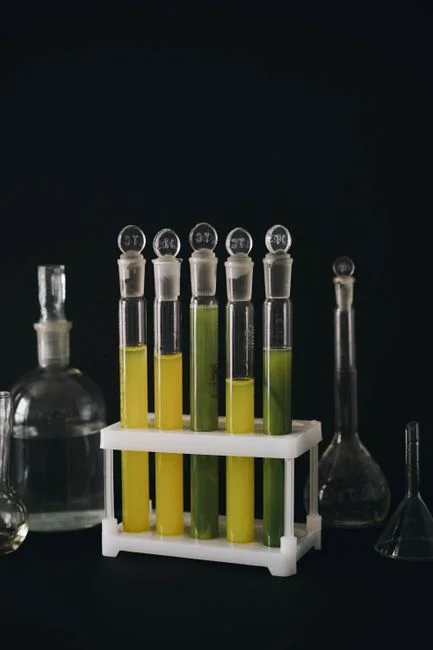
Disinfection is the final liquid-side step. A chlorine dioxide generator at 0.5–2.0 mg/L ClO₂ residual or UV at 30–40 mJ/cm² satisfies the narrative microbial and residual-organic requirements that show up in most local sewer-use ordinances. ClO₂ has the advantage of lower regulated THM formation than chlorine, which matters when the receiving POTW's chlorination step is the next one downstream.
Sludge handling is where 40 CFR 403.3(k) turns from a definition into a compliance test. A plate and frame filter press operating at 6–8 bar with a target cake dryness of 22–28% DS cuts hauled-biosolids volume by 75–80% and sharply reduces the metal-loading mass transfer back to the POTW. Pairing the press with a high-efficiency sedimentation tank that recirculates settled sludge back to the equalization basin allows the plant to capture colloidal metals before they leave the property. Engineers designing a 2026 compliance train should plan sludge-quality sampling (total metals, TCLP for selected organics, capillary suction time for dewaterability) alongside effluent sampling, because the 40 CFR 403.3(k) test treats both endpoints as a single compliance surface. For plants looking at filter press retrofit and upgrade options to expand capacity or cut cycle time, the retrofit guide is a useful procurement reference.
40 CFR 403.3(k) defines interference as a discharge that, alone or with other sources, both (1) inhibits or disrupts the POTW, its treatment processes or operations, or its sludge processes, use, or disposal, and (2) therefore is a cause of an NPDES permit violation or a violation of sewage-sludge use or disposal requirements. 40 CFR 403.5(b)(4) layers on a specific prohibition: no discharge that causes biosolids to fail applicable criteria, guidelines, or regulations — which means failing 40 CFR Part 503 ceiling concentrations is itself a violation, separate from any numeric effluent breach. The upshot is that a Smyrna plant can hit every effluent number and still violate local limits if heavy metals, AOX compounds, or persistent APIs accumulate in the POTW's biosolids. Upstream choices — DAF versus primary clarifier, the polishing block, the sludge recirculation path — are the variables that determine whether this risk is controlled.
Self-Monitoring, Reporting, and the SIU Compliance Calendar
Significant Industrial User status is defined at 40 CFR 403.3(v) and triggers on three criteria: (1) the IU is subject to categorical pretreatment standards; (2) the IU discharges an average of 25,000 gpd or more of process wastewater; or (3) the IU contributes a process waste stream making up 5% or more of the POTW's average dry-weather hydraulic or organic capacity. Almost every Smyrna pharma plant hits trigger 1, because 40 CFR Part 439 covers the entire subcategory set.
The procedural cadence that comes with SIU status: a baseline monitoring report (BMR) under 40 CFR 403.12(b) at the point of categorical standard promulgation or new-discharge startup; compliance reports on the schedule set by the control mechanism under 40 CFR 403.12(d); and 24-hour slug-discharge notification under 40 CFR 403.12(g). For batch operators, a written slug-load control plan under 40 CFR 403.8(f) is also typically required — equalization capacity, flow and pH alarms, and written batch-release procedures are the operational backbone of that plan.
Design the end-of-pipe sampling station during the engineering phase, not after startup. The standard configuration is a refrigerated flow-paced composite autosampler, a continuous pH/temperature probe tied to SCADA, and a discharge flowmeter linked to the plant's discharge tracking. Putting these in the P&ID before construction is far cheaper than retrofitting them. The headworks screening choice — a GX-series rotary mechanical bar screen at 3–6 mm bar spacing — is the first defense against debris that fouls DAF nozzles, MBR membranes, and UV sleeves, and it should be specified alongside the sample station.
For a deeper procurement spec, the DAF unit engineering specs and procurement guidance lays out the 2026 hydraulic and air-to-solid ratios used in commercial specifications.
Capital Planning: When the Federal Floor Is Not the Binding Constraint
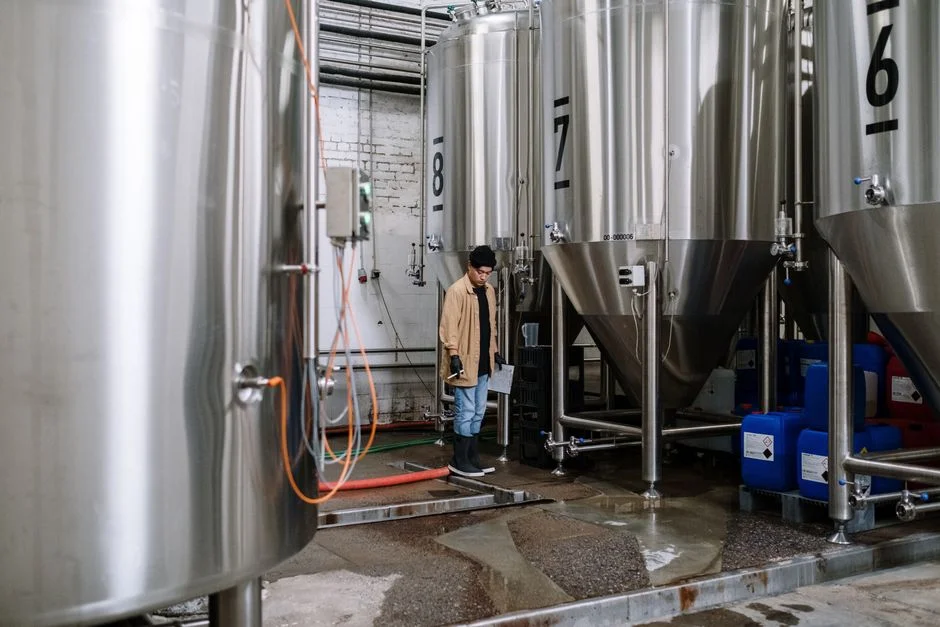
The cost asymmetry in a pharma pretreatment train is well known to anyone who has managed a pass-through excursion: the capital cost of an adequately sized equalization basin is small compared with the cost of a single NPDES violation, including the cost of the corrective action, the for-cause inspection, and the legal exposure under 40 CFR 403.5. Most engineers therefore err on the long side of 8–24 hours of HRT for batch operations.
Qualitatively, the unit operations rank on CAPEX as follows. Equalization and PLC-controlled chemical dosing are the lowest-cost insurance against compliance excursions — under-sizing either is the most common root cause of failed events at chemical and pharma plants. DAF and lamella clarifiers are mid-cost, with the choice driven by FOG loading and footprint. MBR carries a higher CAPEX than conventional activated sludge but eliminates the secondary clarifier, produces reuse-quality water, and roughly halves the footprint — a meaningful tradeoff on tight Smyrna sites. Reverse osmosis and AOP are the most expensive unit operations and are justified only for residual API polishing or for plants moving toward closed-loop process-water reuse.
The water-reuse decision axis reframes the CAPEX question. If the plant is moving toward closed-loop process water, the MBR-plus-RO path beats discharge-only activated sludge on lifecycle cost even though CAPEX is higher, because it produces reuse-quality water and avoids the cost of buying in fresh water for non-contact applications. Pure discharge-to-sewer operations can stay on conventional activated sludge with MBR reserved for plants with the tightest effluent targets. Before procurement, verify every site-specific design value against the current Cobb County or Atlanta permit, recent influent testing, and the final equipment proposal — the numbers cited here are typical, not authoritative for any specific site.
Frequently Asked Questions
Which federal regulation sets the categorical pretreatment floor for a Smyrna pharmaceutical plant discharging to a POTW?
40 CFR Part 439, "Pharmaceutical Manufacturing Point Source Category," sets the federal floor. The plant's subcategory — fermentation, extraction, chemical synthesis, mixing/compounding/formulation, or research — drives the specific BPT, BAT, and NSPS numeric limits at 439.12, 439.14, and 439.15 respectively.
How is a Significant Industrial User defined and does a typical Smyrna pharma plant qualify?
Under 40 CFR 403.3(v), an SIU is an Industrial User that (1) is subject to categorical pretreatment standards, (2) discharges ≥25,000 gpd of process wastewater, or (3) contributes a process waste stream making up ≥5% of the POTW's average dry-weather hydraulic or organic capacity. Almost every Smyrna pharma plant hits trigger 1 because 40 CFR Part 439 covers the entire subcategory set.
What is the difference between a local limit and a categorical pretreatment standard?
A categorical pretreatment standard is a federal numeric limit issued by EPA in 40 CFR Parts 405–471 for a specific industry category or subcategory. A local limit is a site-specific numeric or narrative limit set by the receiving POTW under 40 CFR 403.5(c) and published in the POTW's approved pretreatment program. Local limits can be more stringent than the federal floor when the receiving plant's hydraulic or biological capacity is constrained, and EPA enforces any local limit developed and approved in accordance with 40 CFR 403.5(c) as if it were a federal pretreatment standard.
How often does a POTW reevaluate its local limits?
POTWs perform an annual review of local limits and a full reevaluation typically every 5 years, or sooner if a new industrial user, process change, or biosolids-quality issue arises. The four-step process in EPA 833-B-89-002 (last reissued 2004) — pollutants of concern, headworks loadings, allocation, implementation — is the standard methodology.
Why does sludge handling matter for compliance even when effluent numbers are within limits?
40 CFR 403.3(k) defines interference to include disruption of the POTW's sludge processes, use, and disposal, and 40 CFR 403.5(b)(4) prohibits any discharge that causes biosolids to fail applicable criteria, including 40 CFR Part 503 ceiling concentrations. A plant can therefore hit every numeric effluent limit and still be in violation if heavy metals, AOX compounds, or non-biodegradable APIs accumulate in the biosolids stream — which is why upstream solids capture (DAF, lamella, sludge recirculation) and dewatering (plate and frame filter press) are part of the compliance surface, not just the wastewater side.
Related Equipment
- PLC-controlled chemical dosing skid — specifications, capacity range, and technical data