

Why Pretreatment Limits Govern Chemical-Plant Sewer Discharge
Chemical plants discharging to a municipal sewer near Granite Falls operate under 40 CFR Part 403, which defines an Industrial User (IU) as any non-domestic source of indirect discharge under 40 CFR 403.3(j). A facility whose flow exceeds 25,000 gpd or whose process wastewater contributes more than 5% of the POTW's dry-weather organics is classified as a Significant Industrial User (SIU) and becomes subject to the full pretreatment program, including baseline monitoring reports and 90-day compliance reports. The legal test is twofold: the discharge must not cause pass-through per 40 CFR 403.3(p) (pollutants that exit the POTW and cause an NPDES permit violation) and must not cause interference per 40 CFR 403.3(k) (discharges that disrupt POTW treatment processes, sludge handling, or biosolids disposal). The narrative prohibited-discharge standards in 40 CFR 403.5 forbid flammable materials, corrosive gases, slug loads, and any pollutant that causes pass-through or interference. The actual numbers come from categorical pretreatment standards in 40 CFR Parts 405–471 where they apply, and from site-specific local limits set by the receiving POTW and enforced at the end-of-pipe connection to the collection system.
The Three-Layer Compliance Stack for Plants Near Granite Falls
Regulatory compliance for a 2026 facility requires satisfying three distinct layers of standards simultaneously.
Layer 1 — Federal categorical pretreatment standards. These appear in 40 CFR Parts 405 through 471 and apply by subcategory to specific chemical-manufacturing processes (organic chemicals at Part 414, inorganic chemicals at Part 415, petroleum refining at Part 419, pharmaceutical manufacturing at Part 439). If a chemical plant's primary production activity is covered, the categorical limits override any weaker local limit but are floored by any stronger local limit.
Layer 2 — 40 CFR 403.5 prohibited discharge standards. Narrative rules forbid fires or explosions, corrosive discharges below pH 5.0 or above pH 10.0 capable of damaging the collection system, slug loads capable of causing interference, and BOD/TSS/ammonia loadings that exceed the POTW's hydraulic capacity.
Layer 3 — Site-specific local limits set by the receiving POTW. The City of Granite Falls, MN WWTF, the City of Granite Falls, WA, and the Town of Granite Falls, NC each publish sewer-use ordinances with numeric and narrative local limits developed under 40 CFR 403.5(c). These limits are derived from headworks loading analysis, biosolids-impact calculations, and receiving-water quality — and they are enforced at the point of connection to the collection system.
| Layer | Authority | Form of Limit | Where Enforced |
|---|---|---|---|
| Categorical standard | 40 CFR Parts 405–471 | Numeric, subcategory-specific | End-of-pipe, IU-specific |
| Prohibited discharge | 40 CFR 403.5 | Narrative (no pass-through, no interference) | End-of-pipe |
| Local limits | 40 CFR 403.5(c) | Numeric and narrative, site-specific | Point of connection to collection system |
How Local Limits Are Actually Set and Enforced
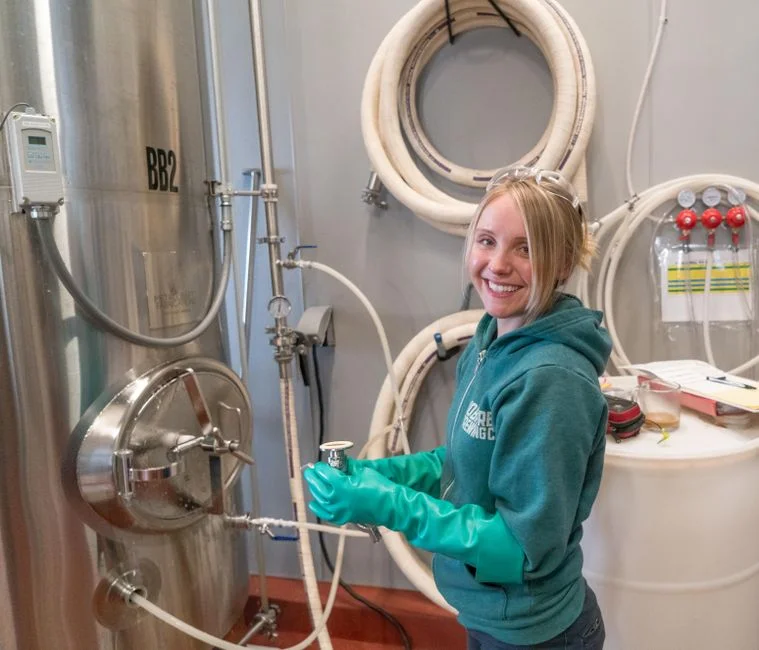
Under 40 CFR 403.5(c)(1), any POTW with a federally approved pretreatment program must develop local limits to prevent pass-through and interference if its NPDES permit requires it, if it accepts hauled waste, or if it has reason to believe pass-through or interference is occurring. EPA's Local Limits Development Guidance (EPA 833-B-89-002, last re-issued 2004) prescribes a four-step process: identify pollutants of concern, calculate maximum allowable headworks loadings, allocate loadings to industrial users, and implement numeric or narrative limits. The numeric limits are usually expressed as daily maximums and monthly averages at the end-of-pipe sampling point, often accompanied by narrative BMPs covering spills, slug-control plans, and waste-minimization practices. POTWs perform an annual review of local limits and a periodic full reevaluation—typically every 5 years or when a new industrial user, process change, or biosolids-quality issue arises. EPA enforces any local limit developed and approved in accordance with 40 CFR 403.5(c) as if it were a federal pretreatment standard, giving local limits the same legal weight as 40 CFR 403.5.
A 2026 Treatment Train That Reliably Meets the Limits
Integrated process designs ensure consistent compliance with municipal sewer ordinances.
Step 1 — Equalization. A flow-and-load equalization basin with 8–24 hours of hydraulic retention time dampens batch releases from reactors, clean-in-place cycles, and shift dumps. Mixing is typically aerated or mechanical at 0.004–0.008 kW/m³ to keep suspended solids in suspension without shearing floc. Surge protection here prevents slug-discharge violations under 40 CFR 403.5(b)(6).
Step 2 — pH and oxidation-state adjustment. An automatic chemical dosing skid brings pH into the 6.0–9.0 band required by virtually every POTW sewer-use ordinance, doses coagulant (typically ferric chloride at 50–200 mg/L or alum at 100–300 mg/L) for colloidal destabilization, and feeds polymer flocculant at 1–10 mg/L. ORP adjustment handles reducing-agent carryover (sulfite, hydrosulfite) from chemical operations.
Step 3 — Primary solids/oil removal. A DAF system achieves 92–97% TSS removal and 85–95% FOG removal at hydraulic loadings of 4–300 m³/h, which is the common spec range for chemical influent carrying emulsified oils, latex residues, or colloidal catalyst fines. Where footprint is constrained, a high-efficiency sedimentation tank (lamella clarifier) at 2–5 m³/m²·h overflow rate substitutes for the DAF on low-FOG streams.
Step 4 — Biological treatment. Conventional activated sludge at F/M 0.2–0.4 lb BOD/lb MLVSS·d and SRT 5–15 days handles readily biodegradable COD/BOD. For tight sites or tougher effluent targets, an integrated MBR system delivers membrane filtration to <1 μm, effluent TSS <5 mg/L, and roughly 60% smaller footprint than a comparable conventional activated-sludge train (HydropureWater field data, 2026). SBRs work for flows under 200 m³/d with high operator attention.
Step 5 — Polishing and disinfection. A chlorine dioxide generator at 0.5–2.0 mg/L ClO₂ residual or a UV dose of 30–40 mJ/cm² satisfies narrative microbial and residual-organic requirements in the local sewer-use ordinance.
| Step | Equipment | Design Parameter | Typical Performance |
|---|---|---|---|
| 1. Equalization | Aerated EQ basin | HRT 8–24 h | <2:1 peak/avg ratio downstream |
| 2. Chemical dosing | Automatic dosing skid | pH 6.0–9.0; FeCl₃ 50–200 mg/L | Colloidal destabilization |
| 3. Primary removal | DAF / lamella | 4–300 m³/h; 2–5 m³/m²·h | 92–97% TSS, 85–95% FOG |
| 4. Biological | MBR / activated sludge / SBR | F/M 0.2–0.4; SRT 5–15 d | >95% BOD/COD; <5 mg/L TSS (MBR) |
| 5. Polishing | ClO₂ or UV | 1–2 mg/L ClO₂; 30–40 mJ/cm² UV | Meets narrative limits |
Protecting POTW Biosolids: The Overlooked Compliance Lever
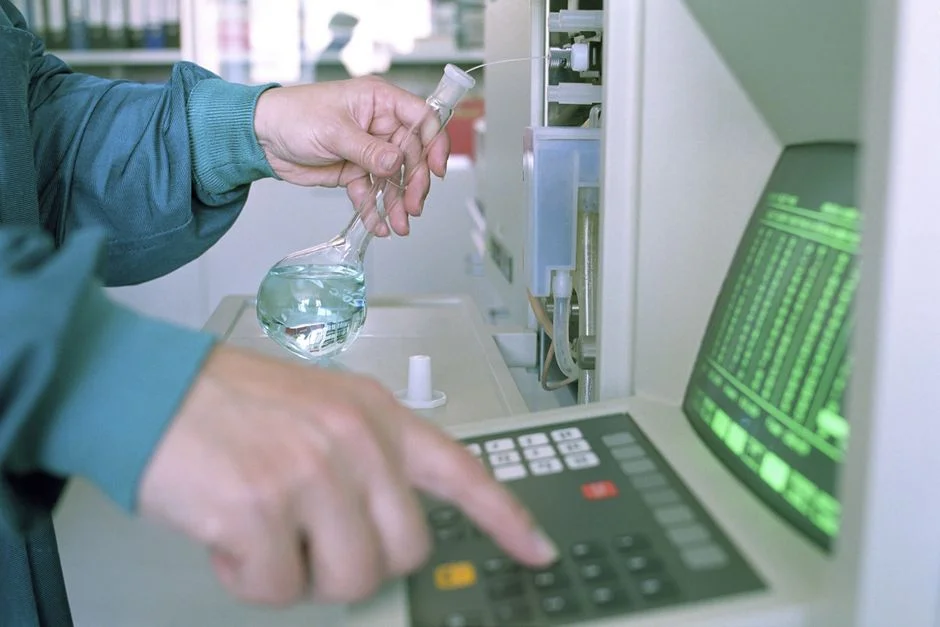
The interference definition in 40 CFR 403.3(k) explicitly extends to sludge processes, sludge use, and sludge disposal. A chemical plant can hit every numeric effluent limit and still violate local limits if heavy metals (Cd, Cr, Cu, Ni, Pb, Zn), non-biodegradable organics (PCBs, dioxins, certain AOX compounds), or persistent foam-makers (surfactants, solvents) accumulate in the POTW's biosolids to the point of exceeding 40 CFR Part 503 ceiling concentrations or blocking dewatering. Sludge handling is a critical component of the pretreatment design. A plate and frame filter press operating at 6–8 bar with a target cake dryness of 22–28% DS cuts hauled-biosolids volume by 75–80% and sharply reduces the metal-loading mass transfer back to the POTW. Pairing the press with a high-efficiency sedimentation tank that recirculates settled sludge back to the equalization basin allows the plant to capture colloidal metals before they leave the property. Engineers designing a 2026 chemical-plant compliance train should plan sludge-quality sampling (Total metals, TCLP for selected organics, capillary suction time for dewaterability) alongside effluent sampling, as the 40 CFR 403.3(k) test treats both endpoints as a single compliance surface.
Screening, Sampling, and Self-Monitoring: Closing the Compliance Loop
Operational reliability begins at the headworks and extends through consistent self-monitoring protocols.
A GX series rotary mechanical bar screen with 3–6 mm bar spacing removes rags, plastics, fibrous packing, and stringy catalysts that otherwise foul DAF nozzles, MBR membranes, and UV sleeves. Downstream of biological treatment, the end-of-pipe sampling station typically carries a refrigerated autosampler paced to flow proportion, a pH/temperature probe with continuous readout to SCADA, and a flowmeter tied to the plant's discharge tracking. POTW pretreatment programs require SIUs to self-monitor and report — 40 CFR 403.12(b) sets baseline monitoring report cadence, 40 CFR 403.12(d) governs compliance reports, and 40 CFR 403.12(g) requires notification of any slug discharge within 24 hours. Designing sample ports, the flow-paced composite sampler location, and the SCADA tie-ins during the engineering phase ensures a program that runs on a continuous-improvement loop. For engineers comparing DAF and lamella alternatives, the DAF machine specifications guide lays out the 2026 hydraulic and air-to-solid ratios for procurement documents.
Frequently Asked Questions
Does 40 CFR Part 403 apply to every chemical plant discharging to a sewer near Granite Falls?
Yes. 40 CFR Part 403 applies to every Industrial User discharging to a POTW with a federally approved pretreatment program, which includes the wastewater facilities serving Granite Falls, MN; Granite Falls, WA; and Granite Falls, NC. The only operational question is whether the IU also qualifies as a Significant Industrial User under 40 CFR 403.3(v), which triggers baseline monitoring, 90-day compliance reports, and slug-control plan requirements.
What is the difference between a categorical standard and a local limit?
A categorical standard is a federal numeric limit in 40 CFR Parts 405–471 that applies to a specific chemical-manufacturing subcategory. A local limit is a site-specific numeric or narrative limit developed by the receiving POTW under 40 CFR 403.5(c) to protect its treatment
Frequently Asked Questions
What pretreatment limits apply to chemical plants discharging to a POTW in the United States?
Chemical plants in the U.S. must comply with the General Pretreatment Regulations under 40 CFR Part 403, which prohibit the discharge of pollutants that cause pass-through or interference at the Publicly Owned Treatment Works (POTW). Furthermore, facilities must adhere to Categorical Pretreatment Standards (PSES) specific to their industrial subcategory, such as those found in 40 CFR Parts 414 (Organic Chemicals, Plastics, and Synthetic Fibers) for process wastewater.
How are local limits different from federal categorical pretreatment standards?
Federal categorical standards are technology-based limits developed by the EPA that apply uniformly to specific industrial sectors regardless of the receiving POTW's capacity. In contrast, local limits are site-specific, risk-based discharge constraints established by the local POTW authority to ensure the facility remains in compliance with its National Pollutant Discharge Elimination System (NPDES) permit, accounting for the specific treatability of the influent, current biosolids quality, and local water quality standards.
What treatment train reliably meets chemical-plant sewer discharge limits?
A robust treatment train typically begins with equalization and pH adjustment to stabilize influent chemistry, followed by physical-chemical treatment such as coagulation, flocculation, and dissolved air flotation (DAF) to reduce Total Suspended Solids (TSS) and oil and grease. For complex organic loads, biological treatment—often via Membrane Bioreactors (MBR) or Moving Bed Biofilm Reactors (MBBR)—is employed, followed by tertiary polishing through activated carbon adsorption or advanced oxidation processes (AOP) to meet stringent chemical oxygen demand (COD) and specific toxic pollutant concentration limits.
Does a chemical plant's pretreatment system have to protect POTW biosolids too?
Yes, under 40 CFR 403.5(b)(4), industrial users are prohibited from discharging pollutants that would cause the POTW’s sewage sludge to fail to meet applicable criteria, guidelines, or regulations. This includes ensuring that heavy metals, such as cadmium, lead, or mercury, and persistent organic pollutants do not accumulate in the biosolids to levels that exceed Part 503 land application standards, which dictate the allowable concentrations for beneficial reuse of treated sludge.
How often are local limits reviewed, and what triggers a reevaluation?
While federal regulations mandate that POTWs must evaluate the need for local limits periodically, most jurisdictions perform a comprehensive Headworks Analysis every five years as part of their NPDES permit renewal process. Reevaluations can be triggered sooner by significant changes in the POTW's influent composition, new upstream industrial contributors, modifications to federal water quality criteria, or the implementation of more stringent state-mandated biosolids disposal requirements.