DAF Machine Specifications: Engineering Data, Standards and Selection Guide
DAF (Dissolved Air Flotation) machines remove suspended solids, FOG, and colloidal matter from industrial wastewater at 92–97% TSS efficiency, with sludge dry solids 3–4× higher than conventional clarifiers. Standard models handle 4–300 m³/h. Modular skid-mounted units typically need about 0.25 hours/day of maintenance. Key DAF machine specifications are flow capacity, air-to-solids ratio (typically 0.02–0.06), and recycle rate (10–30% of influent). This guide gives engineering data, compliance checkpoints, and a selection framework matched to influent and discharge limits.
How DAF Machines Work: Engineering Principles and Process Flow
Dissolved Air Flotation (DAF) systems separate solids, oils, and greases by attaching microbubbles to particles so they float for removal. The four-stage sequence saturates a recycle stream, forms flocs, releases bubbles on pressure drop, then skims floated sludge. DAF fits low-density suspended solids and emulsified oils that settle poorly.
Air saturation starts with recycle of treated effluent, typically 10–30% of influent flow, pressurized to 4–6 bar in a saturation tank with a multiphase pump. At these pressures, air dissolves to about 85–95% saturation. Raw wastewater then undergoes flocculation. Coagulants such as aluminum sulfate and polymers such as polyacrylamide are dosed at 1–5 mg/L, forming flocs 0.5–3 mm in diameter for bubble attachment.
The supersaturated recycle enters the DAF contact zone, where pressure drops from 3–5 bar to atmospheric. Dissolved air comes out of solution as bubbles typically 30–50 µm in diameter. Bubbles attach to flocs and cut aggregate density. By Stokes' Law, the lighter aggregates rise to the surface. Mechanical skimmers remove the buoyant sludge layer. Compressed air at 0.5–1 bar often aids sludge discharge through conical openings, reaching about 3–4% dry solids versus 0.5–1% for gravity clarifiers. Clarified water exits from the tank bottom.
DAF Machine Specifications: Engineering Data by Model and Standard
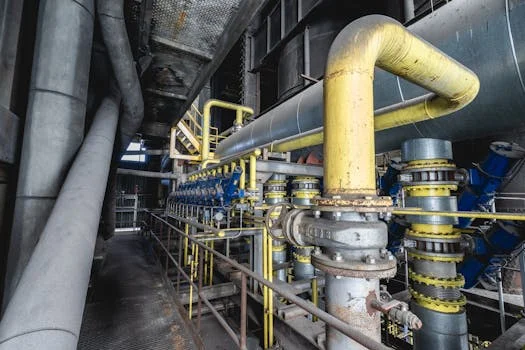
Selecting a DAF system needs clear engineering specs and performance benchmarks. The table below compares HydropureWater DAF models against typical project requirements for flow, footprint, and compliance marks. HydropureWater DAF units target industrial wastewater pretreatment and compact plant layouts.
| Model | Flow Capacity (m³/h) | TSS Removal (%) | Sludge Dry Solids (%) | Footprint (m²) | Recycle Rate (%) | Air-to-Solids Ratio | Compliance |
|---|---|---|---|---|---|---|---|
| DAF-20 | 20 | 95% | 3.5% | 3.0 | 15% | 0.03 | CE |
| DAF-50 | 50 | 96% | 3.8% | 4.2 | 20% | 0.04 | CE, ISO 14001 |
| DAF-100 | 100 | 95% | 3.5% | 6.5 | 20% | 0.035 | CE, ISO 14001 |
| R5 DAF (Rectangular) | 80 | 94% | 3.0% | 7.0 | 25% | 0.05 | EPA 40 CFR, ISO 14001 |
| DAF-200 | 200 | 96% | 3.7% | 10.5 | 25% | 0.04 | CE, ISO 14001 |
Note: Performance varies by influent TSS (50–500 mg/L) and temperature (10–35°C); consult manufacturer for site-specific data.
Regulatory fit is part of DAF selection. Common references include EPA 40 CFR Part 403 for industrial pretreatment, ISO 14001 for environmental management systems, and CE marking for products sold in the European Economic Area. HydropureWater's Dissolved Air Flotation (DAF) System is sized to support these compliance checkpoints on industrial sites.
Circular vs. Rectangular DAF: Performance, Cost, and Use-Case Matching
Circular versus rectangular DAF geometry changes footprint, tank depth, and capital cost. Circular units such as HydropureWater's often run 15–20% smaller in footprint than rectangular units at similar flow. That space saving usually needs deeper tanks of 2.5–3.5 m. Rectangular designs typically use shallower tanks of 1.8–2.2 m.
Rectangular DAF systems generally handle higher solids loading, up to about 1,200 mg/L TSS. That suits concentrated industrial streams, though polymer dose may rise 10–15% to hold floc quality. Circular DAFs fit moderate solids loads more cleanly.
Cost bands differ by geometry and capacity. Circular DAFs at 4–50 m³/h typically cost $25,000–$120,000. Rectangular units at 10–100 m³/h usually fall in $40,000–$200,000 (per 2025 industry benchmarks).
Match geometry to the duty. Circular DAF suits food plants with FOG removal needs and tight floor space. Rectangular DAF suits pulp and paper or other high-TSS, variable-flow duties. For food-plant detail, see DAF systems for food processing wastewater.
| Feature | Circular DAF | Rectangular DAF |
|---|---|---|
| Footprint | 15–20% Smaller | Larger |
| Tank Depth | Deeper (2.5–3.5 m) | Shallower (1.8–2.2 m) |
| Solids Loading (TSS) | Lower (<800 mg/L) | Higher (up to 1,200 mg/L) |
| Polymer Dosing | Lower (1–3 mg/L) | Higher (2–5 mg/L, 10-15% more) |
| Typical Cost (4–50 m³/h) | $25,000–$120,000 | $40,000–$200,000 (for 10-100 m³/h) |
| Best Use Case | FOG-heavy, space-constrained (e.g., food processing) | High TSS, variable flow (e.g., pulp/paper, general industrial) |
A simple gate helps: if influent TSS stays above 800 mg/L, favor rectangular; if footprint must stay under 5 m², favor circular.
Air-to-Solids Ratio and Recycle Rate: Engineering Formulas and Optimization
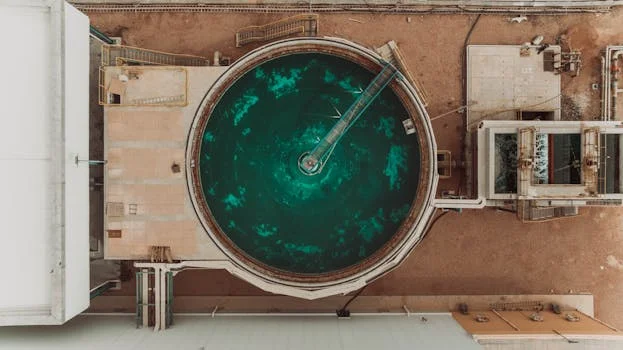
DAF performance hinges on air-to-solids (A/S) ratio and recycle rate. A/S is the mass of air dissolved into the recycle stream divided by the mass of solids in the influent. Design values typically sit between 0.02 and 0.06.
The engineering formula for A/S is:
A/S = (1.3 × S_a × (f × P – 1)) / (Q × C_s)
Where:
- S_a = Air solubility in water at standard conditions (mg/L)
- f = Saturation efficiency (typically 0.85–0.95)
- P = Absolute pressure in the saturation tank (bar)
- Q = Influent flow rate (m³/h)
- C_s = Influent solids concentration (mg/L)
- 1.3 = Conversion factor accounting for air density and temperature effects
Recycle rate (R) is recycle flow divided by influent flow, as a percent. Standard practice uses 10–30% of influent. Air dissolves in that pressurized recycle before release into the DAF tank.
For high TSS (for example >500 mg/L), raising recycle toward 30% supplies more dissolved air. For low TSS (<100 mg/L), cutting recycle toward 10% saves energy without losing removal. Higher saturation pressure (P) dissolves more air and also raises power draw.
Worked Example: For Q = 50 m³/h, C_s = 300 mg/L, P = 5 bar absolute, f = 0.9, and S_a = 24 mg/L, A/S calculates to 0.043. That value supports about 95% TSS removal on many industrial duties.
DAF System Selection Framework: 5-Step Decision Guide for Engineers
A five-step selection path keeps DAF sizing tied to influent data, peak flow, geometry, compliance, and lifecycle cost.
- Step 1: Characterize Influent Wastewater
Measure TSS (mg/L), FOG (mg/L), pH, and temperature. Use composite sampling over 24 hours to catch variability (for example EPA Method 160.2). That dataset drives hydraulic and solids loading. - Step 2: Determine Design Flow Rate
Size on average and peak hourly flow. For batch plants or large swings, design for peak hourly flow (for example 1.5× average) so the unit does not overload. - Step 3: Select DAF Type (Circular vs. Rectangular)
Use the circular versus rectangular checks above. If influent TSS stays above 800 mg/L, rectangular is usually safer. If footprint must stay under 5 m², circular often wins. - Step 4: Verify Compliance with Regulatory Standards
Confirm the unit can meet local, national, and buyer discharge limits. Industry examples include EPA 40 CFR Part 439 for pharmaceutical manufacturing wastewater, EU Directive 91/271/EEC for urban wastewater (to be replaced by Directive (EU) 2024/3019 from 1 August 2027), and ISO 14001. Align performance guarantees with those limits. - Step 5: Calculate Return on Investment (ROI)
Compare capital cost ($/m³/h of capacity) with OPEX ($/m³ treated) for energy, chemicals, and labor. Include PLC-controlled chemical dosing systems for DAF flocculation. Factor polymer savings of about 20–30% versus conventional clarifiers and avoided surcharge exposure when limits are met.
Selection Checklist:
- [ ] Influent data collected and analyzed (TSS, FOG, pH, Temp)
- [ ] Peak and average flow rates calculated
- [ ] DAF type (circular/rectangular) selected based on site constraints and influent characteristics
- [ ] All relevant compliance standards and discharge limits verified
- [ ] Capital and operational costs estimated, and ROI projected
Most plants we size for food or pulp/paper applications run at the lower end of the recycle range (10–15%) when influent TSS stays below 200 mg/L, and ramp up to 25–30% during cleaning or batch discharges. For product-specific sizing on DAF systems, request engineering data via the inquiry form linked below.
Common DAF Problems and Troubleshooting: Engineering Solutions for Operators
Stable DAF performance needs routine checks and fast diagnosis. The issues below cover the failures operators see most often.
Problem 1: Poor TSS Removal (<85%)
- Causes: Low A/S ratio from weak saturation pressure (target 4–6 bar) or recycle outside 10–30%. Wrong polymer type or dose. Influent pH outside 6–8.5.
- Solutions: Raise saturation pressure or recycle rate. Run jar tests for polymer type and dose. Adjust pH with acid or alkali dosing.
Problem 2: Bubble Coalescence (Large Bubbles)
- Causes: Influent temperature above 35°C cuts air solubility and grows bubbles. High turbulence in the contact zone shears flocs and merges bubbles.
- Solutions: Cool upstream if temperature stays high. Reduce pump speed to cut shear. For stubborn foam, add 1–2 mg/L silicone antifoam.
Problem 3: Sludge Not Floating or Insufficient Sludge Blanket
- Causes: Low air saturation from low pressure or multiphase pump seal leaks. Solids loading above 1,200 mg/L TSS can overwhelm flotation capacity.
- Solutions: Repair seals and verify saturation pressure. Raise recycle toward 30%. If solids stay high, add 5–10 mg/L ferric chloride to improve floc density.
Problem 4: High Maintenance Time or Frequent Clogging
- Causes: Clogged pressure-relief nozzles restrict bubble release. Worn multiphase pump impellers cut saturation efficiency.
- Solutions: Clean nozzles weekly with 5% citric acid. Replace worn impellers about every 2,000 operating hours or per manufacturer guidance.
For plant engineers sizing a new line or replacing an underperforming clarifier, the next step is to send influent data (TSS, FOG, flow) and site constraints to HydropureWater engineering for a tailored DAF sizing and quote.
Frequently Asked Questions
What is the typical flow capacity range for DAF machines?
Standard DAF systems handle 4–300 m³/h (roughly 1,760–132,000 US gpm), with modular designs that allow parallel operation for higher flows to meet diverse industrial demands. Custom units can be specified for larger capacities when site conditions require them.
How does DAF compare to sedimentation for TSS removal?
DAF achieves 92–97% TSS removal compared to 80–90% for sedimentation. DAF also produces 3–4× higher sludge dry solids content (3–4% vs. 0.5–1%), leading to reduced sludge volume. DAF is significantly faster, with a hydraulic retention time of 10–20 minutes versus 2–4 hours for sedimentation.
What are the key compliance standards for DAF systems?
Key compliance standards include EPA 40 CFR Part 403 for industrial pretreatment, EU Directive 91/271/EEC for urban wastewater treatment, and ISO 14001 for environmental management systems. Directive 91/271/EEC remains in force until 1 August 2027, when Directive (EU) 2024/3019 replaces it. Local limits such as China GB 8978-1996 may also apply.
How much polymer is needed for DAF flocculation?
Polymer dosage for DAF flocculation typically ranges from 1–5 mg/L, depending on the influent TSS concentration. For example, approximately 2 mg/L may be sufficient for 200 mg/L TSS, while 4 mg/L might be required for 500 mg/L TSS. Jar tests are highly recommended to optimize dosing for specific wastewater characteristics.
What is the maintenance cost for a DAF system?
Annual maintenance costs for a DAF system average $0.05–$0.15 per m³ treated. This includes costs for polymer ($0.02–$0.08/m³), electricity ($0.01–$0.03/m³), and labor (approximately 0.25 hours/day for routine checks). Major overhauls, such as pump replacement, are typically required every 5–7 years.