What Makes Mozambican Textile Effluent Different
Mozambican cotton, denim, and knit dyeing operations discharge an effluent envelope that few other light-industry sectors can match: COD 800–3,000 mg/L, BOD₅ 200–800 mg/L, true color 500–2,500 Pt-Co, TSS 200–600 mg/L, TDS 2,000–8,000 mg/L from reactive dye salt byproducts, temperature 30–60 °C, and pH 9–12 straight off the dye-bath (HydropureWater field data, 2026). Compliance is anchored to Water Law 16/91 (Lei da Água) and Ministerial Diploma 180/2002-style effluent parameters, with a Fecal Coliform ceiling of <1,000 CFU/100 mL (per the Mozambique industrial wastewater compliance matrix). Reactive, disperse, and indigo dyes behave very differently downstream: reactive dyes hydrolyze into chromophores that resist aerobic biodegradation, disperse dyes partition into oil and skimmer sludge, and indigo is covalently bound until it is chemically reduced — a reductive dissolution step that conventional activated sludge cannot perform. Designers who skip dye-chemistry staging end up chasing common MBR operating problems later.
Mozambique's investment in trained operators and accredited labs de-risks long-term ETP operation. The Global Fund–supported Wastewater Environmental Monitoring Program at Mozambique's National Institute of Health (INS) in Marracuene currently samples at 4 Maputo sites, with planned expansion to 15 sites for SARS-CoV-2, cholera, polio, Salmonella typhi, and influenza surveillance (Global Fund/INS, 2023). On the cost side, every CAPEX figure in this article applies a 15–20% Mozambique import/logistics uplift and a further +10% coastal corrosion surcharge for Maputo and Beira (per the 2026 Mozambique cost model) — the two surcharges that will reappear in the pricing tables later.
The 2026 Process Train for a Mozambican Textile ETP
A defensible 2026 process train for a 200–1,000 m³/day Mozambican dye house runs equalization → coarse screening → DAF → MBR biological → ClO₂ or ozone polishing → optional RO reuse, with dewatered sludge leaving site at 22–28% TS. Each stage carries a defined removal target and a defined spec window, so an EPC or owner-engineer can hand the block flow straight to procurement.
| Stage | Unit operation | Design window | Primary removal target |
|---|---|---|---|
| 1. Equalization & cooling | Lined concrete or FRP EQ tank | 8–24 h HRT, pH 6.5–7.5, T < 38 °C | Hydraulic and thermal buffering |
| 2. Screening | GX-series rotary mechanical bar screen | 3–5 mm aperture | Lint, fibers, packaging debris |
| 3. DAF pre-treatment | Dissolved air flotation system | A/S 0.005–0.015, HLR 4–25 m³/m²·h, 4–300 m³/h envelope | TSS, FOG, 20–40% color |
| 4. Biological | Integrated MBR membrane bioreactor with PVDF 0.1–0.4 µm | MLSS 8,000–12,000 mg/L, HRT 18–36 h, flux 12–18 L/m²·h | COD >90%, BOD₅ >95%, residual color |
| 5. Polishing/disinfection | Chlorine dioxide generator or ozone | ClO₂ 2–5 mg/L, 30 min contact | Fecal Coliform <1,000 CFU/100 mL, residual color |
| 6. Optional RO polish | Brackish-water RO with anti-scalant | Recovery 65–75%, permeate <200 μS/cm | Reuse for boiler feed or rinse water |
| 7. Sludge handling | Plate-and-frame filter press | Cake 22–28% TS | Volume reduction for offsite disposal |
For sites with COD >1,000 mg/L and dye-toxic influent — the typical Mozambican dye house — MBR is the recommended biological step (per the 2026 Mozambique technology selection guide). Sludge from DAF float and MBR waste activated sludge is co-thickened and dewatered on the filter press, producing a 22–28% TS cake suitable for licensed offsite disposal.
Sizing the Plant: How to Convert Flow and Load to Equipment Specs
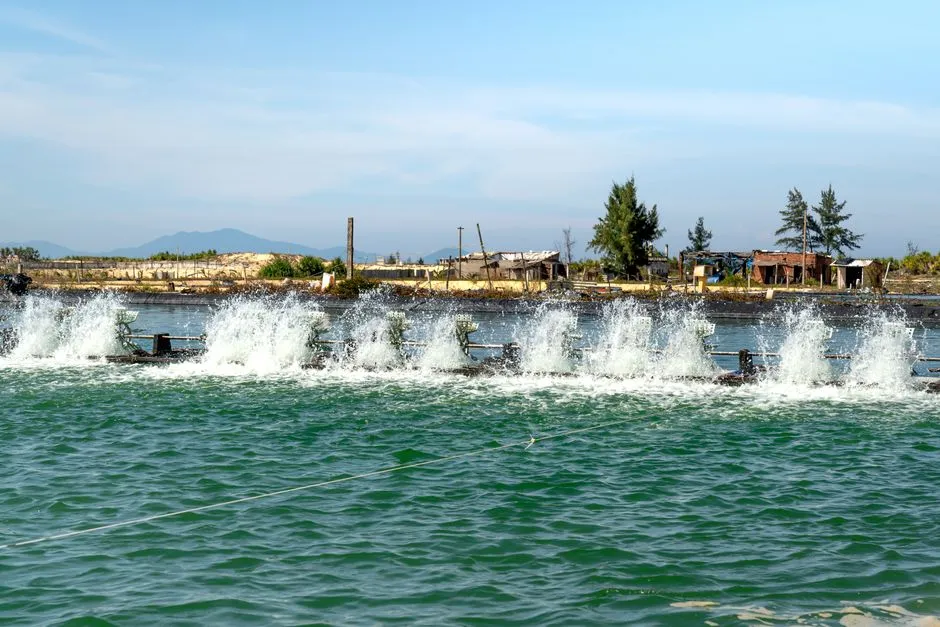
Take a mid-size 500 m³/day Mozambican dye house. Apply a peak factor of 1.4–1.6 to the average flow to size the equalization tank — a 500 m³/day plant at 1.5× peak needs roughly 250–300 m³ of working EQ volume over an 8–12 h buffer. From there, size the DAF unit on hydraulic loading: at 10 m³/m²·h and 21 m³/h average flow, a single DAF unit in the 25–50 m³/h range is appropriate, with an A/S ratio of 0.008–0.012 to capture the oil-coated disperse dye fraction. The MBR volume follows from HRT 24–30 h and MLSS 10,000 mg/L — a real MBR delivers roughly 60% footprint reduction versus conventional activated sludge, which is decisive on a constrained Maputo site where land routinely costs more than USD 30/m².
Mozambique-specific inputs that change equipment selection: ambient temperature 22–32 °C, humidity 70–80%, and tidal-influenced coastal soils that require pile or raft foundations for tanks larger than 200 m³. For larger flow cases, designers can pair the MBR skid with DF-series PVDF flat sheet membrane modules for ease of cassette swap, and a high-efficiency sedimentation tank ahead of the MBR to drop TSS loading on the membranes. A useful cross-check on African projects is the containerized MBR sizing methodology used for Sierra Leone and similar tropical sites, which keeps the MBR skid factory-built and the site work to foundations and piping only.
MBR vs. SBR vs. Constructed Wetland for Mozambican Textile Sites
The biological step is where most Mozambican textile tenders go off the rails, because the cheapest bid often picks the wrong reactor. MBR, SBR, and constructed wetland each fit a specific site profile, and the choice should be made on land cost, influent strength, and reuse intent — not on EPC preference. A pre-treatment-only DAF is not adequate for textile; the biological stage must follow.
| Biological option | Best-fit site | Influent limit | Footprint vs. CAS | Reuse suitability |
|---|---|---|---|---|
| MBR (PVDF, 0.1–0.4 µm) | Urban Maputo, Cabo Delgado, constrained sites, COD >1,000 mg/L | COD up to ~3,000 mg/L; handles dye toxicity and salinity swings | ~40% (high MLSS enables small tankage) | Direct RO feed; reuse for rinse/boiler |
| SBR (sequencing batch) | Inland Sofala, available land, COD <1,500 mg/L | Shock-sensitive; needs equalization buffer | ~100% (similar to CAS) | Limited without tertiary RO; mostly discharge |
| Constructed wetland | Rural dye co-op, <200 m³/day, low color, low TDS | Reactive dyes and high TDS not tolerated; needs DAF upstream | ~300–500% | Not suitable for reuse |
Decision rule: if land cost in Maputo or Cabo Delgado exceeds USD 30/m², default to an integrated MBR membrane bioreactor; if land is available inland in Sofala and the influent COD stays under 1,500 mg/L, an SBR is defensible at lower CAPEX; a constructed wetland only fits a rural community-tied dye co-op below 200 m³/day with low color. The 5–8 year reuse payback band only holds for the MBR + RO reuse case — SBR and wetland plants do not generate enough water-quality value to clear that hurdle. For a comparison with pretreatment practice outside Africa, see the US textile and dyeing pretreatment compliance guide.
CAPEX, OPEX, and Reuse Payback for a Mozambique Textile ETP
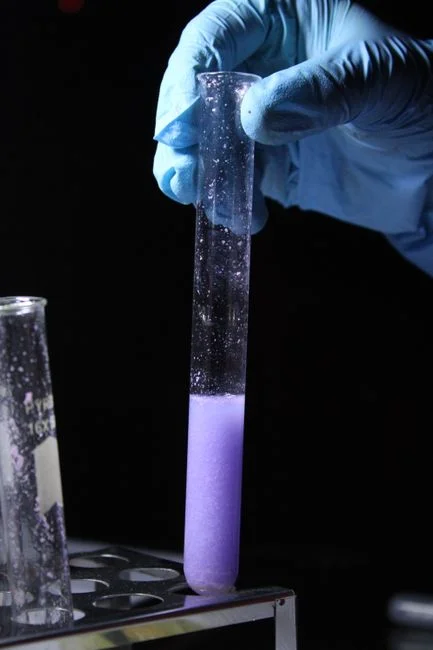
2026 budget CAPEX for a Mozambican textile ETP, before country uplifts, runs USD 250–500 per m³/day for DAF pre-treatment, USD 800–1,400 per m³/day for the MBR biological step, and USD 1,400–2,200 per m³/day for a full train with RO reuse. Apply the 15–20% Mozambique import/logistics uplift and the +10% Maputo/Beira coastal corrosion surcharge on top, and a delivered Maputo full-train with RO lands at roughly USD 1,950–3,000 per m³/day (HydropureWater field data, 2026).
| Cost line | 2026 band | Mozambique-specific driver |
|---|---|---|
| DAF pre-treatment CAPEX | USD 250–500 / m³/day | +15–20% import/logistics |
| MBR biological CAPEX | USD 800–1,400 / m³/day | +10% coastal corrosion (Maputo, Beira) |
| Full train + RO reuse CAPEX | USD 1,400–2,200 / m³/day (delivered Maputo: ~USD 1,950–3,000) | Combined uplifts |
| Energy OPEX | Maputo USD 0.12/kWh; Beira USD 0.18/kWh | EDM tariff gap |
| Chemical OPEX (coagulant, polymer, anti-scalant, ClO₂/NaOCl) | 8–14% of total OPEX | Dosed via automatic chemical dosing skids |
| Reuse payback | 5–8 years for MBR + RO | 60% reuse at 500 m³/day recovers ~USD 0.20–0.35/m³ in avoided water and sewer cost |
OPEX is dominated by energy: Maputo at USD 0.12/kWh versus Beira at USD 0.18/kWh is a 50% gap that materially shifts Beira's reuse payback toward the 8-year end of the band. Chemical spend — coagulant, polymer, anti-scalant, and NaOCl or ClO₂ — typically runs 8–14% of OPEX, with sludge hauling a meaningful line for inland sites. A 500 m³/day plant operating at 60% reuse recovers roughly USD 0.20–0.35 per m³ in avoided freshwater and municipal sewer charges, which is what carries the project through the 5–8 year payback window. World Bank/IFC and MIGA are increasingly active on ESG-compliant textile projects in Mozambique, and a passing ETP is becoming a precondition for FDI finance rather than a nice-to-have.
Supplier Selection: A 7-Point Checklist for Buying Textile ETP Equipment in Mozambique
1. Verify CE and ISO 9001/14001 documentation and a documented track record in African textile projects — not just municipal work. 2. Demand a factory acceptance test (FAT) video on the MBR skids before shipment and a written site acceptance test (SAT) plan for Maputo/Beira commissioning, signed by both parties. 3. Require PLC programs with Portuguese/English language support and remote-monitoring capability — the operator pool in Mozambique is mixed, and a Chinese-only HMI will be unusable. 4. Confirm the spare-parts kit includes 12 months of replacement membranes, dosing pump heads, and a spare DAF recycle pump; Maputo port delays make this non-optional, not a value-add. 5. Verify the supplier has either a local service partner in Maputo or a guaranteed 72-hour fly-in response; cross-check via World Bank Mozambique field offices. 6. Ask for a written coastal-corrosion material schedule (316L stainless, FRP, marine-grade coatings) that explicitly addresses the +10% Maputo/Beira surcharge. 7. Insist on a performance warranty tied to effluent parameters, not just equipment uptime — a passing discharge test is what the regulator and the development bank will both require.
Frequently Asked Questions
What are the Water Law 16/91 discharge limits for textile effluent in Mozambique?
Compliance is anchored to Water Law 16/91 (Lei da Água) and Ministerial Diploma 180/2002-style effluent parameters, with Fecal Coliform capped at <1,000 CFU/100 mL, BOD₅ and COD typically <50 mg/L and <150 mg/L respectively for surface discharge, true color measured in Pt-Co, and pH 6.0–9.0. Designers should always verify site-specific permit values against the latest ARA (Administração Regional de Águas) requirements before locking in equipment.
How much does a 500 m³/day textile wastewater treatment plant cost in Mozambique in 2026?
A 500 m³/day MBR-based textile ETP with RO reuse lands at roughly USD 1,950–3,000 per m³/day delivered in Maputo, or about USD 1.0–1.5 million total CAPEX after the 15–20% import/logistics uplift and the +10% coastal corrosion surcharge. A DAF + MBR train without RO drops to roughly USD 1,150–1,950 per m³/day delivered (HydropureWater field data, 2026).
MBR vs. SBR for textile effluent in Mozambique — which is better?
MBR wins on footprint, effluent quality, and reuse suitability — it handles COD up to ~3,000 mg/L, dye toxicity, and TDS swings that knock out an SBR. SBR is defensible at lower CAPEX only on inland sites with land >USD 30/m² below replacement cost and influent COD <1,500 mg/L. For most urban Maputo and Cabo Delgado dye houses, MBR is the lower-risk choice.
Can a constructed wetland treat reactive dye wastewater in Mozambique?
Not reliably. Constructed wetlands tolerate low color and low TDS but fail on hydrolyzed reactive dyes and high salt. Use a constructed wetland only for rural dye co-ops under 200 m³/day with DAF upstream, and never as the sole biological step for reactive or indigo effluent.
What is the realistic payback for a textile water reuse system in Mozambique?
For a 500 m³/day MBR + RO plant operating at 60% reuse, avoided freshwater and municipal sewer charges recover roughly USD 0.20–0.35 per m³, supporting a 5–8 year payback in Maputo and 6–9 years in higher-tariff Beira. The payback assumes compliance-grade reuse, not RO permeate for boiler feed, which shortens the window further.