Why Baomahun Forces a Different Sizing Logic
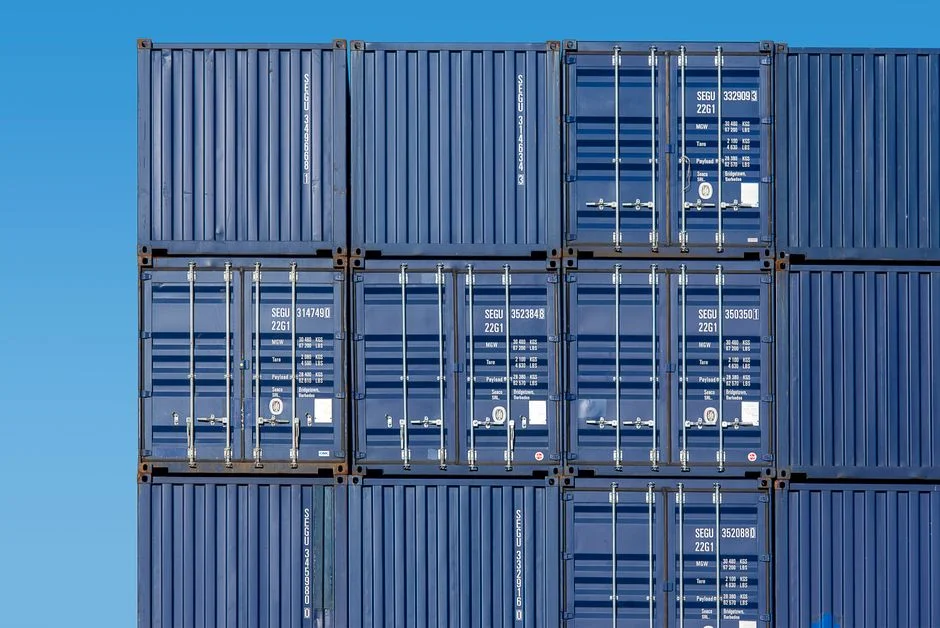
Four site conditions in Bo District force a packaged MBR rather than a septic tank or conventional activated-sludge STP: lateritic soil that makes buried tankage expensive, ambient temperatures of 25–32 °C that accelerate biological kinetics but also membrane fouling, an intermittent Freetown–Bo grid feeding Baomahun, and the absence of any municipal sewer — every drop of effluent must be either stream-discharged under a permit or reused on site. A well-operated septic tank still discharges 30–50 mg/L TSS and BOD 50–100 mg/L, which is roughly double the EPA-SL stream-discharge ceiling of BOD ≤30 mg/L and TSS ≤30 mg/L; that gap alone disqualifies septic for any project going through a formal permit review. Excavation and wet-season dewatering in lateritic Baomahun soil typically cost 2–3× a temperate-climate site, so the 60% footprint reduction a packaged MBR delivers over a conventional activated-sludge plant is decisive. For this article a "containerized MBR STP" means activated-sludge biology plus submerged 0.1 µm PVDF flat-sheet ultrafiltration inside a 20-ft ISO frame, fully factory wet-tested before dispatch — see the containerized MBR system reference design for the configuration. The framing question for a residential or camp project is therefore not "what size MBR do I buy?" but "what daily flow, what peak, and what reuse target am I designing to?"
Step 1 — Establish Population, Occupancy, and Per-Capita Demand
The two project types common in Bo District behave very differently. A permanent residential block has stable occupancy, returning commuters, and family-scale fixtures; a rotational mining or construction camp has shift-based population, a near-empty night block, and centralized mess and laundry loads. The 150–250 L/guest-day benchmark from the 2026 Baomahun hotel STP guide overstates both cases and must be adapted down. Use 120–180 L/person/day for residential (no hotel laundry, lower restaurant turnover) and 90–130 L/person/day for camp (timed shower blocks, metered central laundry). Add discrete loads on top: 25–50 L per mess cover and 40–60 L per worker-shift for centralized camp laundry. Apply occupancy factors of 0.85–1.0 for residential and 0.6–0.8 for camp to capture R&R cycles and project ramp-up.
Worked example 1, residential: 300 people × 150 L/person/day × 0.95 occupancy = 42,750 L/day = 42.75 m³/day ADWF. Worked example 2, camp: 800 people × 110 L/person/day × 0.75 occupancy = 66 m³/day base, plus 8 m³/day mess and 12 m³/day central laundry = 86 m³/day ADWF. The camp number is lower per capita than a hotel because shower blocks are metered and laundry is a single aggregated point, not a per-room slug load.
| Parameter | Residential (300 pax) | Camp (800 pax) |
|---|---|---|
| Per-capita demand (L/p/d) | 150 | 110 |
| Occupancy factor | 0.95 | 0.75 |
| Base ADWF (m³/day) | 42.75 | 66.0 |
| Mess/laundry addition (m³/day) | 0 | 20 |
| Total ADWF (m³/day) | 42.75 | 86.0 |
Step 2 — Apply Peak Factor and Confirm Design Flow
Peak, not average, is what kills membranes. A 2.0–2.5× peak over design flow starves hydraulic retention time and pushes MLSS out of the cassette, so equalization is not an optional buffer — it is the mechanism that lets a smaller MBR ride out a bigger surge. Use 2.0–2.25× for residential (morning and evening meal + shower convergence, slightly desynchronized across a block) and 2.25–2.75× for camp (shift-change surges are sharp and synchronized across the whole population within a 30-minute window). Worked numbers: the 300-person residential block peaks at 42.75 × 2.1 = 89.8 m³/day, and the 800-person camp peaks at 86 × 2.5 = 215 m³/day. Define the "sizing flow" the MBR is quoted against as ADWF × 1.2–1.5; this captures diurnal swings without overspending on tankage. The 300-person block therefore sizes to roughly 45 m³/day nominal, and the 800-person camp to roughly 100 m³/day nominal — the round numbers the supplier will quote against.
Step 3 — Size the MBR Cassette, Equalization, and Aeration
DF-series flat-sheet modules deliver 32–135 m³/day per 80–225 m² of membrane area (S2). For 45 m³/day residential, specify one cassette train at roughly 120 m²; for 100 m³/day camp, specify either one train at 225 m² or two parallel trains at 120 m² for redundancy and easier CIP scheduling. Equalization tank volume should be 25–50% of daily flow — that is 11–22 m³ for residential and 22–43 m³ for camp; 25% is the floor, 50% is the safe choice when shift-change peaks are sharp. Aeration is non-negotiable: continuous scouring at air-to-water ratios of 25:1 to 30:1 at the module headers, which at 100 m³/day implies a 2.5–3.0 Nm³/min blower train. Tropical 25–32 °C lets tankage shrink about 20% versus a temperate design at the same loading rate, but the same warmth raises fouling rate, so blower margin should not be trimmed.
Membrane pore spec matters for the reuse target. The DF series is 0.1 µm nominal PVDF flat-sheet and is sufficient for EPA-SL stream discharge; if the project targets WHO 2006 unrestricted irrigation, consider the tighter 0.04 µm hollow-fiber PVDF option (per S4 MBR-C) to reduce downstream disinfection load. Pretreatment is non-negotiable regardless of pore size: a GX-series rotary bar screen at 1–2 mm aperture ahead of the cassette, plus a dissolved air flotation unit for kitchen FOG, or at minimum a passive grease trap at the camp mess. Without DAF, flat-sheet cassettes blind in 4–8 weeks (HydropureWater field data, 2026). Membrane module selection and layout should be locked to the DF-series flat-sheet membrane modules datasheet before RFQ release.
| Equipment | Residential (45 m³/day) | Camp (100 m³/day) |
|---|---|---|
| DF-series membrane area | ~120 m² (1 train) | 225 m² (1 train) or 2×120 m² (parallel) |
| Equalization tank | 11–22 m³ (25–50% of daily flow) | 25–50 m³ (use 50% for sharp peaks) |
| Blower capacity | 1.1–1.4 Nm³/min at 25–30:1 A/W | 2.5–3.0 Nm³/min at 25–30:1 A/W |
| Pretreatment | GX bar screen + grease trap | GX bar screen + DAF (FOG heavy) |
Step 4 — Disinfection, Sludge, and Reuse Targets
Membrane effluent from a well-operated DF-series cassette is already BOD <5 mg/L, TSS <1 mg/L, turbidity <1 NTU, and fecal coliform 10²–10³ CFU/100 mL (S2). For EPA-SL stream discharge the limit is ≤200 CFU/100 mL; for WHO 2006 unrestricted irrigation the threshold tightens to ≤10⁴ CFU/100 mL. Specify a chlorine dioxide generator at 50–200 g/h sized to peak flow — ClO₂ is preferred over chlorine because it does not form trihalomethanes on reuse lines. Sludge mass balance: the 100 m³/day camp MBR produces 1.5–4.0 m³/day of waste activated sludge at 0.8–1.2% dry solids; specify a plate-and-frame filter press with 5–10 m² filtration area to dewater to >20% DS for stackable cake disposal along the Bo–Baomahun road. Lock the reuse pathway before sizing: toilet flush and landscape irrigation need WHO unrestricted grade; vehicle wash and dust suppression can accept EPA-SL stream-discharge grade.
Power, Logistics, and Containerized Form Factor
Containerized MBR energy demand is 0.3–0.8 kWh/m³; for the 100 m³/day camp example that is 30–80 kWh/day, or a 30–50 kVA diesel standby generator, or a 40–60 kWp solar array with 1–2 days battery autonomy. Specify PLC auto-restart after grid loss — confirmed in the HydropureWater field requirement list. Confirm 230 V / 50 Hz compatibility for Sierra Leone; a 460 V / 3-phase / 60 Hz standard (as on some imported containerized MBRs) is a deal-breaker without a transformer. Logistics shape the form factor: ISO corner-cast certification and CSC plate, gross weight ≤30 tonnes for Sierra Leone road limits, 250 km of two-lane highway from Freetown port to Bo plus a final 30–40 km of unpaved lateritic road to Baomahun, and on-site cranage in Bo that is scarce and must be booked in advance. A 20-ft ISO container above grade in Sierra Leone's UV index 10+ conditions needs an aluminium shade roof to preserve HDPE membrane lifespan — this is standard practice, not a deal-breaker, but it must be in the BOQ.
Regulatory and Pre-Purchase Checklist
Three regulatory items must be locked in before signing a purchase order. First, an Environmental Impact Assessment licence and discharge permit from the Sierra Leone Environment Protection Agency (EPA-SL) under the Environment Protection Agency Act 2008 and the National Water and Sanitation Policy 2018 — allow 8–12 weeks for review. Second, confirm the discharge route and its numeric limits: stream discharge requires BOD ≤30 mg/L, TSS ≤30 mg/L, fecal coliform ≤200 CFU/100 mL; unrestricted irrigation reuse is tighter at ≤10⁴ fecal coliform/100 mL per the WHO 2006 Guidelines for Safe Use of Wastewater. Third, verify Bo District council setback rules — typically 30 m from any watercourse — before fixing the container footprint. For supplier due diligence, request FOB China and CIF Freetown quotes separately so port clearance, Bo road transport, and on-site cranage are visible line items, ask for African reference projects of similar size, and confirm the CIP chemical protocol (1,000–2,000 mg/L NaOCl every 3–6 months plus citric or oxalic acid at pH 2–3 every second CIP) and the stated 5–8 year membrane life.
| Item | Owner | Trigger / Limit |
|---|---|---|
| EIA licence and discharge permit | EPA-SL | 8–12 week review under EPA-SL Act 2008 and NWSP 2018 |
| Stream discharge limits | EPA-SL | BOD ≤30 mg/L, TSS ≤30 mg/L, fecal coliform ≤200 CFU/100 mL |
| Unrestricted irrigation reuse | EPA-SL / WHO 2006 | Fecal coliform ≤10⁴ CFU/100 mL |
| Setback from watercourse | Bo District council | Typically 30 m minimum |
| FOB China vs CIF Freetown split | Procurement | Visible port, road, cranage line items |
Frequently Asked Questions
What per-capita flow should I use for a residential block in Bo District versus a worker camp?
Use 120–180 L/person/day for residential and 90–130 L/person/day for camp shifts with central laundry (HydropureWater field data, 2026), then apply 0.95 and 0.75 occupancy factors respectively. The hotel benchmark of 150–250 L/guest-day is too high for both because there is no per-room laundry slug and no restaurant turnover spike.
What peak factor is defensible for a 24-hour rotational worker camp in Baomahun?
Use 2.25–2.75× for camp, versus 2.0–2.25× for residential, because shift-change surges are synchronized within a 30-minute window (S2). The 800-person example in Step 2 produces 215 m³/day peak from an 86 m³/day ADWF.
What MBR nominal capacity should I specify for a 300-person residential block and an 800-person camp?
Specify about 45 m³/day nominal for the 300-person residential block and about 100 m³/day nominal for the 800-person camp, both at 1.2–1.5× ADWF. Translate the 100 m³/day case to one DF-series train at 225 m² or two parallel trains at 120 m² for redundancy.
What pretreatment is non-negotiable before a flat-sheet MBR cassette in a camp with a central mess?
A 1–2 mm GX-series rotary bar screen plus a DAF for kitchen FOG; without DAF, flat-sheet cassettes blind in 4–8 weeks (HydropureWater field data, 2026). A passive grease trap is acceptable only at the camp mess if DAF capex is rejected, not instead of it.
Which EPA-SL and WHO limits apply if the project will reuse treated water for landscape irrigation?
Stream discharge under EPA-SL allows fecal coliform ≤200 CFU/100 mL with BOD ≤30 mg/L and TSS ≤30 mg/L; unrestricted landscape irrigation tightens to ≤10⁴ CFU/100 mL per the WHO 2006 Guidelines, which is why a ClO₂ generator at 50–200 g/h is typically specified downstream of the cassette.