Why Bakery Wastewater Pushes Conventional Biology to Its Limit
Bakery effluent is nontoxic but extremely concentrated, and that combination breaks a conventional activated sludge (CAS) basin faster than most operators expect. The waste stream is built from flour, sugar, butter, shortening, milk solids, eggs, and fillings, which together push BOD into the 1,500–4,500 mg/L range typical of high-strength food processing (per DataIntelo 2025 food-industry IFAS study). More than half of the water used in a commercial bakery becomes sewage that is oxygen-deficient and high in organics, according to FoodSafe Drains — and the stream is highly acidic because of the dough, dairy, and CIP chemistry that ends up in the floor drain.
The harder problem is variability. A bakery runs in batches: morning dough wash, mid-morning CIP of proofers and pans, afternoon product changeovers, end-of-shift quat disinfection. That sequence produces FOG spikes, starch surges, and surfactant carryover that arrive at the treatment plant in waves rather than as a steady feed. Quaternary ammonium disinfectants in particular will inhibit or kill nitrifying biomass even at low concentrations, and FOG that escapes pretreatment coats flocs, ruins settling, and washes nitrifiers out of the basin (per FoodSafe Drains).
Enhanced dissolved air flotation (DAF) handles 99% of FOG and 97% of TSS, but it does not touch soluble BOD, ammonia, or total nitrogen — those are the parameters that drive POTW surcharges and consent-decibel violations (per Ecologix). The biological step has to take the leftover load and ride out the spikes, which is where a biofilm-augmented process earns its place over floc-only CAS.
What IFAS Is and Why It Fits a Bakery Effluent
Integrated Fixed-film Activated Sludge (IFAS) is a hybrid aeration process in which free-floating polyethylene carrier media are suspended in a conventional activated sludge basin alongside the mixed liquor. The carriers are retained in the reactor by submerged effluent screens, and the basin continues to operate as a complete-mix suspended-growth system with the biofilm attached growth running in parallel. Two biomass populations share the work: the suspended flocs handle the bulk of the soluble BOD and COD from sugars and starches, while the attached biofilm carries the slower-growing nitrifiers at a lower effective SRT and at temperatures that would stall a floc-only system (per Hazen & Sawyer, 2025 full-scale IFAS demonstration at Greensboro, NC).
That division of labor is exactly what bakery effluent needs. The biofilm acts as a shock buffer when a FOG or surfactant slug arrives: the attached mass is physically retained in the basin, so it cannot be washed out the way a floc blanket can. Meanwhile, the suspended-growth fraction absorbs the high BOD swings without the operator having to push SRT high enough to keep everything alive on flocs alone. The Hazen & Sawyer pilot demonstrated this with AnoxKaldnes K3 carrier media at a 35% fill fraction, with attached biomass contributing up to 50% of the total active biomass in the system and consistent nitrification maintained at 15 °C and an aerobic SRT of roughly 5.5 days — far below the 8–12 days a CAS basin would need at the same temperature. The same configuration is also deployed at commercial scale with AnoxKaldnes K5 carriers, which have a higher specific surface area and are typically used when the basin volume is constrained or the load per unit volume is high.
IFAS Design Parameters for Bakery Service
Use the table below as a starting point for a bakery-strength IFAS design. Values marked as demonstrated are taken from the Hazen & Sawyer full-scale pilot; the rest are typical operating ranges for biofilm-augmented municipal and food-industry installations.
| Parameter | Design Range | Notes / Source |
|---|---|---|
| Carrier fill fraction | 30–40% | 35% demonstrated with AnoxKaldnes K3 (Hazen & Sawyer) |
| Carrier type | AnoxKaldnes K3 or K5 (or equivalent HDPE) | K5 used when specific surface area must be maximized in a small footprint |
| Dissolved oxygen (suspended phase) | 3.0–4.0 mg/L | Required to keep the biofilm fully aerobic (Hazen & Sawyer) |
| Aerobic SRT (total system) | 5–8 days | 5.5 days demonstrated at 15 °C; 3.6 days for the suspended phase alone |
| MLSS | 2,500–4,000 mg/L | Lower than typical CAS because attached growth carries part of the load |
| Attached biomass | 5–15 g TSS/m² | Demonstrated range; sensitive to sCOD loading, temperature, DO |
| Hydraulic retention time | 6–12 h (bakery BOD 1,500–4,500 mg/L) | Anchor on the brewing/F&B proxy from the DataIntelo 2025 report |
| F/M ratio | 0.15–0.30 lb BOD/lb MLSS·d | Upper end acceptable when biofilm is carrying nitrification |
| Temperature | Nitrification held at 15 °C | Important for bakeries without heated basins (Hazen & Sawyer) |
| Upstream screening | < 6 mm openings, no bypass | Debris and scum recycle will foul the first IFAS cell (Hazen & Sawyer) |
| CIP disinfectant policy | Peracetic acid or H₂O₂ preferred; avoid quats | Quats inhibit nitrification even at low ppm (FoodSafe Drains) |
Two design points matter more than the rest for a bakery retrofit. First, specify the upstream screen at less than 6 mm openings — the Hazen & Sawyer pilot documented floatables and debris building up in the first IFAS cell when scum and screening bypass were allowed to recycle. Second, write the CIP chemical policy into the operating procedure: switching from quaternary ammonium sanitizers to peracetic acid or hydrogen peroxide protects the nitrifying biofilm from chronic inhibition, which is the single most common cause of "mysterious" ammonia breakthrough in food-plant IFAS systems (per FoodSafe Drains).
Pretreatment Train: Pairing DAF with IFAS
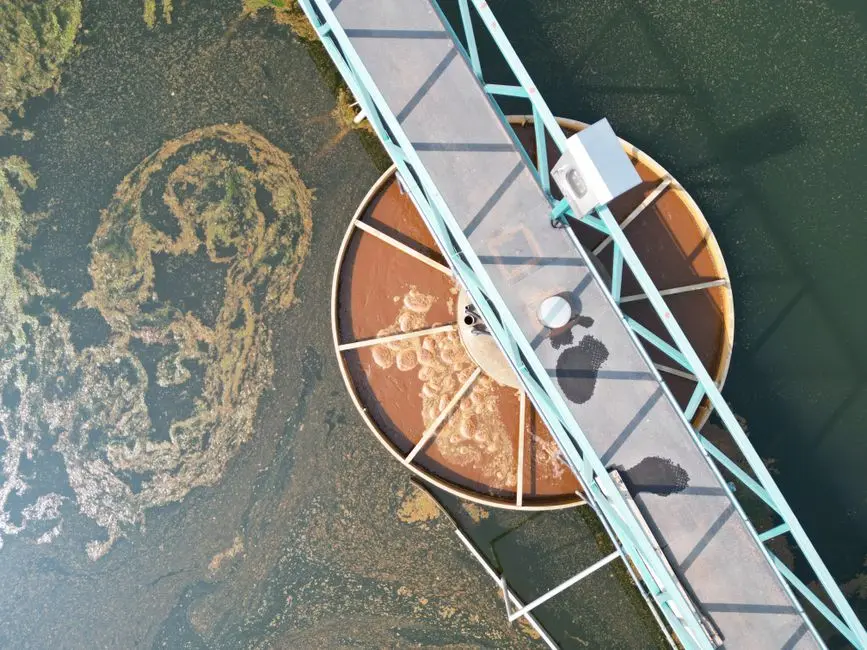
IFAS will not survive without a guard on the front end. The defensible train for a bakery is: slot drainage (food-grade stainless) → GX Series rotary mechanical bar screen for rags and packaging debris → flow equalization → pH adjustment and coagulant/polymer dosing on an automatic coagulant/polymer dosing skid → enhanced DAF → IFAS aeration basin with media retention screens → final clarifier → disinfection. Skimmings from the DAF and waste activated sludge from the IFAS cell are dewatered together on a HydropureWater plate-and-frame filter press for solids handling.
DAF must come immediately before IFAS, not after. An enhanced DAF in a commercial bakery service can hit 99% FOG removal and 97% TSS removal when flocculant addition and pH adjustment are automated, according to Ecologix — and that is the only configuration that keeps residual oil from coating the biofilm carriers. Even a thin FOG film on the carrier surface will shut down nitrification within days, because the oxygen transfer barrier at the biofilm interface is already marginal. The HydropureWater enhanced DAF system is specified here as the matched pretreatment unit because it is built for the FOG/TSS loads typical of bakery effluent and integrates with the same controls platform used on the downstream biological step.
Equalization ahead of the DAF is not optional in a bakery. Without it, the morning dough wash and the afternoon CIP peak arrive at the DAF as a slug, the air-saturation loop cannot keep up, and the IFAS cell sees the residual FOG plus a pH excursion simultaneously. A 4–8 hour equalization basin with mechanical mixing and pH correction is the cheapest insurance on the entire train.
IFAS vs MBR vs Conventional Activated Sludge for Bakeries
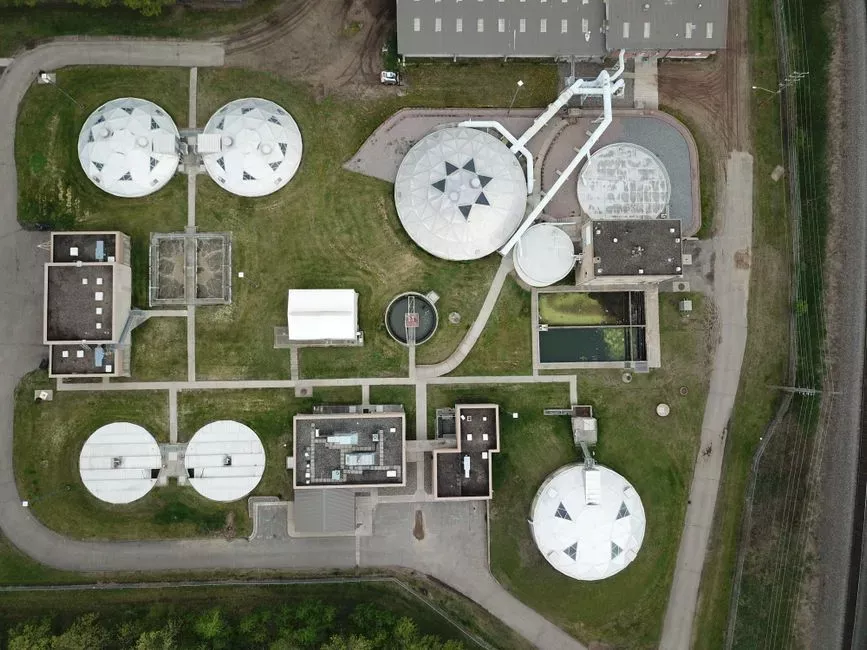
Use the table below for the head-to-head, then read the commentary for the cases where MBR or CAS still wins.
| Criterion | IFAS | MBR | Conventional Activated Sludge (CAS) |
|---|---|---|---|
| Footprint vs. CAS (same load) | ~50% aerobic volume | ~30–40% aerobic volume | 100% (baseline) |
| Effluent BOD₅ / TSS | < 20 mg/L / < 20 mg/L | < 5 mg/L / < 1 mg/L | < 30 mg/L / < 30 mg/L |
| Ammonia / TN | Consistent nitrification at 15 °C | Consistent nitrification and denitrification | Weak below 18 °C |
| Sludge yield | 20–35% lower than CAS | Similar to CAS | Baseline |
| CAPEX (retrofit) | 40–65% below greenfield BNR | Highest (membranes + building) | Mid; lowest if basin exists |
| OPEX — aeration energy | 15–25% below MBR (DataIntelo 2025) | Highest (membrane air scour) | Mid |
| Sensitivity to FOG spikes | Low — biofilm retained | High — membrane fouling | High — floc washout |
| Retrofit friendliness | Drop-in media, screens, DO probes | Major civil work | Not a retrofit driver |
| Water-reuse ready | No (needs tertiary) | Yes | No |
IFAS hits the operating point most bakery plants actually need: nitrification that holds at 15 °C, a basin footprint roughly half of CAS at the same load, and a retrofit path that costs 40–65% less than a greenfield BNR plant (per DataIntelo 2025). MBR, by contrast, produces the cleanest effluent — sub-micron TSS, water-reuse-ready — and is the right call when the plant has a reuse obligation or a very tight TN limit. The trade-off is membrane fouling during FOG or starch spikes and an aeration energy bill 15–25% higher than IFAS for the same BOD removed. For a full membrane-based train, see the integrated MBR treatment unit for reference sizing, but expect more frequent CIP and a higher membrane replacement budget than a biofilm-based train.
CAS loses on three counts that matter for a bakery: largest footprint per unit of nitrification, weakest nitrification below 18 °C, and the worst shock-load tolerance of the three options. That is the reason retrofit demand for IFAS exists in the first place — operators already own a CAS basin, they cannot expand the civil footprint, and they need to meet new nitrogen limits without building a new plant.
Retrofit Economics and 2026 Compliance Drivers
The procurement case for IFAS in 2026 is straightforward: the retrofit avoids most of the civil cost, hits the new nitrogen limits, and lands inside a compressed compliance timeline. Typical IFAS retrofits deliver 30–50% more volumetric treatment capacity in the same basin and 20–35% lower sludge yield than the CAS configuration they replace, while the capex lands 40–65% below an equivalent greenfield BNR plant (per DataIntelo 2025). The retrofit itself is a media drop-in plus an effluent screen, a DO probe calibration, and a blower upgrade if the existing units cannot hold 3–4 mg/L under the new load. The whole sequence is typically executed in months, not the years a greenfield BNR plant would require.
The 2026 timing is set by regulators, not by the equipment market. The EU's revised Urban Wastewater Treatment Directive (adopted 2024) extends coverage to food processing plants above 2,000 population equivalents and adds nutrient removal obligations that legacy secondary treatment cannot meet without a retrofit. In the U.S., the EPA's Effluent Limitation Guidelines for the meat and poultry products category are under active review and are widely expected to tighten in favor of BNR-capable systems (per DataIntelo 2025). On the equipment side, the IFAS food-industry market was valued at $2.8B in 2025 and is projected to reach $5.1B by 2034 at a 6.9% CAGR, with Asia Pacific at 36.2% and North America at 27.4% — a market signal that biofilm-BNR retrofits are the default path, not the experimental one (per DataIntelo 2025).
For operators sizing an IFAS retrofit against a greenfield BNR, the defensible memo lines are: 40–65% lower capex at the same effluent quality, 30–50% more capacity in the same basin, 20–35% less waste sludge, and 15–25% lower aeration energy than MBR for the same BOD removed. That is the procurement case in five numbers.
Frequently Asked Questions
What influent BOD can an IFAS system handle for a bakery?
An IFAS system sized for bakery effluent can treat influent BOD5 in the 1,500–4,500 mg/L range, which is the high-strength F&B proxy cited in the DataIntelo 2025 food-industry IFAS study. The biofilm carries the slower-growing nitrifiers at a lower SRT than a floc-only basin would need, which is what makes the high BOD tractable without a massive equalization volume.
Does IFAS still need a DAF upstream for bakery wastewater?
Yes — the DAF is non-optional. Even a thin FOG film on the carrier media will shut down nitrification within days by blocking oxygen transfer at the biofilm interface, and the Hazen & Sawyer IFAS pilot specifically documented debris and floatables fouling the first IFAS cell when upstream screening and FOG removal were insufficient. Enhanced DAF hitting 99% FOG and 97% TSS removal (per Ecologix) is the standard guard.
How does IFAS compare to MBR for a bakery retrofit?
IFAS wins on retrofit cost, energy, and FOG tolerance; MBR wins on effluent quality and reuse readiness. IFAS typically lands 40–65% below greenfield BNR capex and uses 15–25% less aeration energy than MBR for the same BOD removed, but MBR delivers a tighter effluent (sub-micron TSS) and is the right call when the plant has a water-reuse obligation or a very low TN limit (per DataIntelo 2025). For foam control in biofilm systems, see the foam control in IFAS systems guide.
What upstream screening is required before an IFAS basin?
Specify screens with less than 6 mm openings and eliminate any bypass of debris or scum back into the IFAS cell. The Hazen & Sawyer pilot traced floatables buildup in the first IFAS cell directly to recycled scum and screening bypass, and the same paper recommended "the smaller the better" on screen aperture. A rotary mechanical bar screen ahead of the DAF is the typical configuration.