Why Indonesia's Food Sector Needs a 2026 Wastewater Overhaul
Food and beverage manufacturing accounts for roughly 28% of Indonesia's national GDP and is the single largest industrial wastewater source by volume in KLHK inventories (BPS 2024). The 2026 enforcement environment makes treatment a permit-to-operate issue, not an ESG talking point. Permen LHK No. 5/2014 caps marine-discharge BOD at 100 mg/L, COD at 250 mg/L, TSS at 200 mg/L, oil & grease at 15 mg/L, and NH₃-N at 5 mg/L. Plants discharging to inland rivers under Pergub DKI Jakarta 122/2005 face a tighter 50 mg/L BOD and 5 mg/L oil ceiling, which conventional activated sludge routinely misses on warm, high-strength food streams.
Two structural shifts close the gap for plant managers in 2026. First, PROPER green-to-black rating audits are now linked to operational permits via the OSS-RBA licensing system, so a black rating can delay expansion approvals for new food-sector FDI. Second, the 2025 Springer bibliometric review on Indonesian wastewater biomass research confirms that pilot-scale plant data remain scarce (Springer, 2025-08) — meaning EPC buyers cannot lean on local academic datasets and must rely on vendor engineering for mass balance and sizing.
Sub-Sector Wastewater Characterisation: Palm Oil, Fish, Tofu, Seaweed, Dairy, Starch
Sub-sector influent profiles diverge by an order of magnitude, so the right train depends on which row of the table below matches your plant. Palm oil mill effluent (POME) runs 0.67 m³ per ton of fresh fruit bunch (FFB) at 60–80°C with high free fatty acids; tofu and fish plants run 5–20 m³ per ton of product with much cooler but protein- and starch-loaded streams. The high oil content of POME, fish canning, and dairy streams makes floatable separation the first unit operation; the alkaline black lye from carrageenan extraction requires acid neutralisation before any biology (per Blue Biotechnology 2024 seaweed gel review).
| Sub-sector | Flow | COD (mg/L) | TKN (mg/L) | Temperature / pH | Key constraint |
|---|---|---|---|---|---|
| Palm oil mill (POME) | 0.67 m³/t FFB | 15,000–25,000 | 700–1,200 | 60–80°C, pH 4–5 | High temp + FFA → cooling + acid cracking before biology |
| Sardine / fish canning | 5–20 m³/t product | 2,000–8,000 | 200–400 | 25–35°C, pH 6–7 | High TKN + sulfate → anoxic pre-stage protects methanogens |
| Tofu / tempe | 10–20 m³/t product | 4,000–8,000 | 200–350 | 30–45°C, pH 4–5 | Acid whey, fine curd solids → DAF + equalisation |
| Carrageenan / seaweed | 15–30 m³/t gel | 8,000–15,000 | 100–300 | 60–80°C, pH 11–13 | Alkaline black lye → H₂SO₄ neutralisation, high-rate anaerobic |
| Dairy | 2–5 m³/t milk | 1,500–3,000 | 80–150 | 20–30°C, pH 6–8 | Lactose-driven BOD, cleaning CIP surges |
| Tapioca / cassava starch | 10–20 m³/t starch | 5,000–10,000 | 150–300 | 25–40°C, pH 4–6 | High suspended starch → DAF + acid-phase |
Springer (2021) frames the broader point: food-processing streams are rich in BOD, suspended solids, and oily substances, and biological treatment alone is size-limited under tightening discharge standards — resource recovery (biogas, reuse water) is the 2024–2026 direction. For a deeper fish-stream drill-down, see the fish processing wastewater treatment guide.
Regulatory Framework: Permen LHK 5/2014, Pergub DKI 122/2005, and the 2026 PROPER Scorecard
Designers must hit the parameter on the discharge pipe, not the parameter on a slide. The table below consolidates the 11 parameters that PROPER auditors and Dinas Lingkungan Hidup field teams will sample. Marine outfalls carry the 15 mg/L oil ceiling; inland river and land-application outlets drop to 5 mg/L oil and 50 mg/L BOD under Pergub DKI 122/2005.
| Parameter | Permen LHK 5/2014 (marine) | Pergub DKI 122/2005 (inland river) | Note for 2026 |
|---|---|---|---|
| pH | 6.0–9.0 | 6.0–9.0 | Equalisation + CO₂ stripping for tofu |
| BOD₅ | 100 mg/L | 50 mg/L | MBR typically drives to <20 mg/L |
| COD | 250 mg/L | 100 mg/L | RO polish if boiler-feed reuse targeted |
| TSS | 200 mg/L | 100 mg/L | MBR effluent routinely <5 mg/L |
| Oil & grease | 15 mg/L | 5 mg/L | DAF + coalescer before biology |
| NH₃-N | 5 mg/L | 5 mg/L | Nitrification stage required for fish/dairy |
| Total N | 30 mg/L | 30 mg/L | Anoxic zone in MBR tank |
| Total P | 10 mg/L | 10 mg/L | Coagulant dosing common for compliance |
| Sulfide | 1 mg/L | 1 mg/L | Ferric chloride dosing in anaerobic stage |
| Free chlorine | 1 mg/L | 1 mg/L | Dechlorination before discharge if ClO₂ used |
| Flow reporting threshold | 50 m³/day | 50 m³/day | Online flowmeter mandatory above threshold |
Reuse for irrigation or boiler feed falls under a different envelope — designers should cross-check against the reclaimed water irrigation standards before sizing RO. For plants near the Malaysia export corridor, the 2026 ammonia-nitrogen compliance guide for Malaysia is a useful sanity check on regional limits.
The 2026 Reference Process Train: DAF → Anaerobic (UASB/IC) → MBR
The dominant engineered train for Indonesian food IPAL in 2026 is DAF → equalisation → high-rate anaerobic (UASB or IC) → MBR, with optional RO polishing for reuse. Each step has a defensible sizing basis that finance will accept.
- DAF for FOG and floatables. A DAF system for FOG and suspended solids removal removes 90–95% of oil and grease at 4–25 m³/h per m² of flotation area. Putting DAF first prevents scum fouling of the MBR membrane and clogging of the anaerobic distributor. OPEX benchmarks are covered in the DAF system maintenance OPEX breakdown.
- Equalisation + pH correction. 8–24 h HRT buffer; sodium hydroxide for acidic tofu and fish streams, sulfuric acid for alkaline seaweed lye (per Blue Biotechnology 2024: alkali from gel extraction carries dissolved polysaccharides and proteins).
- High-rate anaerobic (UASB or IC). UASB handles 6–12 kg COD/m³·day; IC reactors reach 20–35 kg COD/m³·day. Methane yield is 0.30–0.35 m³/kg COD at 35°C. Tropical plants should plan a 2–4 month commissioning window for sludge blanket acclimation.
- MBR polishing. An integrated MBR system using a PVDF flat-sheet MBR module at 0.1 µm pore size, MLSS 8,000–12,000 mg/L, and flux 15–25 LMH delivers effluent COD <50 mg/L and TSS <5 mg/L — well inside the 2026 limits.
- Optional RO for reuse. An industrial RO system for reuse water at 95% recovery (SDI <3 via multi-media prefilter) supplies CIP and boiler-feed quality, displacing 40–60% of freshwater intake.
| Stage | Influent (mg/L) | Removal | Effluent (mg/L) | Load (kg/d at 500 m³/d) |
|---|---|---|---|---|
| Raw POME | COD 20,000 | — | 20,000 | 10,000 |
| After DAF | 14,000 | 30% | 14,000 | 7,000 |
| After IC anaerobic | 2,100 | 85% | 2,100 | 1,050 |
| After MBR | <50 | ~98% | <50 | <25 |
| Methane produced | — | — | — | ~2,400 m³/d at 35°C |
The same logic applies to a COD removal technology comparison — see the 2026 COD removal technology guide for cross-stream benchmarking, and the MBR cost breakdown for meat processing for an adjacent budget case.
Sludge and By-Product Handling in Indonesian Conditions
Most food-plant IPALs under-size the dewatering stage and then drown in wet cake during the rainy season. Anaerobic + aerobic sludge yield is 0.08–0.15 kg dry solids per kg COD removed; DAF scum alone contributes 0.20–0.30 kg DS/m³. A plate-and-frame filter press for sludge dewatering is the workhorse in tropical humidity, reaching 22–25% DS cake solids with polyacrylamide dosing at 4–8 g/kg DS.
A lamella clarifier as a low-energy pre-thickener is worth specifying for waste-activated sludge before the press, particularly on sites with limited footprint. On the biogas side, 1 m³ CH₄ = 9.97 kWh, so a 500 m³/day POME plant producing 2,400 m³ CH₄/day can run a 600 kW CHP engine or substitute 24 tonnes/day of boiler fuel — typical simple payback under 3 years when offset against diesel purchases.
2026 CAPEX and OPEX Benchmarks for Indonesian Food-Plant IPAL
Benchmarks below are turnkey including civil works, equipment, piping, instrumentation, and commissioning — land excluded. Currency conversions use 1 USD ≈ IDR 16,100 (Q1 2026 reference).
| Capacity band | CAPEX (USD per m³/day) | CAPEX (IDR per m³/day) | Typical fit |
|---|---|---|---|
| 50–200 m³/day | 250–500 | 4.0–8.0 million | Tofu, tempe, small fish, dairy |
| 200–1,000 m³/day | 150–350 | 2.4–5.6 million | Mid-size cannery, dairy, seaweed |
| >1,000 m³/day | 120–280 | 1.9–4.5 million | Palm oil mills, large starch |
OPEX drivers and water-reuse credit (typical 2026 DKI industrial freshwater tariff IDR 8,000–12,000/m³):
| Cost line | IDR/m³ treated | USD/m³ treated | Driver |
|---|---|---|---|
| Electricity | 1,200–2,500 | 0.075–0.155 | Blower + MBR permeate pump + recirculation |
| Chemicals (coagulant, NaOH, H₂SO₄, polyacrylamide) | 350–800 | 0.022–0.050 | pH correction + DAF + sludge conditioning |
| Sludge disposal | 150–400 | 0.010–0.025 | Landfill or co-composting |
| Labour | 200–600 | 0.012–0.038 | 2–4 operators per shift |
| Freshwater credit (reuse offset) | 8,000–12,000 avoided | 0.50–0.75 avoided | Per m³ of reused permeate |
Scenario comparison over 10 years for a 500 m³/day plant: aerated-lagoon discharge-only baseline ≈ IDR 95 billion LCC; anaerobic + MBR with discharge ≈ IDR 72 billion; anaerobic + MBR + RO with 60% reuse ≈ IDR 64 billion — driven by the freshwater credit at 60% reuse and biogas offset.
Procurement Checklist: Selecting a Chinese or Asian EPC for the Indonesian Market
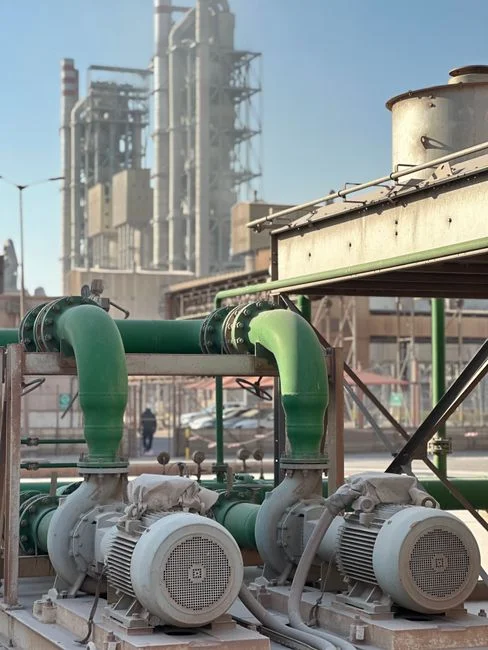
Indonesian food plants fail commissioning more often from documentation and climate-fit gaps than from bad equipment. Score each vendor against the criteria below before signing the PO.
| Criterion | Weight | What to verify |
|---|---|---|
| Bahasa-Indonesia commissioning team | High | CVs of lead commissioning engineer; HSE induction in Bahasa |
| Shipped ASEAN references with on-site photos and client contacts | High | At least 3 food-sector IPAL running >12 months |
| Containerised / skid-mounted options for Sumatra and Kalimantan sites | Medium | Reduces civil cost where soil is peat or high water table |
| Local agent or representative with spare-parts warehouse in Jakarta or Surabaya | High | Lead time on replacement membranes <8 weeks |
| Compliance documentation in Bahasa for PROPER + OSS-RBA | High | UKL-UPL or AMDAL support, including flowmeter calibration certificates |
| IP55 tropicalised electrical panels | Medium | Anti-condensation heaters, stainless enclosures, surge protection |
Standard scope items that should land in the deliverables list: a containerised MBR skid with automatic chemical dosing, a on-site chlorine dioxide generator for treated-effluent polishing before reuse, and a multi-media filter upstream of RO to protect membranes from SDI spikes.
Decision Framework: Which Treatment Train Fits Your Sub-Sector and Budget?
Match your influent to one of the branches below; each lands on a defensible 2026 equipment package.
- High oil + high temperature (palm oil, rendering): DAF + cooling tower + IC anaerobic + MBR. Methane recovery covers ~30–40% of plant electricity.
- High protein + high TKN (fish canning, dairy): DAF + anoxic pre-stage + UASB + MBR with extended aeration for nitrification.
- High starch / COD (tofu, tempe, cassava): DAF + acid-phase reactor + UASB + MBR.
- Alkaline lye (seaweed, carrageenan): H₂SO₄ neutralisation + UASB + MBR; consider RO if NaCl-rich waste is in the mix.
- Low volume + discharge (small tofu, tempe <50 m³/day): A containerised package sewage treatment plant with built-in A/O and chlorination.
- Rural / edge sites with no sewer: An integrated water purification system for combined potable reuse and treated-effluent discharge.
Frequently Asked Questions
What is the BOD and COD discharge limit for food processing wastewater in Indonesia in 2026?
Marine discharge follows Permen LHK No. 5/2014: BOD 100 mg/L, COD 250 mg/L, TSS 200 mg/L, oil & grease 15 mg/L, NH₃-N 5 mg/L. Inland river discharge under Pergub DKI Jakarta 122/2005 tightens to BOD 50 mg/L, COD 100 mg/L, and oil & grease 5 mg/L. Plants near the Java coast discharging offshore should design to the marine ceiling; Sumatra and Kalimantan riverine plants should design to the inland ceiling.
How much does a 500 m³/day food wastewater treatment plant cost in Indonesia?
Turnkey CAPEX in 2026 runs USD 150,000–175,000 (IDR 2.4–2.8 billion) for a DAF + UASB + MBR train on a 500 m³/day plant, excluding land. Adding RO polishing for 60% reuse adds another USD 80,000–120,000. OPEX is typically IDR 1,900–4,300 per m³ (USD 0.12–0.27) depending on the chemical regime and biogas utilisation.
Is MBR necessary for food wastewater, or will activated sludge suffice?
Conventional activated sludge can meet Permen LHK 5/2014 marine limits on low-strength tofu and dairy streams with stable operation, but it routinely misses the 50 mg/L BOD / 5 mg/L oil ceiling under Pergub DKI on POME, fish, and starch streams. MBR is the lowest-energy way to guarantee compliance on high-strength streams and unlocks the freshwater credit from reuse.
What is the best treatment for palm oil mill effluent (POME)?
The 2026 reference train is cooling → DAF → IC anaerobic reactor (20–35 kg COD/m³·day) → MBR polishing, with biogas recovery to a CHP engine. IC outperforms UASB on POME because of the high temperature (55–60°C) and high organic loading.
Can treated food wastewater be reused for irrigation or boiler feed?
Yes, but the envelope changes. Reuse for irrigation must meet reclaimed-water quality standards, not Permen LHK discharge limits — cross-check against the 2026 reclaimed water standards. Boiler feed or CIP reuse requires RO polish to conductivity <50 µS/cm and SDI <3, which an industrial RO system upstream of the storage tank can deliver.