Why Reclaimed Water Standards Are Stricter Than Ordinary Irrigation Limits
Reclaimed water for irrigation in 2026 is regulated as a controlled product, not a free resource, and that distinction drives a testing burden 5–10× heavier than the one applied to surface-water irrigation sources. Parsons (2010, cited 120×) documented that reclaimed water undergoes more monitoring than most irrigation waters because regulators track fecal coliform, E. coli, trace metals, endocrine-disruptor compounds, and residual chlorine on every batch — parameters that a river diversion or groundwater well never sees. The same paper notes that public-health agencies treat reclaimed water as a potential drinking-water exposure route when spray drift reaches schoolyards or residential lots, which is why the limits read more like drinking-water standards than agronomic guidelines.
Every major 2026 regulator uses a three-tier reuse framework: unrestricted urban irrigation → food-crop unrestricted (eaten raw) → food-crop restricted (commercially processed). The Virginia 9VAC25-740-90 "Level 1 / Level 2" structure is the cleanest written example, but the same logic appears in EU 2020/741 reclaimed water quality classes A/B/C/D and in California Title 22. The public-health driver is quantified: WHO attributes 829,000 deaths annually to diarrhea linked to unsafe water, sanitation, and hygiene (per WHO 2006 Sanitation Guidelines Vol. 2), and the reclaimed water pathogen envelope is calibrated against that epidemiological risk.
Five authoritative sources anchor this article and are cited inline throughout: EPA 2012 Guidelines for Water Reuse (updated 2018 references intact), California Title 22 (last revised 2018, still the de facto North American benchmark), EU Regulation 2020/741 minimum reclaimed water requirements, WHO 2006 Guidelines for Safe Recreational Water Environments Vol. 2, and FAO Irrigation & Drainage Paper 29 (Ayers & Westcot 1985). Engineers defending a design to a regulator in 2026 can cite at least one of these in every line of the compliance argument.
Tier 1 — Unrestricted Irrigation: Food Crops Eaten Raw, Public-Access Landscapes
Tier 1 is the worst-case envelope: any reclaimed water scheme that sprays onto lettuce, carrots, or schoolyard turf must meet these numbers. The microbial target is non-detectable fecal coliform in the 7-day geometric mean, with some jurisdictions (notably the EU 2020/741 Annex I class A) accepting <14 CFU/100 mL as the operational ceiling. BOD5, TSS, and turbidity are set tight enough that conventional secondary effluent cannot meet them without membrane separation plus disinfection.
| Parameter | Tier 1 limit | Source |
|---|---|---|
| BOD5 | ≤10 mg/L | EPA 2012 Guidelines for Water Reuse Table 4-1; California Title 22 |
| TSS | ≤5 mg/L | California Title 22 (2018 revision) |
| Turbidity | ≤2 NTU (24-h mean) | EPA 2012 Table 4-1; EU 2020/741 Annex I |
| Fecal coliform | Non-detectable (7-day geo. mean); <14 CFU/100 mL where allowed | EU 2020/741 class A; California Title 22 |
| E. coli | ≤10 CFU/100 mL (95th percentile) | EU 2020/741 Annex I |
| Total nitrogen | ≤10 mg/L | EPA 2012 Table 4-1 (interpretive) |
| pH | 6.5–8.5 | EPA 2012; California Title 22 |
Title 22 was updated in 2018 and the 2018 revision remains the operating benchmark in California and most of the U.S. Southwest; engineers outside California should still cite it because the numerical envelope has been adopted wholesale by Arizona, Nevada, and the Texas Water Development Board. The "unrestricted access" carve-out used by Virginia 9VAC25-740-90 is the more subtle point: golf courses, cemeteries, public parks, school yards, and athletic fields all fall under Tier 1 even when no food crop is involved, because the public has direct contact with the spray. The designer who tries to relax to Tier 2 because the end use is "just turf" will lose the argument with the regulator.
Tier 2 — Restricted Irrigation: Commercially Processed Food Crops and Non-Food Crops
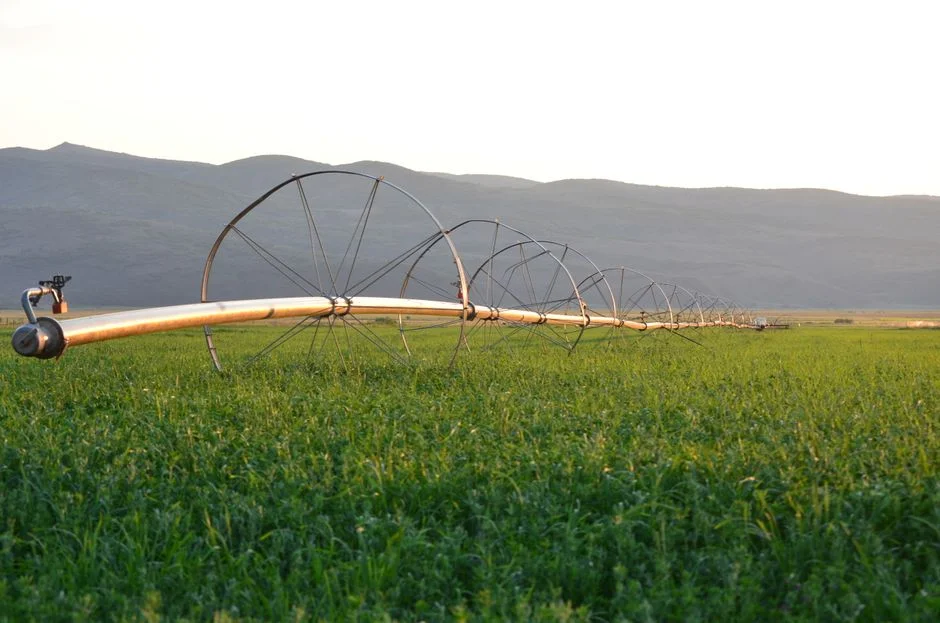
Tier 2 is where the design can relax, and the savings are real. Pathogen limits are roughly 10× more permissive than Tier 1: fecal coliform ≤200 CFU/100 mL versus non-detectable, turbidity ≤10 NTU versus ≤2 NTU. That relaxation typically lets the operator drop the chlorine dioxide residual target from 1.0–2.0 mg/L down to 0.5–1.0 mg/L, which translates into a 30–50% reduction in sodium chlorite consumables cost at the OPEX line.
| Parameter | Tier 2 limit | Source |
|---|---|---|
| BOD5 | ≤30 mg/L | EPA 2012 Table 4-2; California Title 22 |
| TSS | ≤30 mg/L | EPA 2012 Table 4-2; Virginia 9VAC25-740-90 Level 2 |
| Turbidity | ≤10 NTU | EU 2020/741 class B; EPA 2012 |
| Fecal coliform | ≤200 CFU/100 mL (7-day geo. mean) | EU 2020/741 class B; Virginia Level 2 |
| Total nitrogen | ≤15 mg/L | EPA 2012 Table 4-2 |
| pH | 6.5–8.5 | EPA 2012; California Title 22 |
Virginia 9VAC25-740-90 Level 2 is the cleanest written reference: it explicitly covers irrigation for food crops commercially processed, fodder, pasture for non-dairy livestock, and restricted-access landscape irrigation (golf courses irrigated at night with no public contact). EU 2020/741 class B maps onto the same envelope for food-crop processed applications. EPA 2012 Table 4-2 covers the landscape irrigation with controlled access case. Note that restricted-access landscape irrigation and food-crop restricted access both fall in Tier 2, but they have different monitoring frequencies: food crops typically require daily composite sampling, while restricted-access turf can move to weekly or sentinel-well sampling once baseline data is established. The MBR vs MBBR engineering comparison at /blog/5303-mbr-vs-mbbr-2026-engineering-comparison-for-industrial-plants.html is worth reading alongside this section if the design is still choosing between the two bioreactor architectures for a Tier 2 site.
FAO and WHO Agronomic Limits: Salinity, SAR, Trace Metals, and Long-Term Soil Loading
Tier 1 and Tier 2 microbial/BOD limits do not cover the slow-acting agronomic parameters that determine whether the field is still productive after 20 years of irrigation. Salinity build-up, sodium adsorption ratio (SAR), and trace-metal accumulation in the root zone are the constraints that push designers toward RO polishing even when the MBR + ClO2 train already meets every microbial number. Ayers & Westcot's 1985 FAO Irrigation & Drainage Paper 29 remains the operating reference and is still cited unchanged in 2026 EU and U.S. design manuals because the soil-chemistry framework has not been superseded.
| Parameter | No restriction | Slight–moderate restriction | Severe restriction | Source |
|---|---|---|---|---|
| EC (salinity) | <0.7 dS/m | 0.7–3.0 dS/m | >3.0 dS/m | FAO Paper 29 (Ayers & Westcot 1985) |
| SAR | <3 | 3–9 | >9 | FAO Paper 29 |
| Chloride | <4 meq/L | 4–10 meq/L | >10 meq/L | FAO Paper 29 |
| Boron | <0.7 mg/L | 0.7–3.0 mg/L | >3.0 mg/L | FAO Paper 29 |
| Cadmium | ≤0.01 mg/L | — | — | WHO drinking-water guidelines (lower of WHO/FAO) |
| Lead | ≤5 mg/L (agronomic); 0.01 mg/L (WHO DW) | — | — | WHO 2006 / FAO 29 |
| Chromium (total) | ≤0.1 mg/L | — | — | WHO 2006 |
For long-term irrigation the controlling number is the lower of the WHO drinking-water guideline and the FAO agronomic limit, because reclaimed water applied over decades accumulates in the root zone faster than rainwater leaches it. The 0.01 mg/L cadmium and 0.1 mg/L chromium numbers in particular are the ones that force an RO polishing step: an MBR + ClO2 train has no effect on dissolved cadmium or chromium, and no conventional media filter will touch them either. Salinity and chloride follow the same logic — once the source water EC rises above 0.7 dS/m or chloride climbs past 4 meq/L, the only unit operation in the standard reuse train that will pull them back down is an industrial RO polishing skid at 95% recovery. Engineers specifying an Ohio or Great Lakes reuse scheme — where source-water TDS often sits at 500–800 mg/L — should plan the RO step into the base case, not as a future upgrade; the Ohio industrial wastewater treatment compliance guide at /blog/5309-industrial-wastewater-treatment-in-ohio-usa-2026-compliance-equipment-guide.html walks through one such 2026 installation.
Treatment Train Design: How Each Unit Operation Earns Its Place in the Reuse Scheme
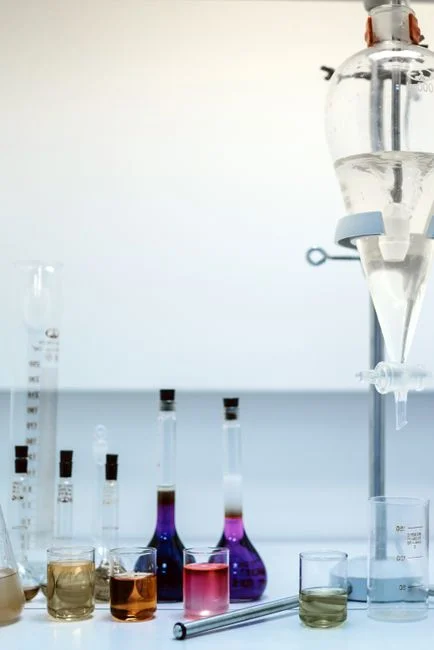
Start from a typical secondary effluent baseline after conventional activated sludge: BOD5 25 mg/L, TSS 30 mg/L, turbidity 15 NTU, fecal coliform 105 CFU/100 mL, total nitrogen 20 mg/L. None of those numbers meet Tier 1. The treatment train that closes the gap is screening → (optional DAF) → MBR → ClO2 → (optional MMF) → (optional RO) → reuse storage. Each unit operation is justified by a specific parameter it moves.
| Unit operation | Parameter it controls | Typical performance | Design note |
|---|---|---|---|
| MBR (PVDF 0.1 µm) | BOD5, TSS, turbidity, TN (partial) | BOD5 <5 mg/L, TSS <1 mg/L, turbidity <0.5 NTU | Footprint ~60% smaller than CAS + clarifier at equivalent loading (HydropureWater field data, 2026) |
| ClO2 disinfection | Fecal coliform, E. coli, viruses | 4-log reduction at 1–2 mg/L, 30-min CT | CT advantage over free chlorine at equivalent dose; unaffected by ammonia |
| DAF pre-treatment | FOG, colloidal TSS, oil & grease | 80–90% FOG removal, 50–70% TSS reduction | Warranted when source is industrial wastewater or food-processing effluent |
| Multi-media filter | SDI protection for RO | SDI <3 downstream | Anticipate 5–15% reject flow; backwash every 8–24 h |
| RO polishing | Salinity, chloride, SAR, Cd, Pb, Cr, B | 95–99% ion rejection; 95% recovery design point (2026 standard) | Required when source TDS >500 mg/L or any FAO heavy-metal limit is at risk |
The MBR is the workhorse. A well-operated MBR membrane bioreactor system with PVDF 0.1 µm flat-sheet or hollow-fiber membranes drops BOD5 to under 5 mg/L and TSS to under 1 mg/L in a single step, while reducing the aeration-tank + clarifier footprint by roughly 60% compared with conventional activated sludge (HydropureWater field data, 2026). An on-site chlorine dioxide generator downstream at 1–2 mg/L with a 30-minute contact time delivers 4-log fecal coliform reduction; ClO2 outperforms free chlorine at the same dose because it is unaffected by ammonia nitrogen and is more virucidal per unit CT. When the source is industrial wastewater — particularly food processing, dairy, or oil & gas — a DAF pre-treatment system upstream of the MBR removes FOG and colloidal matter that would otherwise foul the membranes within weeks. A multi-media filter ahead of the RO drops the Silt Density Index below 3, which is the operating ceiling for most brackish-water RO elements. Maintenance budgeting for this train is covered in the predictive maintenance cost guide for wastewater plants — ClO2 generator cell replacement and MBR chemical cleaning both belong on the calendar.
Frequently Asked Questions
What are the strictest reclaimed water quality standards for irrigation in 2026? Tier 1 (unrestricted, food crops eaten raw) requires BOD5 ≤10 mg/L, TSS ≤5 mg/L, turbidity ≤2 NTU, and fecal coliform non-detectable per EPA 2012 Table 4-1 and California Title 22, with EU 2020/741 Annex I class A accepting <14 CFU/100 mL E. coli as the operational ceiling.
Which EU 2020/741 class applies to commercially processed food crops? Class B is the minimum reclaimed water quality for food crops commercially processed, with fecal coliform ≤200 CFU/100 mL and BOD5 ≤25 mg/L per Annex I; this maps onto Virginia 9VAC25-740-90 Level 2 and EPA 2012 Table 4-2.
Can MBR plus chlorine disinfection meet Tier 1 without RO? Yes for BOD5, TSS, turbidity, and fecal coliform — an MBR + ClO2 train reliably delivers BOD5 <5 mg/L, TSS <1 mg/L, turbidity <0.5 NTU, and 4-log coliform reduction. No for FAO agronomic parameters: salinity, SAR, chloride, boron, cadmium, lead, and chromium require RO polishing once the source water approaches the FAO Paper 29 long-term thresholds.
What is the standard 2026 RO recovery rate for a reuse polishing train? 95% recovery is the operating design point for brackish-water RO in irrigation reuse schemes, with 99% ion rejection for monovalent species and lower rejection for boron and silica (per standard 2026 RO design manuals).
How does ClO2 dose change between Tier 1 and Tier 2? Tier 1 typically requires 1.0–2.0 mg/L ClO2 residual with 30-minute contact time for 4-log fecal coliform reduction; Tier 2 can relax to 0.5–1.0 mg/L, cutting sodium chlorite consumables cost by 30–50% on the OPEX line.