
Why Tarkio-Area Textile Plants Face a Different Compliance Problem
Textile and dyeing plants near Tarkio, U.S. typically discharge to a small municipal POTW and must meet local pretreatment limits — commonly COD ≤200 mg/L, BOD₅ ≤50 mg/L, TSS ≤100 mg/L, sulfide ≤1.0 mg/L, and color ≤80× dilution for indirect discharge. A typical train — bar screening, equalization, coagulation/DAF, biological treatment, and MBR polishing — removes >90% of COD and 100% of TSS, and adding nanofiltration or RO recovers dye and salt for reuse.
Tarkio straddles the Missouri–Iowa border, and the mills in that region send wastewater to municipal POTWs sized for domestic flow plus a handful of light-industrial users. Those POTWs do not have the biological or hydraulic headroom to absorb reactive-dye color, high-COD dye-bath dumps, or salt spikes, so the binding compliance document is not the federal categorical standard under 40 CFR Part 410 (Textile Mills Point Source Category) — it is the local limits the POTW negotiates with each significant industrial user under 40 CFR Part 403. Categorical standards are EPA-set, industry-wide effluent limitations; local limits are POTW-specific numerical caps derived from pass-through and interference analyses designed to protect the receiving POTW's sludge, biomass, and effluent quality. At the flow rates typical of a Tarkio-area mill (under ~500 m³/day), local limits almost always govern because the POTW can demonstrate that even small industrial loadings cause pass-through or interference at the headworks.
The volume driver is the dyeing step itself. Per the US EPA, an average of 40 L of water is required to dye 1 kg of cloth, and roughly 25% of a mill's total water consumption occurs in dyeing and printing (InTechOpen). Reactive dyes, widely used on cotton, have the poorest fiber-fixation efficiency of the major dye classes — meaning most of the unfixed reactive dye, plus the salt and auxiliaries used in the bath, ends up in the wastewater stream the POTW is trying to reject.
The Pretreatment Numbers a Tarkio Mill Will Be Held To
Local limits are written in numbers, so the first engineering step is to put the right numbers on the page. The InTechOpen Table 3 limit set, drawn from a representative national textile regulation, is the working reference. Indirect discharge is the route a Tarkio mill will almost always use.
| Parameter | Indirect discharge (to POTW) | Direct discharge (to surface water) |
|---|---|---|
| pH | 6–9 | 6–9 |
| COD | 200 mg/L | 100 mg/L |
| BOD₅ | 50 mg/L | 25 mg/L |
| TSS | 100 mg/L | 60 mg/L |
| Color (dilution ratio) | 80× | 70× |
| Ammonia-N | 20 mg/L | 12 mg/L |
| Sulfide | 1.0 mg/L | 1.0 mg/L |
| Total Cr | 0.5 mg/L | 0.5 mg/L |
| AOX | 15 mg/L | 15 mg/L |
| Total N | 35 mg/L (50 mg/L batik) | 20 mg/L (30 mg/L batik) |
| Total P | 1.5 mg/L | 1.0 mg/L |
| Chlorine dioxide | 0.5 mg/L | 0.5 mg/L |
| Anilines | 1.0 mg/L | 1.0 mg/L |
Two operational caveats matter. First, local POTWs frequently tighten these values and add metals, temperature, and instantaneous-flow caps, so the table is the floor, not the ceiling — the mill's actual permit governs. Second, the EPA Textile Mills Effluent Guidelines at 40 CFR Part 410 remain the federal baseline that shapes what local limits look like, even when the permit is written under 40 CFR Part 403 (per EPA Textile Mills Effluent Guidelines).
What Dyeing Wastewater Actually Looks Like at the Inlet
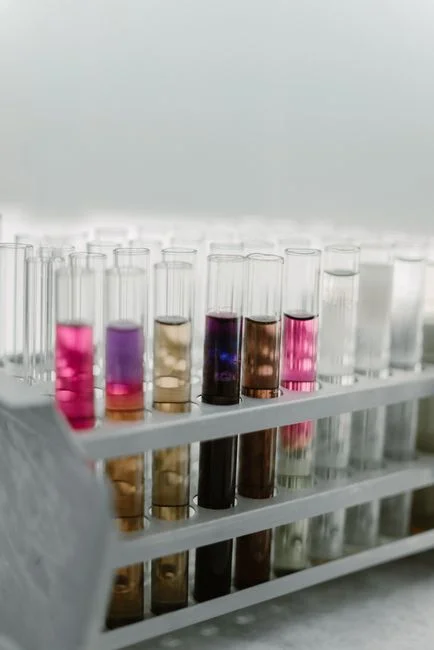
All removal-percentage claims are only meaningful when the reader knows what is being removed. The InTechOpen real-wastewater characterization is the worked example used throughout this article: COD 3,094 mg/L, conductivity 5,370 µS/cm, pH 9.0, suspended solids 33 mg/L, color 1.47 absorbance units at 530 nm, and a BOD₅/COD ratio of 0.25 (InTechOpen).
Several properties of that profile drive equipment selection. The BOD₅/COD of 0.25 signals low biodegradability — a large fraction of the COD is non-biodegradable color bodies, dye auxiliaries, and surfactants, so biological treatment alone is structurally insufficient. The pH of 9.0 sits outside the 6–9 discharge window and will also inactivate unacclimated biomass, so pH correction is required upstream of any biological stage. Conductivity of 5,370 µS/cm confirms that salt — typically NaCl or Na₂SO₄ from reactive-dye baths — is part of the loading, and any salt-recovery or zero-liquid-discharge (ZLD) decision must account for that. To size the daily load: at 40 L/kg (US EPA) and an 8,000 kg/day mill, process wastewater is roughly 1.6 million L/day (InTechOpen). A 5,000 kg/day mill — common in the Midwestern cut-and-sew and dye-house segment — produces on the order of 200 m³/day.
The Five-Stage Treatment Train Tarkio Mills Use to Hit POTW Limits
The treatment train for a Tarkio-area mill runs in five stages, each targeting a specific fraction of the InTechOpen influent profile. The same logic applies whether the mill is retrofitting an existing building or designing a new line.
- Bar screening. A rotary bar screen for fiber and rag removal takes out rags, fibers, and lint before they enter equalization. Without it, downstream pumps rag up and DAF orifice plates clog.
- Equalization and pH correction. A 24-hour EQ basin dampens the cyclical, high-pH shocks from dye-bath dumps. Automatic coagulant and pH dosing keeps the mixed stream in the 6–9 range required for both discharge and biological activity.
- Coagulation/DAF. Coagulant + flocculant destabilizes colloidal dyes and suspended solids; the DAF system for textile wastewater (micro-bubble flotation, 4–300 m³/h) removes 80–95% TSS, 50–80% color, and a meaningful fraction of COD before the biological stage.
- Biological treatment (activated sludge, SBR, or MBR). With a feed BOD₅/COD of 0.25, biology performs partial work — 60–80% BOD₅ reduction is realistic. An MBR integrates the membrane with the bioreactor, lifting effluent quality close to reuse grade and avoiding a secondary clarifier.
- Polishing — optional NF or RO. For mills that need to drop color below 80× dilution consistently, recover salt for reuse, or hit direct-discharge numbers. VSEP-style vibratory RO can deliver >98% dye rejection (InTechOpen, vsep.com).
Putting numbers on the 90% removal target: starting from the InTechOpen influent of 3,094 mg/L COD, the indirect-discharge target of 200 mg/L requires a 93.5% overall reduction; the direct-discharge target of 100 mg/L requires 96.8%. That arithmetic is the binding constraint on the train.
Matching Each Treatment Stage to the Pollutants It Removes
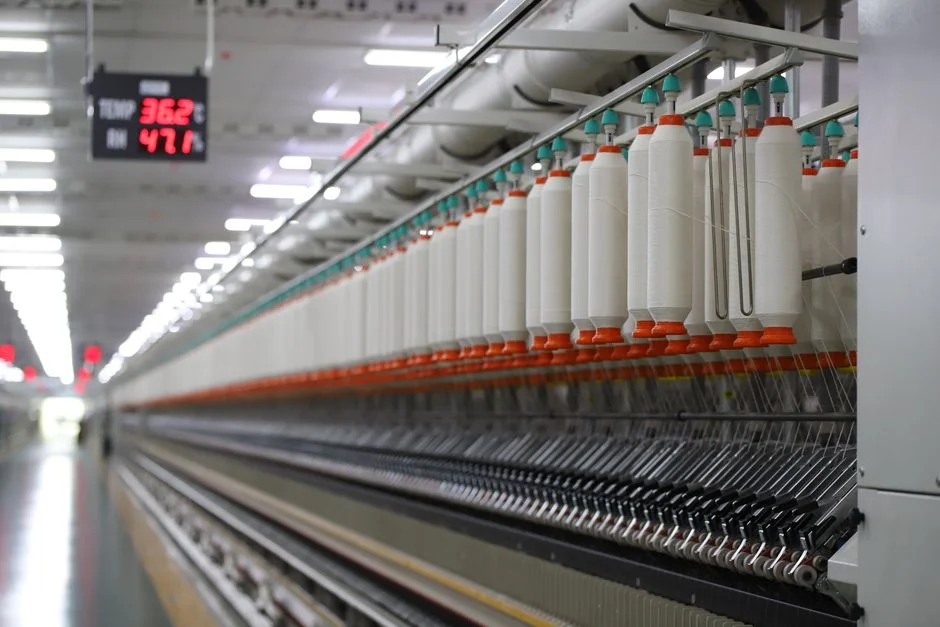
Compliance gaps are specific, so the equipment-priority list should be specific too. The table below maps each stage to the parameter it actually moves, with sources.
| Stage | Primary removals | Notes / source |
|---|---|---|
| Bar screen | Rags, fibers, lint, large debris | Protects downstream pumps and DAF orifices |
| Equalization + pH | Flow buffering, pH to 6–9 | Required upstream of biology and discharge |
| Coagulation/DAF | TSS 80–95%, color 50–80%, partial COD | Co-precipitation at pH 8: 99% color, 85–90% COD on 100–1,000 mg/L azo dye (InTechOpen) |
| Biological (AS/SBR) | BOD₅ 60–80%, partial NH₃-N | Low feed BOD₅/COD (0.25) limits COD removal |
| MBR | Residual COD, SS, some color; effluent to near-reuse | Higher MLSS, smaller footprint, no clarifier (per MBR system for textile effluent polishing) |
| NF / RO | Color 100%, COD 98%, BOD₅ 96%, SS 100% (InTechOpen) | Enables salt/dye recovery; >98% dye rejection per vsep.com |
Two practical flags. First, sulfide (1.0 mg/L cap) is a side-stream issue from sulfur dyes and is best oxidized at source — pushing it into the main biological tank destabilizes nitrification. Second, the >90% COD/BOD/TSS removal the InTechOpen limits require cannot be hit by DAF alone; it needs DAF plus biology, with MBR or RO as the polishing step that closes the gap.
Choosing Between DAF, MBR, and RO for a Tarkio Mill
The right configuration is set by two questions: where the mill discharges, and whether the mill wants reuse water. The MBR membrane bioreactor step is the decision pivot.
- DAF only. Cheapest. Fits a mill that only needs to knock down TSS and color before sending to a POTW comfortable with residual COD. Works for the loosest indirect permits and very small flows, but leaves the mill exposed if the POTW tightens its local-limits worksheet.
- DAF + MBR. The default for most Tarkio-area mills. Hits COD ≤200 mg/L, BOD₅ ≤50 mg/L, TSS effectively zero, and produces a permeate suitable for rinse-water reuse. Packaged/skid-mounted MBR systems (10–2,000 m³/day) cover the typical small-Midwestern flow envelope.
- DAF + MBR + RO (or NF). Required for direct discharge to surface water (COD 100, BOD₅ 25, TSS 60, color 70×) and for any mill targeting ZLD, salt recovery, or dye reuse. Recovery rates up to 95% are feasible; a RO water purification system sized for the MBR permeate is the standard polishing step.
For Tarkio-area flows under ~500 m³/day, indirect discharge with DAF + MBR is the configuration that best balances CapEx against the risk of local-limits tightening. Direct discharge and ZLD only pencil out when the mill has a clear salt, dye, or water-reuse value stream to recover the membrane cost.
Sludge, Chemical Use, and the Hidden Operating Costs
Discharge numbers get the attention, but OPEX is where small mills get hit. DAF and chemical coagulation generate a colored, low-solids sludge that has to be dewatered; a plate and frame filter press for textile sludge (1–500 m²) is the standard fit for small mills. Automatic chemical dosing — coagulant, flocculant, pH adjuster — is the largest variable OPEX after labor, and PLC-controlled skid units materially reduce overdosing relative to manual dosing. MBR waste-activated sludge is more concentrated than conventional activated sludge, which reduces dewatering volume but raises polymer demand. A ZLD or salt-recovery loop adds evaporator/crystallizer OPEX that, for most Tarkio-area flows, pushes the math back toward indirect discharge as the economical choice.
2026 Watch Items: PFAS, AOX, and Tightening Local Limits
Three trends are most likely to hit small Midwestern textile mills in the next 24 months. AOX is already capped at 15 mg/L in the InTechOpen limits and is appearing on more POTW local-limit worksheets in 2026; mills that have not measured AOX should start. PFAS from dye auxiliaries and finishing agents is the next categorical-review target, and any mill that installs RO today is structurally ahead of a future PFAS numeric limit. Smaller POTWs are moving away from narrative "no interference" clauses and imposing numeric caps on color and salinity — which means the design target for new builds should be color and salt removal up front, not as a retrofit. The EPA Textile Mills Effluent Guidelines remain the federal baseline (per EPA), but enforcement is happening through 40 CFR Part 403 local limits, and that is where capital planning should be focused.
Frequently Asked Questions
What COD level does a Tarkio textile plant need to hit?
≤200 mg/L for indirect discharge to a POTW and ≤100 mg/L for direct discharge to surface water (InTechOpen Table 3). Local POTWs often tighten these numbers further.
Can a DAF system alone meet textile pretreatment limits?
No. A DAF system removes 80–95% TSS and 50–80% color, but residual COD of several hundred mg/L will not meet a 200 mg/L POTW cap. Biological treatment (typically MBR) is required to close the COD gap.
Why is MBR preferred over conventional activated sludge for textile wastewater?
MBR operates at higher mixed-liquor concentration, has a smaller footprint, and produces near-reuse-quality effluent (COD often <50 mg/L) without a secondary clarifier — well matched to the tight TSS and color performance today's local limits demand.
How is color removed from textile wastewater?
By coagulation/DAF, advanced oxidation, and membrane filtration (NF/RO). Biological treatment alone does not remove the chromophore; biology reduces BOD and partial COD but leaves color largely intact.
What is the typical flow rate from a small Midwestern textile mill?
About 40 L of process water per kg of fabric (US EPA), so a 5,000 kg/day mill produces on the order of 200 m³/day of process wastewater. An 8,000 kg/day mill produces roughly 1.6 million L/day (InTechOpen).