Nebraska Industrial Wastewater Regulations: EPA Region 7 & NDEE Compliance Guide
Nebraska USA industrial wastewater treatment falls under EPA Region 7 oversight and the Nebraska Department of Environment and Energy (NDEE). Direct dischargers face numeric effluent limits of 30 mg/L BOD, 30 mg/L TSS, and pH 6-9, with 10 mg/L oil & grease. Indirect dischargers to Publicly Owned Treatment Works (POTWs) must meet local pretreatment limits—Omaha's Missouri River Plant applies <250 mg/L BOD and <300 mg/L TSS for industrial users. Sector ceilings also apply: ethanol plants (COD 500 mg/L), meatpacking (FOG 100 mg/L), and food processing (TSS 200 mg/L). Permits run through NPDES for direct discharges and Industrial User permits for indirect discharges, with typical timelines of 90-180 days.
| Parameter | Direct Discharge Limit (NDEE) | Indirect Discharge Limit (Omaha POTW) | Sector-Specific Limit |
|---|---|---|---|
| BOD (mg/L) | 30 | 250 | Ethanol: 500 (COD) |
| TSS (mg/L) | 30 | 300 | Food Processing: 200 |
| pH | 6-9 | 6-9 | N/A |
| FOG (mg/L) | 10 | 100 | Meatpacking: 100 |
EPA Region 7 enforces Clean Water Act pretreatment standards under 40 CFR Part 403, while NDEE implements state rules through Neb. Admin. R. & Regs. Tit. 123. Permit applications need influent and effluent sampling data, engineering reports, and a public notice period. The NDEE 2024 guidance confirms these limits. Earlier summaries cited enforcement fines up to $25,000 per day; Neb. Rev. Stat. 81-1508.02 sets civil penalties at no more than $10,000 per day. Common Nebraska violations logged in the NDEE 2023 enforcement report include high ammonia from fertilizer plants, FOG from meat processors, and seasonal flow spikes from ethanol facilities during harvest.
Nebraska's Top 5 Industrial Wastewater Challenges & Treatment Solutions
Nebraska's dominant industries—food processing, ethanol, meatpacking, and fertilizer—each create a distinct waste profile. Food processing plants typically run 1,000-5,000 mg/L TSS and respond well to dissolved air flotation systems sized for Nebraska plants, which deliver 92-97% TSS removal. Ethanol plants produce 20,000-50,000 mg/L COD wastewater, most often treated with anaerobic digestion (UASB, 8-12 hr HRT at 35°C) followed by aerobic polishing to reach <500 mg/L COD. Meatpacking FOG runs 500-2,000 mg/L and is handled with DAF plus chemical pretreatment (pH 6.5-7.5, 10-20 mg/L polymer), holding effluent FOG below 50 mg/L. Seasonal flow surges of roughly 30% during ethanol harvest are buffered with equalization tanks or modular skids. Fertilizer plant ammonia at 50-200 mg/L is treated with nitrification/denitrification trains operating at 6-12 hr HRT.
| Challenge | Typical Influent | Solution | Effluent Target | Key Parameters |
|---|---|---|---|---|
| High TSS (Food Processing) | 1,000-5,000 mg/L | DAF System | <30 mg/L | 92-97% removal, 20-40 min HRT |
| High COD (Ethanol) | 20,000-50,000 mg/L | Anaerobic + Aerobic | <500 mg/L | UASB: 8-12 hr HRT, 90% COD removal |
| FOG (Meatpacking) | 500-2,000 mg/L | DAF + Chemical Pretreatment | <50 mg/L | pH 6.5-7.5, 10-20 mg/L polymer dose |
A standard Nebraska process train runs: (1) screening and grit removal, (2) equalization for variable flows, (3) primary treatment with DAF or sedimentation, (4) secondary biological or chemical treatment, and (5) tertiary polishing by filtration or disinfection. Chemical dosing on the front end commonly uses 5-15 mg/L ferric chloride for coagulation, and DAF units typically draw 0.3-0.5 kWh/m³. Engineers reviewing food plant designs should consult the food processing wastewater technical guide for stage-by-stage sizing.
DAF vs MBR vs Sedimentation: Which System Fits Nebraska Industries?
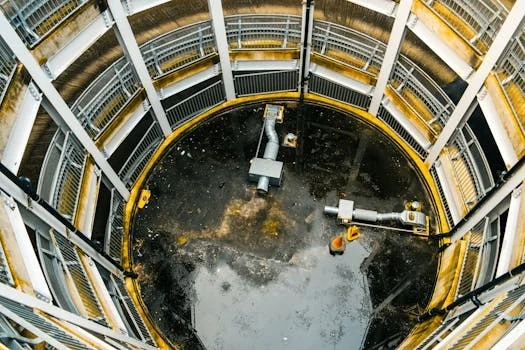
DAF, MBR, and sedimentation each fit a different corner of Nebraska's industrial load profile. DAF targets influent TSS of 500-5,000 mg/L and produces 10-30 mg/L effluent TSS. MBR accepts 100-1,000 mg/L TSS and returns <1 mg/L—near-reuse quality—at higher energy and membrane cost. Sedimentation handles <500 mg/L TSS and yields 50-100 mg/L effluent, which suits power plant cooling water but fails on heavy organics. The table below compares all three across sizing, energy, sludge, and cost for a 100 m³/day reference flow.
| Parameter | DAF | MBR | Sedimentation |
|---|---|---|---|
| Influent TSS (mg/L) | 500-5,000 | 100-1,000 | <500 |
| Effluent TSS (mg/L) | 10-30 | <1 | 50-100 |
| Footprint (m²/100 m³/day) | 10-20 | 5-15 | 30-50 |
| Energy Use (kWh/m³) | 0.3-0.5 | 0.8-1.2 | 0.1-0.2 |
| Sludge Production (kg/m³) | 0.5-1.5 | 0.3-0.8 | 1.0-2.0 |
| O&M Cost ($/1,000 gal) | 0.50-1.20 | 1.50-2.50 | 0.20-0.50 |
| Nebraska Industry Fit | Meatpacking, Food Processing | Ethanol, Water Reuse | Power Plants, Low-TSS Waste |
The Fremont WWTP expansion (2024) added DAF units to absorb 1,500 mg/L FOG loads from local packing plants and held effluent below 50 mg/L FOG. MBR is the better pick when ethanol plants target water reuse under Nebraska's 2025 reuse guidelines, despite the higher capital. Sedimentation stays in play only for low-TSS streams such as power plant cooling blowdown. Use this decision framework when sizing:
- If influent TSS >1,000 mg/L and effluent TSS <30 mg/L required: Choose DAF or MBR
- If water reuse is a goal: MBR (despite higher costs)
- If space is constrained: MBR (5-15 m²/100 m³/day vs DAF's 10-20 m²)
- If budget is limited and TSS <500 mg/L: Sedimentation
For deeper data, compare DAF versus sedimentation performance data for 2025 and review the aerobic vs anaerobic wastewater treatment decision framework.
Industrial Wastewater Treatment Costs in Nebraska: 2025 Breakdown by System & Industry
Capital costs in Nebraska USA run $50,000-$500,000 for DAF skids (4-300 m³/h) and $200,000-$2,000,000 for MBR systems (10-2,000 m³/day). O&M lands between $0.20 and $2.50 per 1,000 gallons treated depending on technology. The table below maps typical spend to the industries that drive each cost line.
| System | Capital Cost | O&M Cost ($/1,000 gal) | Nebraska Industry | Cost Drivers |
|---|---|---|---|---|
| DAF | $50,000-$500,000 | 0.50-1.20 | Meatpacking, Food Processing | FOG load, chemical costs |
| MBR | $200,000-$2M | 1.50-2.50 | Ethanol, Water Reuse | Membrane replacement, energy |
| Sedimentation | $20,000-$200,000 | 0.20-0.50 | Power Plants | Sludge disposal |
Ethanol plants spend more on chemicals because influent COD sits at 20,000-50,000 mg/L; meatpacking plants spend more on DAF maintenance because FOG accumulates on the skimmer. A Nebraska ethanol plant running 100,000 gal/day through a DAF system can save roughly $120,000 per year in sewer surcharges once it meets pretreatment limits. The payback math is straightforward:
Annual Savings = (Sewer Surcharge Rate - Treatment Cost) × Daily Flow × 365
Payback Period = Capital Cost / Annual Savings
Worked example: a meatpacking plant invests $300,000 in a DAF system, pays $1.00/1,000 gal to treat, and avoids a $3.50/1,000 gal surcharge on 50,000 gal/day.
- Annual Savings = ($3.50 - $1.00) × 50,000 gal/day × 365 = $456,250
- Payback Period = $300,000 / $456,250 = 0.66 years
Funding levers include Nebraska Department of Economic Development grants for water reuse (up to 50% of capital) and USDA Rural Development loans for small plants (3-5% interest). For component-level pricing, see the DAF unit cost and ROI guide and the MBR membrane module cost and ROI analysis.
Nebraska Case Studies: How Local Industries Solved Their Wastewater Challenges
Three Nebraska projects show how the numbers above translate into installed performance. A Columbus ethanol plant cut COD from 30,000 mg/L to 500 mg/L with a 500 m³ UASB reactor (8-12 hr HRT, 35°C) followed by a 200 m³ DAF unit dosing 15 mg/L polymer; the $1.2M system achieved 98% COD removal and paid back in roughly 3 years through lower sewer surcharges. In Fremont, a meatpacking plant pulled FOG from 1,500 mg/L down to 50 mg/L with a DAF plus chemical pretreatment (pH 6.8, 12 mg/L ferric chloride), documented in the Fremont WWTP expansion (2024). Capital was $450,000, offset by $180,000/year in surcharge savings. An Omaha food processor installed a 100 m³/day MBR (0.1 μm pore size, 25 LMH flux) that cut water consumption by 40% and qualified for a 30% Nebraska DED grant.
Lessons learned on these jobs include:
- Underestimating seasonal flow variations leads to undersized equalization tanks (common in ethanol plants)
- Pilot testing is critical—Omaha's MBR system required 3-month trials to optimize membrane flux
- Chemical dosing must be adjusted for Nebraska's hard water (150-300 mg/L CaCO₃), which affects coagulation efficiency
Two HydropureWater product lines map directly onto these work flows: MBR systems for ethanol plants and water reuse projects cover the reuse case, and precision chemical dosing skids for variable industrial flows handle the polymer and coagulant adjustments that Nebraska hard water demands.
This guide is written for plant engineers and procurement leads at food processing, ethanol, meatpacking, fertilizer, and power plants operating in Nebraska USA, plus EPC contractors sizing pretreatment skids for them. If your discharge is domestic-only, or your plant sits outside Nebraska's regulated industrial categories, the limits above do not apply and a lighter residential package will fit better.
Frequently Asked Questions
What are the industrial wastewater discharge limits in Nebraska?
Direct dischargers under NDEE must meet 30 mg/L BOD, 30 mg/L TSS, pH 6-9, and 10 mg/L oil & grease. Indirect dischargers to POTWs face local pretreatment limits—Omaha applies <250 mg/L BOD and <300 mg/L TSS for industrial users. Sector-specific ceilings include ethanol plants at 500 mg/L COD and meatpacking at 100 mg/L FOG.
How much does industrial wastewater treatment cost in Nebraska?
Operating costs run $0.50-$2.50 per 1,000 gallons treated. DAF systems cost $50,000-$500,000 in capital and $0.50-$1.20 per 1,000 gal in O&M, while MBR systems cost $200,000-$2M in capital and $1.50-$2.50 per 1,000 gal in O&M. Ethanol plants see higher chemical costs from high-COD loads; meatpacking plants see more frequent DAF maintenance from FOG buildup.
What are the best wastewater treatment systems for Nebraska ethanol plants?
Anaerobic digestion (UASB or EGSB) followed by DAF or MBR is the standard stack. A Nebraska ethanol plant cut COD from 30,000 mg/L to 500 mg/L with this configuration, reaching 98% removal. MBR is preferred when water reuse is the goal because Nebraska's 2025 reuse guidelines incentivize near-reuse effluent quality.
How do I get a wastewater discharge permit in Nebraska?
Submit an application to NDEE with a facility description, wastewater characterization (sampling data), engineering report, and public notice. The process runs 90-180 days. Direct dischargers apply for NPDES permits; indirect dischargers apply for Industrial User permits through their local POTW such as the Omaha Missouri River Plant.
What are the penalties for violating Nebraska wastewater discharge limits?
NDEE enforcement can include civil penalties, permit revocation, and criminal charges for willful repeat offenses. Earlier summaries cited fines up to $25,000 per day; Neb. Rev. Stat. 81-1508.02 caps civil penalties at $10,000 per day. The NDEE 2023 enforcement report recorded 47 violations, with 12% carrying fines over $10,000. High ammonia from fertilizer plants and FOG from meatpacking were the most common drivers.
Send your daily flow, influent concentrations, and target effluent to request a sized system and budget number, or request a free quote to get started.