
Why Fort Wayne F&B Plants Can't Discharge Straight to the Sewer
Food and beverage plants near Fort Wayne meet pretreatment limits by combining flow equalization, pH neutralization, and a dissolved air flotation or lamella clarifier to strip FOG, TSS, and a large fraction of BOD/COD before discharge, with biological polishing where loads warrant. The governing rule stack is EPA federal categorical pretreatment standards under 40 CFR 403 as the floor, the City of Fort Wayne Water Pollution Control Utility sewer ordinance on top, and IDEM industrial waste oversight on the third layer. Local limits are typically stricter than the federal baseline (per Crystal Clean, 2026).
Discharging raw F&B process water to the City of Fort Wayne sanitary sewer is a fast way to accumulate surcharges, monitoring requirements, and eventually a mandatory pretreatment order. A dairy or brewery can generate wastewater with BOD levels 10 to 20 times higher than domestic sewage, and the swings don't stop there — pH moves from acidic to alkaline as products change and CIP chemicals cycle through the line (per Crystal Clean, 2026). Peak flows during washdowns and shift changes routinely exceed average-flow capacity, creating the exact hydraulic surges the local utility penalizes.
The downstream consequence is structural. Municipal plants are designed around domestic baselines; high BOD loads overload their biological stage, solids accumulate in sewer lines, and pH extremes kill the microorganisms that make treatment work. The penalty escalation runs from administrative fines to mandatory pretreatment installation to permit revocation, and in documented cases, full production shutdown (per Crystal Clean, 2026). For a Fort Wayne plant, the cheapest place to control that risk is upstream, on-site, before the sewer.
The Fort Wayne & Indiana Pretreatment Rule Stack in 2026
Three regulators share authority over a Fort Wayne F&B discharge, and the same plant sitting 20 miles outside the city can face a meaningfully different number. Federal categorical pretreatment standards under 40 CFR 403 — issued under the Clean Water Act and enforced through the local POTW's pretreatment program — set the minimum floor for industrial discharge. The City of Fort Wayne Water Pollution Control Utility sits on top of that with its sewer ordinance, which publishes specific industrial waste limits, monitoring frequencies, and reporting requirements; per Crystal Clean, the local caps are typically stricter than the federal floor, and BOD/TSS/FOG/pH envelopes vary by jurisdiction (2026).
The third layer is the Indiana Department of Environmental Management (IDEM) industrial waste pretreatment program. IDEM issues state-level permits, performs sampling, and can layer additional categorical or technical requirements on top of the local ordinance. A brewer in Allen County discharges under the federal floor, the City of Fort Wayne ordinance, and any IDEM-specific conditions on its permit simultaneously. Each layer is enforceable on its own, and a violation in one is a violation the others will eventually see.
For a plant engineer, the practical implication is that the design basis is the strictest of the three, not the average. Sizing a DAF to hit only the 40 CFR 403 federal cap while ignoring a tighter local FOG limit produces a permit violation the first time a CIP cycle runs long. The audit trail — manifests, chain-of-custody, calibration logs — has to satisfy all three reviewers, which is why a single-source compliance program (such as the Source-to-Discharge model ChemREADY describes for Fort Wayne and Northeast Indiana) materially reduces audit risk (per ChemREADY, 2026).
Typical F&B Wastewater Characteristics Around Fort Wayne
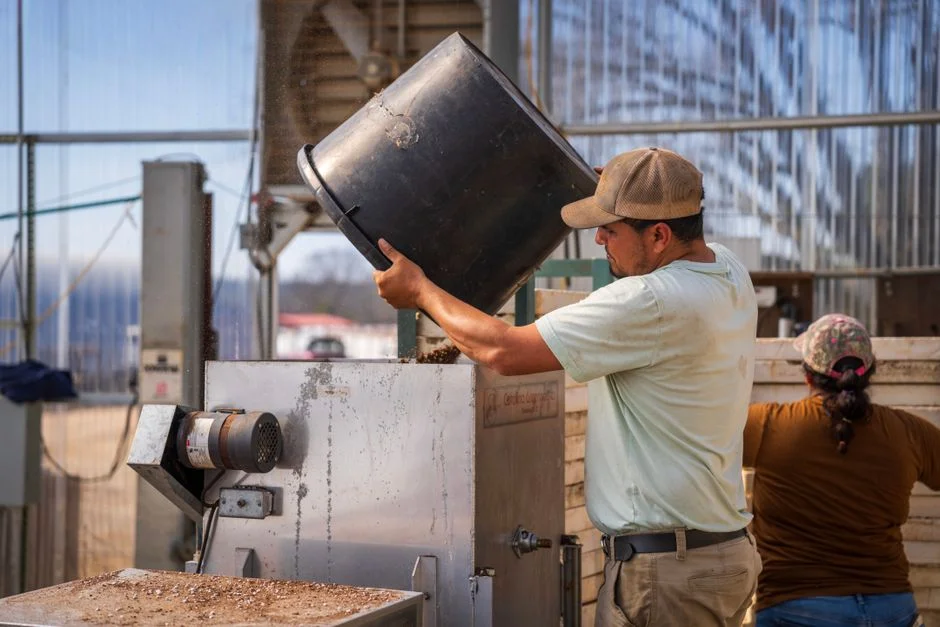
Sizing pretreatment equipment starts with the influent. The numbers below are typical design values for Northeast Indiana F&B streams, not site-specific measured data — confirm against your own characterization before committing to equipment sizing.
| Parameter | Dairy | Brewhouse / Craft Brewery | Meat Processing | Typical Fort Wayne Sewer Cap (indicative) |
|---|---|---|---|---|
| BOD5 (mg/L) | 1,500–3,000 | 1,800–3,500 | 2,000–4,500 | 250–350 (local surcharge above) |
| COD (mg/L) | 2,500–6,000 | 3,000–7,000 | 3,500–9,000 | Site-specific |
| TSS (mg/L) | 500–1,500 | 200–800 | 800–2,500 | 250–350 |
| FOG (mg/L) | 200–600 | 50–250 | 500–2,000 | 100–200 |
| Total Nitrogen (mg/L) | 50–150 | 20–80 | 100–300 | Site-specific |
| pH (s.u.) | 4–11 (swing) | 5–10 (swing) | 6–10 (swing) | 6.0–10.0 typical |
The control targets ChemREADY states for F&B streams — TSS, FOG, BOD, COD, pH, plus odors, foam, and sulfides — map directly onto the table above (per ChemREADY, 2026). Dairy and meat streams swing harder on FOG and TSS; brewery wastewater swings on BOD/COD with relatively low FOG if fermentation is well-managed.
The reason these numbers move so much is operational. Product changeovers shift the load profile within a shift, CIP cycles introduce caustic and acidic cleaners in concentrated slugs, and seasonal production peaks (think summer brewery runs or holiday meat processing) push daily flows well above the design average. For a 50,000 L/day dairy or craft brewery near Fort Wayne, the practical implication is that primary solids and FOG removal plus equalization is the minimum, and biological polishing is required whenever the post-DAF BOD still exceeds the local cap.
The Core Pretreatment Train: Equalization, pH Control, and Dissolved Air Flotation
Most Fort Wayne F&B pretreatment trains follow the same four-block sequence: equalize, neutralize, float, and (where needed) polish biologically. Each block has a specific job and a specific failure mode if undersized.
- Equalization basin. Blends intermittent CIP and production flows to dampen pH, BOD, and hydraulic surges before they hit downstream equipment. ChemREADy's Fort Wayne service description specifically calls out flow-equalization (EQ) basins as part of the front-end design (per ChemREADY, 2026). Typical sizing targets 8–24 hours of retention at average flow, with mixers sized to keep solids in suspension without re-aerating floatables.
- pH control. A PLC-controlled coagulant and pH dosing skid doses acid or caustic to hold the discharge inside the sewer ordinance's pH window — typically 6.0–10.0 s.u. for Fort Wayne sanitary discharges. Probe-based feedback with adjustable deadband is the standard logic; trim chemicals run on the same skid for the next step.
- Dissolved Air Flotation (DAF). Micro-bubble skimming lifts FOG and suspended solids to the surface for skimming. In F&B service, DAFs commonly deliver 50–90% FOG removal and 60–85% TSS removal on conditioned feed (HydropureWater field data, 2026). The DAF system is a representative fit for this slot, sized to handle the hydraulic surge from CIP cycles after equalization has done its job.
- Biological polishing (optional). MBBR, activated sludge, or MBR membrane bioreactor for high-load dairies and breweries where residual BOD after DAF still breaches the local cap. MBR is the right pick when near-reuse effluent is a downstream goal, since it produces a low-TSS, low-coliform stream suitable for washdown or boiler feed after disinfection.
The sequencing is deliberate: the DAF protects the biological stage from FOG slugs that would otherwise wipe out biomass, and the equalization basin protects the DAF from pH excursions that would break emulsion chemistry. Skipping any one of the first three steps makes the next one unreliable.
DAF vs. Lamella Clarifier: Choosing the Right Primary Separator
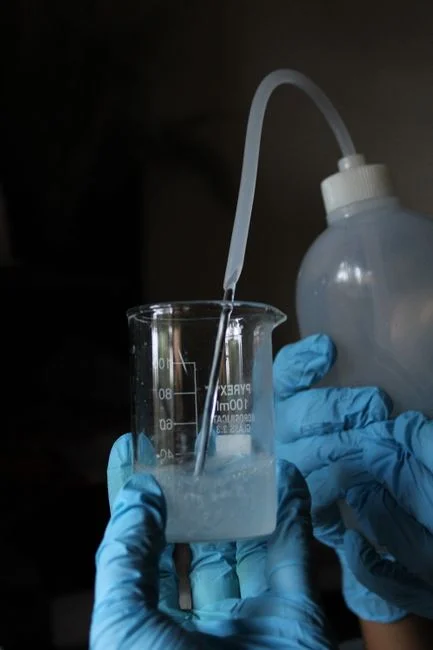
The single most consequential equipment decision in a Fort Wayne F&B pretreatment skid is the primary separator. DAF and lamella clarifier both remove TSS and a fraction of FOG, but they do it by different mechanisms and they suit different waste profiles. A head-to-head comparison helps procurement and engineering align on the same spec.
| Criterion | DAF (Dissolved Air Flotation) | Lamella Clarifier (High-Efficiency Sedimentation Tank) |
|---|---|---|
| Primary mechanism | Micro-bubble flotation of FOG and light colloids | Gravity settling of suspended solids on inclined plates |
| FOG removal (typical) | 50–90% (HydropureWater field data, 2026) | 20–40% on conditioned feed |
| TSS removal (typical) | 60–85% | 70–90% on settleable solids |
| Footprint | Compact; small basin area | Larger basin for equivalent hydraulic loading |
| Hydraulic loading | 5–25 m³/m²·h depending on design | 1–4 m³/m²·h effective |
| Chemical demand | Coagulant + polymer; sensitive to dose tuning | Coagulant + polymer; generally lower polymer demand |
| OPEX drivers | Air compressor, polymer, sludge hauling | Polymer, sludge hauling, lower energy |
| Best-fit F&B sub-sector | Dairy, beverage, brewery, poultry, bakery with high FOG | Meat processing with settleable solids, bakery, low-FOG streams |
The decision rule is straightforward. If the FOG content in the equalized feed consistently runs above roughly 300 mg/L — common in dairy, poultry, and meat rendering — or if the stream carries emulsified oils from CIP surfactant chemistry, default to DAF; the DAF system will hit local FOG caps that a lamella cannot (HydropureWater field data, 2026). If FOG is moderate and the bulk of the load is settleable solids, a lamella clarifier will hit the TSS cap with lower chemical and energy OPEX. For a deeper head-to-head framework that procurement can hand to a vendor, see the DAF vs. clarifier buyer's guide for F&B plants.
On-Site Pretreatment vs. Centralized Off-Site Hauling
Not every Fort Wayne F&B plant should own its full pretreatment train. The build-vs-buy question turns on flow variability, peak-to-average ratio, and whether the local ordinance treats hauled waste the same way it treats in-plant discharge. On-site pretreatment means high CAPEX, predictable per-liter OPEX, full process control, and an audit trail that lives entirely on your SCADA. For a 24/7 dairy or a high-throughput brewery running close to design capacity, the unit economics almost always favor on-site over the planning horizon.
Off-site centralized treatment flips the math. Valicor's Fort Wayne facility at 2122 Bremer Road (260.245.0586) offers centralized wastewater treatment, industrial cleaning, and container management as part of its Indiana network, with receiving hours 7:00 am – 4:00 pm Monday through Friday (per Valicor, 2026). The model is zero CAPEX, per-load hauling cost, and zero direct discharge liability on the hauling waste. Crystal Clean's regional vacuum-truck network is the alternative for high-strength batches that can't be safely neutralized on-site, with chain-of-custody documentation that holds up to IDEM and POTW audits (per Crystal Clean, 2026).
The decision trigger is hydraulic. When peak CIP or seasonal production drives flows more than roughly 2× the on-site design capacity, a hybrid on-site + off-site arrangement usually wins on permit risk and CAPEX efficiency. The on-site train handles the steady-state load under the local cap, and the off-site contract absorbs the surges that would otherwise force an oversize EQ basin and a second DAF. For plants already past 80% of their permitted hydraulic capacity, this is often the cheapest compliance path available without a major expansion.
Documentation, Monitoring, and 2026 Compliance Habits
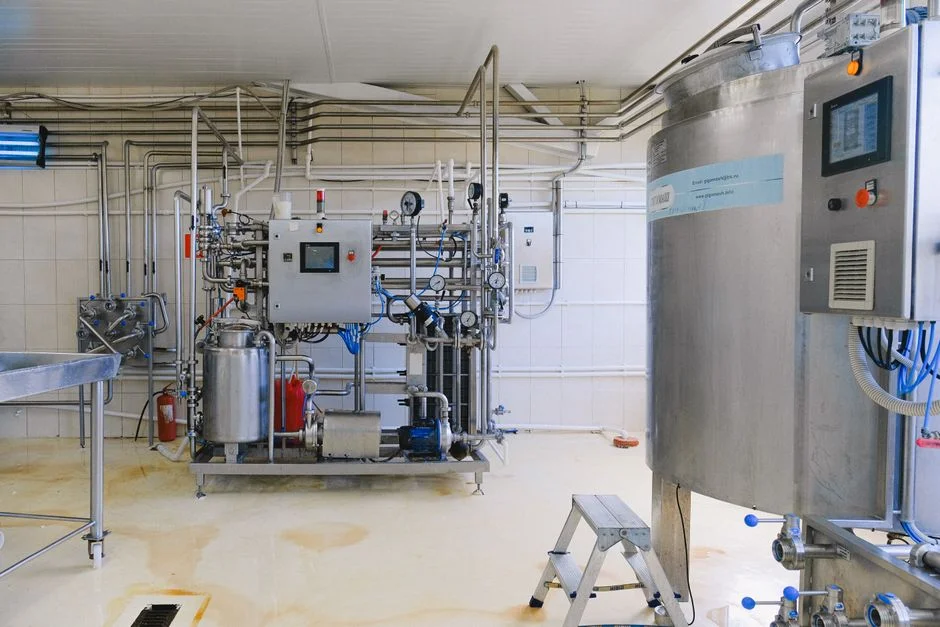
Equipment that meets the spec on paper still fails an audit if the documentation is incomplete. Self-monitoring — pH, TSS, FOG, and BOD/COD at the designated sampling point, on the schedule the City of Fort Wayne ordinance sets — is the foundation. ChemREADy's stated model layers controllers, probes, and smart pumps with dashboards and remote alerts, so operators see drift before it becomes a violation rather than after a sample result comes back (per ChemREADY, 2026).
Chain-of-custody is the second leg. Manifests, service reports, residual logs, and treatment verification are the artifacts an IDEM inspector or a POTW pretreatment coordinator will ask for first; the documentation model Crystal Clean describes — manifests, service records, and treatment verification from a permitted facility — is the working template (per Crystal Clean, 2026). For off-site batches routed to Valicor Fort Wayne, retain the receiving ticket with date, volume, and waste code.
Permit-renewal hygiene is the third leg and the most commonly neglected. Keep SDS for every chemical on the dosing skid, calibration records for every probe and flow meter, and SOPs for chemical dosing and DAF operation in a single binder (or document management system) that is audit-ready year-round, not assembled in a panic two weeks before renewal. Remote dashboards and KPI snapshots are the easiest way to make this passive rather than a quarterly fire drill (per ChemREADY, 2026).
Frequently Asked Questions
What are the City of Fort Wayne sewer discharge limits for BOD, TSS, and FOG in 2026?
The City of Fort Wayne Water Pollution Control Utility publishes its industrial waste limits in its sewer ordinance, and per Crystal Clean, local caps are typically stricter than the federal 40 CFR 403 floor (2026). Indicative ranges for F&B operations are BOD and TSS around 250–350 mg/L and FOG around 100–200 mg/L, with pH typically held in the 6.0–10.0 s.u. window; confirm the current numbers against the ordinance before sizing equipment.
What size DAF does a 50,000 L/day Fort Wayne dairy need?
Sizing depends on equalized feed characteristics, not just flow. A 50,000 L/day dairy with 8–16 hours of EQ retention and FOG in the 200–600 mg/L range typically lands in the 10–25 m³/h hydraulic capacity bracket for a DAF system, sized to deliver 50–90% FOG and 60–85% TSS removal (HydropureWater field data, 2026). Confirm against jar tests and a 7-day composite characterization before committing.
When does it make sense to haul wastewater off-site instead of running on-site pretreatment?
Off-site hauling to a centralized treatment facility such as Valicor's Fort Wayne location at 2122 Bremer Road (260.245.0586) makes economic and permitting sense when peak flows run more than roughly 2× the on-site design capacity, when the plant is seasonal, or when a one-time high-strength batch (CIP chemical dump, production changeover) can't be safely neutralized on-site (per Valicor, 2026; per Crystal Clean, 2026). It also wins when CAPEX funding is constrained and the plant expects to grow into a full on-site train within 3–5 years.
How does IDEM interact with the City of Fort Wayne on pretreatment enforcement?
IDEM holds the state-level industrial waste pretreatment authority, while the City of Fort Wayne Water Pollution Control Utility runs the local POTW pretreatment program — meaning an F&B plant in Allen County answers to both, plus the federal EPA floor under 40 CFR 403. In practice, IDEM issues state permits, the POTW enforces local caps and monitoring, and the two coordinate on significant non-compliance; an identical plant 20 miles outside Fort Wayne may face different numeric limits under a different POTW (per Crystal Clean, 2026).