
Why Bakery Wastewater Is a Good Fit for MBBR
Bakery effluent carries four dominant pollutant streams that align with biofilm biology: flour and dough washout (high suspended solids, starch), sugar and yeast residues (high soluble BOD/COD), butter, oil, and grease from baking lines, and clean-in-place (CIP) acid/alkali that drives pH and temperature swings. The BOD/COD ratio of bakery effluent typically sits between 0.5 and 0.6, indicating a substrate that is highly biodegradable rather than refractory. Combined with operating temperatures of 30-45 °C from oven condensate and CIP, this profile is well-matched to mesophilic heterotrophic bacteria on biofilm carriers.
The closest published biofilm performance benchmark for a comparable high-strength, biodegradable industrial effluent is the S1 Kaldnes K1 study at 20% carrier fill, which delivered 91% BOD removal, 93.81% COD removal, 86.10% phosphate removal, and 88.22% surfactant removal at a 10-day hydraulic retention time (Tanjungpura University, 2019). While that work addressed laundry wastewater, the underlying mechanism — biofilm carriers metabolizing soluble organics without toxic inhibition — translates directly to bakery effluent, which has even higher starch and sugar fractions. S2 Wikipedia notes that anaerobic MBBRs are now used widely for industrial wastewater, confirming the technology's industrial track record, and S5 microbenotes describes how biofilm thickness self-regulates through sloughing, a useful property when influent strength varies by shift. Compared with refinery or chemical-plant effluent, bakery wastewater carries no toxic micro-pollutants, has mild pH excursions that equalization can flatten, and lacks the recalcitrant fractions that make MBBR a poor fit for those streams.
Influent Characteristics You Must Characterize Before Sizing
No MBBR design is credible without a 24-hour composite influent study. The minimum parameter set a bakery plant must collect before sizing the biological stage is: flow (m³/d), pH, temperature, total and soluble COD/BOD, total suspended solids (TSS), FOG, total nitrogen (TN), ammonia, and phosphate. Each parameter drives a specific design choice: flow sets the hydraulic retention time (HRT), temperature sets the kinetic rate, FOG sets the upstream pretreatment train, and BOD/COD sets the volumetric loading.
For a typical bread, biscuit, or pastry plant, expect warm effluent in the 30-45 °C range, pH swings from 4 to 11 driven by CIP acid and caustic, soluble BOD of 800-2,500 mg/L from sugar and yeast washout, and TSS of 200-1,500 mg/L from dough and batter carryover. FOG can exceed 300 mg/L on a poorly managed line. Per S5 microbenotes, the MBBR tank is sized by HRT and Surface Area Loading Rate (SALR); both are only as reliable as the influent numbers behind them, which is why a composite sample across at least three production days — including a CIP day — is the foundation of the design. The same source notes that the carriers are sized 10-25 mm with open engineered structures, so the influent TSS load that reaches the MBBR must already be inside the design envelope.
FOG is the single biggest threat to a bakery MBBR. A fat film coats the biofilm and starves the underlying biomass of oxygen, while emulsified oil fouls diffuser membranes. Stripping FOG, starch, and most TSS upstream with a dissolved air flotation (DAF) system is not optional for a bakery — it is the difference between a stable biological stage and a chronic oxygen-transfer failure.
| Parameter | Typical bakery range (raw) | Target after DAF pretreatment | Why it matters for MBBR |
|---|---|---|---|
| Flow (m³/d) | 50-500 | Equalized to ±20% | Sets HRT and pump sizing |
| pH | 4-11 (CIP swings) | 6.5-8.5 | Outside this range, nitrification halts |
| Temperature (°C) | 30-45 | 25-38 | Warmer effluent accelerates kinetics but lowers DO solubility |
| COD (mg/L) | 1,500-5,000 | 1,000-3,000 | Drives volumetric loading (kg COD/m³·d) |
| BOD₅ (mg/L) | 800-2,500 | 500-1,800 | Sets biodegradable fraction for sizing |
| TSS (mg/L) | 200-1,500 | <150 | Excess TSS blinds diffusers and smothers biofilm |
| FOG (mg/L) | 100-400 | <30 | Coats biofilm, destroys oxygen transfer |
| TN / NH₃-N (mg/L) | 20-80 / 10-40 | Same | Defines whether intermittent aeration is required |
How the MBBR Stage Works Inside a Bakery Plant
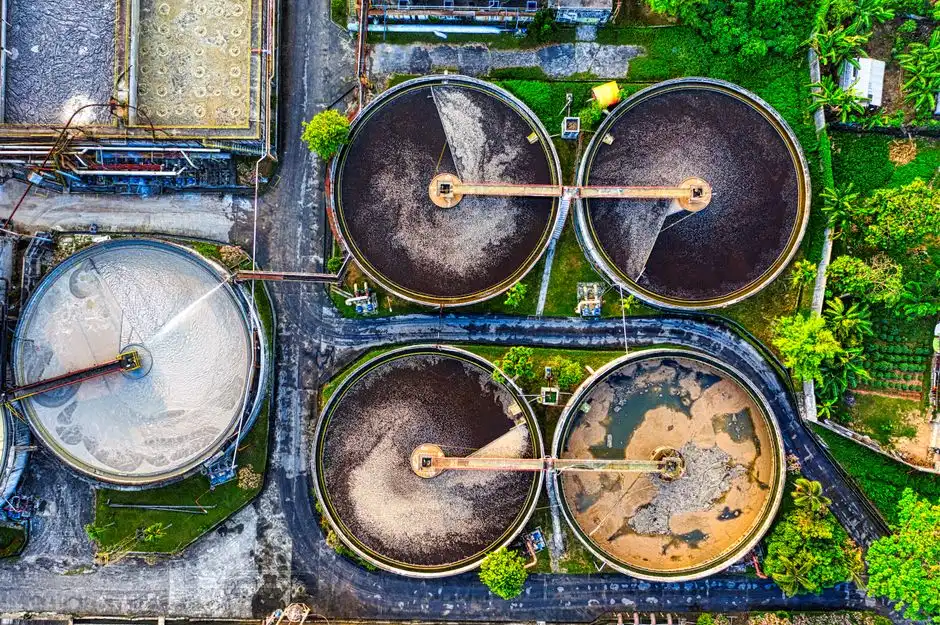
An MBBR inside a bakery treatment train is built from four standard components per S2 Wikipedia and S5 microbenotes: an aeration basin, free-floating HDPE carriers (typically 10-25 mm), an aeration grid with coarse-bubble or membrane diffusers, and retention sieves at the outlet. The basin is sized for the design HRT, the carrier inventory is sized for the target volumetric loading, and the blower package is sized to fluidize the media at the low end of the oxygen-demand envelope.
For bakery service, specify a carrier fill of 20% as a conservative minimum — that is the fill at which the S1 Kaldnes K1 study recorded 91% BOD and 93.81% COD removal on a comparable high-strength biodegradable feed (Tanjungpura University, 2019). For high-load bakeries with COD above 3,000 mg/L after DAF, push fill to 30-40% to keep the volumetric loading rate below 3.0 kg COD/m³·d. Continuous aeration at a "rolling boil" maintains a dissolved oxygen (DO) setpoint of 2-4 mg/L and keeps the carriers fluidized; intermittent aeration cycles can be superimposed if total nitrogen discharge limits apply, since alternating aerobic and anoxic phases drive simultaneous nitrification/denitrification in the same tank.
Outlet sieves are the most overlooked item. Mesh opening must be smaller than the smallest carrier dimension, typically 5-7 mm for a 10 mm K1-class media, fabricated in stainless steel 304/316 or HDPE for corrosion resistance. A poorly sized sieve is the single most common cause of media loss in the field, and once carriers migrate downstream they damage pumps and clog the clarifier. Position the sieves flush with the outlet weir, not downstream of it, so the hydraulic gradient does not pull media through the slots.
MBBR Design Parameters for Bakery Effluent
A bakery MBBR spec can be built around six numbers: HRT, carrier fill, volumetric loading, DO setpoint, temperature, and expected removal. The values below are anchored in the S1 Kaldnes K1 case data (91% BOD and 93.81% COD at 20% fill) and extrapolated to bakery service, where the substrate is more readily degradable than laundry surfactant but warmer and more variable.
Reactor volume is sized by two interchangeable methods. The loading-driven form: required reactor volume (m³) = daily COD load (kg/d) ÷ target volumetric loading (kg COD/m³·d). The HRT-driven form: reactor volume (m³) = daily flow (m³/d) × HRT (days). For a 200 m³/d bakery effluent at 2,000 mg/L COD after DAF, the daily COD load is 400 kg/d; at a target loading of 1.5 kg COD/m³·d the reactor volume is 267 m³, which gives an HRT of 32 hours — clearly oversized against the 6-10 h band, meaning the design should be raised to 2.5-3.0 kg COD/m³·d to land inside the table range. This is the kind of iteration a sizing calc must show, not hide.
Temperature is a quiet trade-off. Warm bakery effluent (30-40 °C) accelerates biological kinetics — heterotrophic rate roughly doubles per 10 °C inside the mesophilic range — but reduces oxygen solubility from 8.4 mg/L at 25 °C to about 6.4 mg/L at 40 °C. The DO setpoint therefore becomes the binding constraint in warm months; spec the blower with a 20-30% turndown margin so the control loop can hold 2-4 mg/L without over-aerating in winter.
| Design parameter | Bakery MBBR typical value | Design basis |
|---|---|---|
| HRT (hours) | 6-10 | Higher end for variable influent; lower end for steady two-shift plants |
| Carrier fill (% of tank volume) | 20-40 | 20% as conservative baseline per S1 Kaldnes K1 (Tanjungpura University, 2019); 30-40% for high-load applications |
| Volumetric loading (kg COD/m³·d) | 0.5-3.0 | Keep below 3.0 to avoid oxygen-transfer limit; upper end acceptable with surplus blower capacity |
| Dissolved oxygen setpoint (mg/L) | 2-4 | Minimum 2 for BOD removal; 3-4 if simultaneous nitrification is required |
| Temperature range (°C) | 15-40 | Mesophilic biofilm; warmer effluent accelerates kinetics but lowers DO solubility |
| Expected BOD₅ removal | >90% | Conservative for full-scale bakery plant; up to 91% demonstrated (Tanjungpura University, 2019) |
| Expected COD removal | >85% | Up to 93.81% demonstrated (Tanjungpura University, 2019); design to lower end for risk margin |
MBBR vs SBR vs Submerged Aerated Filter for Bakeries
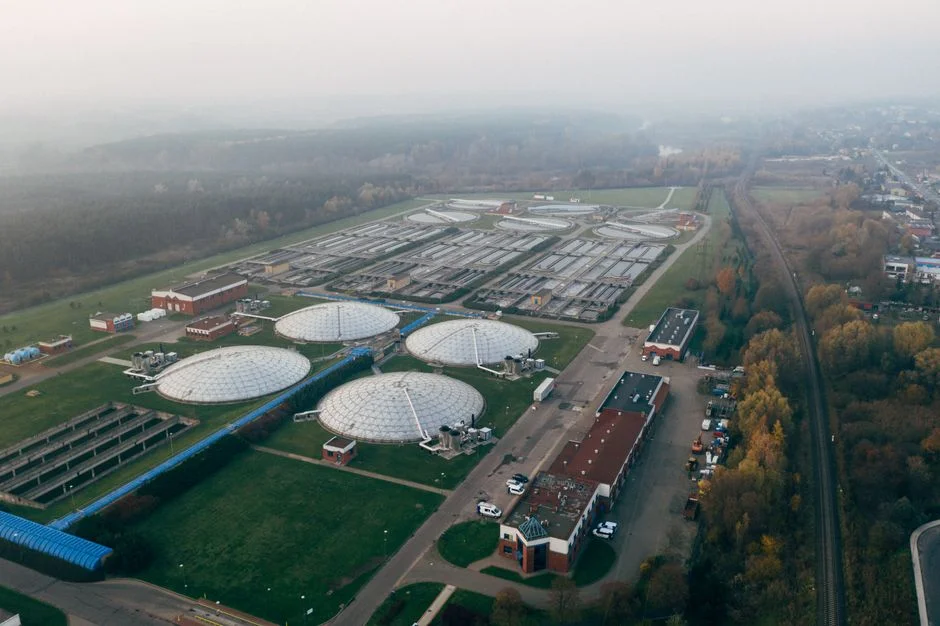
Three biological options realistically fit a bakery plant: MBBR, sequencing batch reactor (SBR), and submerged aerated filter (SAF). All three can meet a 30/100 mg/L BOD/COD envelope with proper design; the difference is footprint, operator burden, and load-tolerance. Per CWT, MBBR uses 30-40% less space than conventional activated-sludge systems, and S2 Wikipedia notes it is commonly retrofitted into existing aeration tanks by adding carriers. SBR is a single-tank batch process, simpler mechanically but more dependent on a stable influent profile and tighter operator control. SAF is fixed-film, which avoids media loss but carries documented bioclogging and headloss issues per S2 Wikipedia's MBBR disadvantages section.
The decision rule for a bakery is straightforward. Choose MBBR if flow is variable, footprint is constrained, or you need to retrofit into an existing aeration tank. Choose SBR if you have small flows (under 100 m³/d), a stable influent, and a single operator who can manage batch cycles. Choose SAF only if you need a very compact reactor and can accept more frequent media maintenance, headloss monitoring, and replacement.
| Criterion | MBBR | SBR | SAF |
|---|---|---|---|
| Footprint | Smallest (30-40% less than CAS, per CWT) | Moderate (single tank but taller) | Compact but with media volume |
| Operator skill | Low (no sludge recycle, SBR-style cycle control not required) | Higher (timed cycles, decant control) | Moderate (headloss and backwash management) |
| Sludge handling | Low yield, no sludge recycle per S2 Wikipedia | Batch wasting, must size sludge storage | Low yield, but sloughing events can be uneven |
| Load variation tolerance | High (biofilm self-regulates via sloughing, per S5 microbenotes) | Moderate (batch timing assumes steady feed) | Low-moderate (media clogs under shock load) |
| Effluent quality (BOD/COD) | <30 / <100 mg/L typical | <20 / <80 mg/L achievable | <25 / <100 mg/L typical |
| Retrofit ease | High (carriers added to existing tank, per S2 Wikipedia) | Low (batch cycle conflicts with continuous flow) | Low (fixed media, hard to expand) |
| CAPEX tendency | Moderate | Low (less equipment, more controls) | Moderate |
| OPEX tendency | Low (less sludge, no recycle) | Moderate (controls, cycle management) | Moderate (replacement media, backwash) |
Typical Bakery Plant Layout: DAF → MBBR → Polishing
The canonical bakery treatment train is rotary bar screen → dissolved air flotation (DAF) system → equalization basin → MBBR aeration tank → secondary clarifier or MBR polish → chlorine dioxide disinfection system → discharge or reuse. A rotary mechanical bar screen protects the DAF from rags and packaging carryover; the DAF strips FOG, starch, and TSS that would otherwise blind the MBBR diffusers; equalization absorbs the CIP pH and flow spikes; the MBBR does the carbon and ammonia reduction; the clarifier or MBR polish captures any carrier-fleeing solids; and chlorine dioxide or ozone finishes the job for either POTW discharge or on-site reuse.
Two design notes close this train. Per S5 microbenotes, sieves are installed at the MBBR outlet to keep media in the reactor and protect downstream equipment — that is why a fine screen or MBR polish sits immediately after the MBBR rather than skipping straight to disinfection. And per S2 Wikipedia, the MBBR's high solid-retention time supports slow-growing microbial communities, which is why no sludge recycle is required — a practical advantage for bakery plants without dedicated wastewater operators, and the reason an MBBR retrofit can usually be dropped into an existing aeration tank with only a media-inventory addition and a sieve change. For a comparable retrofit pattern in another food stream, the same logic applies when sizing an MBBR for distillery wastewater, and for high-strength food-industry pretreatment decisions, the DAF vs clarifier for food and beverage wastewater comparison covers the upstream unit operation in more depth.
Frequently Asked Questions
What COD removal can MBBR achieve for bakery wastewater?
Designers should assume 85-90% COD removal and >90% BOD removal at full scale on bakery effluent. The published benchmark from the S1 Kaldnes K1 study is 93.81% COD and 91% BOD at 20% carrier fill and 10-day HRT (Tanjungpura University, 2019); bakery effluent is more readily degradable than that feed, but full-scale plants typically run at shorter HRT and lose some efficiency to load variation, so the conservative design point sits at the lower end of the demonstrated range.
Do I still need DAF before an MBBR in a bakery?
Yes. DAF is the standard upstream unit for any bakery MBBR. FOG, starch, and TSS in raw bakery effluent will coat the biofilm, foul diffuser membranes, and starve the aeration system of oxygen transfer. A well-sized DAF dropping FOG below 30 mg/L and TSS below 150 mg/L is the difference between a stable biological stage and a chronic oxygen-transfer failure that no amount of blower capacity can rescue.
How long does it take to start up an MBBR for bakery effluent?
Biofilm seeding typically takes 2-4 weeks. The S1 Kaldnes K1 study used 15 days of seeding on a comparable high-strength biodegradable feed (Tanjungpura University, 2019) as a representative baseline. Warm bakery effluent shortens this window by accelerating initial colonization; cold influent below 15 °C can extend it to 4-6 weeks. Plan for reduced removal efficiency during the first 30 days and avoid discharging to reuse during that window.
Can MBBR be added to an existing bakery activated-sludge plant?
Yes, and it is one of the more common retrofit patterns in food-plant wastewater. Per S2 Wikipedia, the MBBR is often installed as a retrofit of existing activated-sludge tanks by adding carriers to the aeration basin, with the fill ratio adjusted to the desired capacity increase. No new tankage is required in most cases, and the diffusers typically only need a re-balance to deliver the higher air demand.
What is the typical footprint saving of MBBR vs conventional activated sludge for a bakery?
MBBR typically delivers 30-40% footprint reduction against a conventional activated-sludge system at the same treatment capacity (CWT). For a space-constrained urban bakery with no greenfield room, that is often the deciding factor between MBBR and a larger SBR or oxidation ditch. For a deeper worked example of MBBR sizing on another food stream, see the guide to sizing an MBBR for rack wash water.