Why Seattle food and beverage plants are re-asking the DAF-vs-clarifier question in 2026
For Seattle food and beverage factories in 2026, dissolved air flotation (DAF) is the right primary separator when fats, oils, and grease (FOG) and emulsified suspended solids dominate the stream — typical of breweries, dairy, seafood, and coffee operations. A lamella clarifier is the lower-CAPEX choice when influent is mostly settleable TSS with low FOG. Most high-strength Seattle plants run a DAF plus a downstream clarifier or DAF-thickener hybrid for compliance with King County IWS pretreatment limits.
Three forces are converging on Seattle plant managers right now. First, King County's Industrial Wastewater Source (IWS) control program enforces oil-and-grease, TSS, and BOD limits that are stricter than federal categorical pretreatment standards and applies surcharges the moment those local thresholds are crossed. Second, breweries, seafood processors, dairy plants, and coffee roasters are adding SKUs and CIP streams that load the headworks with emulsified organics a clarifier was never designed to handle. Third, the regional benchmark is getting larger: the ConAgra/Pacific Northwest-adjacent wastewater-to-energy expansion scaled plant capacity from 3.42 MGD to 4.25 MGD and roughly doubled organic capacity to nearly 49,900 lb/day (source: McIlvaine, Food Industry IIoT report, 2026).
The competing toolkits are dissolved air flotation (micro-bubble flotation of FOG and light TSS) and clarifiers (gravity settling of heavier TSS, often with inclined lamella plates). For a Seattle buyer staring at surcharge invoices, the right question in 2026 is not "DAF or clarifier?" in the abstract — it is which configuration, at what scale, hits IWS limits with the lowest five-year cost-of-ownership. The dairy wastewater treatment guide covers the dairy side in detail; this article focuses on the head-to-head decision framework a Seattle procurement manager can actually run.
How a DAF system and a clarifier actually work in a food and beverage line
A dissolved air flotation (DAF) system saturates a pressurized side-stream of clarified effluent with air at 4–6 bar, then releases that stream through needle valves into the main flotation tank. The pressure drop nucleates a cloud of 10–100 μm micro-bubbles that attach to FOG droplets and colloidal suspended solids, lifting them to the surface as a float blanket that a rotating skimmer scrapes into a sludge hopper (per Ecologix, F&B DAF application note, 2025). Hydraulic residence time is short — typically 20–40 minutes — and the float is scraped continuously rather than allowed to accumulate.
A clarifier is older and simpler: a quiescent hopper-bottom tank where gravity pulls heavier settleable solids to the floor, where a slowly rotating rake sweeps them to a central sump. A lamella clarifier adds a stack of inclined plates at 55–60° inside the tank; the plates multiply the effective settling area and push surface loading to 20–40 m³/m²·h, which is 4–6× higher than a conventional circular clarifier of the same footprint. Sludge leaves as underflow at 1–3% solids; clarified water rises over a peripheral weir.
Per Clearwater Industries (2025-06 update), DAF is used in F&B plants for pretreatment, tertiary polishing, sludge thickening, and post-biological separation — essentially any duty where FOG, colloidal TSS, or biological floc needs to be floated. Clarifiers are used where streams are mostly settleable TSS with low FOG. Chemical conditioning — coagulation, flocculation, and pH adjustment — is almost always paired with DAF to break emulsions, and is often paired with lamellas when high-TSS polish is required. Without chemistry, a DAF on raw F&B influent typically removes only 20–30% FOG; with proper coagulant and flocculant dosing, removal climbs to 60–90%.
DAF vs clarifier for F&B wastewater: head-to-head comparison
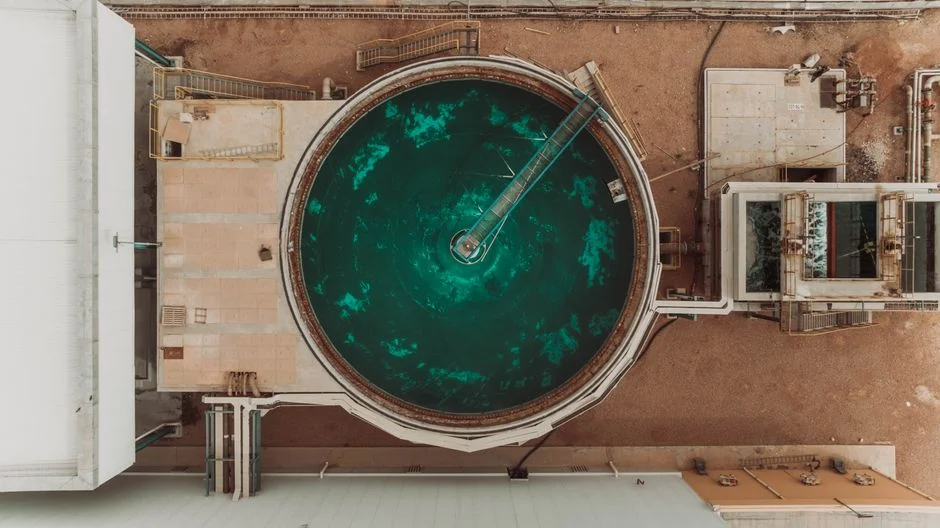
The single-stage DAF unit at a craft brewery removes 60–90% of FOG and 80–95% of TSS, while a lamella clarifier on the same stream delivers 50–70% TSS and very limited free-oil capture. That gap is the entire reason DAF exists as a category, and it is why a Seattle seafood processor with cook-water FOG cannot meet IWS oil-and-grease limits with a clarifier alone.
| Parameter | DAF system | Lamella clarifier |
|---|---|---|
| FOG removal | 60–90% (with chemistry) | 10–25% (free oil only) |
| TSS removal | 80–95% | 50–70% |
| Footprint (m² per m³/h) | 0.05–0.15 | 0.02–0.06 |
| Sludge concentration | 2–5% (float) | 1–3% (underflow) |
| Hydraulic shock tolerance | High (5–10× rated for short periods) | Low (upsets above 1.5× rated) |
| Cold influent (8–15 °C) sensitivity | Low | High (Stokes-law settling slows ~40% at 10 °C vs 25 °C) |
| Operator attention | Air saturator, valves, skimmer, chemical dosing skid | Rake torque, underflow pump, scum weir |
| Best-fit duty | FOG, emulsified TSS, sludge thickening, post-biological polish | Low-FOG settleable TSS, primary sedimentation |
Footprint tells a subtler story: a DAF unit is bigger per m³/h than a lamella, but the DAF replaces a clarifier plus a grease trap plus often a sludge thickener. When those auxiliary units are added to the clarifier column, the DAF's effective footprint advantage typically shrinks to 20–30%. On sludge, DAF float at 2–5% solids thickens well in a holding tank; clarifier underflow at 1–3% benefits from a downstream DAF-thickener or a belt press before haulage. For Seattle plants with high CIP swings, DAF tolerates shock FOG loads because micro-bubble contact is a fast physical process; a clarifier upsets and bleeds suspended solids when the surface-loading rate is exceeded even briefly. Both units are mechanical, but the skid-mounted DAF system brings a compressed-air skid, saturator, and chemical dosing panel that need periodic service, while the lamella brings rake-torque and underflow-pumping checks.
Seattle and Pacific Northwest factors that change the answer
King County IWS enforces oil and grease at 100 mg/L daily maximum and TSS at 200 mg/L daily maximum for significant industrial users, with BOD surcharges kicking in above 300 mg/L — limits that are tighter than the federal categorical standards most out-of-state vendors quote. A plant that passes a generic USA jar test on a clarifier can still fail IWS on FOG. Per the King County IWS rate schedule, the 2026 FOG surcharge is approximately $0.18 per pound above the limit, and BOD surcharge runs $0.12 per pound — together, those are usually the line items that justify a CAPEX request to finance.
Seattle's brewery cluster — both Pike Place-anchored craft and the macro-brewery operations to the south — produces high-COD, high-sugar, foaming streams where DAF ahead of an anaerobic or aerobic train is the standard configuration. Seafood and shellfish processors in the Puget Sound corridor (Elliott Bay, Bellingham, Tacoma) generate high-salinity, high-protein cook-water streams with emulsified FOG that does not settle — DAF is essentially mandatory for these plants, often paired with pH adjustment to 6.5–7.5 to break the protein-stabilized emulsion. Cold influent temperatures — often 8–15 °C year-round in unheated equalization basins — reduce clarifier settling rates by 30–40% versus 20–25 °C reference data, while DAF flotation kinetics are far less temperature-sensitive because bubble attachment is a surface-tension-driven process. Space-constrained urban sites in SoDo, Ballard, and Georgetown push buyers toward packaged skid DAF units that can be set on a parking-lot pad versus cast-in-place concrete clarifiers that need excavation, rebar, and 28-day cure. The 2026 compliance guide for F&B pretreatment covers the regulatory mechanics in more detail.
The 4-question decision framework most Seattle buyers actually use
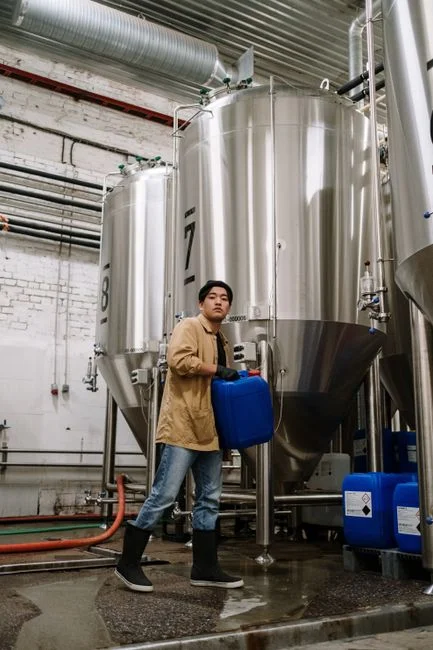
Run these four questions against your stream profile and the answer usually picks itself.
- Is FOG or emulsified oil more than ~100 mg/L? If yes, choose DAF. A lamella alone will not hit the King County IWS oil-and-grease limit, and adding a separate grease trap raises both CAPEX and footprint.
- Is the stream mostly settleable TSS with low oil (vegetable wash water, grain steep liquor, fruit pomace)? A high-efficiency lamella clarifier is the lower-CAPEX right answer at $40K–$120K turnkey for a 20–50 m³/h skid.
- Do you plan to add MBR or RO reuse within 2 years? Choose DAF upstream. Clarifier carryover fouls membranes fast; DAF effluent with TSS under 30 mg/L is a much better membrane feed and reduces CIP frequency by 30–50%.
- Is site footprint constrained or hydraulic load highly variable? DAF is more compact per unit of FOG removed and tolerates shock loads better. For a 25 m³/h peak CIP stream on a 1,200 m² SoDo lot, packaged DAF is the only realistic fit.
The decision rule that covers 80% of Seattle F&B cases: DAF for any stream with meaningful FOG or emulsified load; clarifier for low-FOG, settleable-TSS polishing; hybrid DAF + lamella for high-strength plants or those targeting water reuse. Procurement managers can run this on a vendor call in 15 minutes and walk out with a shortlist of two or three configurations instead of fifteen.
Hybrid DAF + clarifier trains: when two tools are smarter than one
For medium-to-large Seattle plants — a 50,000 bbl/yr brewery, a 200 ton/day seafood processor, a regional dairy — the real answer is rarely "DAF or clarifier." It is DAF as primary FOG/TSS removal, then a lamella clarifier as post-biological or post-DAF polishing for carryover fines before MBR/RO or discharge. The hybrid cuts total sludge volume 20–30% versus a clarifier-only system because DAF float thickens better and the lamella captures the fines that would otherwise recycle to the head of the biological train. Downstream membranes stay cleaner — typically 30–50% longer CIP intervals — and the biological stage is protected from FOG shock that would otherwise upset biomass and cause foaming in aeration tanks.
Cost nuance: hybrid CAPEX is higher than either single unit, but OPEX is lower because of reduced coagulant and polymer consumption, fewer membrane CIP cycles, and lower IWS surcharges. As a matched pair, a skid-mounted DAF system at 4–300 m³/h and 13 standard hydraulic sizes pairs cleanly with a high-efficiency lamella clarifier rated to 20–40 m³/m²·h surface loading and typically 20–30% lower polymer consumption than a conventional clarifier. For plants that add an automatic coagulant and flocculant dosing skid, the chemistry is reproducible jar-test results in continuous operation, which is what holds the hybrid train inside its design removal band week after week.
2026 CAPEX, OPEX, and ROI snapshot for Seattle F&B buyers
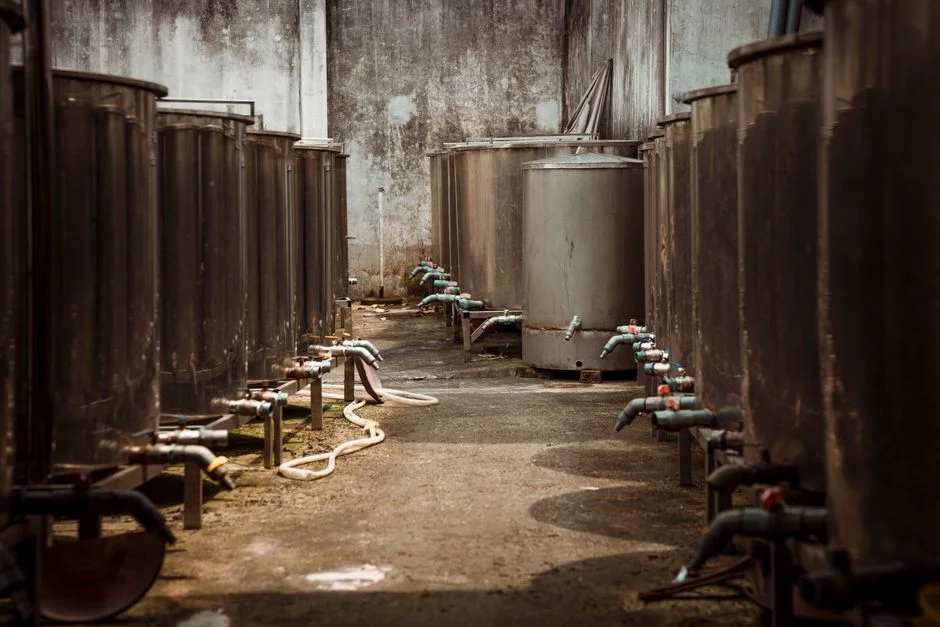
The 2026 turnkey CAPEX for a skid DAF in the 20–50 m³/h range, packaged with PLC controls, sat tank, and chemical dosing, runs $80K–$220K installed. A lamella clarifier of equal hydraulic capacity runs $40K–$120K. Hybrid DAF + lamella typically lands at $130K–$300K depending on tankage and integration scope. OPEX drivers differ: DAF compressed-air energy is 0.1–0.3 kWh/m³, and coagulant/polymer dosing adds $0.02–$0.08 per m³ treated. Clarifier OPEX is mostly sludge pumping energy and modest polymer for flocculation aid.
| Cost line item (2026 USD) | Skid DAF (20–50 m³/h) | Lamella clarifier (20–50 m³/h) | Hybrid DAF + lamella |
|---|---|---|---|
| Turnkey CAPEX | $80K–$220K | $40K–$120K | $130K–$300K |
| Energy (kWh/m³) | 0.1–0.3 (air saturation) | 0.05–0.1 (pumping, rake) | 0.15–0.4 combined |
| Chemical OPEX ($/m³) | $0.02–$0.08 | $0.01–$0.03 | $0.03–$0.10 |
| Sludge haulage | 2–5% float, ~40% lower volume | 1–3% underflow, baseline | ~25% lower than clarifier alone |
| Expected service life | 15–20 years (skid) | 25+ years (tank), 10–15 (rake) | 20+ years combined |
| Typical payback lever | FOG surcharge avoidance | Lower CAPEX vs DAF | Surplus avoidance + reuse credit |
Payback levers for Seattle plants stack up fast: avoiding FOG surcharges at $0.18/lb above limit, avoiding BOD surcharges at $0.12/lb, earning Seattle Public Utilities water-reuse credits, and reducing haulage from improved sludge thickening (per Ecologix F&B DAF brief, 2025). For a 30 m³/h brewery stream that was incurring ~$8K/month in combined FOG/BOD surcharges, a $150K DAF skid pays back in 18–24 months. Lifecycle note: DAF skids have 15–20 year service life with rotating-element (saturator pump, skimmer, valves) replacement; cast-in-place clarifiers last 25+ years but cost more to retrofit or relocate. For multi-train visions, scale up from the ConAgra 3.42 → 4.25 MGD Pacific Northwest benchmark (McIlvaine, 2026) — a 4 MGD campus is roughly eight 50 m³/h DAF skids running in parallel, which is a realistic layout for a regional brewery or seafood processor expanding in 2026.
Frequently Asked Questions
Is a DAF or a clarifier better for brewery wastewater in Seattle?
DAF is the right primary separator for Seattle brewery wastewater because FOG from brewing, CIP caustic, and yeast carryover produce emulsified loads that a clarifier cannot float. A DAF with proper coagulant/flocculant chemistry typically removes 80–95% TSS and 60–90% FOG in a single stage, clearing the King County IWS 100 mg/L oil-and-grease daily maximum.
When is a lamella clarifier enough for a food or beverage plant?
A lamella clarifier is enough when influent FOG is consistently below ~50 mg/L and the suspended solids are mostly settleable — vegetable wash water, grain steep, fruit pomace, or low-strength produce rinse. In those cases the 20–40 m³/m²·h surface loading of a lamella delivers 50–70% TSS removal at 40–60% of the DAF CAPEX.
What are the King County IWS oil and grease limits for food and beverage dischargers in 2026?
King County IWS enforces oil and grease at 100 mg/L daily maximum, TSS at 200 mg/L daily maximum, and BOD at 300 mg/L daily maximum for significant industrial users, with surcharges above each threshold. These limits are stricter than federal categorical pretreatment standards and are the typical CAPEX justification for a DAF.
How long does a hybrid DAF + clarifier train take to pay back?
A hybrid DAF + lamella train at 20–50 m³/h typically pays back in 18–36 months at a Seattle F&B plant, driven by FOG/BOD surcharge avoidance ($0.18/lb and $0.12/lb respectively), 20–30% lower sludge haulage costs, and 30–50% longer membrane CIP intervals if the plant is on a reuse train.
What size DAF does a small craft brewery in Seattle actually need?
A Seattle craft brewery producing 5,000–15,000 bbl/yr typically needs a DAF rated for 5–15 m³/h peak flow, with a 1–2 m³ sludge hopper and a 50–100 L saturator. That is well within the smallest standard skid and lands at the low end of the 2026 turnkey CAPEX range. The brewery ETP expansion guide covers the larger-scale analog at macro-brewery throughput.