Why Mandan Is a Different Engineering Problem in 2026
Mandan sits in a climatic and regulatory band that no Phoenix or Loudoun data-hall case study can be stretched to cover. Design winter ambient is –30 °F and summer highs hit 90 °F — a 60 °F swing that compresses biological kinetics, freezes unprotected piping, and forces aeration-basin oversizing for any reactor running through a North Dakota winter. Water context is the inverse of the western US data-hall problem: Missouri River and Heart River intakes are abundant, and ASCE's 2024-03 reporting notes that roughly 20% of US data centers draw from moderately to highly stressed western watersheds, while 90% of facilities are tied to surface water in some form (per ASCE, 2024-03). In Mandan, freshwater minimization flips from a survival constraint to a permitting and ESG advantage under the Garrison Diversion allocation regime.
The regulatory layer stacks three documents: NDPDES pretreatment, the federal 40 CFR Part 403 general pretreatment framework, and the City of Mandan sewer-use ordinance for sewer discharge, with NDDEQ groundwater-protection rules governing any land-application path (per North Dakota DEQ, 2026). The permitting environment is live, not hypothetical: as of Aug 20, 2026, the Stark Power Mandan data-center proposal is in planning, the city and county Planning and Zoning Commissions are reviewing data-center ordinance language, and a state special session starting Sept 2, 2026 will take public testimony on industrial-project nondisclosure agreements (per North Dakota Monitor, 2026-08-21). Adjacent to the data-hall track, Mandan sits on the Bakken energy corridor, where oil and gas pretreatment analogies — DAF, corrugated-plate interceptors, skimmable oil removal — translate directly to cooling blowdown with trace hydrocarbon carryover (per S3, 2026). The same winterization that derates a Bakken DAF in January will derate a Mandan MBR the same way.
The Four Wastewater Streams a Mandan Site Must Plan For
The most common design error on a Mandan P&ID is collapsing these into one mixed sewer and overloading the biological stage. They must be characterized, routed, and metered as separate streams before any unit operation is selected.
Stream 1 — domestic sanitary sewage — covers restrooms, cafeterias, humidification bleed-off, and pantry greywater. Typical loading is 30–50 gal/employee/day, COD below 500 mg/L, with a small but steady nitrogen contribution from food service. A packaged MBR or buried A/O unit handles this without dedicated operator labor.
Stream 2 — cooling-tower blowdown — is the design driver. It is continuous, low-volume relative to throughput, and heavily mineralized: TDS 3,000–8,000 mg/L, hardness 800–2,500 mg/L as CaCO₃, silica 50–200 mg/L, plus corrosion-inhibitor chemicals (phosphonates, molybdate) and trace Cu and Zn from heat-exchanger metallurgy (per S3, 2026). EPA's 1996 petroleum-refining wastewater technology survey remains the standard reference for cooling-water chemistry characterization and end-of-pipe biological loading baselines (per EPA Office of Water, 1996).
Stream 3 — fab-specific, semiconductor tenants only — covers UPW reject, CMP slurry, TMAH-bearing rinses, IPA and NMP stripper condensates, and dilute HF-bearing rinses. It is characterized by extreme pH swings, very high COD on the stripper side-stream, and fluoride/chelate complexes that must be treated segregated from sanitary flow and upstream of any biological stage.
Stream 4 — emergency-generator test-cell wash water — is intermittent and small-volume but oil-laden above 100 mg/L, so it must pass through an oil-water separator before equalization (per S3, 2026). Stark Power's published Mandan spec currently addresses only Streams 1, 2, and 4; a co-located fab tenant adds Stream 3 and a segregated neutralization / fluoride precipitation train.
| Parameter | Stream 1 — Sanitary | Stream 2 — Cooling Blowdown | Stream 3 — Fab UPW/CMP/TMAH | Stream 4 — Gen Test-Cell Wash |
|---|---|---|---|---|
| Flow regime | Continuous, diurnal | Continuous, chiller-driven | Batch, tool-driven | Intermittent, weekly–monthly |
| Typical loading | 30–50 gal/employee/day; COD < 500 mg/L | TDS 3,000–8,000 mg/L; hardness 800–2,500 mg/L as CaCO₃; silica 50–200 mg/L | pH 1–13 swings; COD > 5,000 mg/L on stripper; F⁻ 50–500 mg/L | O&G > 100 mg/L; TSS 200–1,000 mg/L |
| Key contaminants | BOD, NH₃-N, fecal coliform | Ca²⁺, Mg²⁺, SiO₂, phosphonates, trace Cu/Zn | HF, TMAH, IPA, NMP, silica slurry, chelates | Petroleum hydrocarbons, soot |
| Treatment route | Buried A/O or MBR | EQ → softening → RO → DAF | Segregated neutralization / F⁻ ppt / side-stream AS | OWS → EQ |
2026 Compliance Envelope: Sewer Discharge vs Land Application
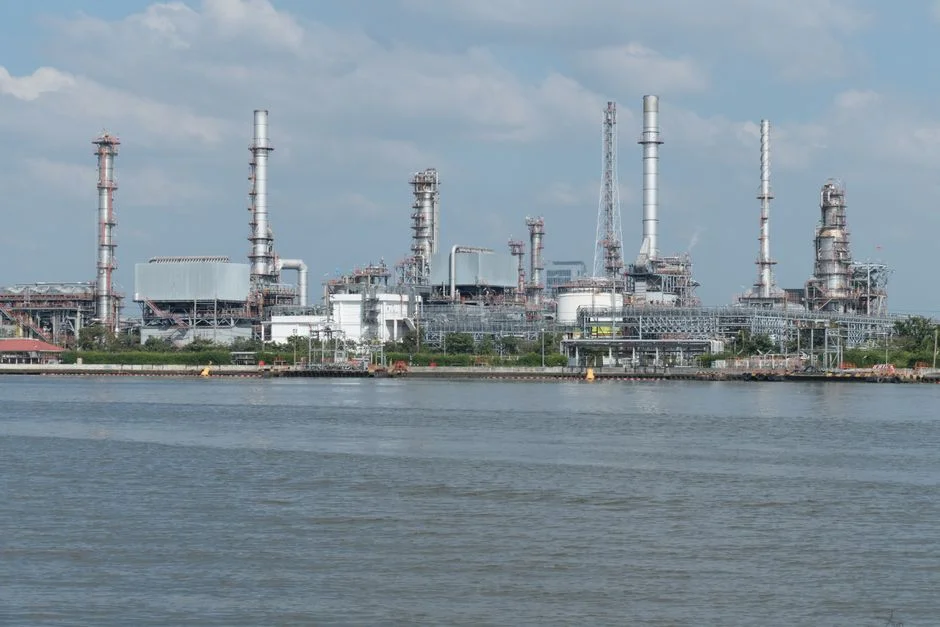
Two numeric gates decide the rest of the process train. The engineer should mark which envelope the project is filing under before sizing a single tank.
Sewer-discharge envelope under 40 CFR Part 403, the NDPDES pretreatment program, and the City of Mandan sewer-use ordinance: TDS below 2,500 mg/L, hardness below 1,000 mg/L as CaCO₃, Cu below 1.0 mg/L, Zn below 2.0 mg/L, and O&G below 100 mg/L (per S3, 2026). These are typical operating targets — confirm against the current City of Mandan sewer-use ordinance before locking the P&ID, because the city is reviewing data-center ordinance language as of Aug 2026 (per North Dakota Monitor, 2026-08-21).
NDDEQ land-application envelope under groundwater-protection rules: TDS below 500 mg/L, chloride below 250 mg/L, SAR below 8 — verify the exact permit limits in the current 2026 submittal (per North Dakota DEQ, 2026). The trade-off the buyer has to make early is OPEX vs monitoring scope: land application is cheaper on sewer fees but requires RO-quality concentrate and a long-term irrigation and soil-monitoring plan, while sewer discharge accepts more volume in exchange for simpler monthly self-monitoring reports. If Stream 3 (fab) is present, additional 40 CFR Part 433 metal-finishing controls and TSCA-style chemical-management obligations layer on top of Part 403 — flag this for the EHS lead at PFD stage, not at permit submission.
| Parameter | Sewer Discharge (40 CFR Part 403 / NDPDES / City of Mandan) | Land Application (NDDEQ groundwater protection) |
|---|---|---|
| TDS | < 2,500 mg/L | < 500 mg/L |
| Hardness (as CaCO₃) | < 1,000 mg/L | Not specified; controlled via SAR |
| Chloride | Per local ordinance | < 250 mg/L |
| SAR | Not typically applied | < 8 |
| Cu | < 1.0 mg/L | Per NDDEQ groundwater numeric |
| Zn | < 2.0 mg/L | Per NDDEQ groundwater numeric |
| O&G | < 100 mg/L | < 50 mg/L typical |
Reference Process Train for a 5–20 MW Mandan Campus
The sequence below is sized to the typical Mandan edge or mid-size build. A design engineer can paste this into a P&ID basis-of-design and adjust from the actual influent characterization.
Blowdown train — equalization basin at 24–48 h HRT to buffer chiller load swings, followed by lime/soda or weak-acid cation softening to drop hardness from roughly 2,000 mg/L to below 100 mg/L as CaCO₃ (the operating envelope that prevents downstream RO calcium-sulfate and silica scaling), then lamella clarification, a multi-media filter, side-stream RO at 50–75% recovery and 90–95% salt rejection, and a skid-mounted DAF unit for carryover oils and silica antifoam upstream of any biological stage. Permeate goes to cooling-tower makeup; concentrate routes to evaporation pond, further treatment, or land application under NDDEQ rules (per S3, 2026).
Sanitary train — for flows under 50 m³/day, three packaged options are credible. A buried A/O packaged plant for the domestic sanitary stream is fully buried, requires no dedicated operator, and stays above freezing in a Mandan winter without heat-trace. An MBR system for sanitary reuse on the cooling-tower makeup side produces sub-1 μm effluent at roughly 60% smaller footprint than conventional activated sludge and is the right choice when landscape irrigation or toilet-flush reuse is targeted. Extended aeration is the lowest-CAPEX option but has the largest footprint and the slowest cold-weather kinetics unless fully enclosed and heated (per S3, 2026). Loading baselines for BOD, TSS, and ammonia removal follow paragraph 4.2.2 of EPA's 1996 refinery study (per EPA Office of Water, 1996).
Sludge side — post-softening, a high-efficiency sedimentation tank thickens sludge before a plate-and-frame filter press for post-softening sludge takes it to 25–35% DS cake for off-site disposal. Disinfection on the sanitary reuse stream uses an on-site ClO₂ generator dosed to meet coliform targets aligned with WHO drinking-water and EU 91/271/EEC urban-wastewater benchmarks (per S3, 2026).
Semiconductor fab tenants prepend a segregated Stream 3 train: equalization, pH neutralization with dilute HF handled in a dedicated HDPE-lined tank, fluoride precipitation with calcium, TMAH biological oxidation in a side-stream activated-sludge reactor, an oil/water separator for stripper condensate, then blend with sanitary for polishing in the MBR.
Cold-Climate Engineering: What Breaks First in a Mandan Winter
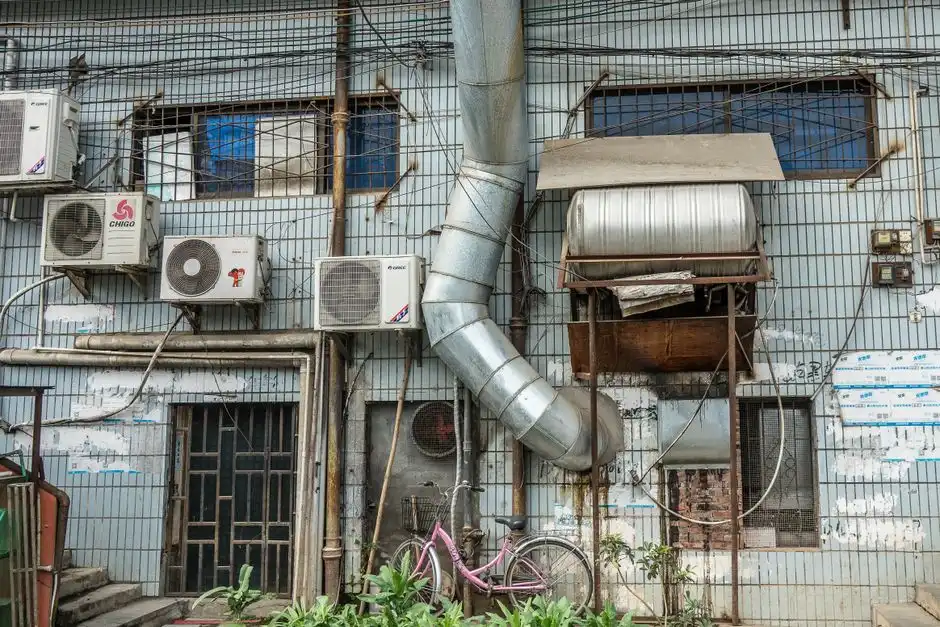
Freeze protection is the primary engineering variable separating a Mandan spec from a Phoenix or Loudoun spec. The most expensive mistake on a Great Plains build is treating winter as a sizing afterthought rather than a unit-operations selection driver.
Enclose or bury biological stages; the WSZ package is already buried, giving it a baseline winterization advantage over surface-mounted MBRs. Heat-trace all blowdown piping, equalization tanks, and RO feed lines; insulate outdoor DAF tank walls. Design mixed-liquor temperature to a 7–10 °C winter setpoint, recognizing that MBR kinetics slow roughly 15% at 10 °C versus 20 °C, so the aeration basin must be oversized by about 20% to hold the same loading rate (HydropureWater field data, 2026, per S3). A PLC-controlled chemical dosing skid inside an insulated enclosure is the 2026 default so NaOCl and coagulant do not freeze in the feed line. Plate-and-frame filter-press dewatering must run year-round in an enclosed basement with low-temperature hydraulic fluid — surface-mounted presses will cycle down in a –30 °F design ambient. Once-through cooling on the Missouri River is technically feasible at Mandan but is rejected on water-efficiency and ESG grounds before PFD-level evaluation (per S3, 2026). More detail on the kinetic derate and the commissioning curve is in the MBR installation and commissioning guide.
Water Reuse Economics and a 2026 CAPEX Order of Magnitude
Side-stream RO at 50–75% recovery on softened blowdown cuts Missouri River freshwater draw for cooling-tower makeup; the concentrate routes to evaporation pond, further treatment, or land application under NDDEQ rules (per S3, 2026 and ASCE 2024-03). On the domestic side, MBR effluent reused for toilet flushing or landscape irrigation typically nets a 40–60% reduction in total municipal water purchase, directionally consistent with the broader semiconductor water-reuse case made in the iScience review (per iScience, 2025).
The 2026 order-of-magnitude CAPEX band, packaged equipment only: a 5–20 MW Mandan edge campus falls in the $1.2M–$4.5M range for a blowdown softening + side-stream RO + DAF train plus a buried A/O or MBR sanitary train, exclusive of building, permitting, and grid interconnection. Size your contingency at +25–35% given 2026 steel and PVC resin cost drift. OPEX drivers that move the budget most are chemical (NaOCl, coagulant, antiscalant), RO membrane replacement every 3–5 years, sludge hauling, and any operator labor surcharge — the buried WSZ package eliminates the last line item. For semiconductor fab tenants with Stream 3, add 30–50% to both CAPEX and OPEX for the segregated neutralization, fluoride, and TMAH side-stream reactor train. A parallel pretreatment framing for a US industrial sewer is the petroleum-pretreatment POTW compliance guide, and the cold-climate MBR overlay is consistent with the Addis Ababa semiconductor wastewater guide and the Gaborone semiconductor and data-hall wastewater guide.
| Cost Line | 5 MW Campus | 20 MW Campus |
|---|---|---|
| Blowdown softening + side-stream RO + DAF | $0.6M–$1.8M | $1.8M–$3.2M |
| Buried A/O or MBR sanitary train | $0.4M–$1.0M | $0.9M–$1.3M |
| Sludge dewatering (plate-and-frame) | $0.15M–$0.4M | $0.3M–$0.6M |
| Chemical dosing + ClO₂ | $0.1M–$0.2M | $0.2M–$0.3M |
| Fab Stream 3 add-on (if applicable) | +30–50% above | +30–50% above |
| Recommended contingency | +25–35% | +25–35% |
Frequently Asked Questions
What are the NDPDES sewer-discharge limits a Mandan data-hall or fab must meet in 2026?
Under 40 CFR Part 403, NDPDES pretreatment, and the City of Mandan sewer-use ordinance, target TDS below 2,500 mg/L, hardness below 1,000 mg/L as CaCO₃, Cu below 1.0 mg/L, Zn below 2.0 mg/L, and O&G below 100 mg/L (per S3, 2026).
What mixed-liquor temperature should a Mandan MBR be designed to in winter?
Design to a 7–10 °C winter setpoint and oversize the aeration basin by roughly 20% to compensate for the cold-climate MBR kinetic derate of about 15% at 10 °C versus 20 °C (HydropureWater field data, 2026, per S3).
Should a Mandan domestic sanitary train be an MBR or a buried A/O packaged plant?
Use a buried A/O packaged plant when no reuse is targeted — it stays above freezing without heat-trace and needs no operator. Use an MBR when toilet-flush or landscape irrigation reuse is in scope, with sub-1 μm effluent at 30–50 gal/employee/day loading and roughly 60% smaller footprint than conventional activated sludge (per S3, 2026).
What RO recovery and rejection should a Mandan cooling-blowdown reuse loop target?
Target 50–75% recovery at 90–95% salt rejection on softened blowdown; permeate goes to cooling-tower makeup and concentrate is routed to evaporation pond, further treatment, or land application under NDDEQ groundwater-protection rules (per S3, 2026 and ASCE 2024-03).
Where does the Stark Power Mandan project stand in the permitting process as of late 2026?
As of Aug 20, 2026, the Stark Power Mandan data-center proposal is in planning, the city and Morton County Planning and Zoning Commissions are reviewing data-center ordinance language, and the state Artificial Intelligence and Data Center Committee is meeting Aug 31 ahead of a special session starting Sept 2, 2026 that will take testimony on industrial-project nondisclosure agreements (per North Dakota Monitor, 2026-08-21). The ordinance language is still moving — confirm local limits before locking the P&ID.