
Why Mandan Is a Different Cooling-Water Problem Than Phoenix or Loudoun
A data center in Mandan, North Dakota must treat two distinct wastewater streams in 2026: domestic sanitary sewage and cooling-tower blowdown. Blowdown carries high total dissolved solids (TDS), hardness, silica, and trace metals, requiring softening, side-stream filtration, and often reverse osmosis, with discharge to the City of Mandan sanitary sewer or land application under a North Dakota Department of Environmental Quality permit.
Mandan sits on the Missouri River in Morton County, with a design winter temperature of –30 °F and summer highs of 90 °F. This 60 °F swing compresses biological kinetics and freezes unprotected piping. The Great Plains water profile is a strategic advantage: ASCE's reporting notes that about 20% of US data centers draw from moderately to highly stressed western watersheds, while 90% of facilities are tied to surface water in some form (ASCE, 2024-03). Mandan is the opposite case — Missouri River and Heart River intakes are abundant, and the Garrison Diversion allocation regime rewards freshwater minimization as a permitting and ESG win, not a survival constraint. That is why pretreatment compliance on a Great Plains industrial sewer is the closer engineering reference than Phoenix evaporative-cooling case studies.
Mandan also sits on the Bakken energy corridor, where oil & gas pretreatment analogies — DAF, corrugated-plate interceptors, skimmable oil removal — translate directly to data-center blowdown with trace hydrocarbon carryover. Cold climate changes which unit operations fail first rather than eliminating the water-management problem.
The Two Wastewater Streams a Mandan Data Center Must Manage
ASCE frames data-center effluents as two primary streams: domestic wastewater and cooling effluents (ASCE, 2024-03). For a Mandan campus, the engineering reality includes a third minor stream from generator test cells.
Stream 1 — domestic sanitary sewage — covers restrooms, cafeterias, humidification, and pantry greywater. Typical loading is 30–50 gal/employee/day, COD below 500 mg/L, and a small but steady nitrogen load from food service. A packaged MBR for near-reuse effluent on the sanitary side handles this without dedicated operator labor.
Stream 2 — cooling-tower blowdown — is the design driver. It is continuous, low-volume relative to throughput, and heavily mineralized: TDS 3,000–8,000 mg/L, hardness 800–2,500 mg/L as CaCO₃, silica 50–200 mg/L, plus corrosion-inhibitor chemicals (phosphonates, molybdate) and trace Cu / Zn from heat-exchanger metallurgy. EPA's petroleum-refining wastewater technology survey remains the standard reference for cooling-water chemistry characterization and end-of-pipe biological treatment (EPA Office of Water, 1996).
Stream 3 — emergency-generator test-cell wash water — is intermittent, small, but oil-laden above 100 mg/L, so it routes through an oil-water separator before equalization. Once-through cooling water is technically feasible on the Missouri River at Mandan, but it is rejected on water-efficiency and ESG grounds before PFD-level evaluation.
Process Train for Cooling Blowdown: Softening, Side-Stream RO, and DAF Polishing
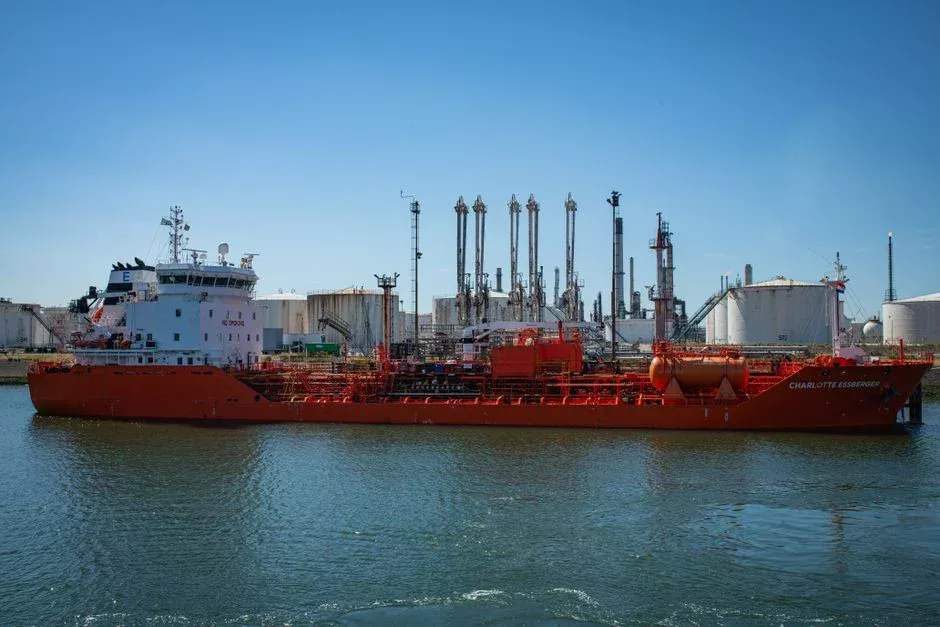
For a 5–20 MW Mandan edge or mid-size campus, the specified process train is: equalization → lime/soda or weak-acid cation softening → lamella clarification → media filter → side-stream RO → DAF polishing → permeate to cooling-tower makeup, concentrate to evaporation pond or further treatment.
Equalization basin HRT of 24–48 h buffers blowdown variability from chiller load swings. Softening drops hardness from ~2,000 mg/L to below 100 mg/L as CaCO₃, the operating envelope that prevents downstream RO calcium-sulfate and silica scaling. Side-stream RO at 50–75% recovery with 90–95% salt rejection produces reusable permeate for cooling-tower makeup and a concentrate for further treatment or ponding. A skid-mounted DAF unit for cooling-blowdown pretreatment upstream of any biological stage removes carryover oils and silica antifoam that would otherwise foul MBR membranes. Post-softening, a high-efficiency sedimentation tank thickens sludge before a plate-and-frame filter press takes it to 25–35% DS cake for off-site disposal.
| Unit Operation | Design Parameter | Typical Value |
|---|---|---|
| Equalization basin | HRT | 24–48 h |
| Lime/soda softener | Hardness outlet | <100 mg/L as CaCO₃ |
| Lamella clarifier | Surface loading | 2–4 m³/m²·h |
| Side-stream RO | Recovery / rejection | 50–75% / 90–95% |
| DAF | Hydraulic capacity | 4–300 m³/h |
| Filter press cake | DS content | 25–35% |
Domestic Sanitary Side: Packaged A/O, MBR, or Extended Aeration?
For a Mandan data-center sanitary stream under 50 m³/day, three packaged options are credible. Each maps to a different reuse and footprint constraint.
The buried A/O packaged plant for the domestic sanitary stream (WSZ series, 1–80 m³/h) is fully buried, requires no dedicated operator, and stays above freezing in a Mandan winter without heat-trace. MBR (10–2,000 m³/day) is the right choice when landscape irrigation or toilet-flush reuse is targeted: sub-1 μm effluent, 60% smaller footprint than conventional activated sludge. Extended aeration is the lowest CAPEX option but has the largest footprint and the slowest cold-weather kinetics unless fully enclosed and heated. EPA's biological-treatment guidance (paragraph 4.2.2 of the 1996 refinery study) sets the design loading baseline for BOD, TSS, and ammonia removal that the Mandan plant must meet (EPA Office of Water, 1996).
| Option | Flow Range | CAPEX vs MBR | Footprint | Reuse Suitability |
|---|---|---|---|---|
| WSZ underground A/O | 1–80 m³/h | ~70% | Buried, zero surface | Discharge only |
| MBR (DF series) | 10–2,000 m³/d | 1.0× (baseline) | ~40% of conventional | Irrigation / toilet flush |
| Extended aeration | 10–500 m³/d | ~80% | Largest | Discharge only |
2026 Discharge Compliance in North Dakota: NDPDES and POTW Sewer-Use Limits
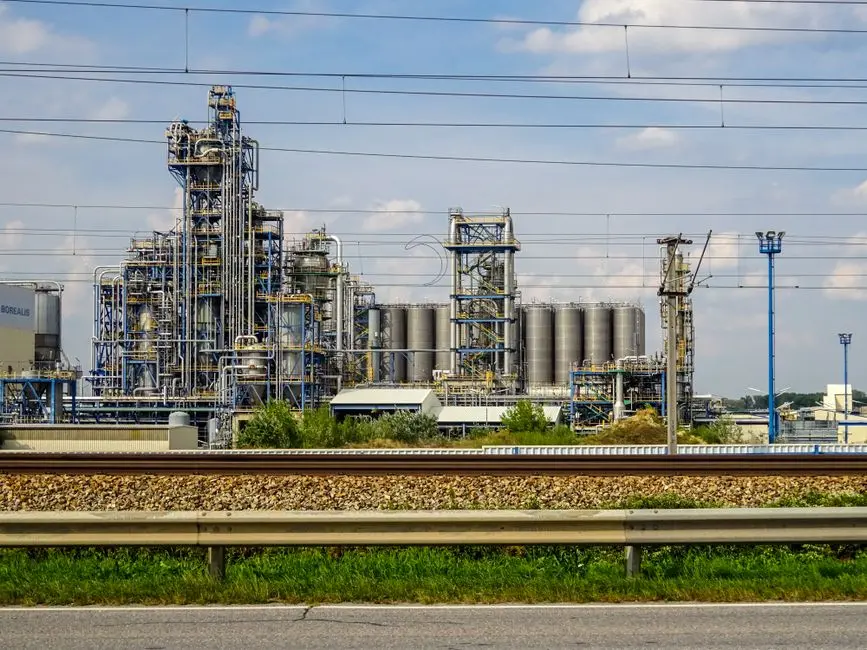
Discharge to the City of Mandan sanitary sewer is governed by the local sewer-use ordinance, the NDPDES pretreatment program, and the federal 40 CFR Part 403 general pretreatment framework. Cooling-blowdown sewer discharge is typically held to the following numeric envelope before the operator opens a discharge valve; verify these against the current North Dakota DEQ submittal for the specific permit action.
| Parameter | Typical Sewer-Use Target | Land-Application Target (NDDEQ) |
|---|---|---|
| TDS | <2,500 mg/L | <500 mg/L |
| Hardness | <1,000 mg/L as CaCO₃ | — |
| Copper | <1.0 mg/L | <0.2 mg/L |
| Lead | <0.6 mg/L | <0.1 mg/L |
| Zinc | <2.0 mg/L | <2.0 mg/L |
| Oil & grease | <100 mg/L | <10 mg/L |
| SAR | — | <8 |
| Chloride | — | <250 mg/L |
If the concentrate is land-applied instead of sewered, the North Dakota Department of Environmental Quality groundwater protection rules apply, with the more aggressive agricultural-reuse numbers in the right column. Disinfection on the sanitary reuse stream uses an on-site ClO2 generator for the sanitary reuse stream, dosed to meet coliform targets aligned with WHO drinking-water and EU 91/271/EEC urban-wastewater compliance benchmarks. For pretreatment framing on US industrial sewers, see pretreatment compliance on a US industrial sewer as a parallel reference.
Cold-Climate Winterization: Keeping the Plant Alive at –30 °F
Freeze protection is the primary engineering variable separating a Mandan spec from a Phoenix or Loudoun spec. Enclose or bury biological stages; the WSZ package is already buried, providing an advantage over surface-mounted MBRs. Heat-trace all blowdown piping, equalization tanks, and RO feed lines, and insulate outdoor DAF tank walls. Design the mixed-liquor temperature to a 7–10 °C winter setpoint, recognizing that MBR kinetics slow roughly 15% at 10 °C versus 20 °C, which requires oversizing the aeration basin by about 20% to hold the same loading rate (HydropureWater field data, 2026). Provide an enclosed, snow-shielded chemical dosing skid so NaOCl and coagulant do not freeze in the feed line; a PLC-controlled chemical dosing skid for softener and coagulant feed mounted inside an insulated enclosure is the standard 2026 solution. Plate-and-frame filter press dewatering operates year-round in an enclosed basement with low-temperature hydraulic fluid.
Frequently Asked Questions
What wastewater and cooling blowdown treatment does a data center in Mandan, United States need?
A Mandan data center in 2026 needs a packaged A/O or MBR plant for the domestic sanitary stream (30–50 gal/employee/day, COD under 500 mg/L) and a separate cooling-blowdown train consisting of equalization, lime/soda softening to under 100 mg/L hardness, side-stream RO at 50–75% recovery, and DAF polishing — with discharge to the City of Mandan sanitary sewer under NDPDES pretreatment limits or land application under NDDEQ rules. Cold-climate winterization — heat-trace, buried reactors, and a 7–10 °C mixed-liquor design point — is mandatory.
What numeric discharge limits apply to cooling-tower blowdown in North Dakota?
For sewer discharge, target TDS under 2,500 mg/L, hardness under 1,000 mg/L as CaCO₃, copper under 1.0 mg/L, zinc under 2.0 mg/L, and oil & grease under 100 mg/L under the 40 CFR Part 403 general pretreatment framework layered with the City of Mandan sewer-use ordinance. For land application under NDDEQ rules, TDS drops to under 500 mg/L, chloride under 250 mg/L, and SAR under 8 — confirm the exact permit limits in the current submittal (North Dakota DEQ, 2026).
Can a Mandan data center reuse cooling-tower blowdown for cooling-tower makeup?
Yes — a side-stream RO at 50–75% recovery and 90–95% salt rejection produces permeate suitable for cooling-tower makeup after softening, cutting freshwater draw from the Missouri River. The concentrate is then routed to an evaporation pond, further treatment, or land application under NDDEQ groundwater-protection rules (per ASCE 2024-