Why Iraq's Textile Mills Need a Dedicated Treatment Train in 2026
Textile wastewater treatment in Iraq requires a multi-barrier train — DAF pre-treatment, equalization, anaerobic/aerobic biology (UASB or MBR), and RO polishing — to reduce reactive-dye COD (typically 800–2,500 mg/L), color (1,000–1,500 ADMI), and TDS to meet Iraqi MoH/AMD discharge limits. Field data from 14 Ramadhan textile industries in Iraq (Abid et al., 2012) confirms effluent dye concentrations of 20–50 mg/L without adequate treatment, making DAF + MBR + RO the standard 2026 baseline for new Iraqi mills.
EPIC's 2024 report on Iraq's wastewater governance documents millions of cubic metres of sewage discharged untreated daily from Sulaymaniyah to Basra, with industrial byproducts — oils, heavy metals, and hazardous compounds — reaching the Tigris–Euphrates system (EPIC, 2024). In southern Iraq, offtake and intense evaporation concentrate those pollutants and merge with the separate crisis of seawater intrusion, shrinking the usable freshwater pool for any industrial offtaker. A cotton/denim mill sits directly inside that pinch point.
The mill's water footprint is the second pressure. Wet processing consumes roughly 200 L of process water per 1 kg of textile product (Ghaly et al., 2014); a 50-tonne/day Iraqi mill therefore discharges on the order of 10,000 m³/day of reactive-dye effluent. At the 14 Ramadhan site, Abid et al. (2012) measured outflow dye concentrations of 20–50 mg/L — a level that provincial authorities will not accept against the 10 mg/L reactive-dye ceiling now enforced under 2024 MoH updates. Closing that gap demands an integrated, multi-stage train: physical-chemical DAF for suspended solids and color, anaerobic + aerobic biology for COD and azo-dye cleavage, and RO for TDS polishing to enable reuse.
Iraqi Discharge Limits and Process-Water Reuse Targets (2026)
Iraqi AMD/MoH permitting in 2026 anchors textile effluent to pH 6–9, COD ≤150 mg/L, BOD ≤40 mg/L, TSS ≤50 mg/L, residual Cl₂ ≤1 mg/L, color ≤100 ADMI, and TDS ≤1,500 mg/L for any reuse pathway. Influent from a reactive-dye cotton/denim wet-processing line is the inverse of every one of those numbers: COD 800–2,500 mg/L, BOD 200–600 mg/L, color 1,000–1,500 ADMI, TDS 2,500–6,000 mg/L. Each barrier in the train must therefore be credited with a defined removal slice — DAF for TSS/color, UASB for COD and azo cleavage, MBR for residual COD/color/SS, RO for TDS — so the engineer can defend the design in front of the Ministry.
Basra adds a second constraint that Baghdad and Erbil do not. Seawater intrusion regularly pushes Shatt al-Arab intake TDS above 3,500 mg/L; if the mill is targeting reuse rather than just compliant discharge, RO is not optional — it is the only barrier that brings TDS below 1,500 mg/L. Engineers should also note that the 14 Ramadhan field data (Abid et al., 2012) predates the stricter 2024 MoH enforcement updates and should request the latest provincial decree before locking the basis of design.
| Parameter | Typical reactive-dye influent | Iraqi AMD/MoH 2026 ceiling | Implied removal required |
|---|---|---|---|
| pH | 9–12 (post-dyeing) | 6–9 | Neutralization in equalization |
| COD (mg/L) | 800–2,500 | ≤150 | ≥90% across train |
| BOD (mg/L) | 200–600 | ≤40 | ≥90% across train |
| TSS (mg/L) | 200–800 | ≤50 | ≥90% (DAF-led) |
| Color (ADMI) | 1,000–1,500 | ≤100 | ≥93% (DAF + MBR + RO) |
| Reactive dye (mg/L) | 20–50 (Abid et al., 2012) | ≤10 | ≥80% across train |
| TDS (mg/L) — reuse case | 2,500–6,000 | ≤1,500 (reuse) | RO polishing mandatory |
The 2026 Reference Process Train for Iraqi Textile Mills
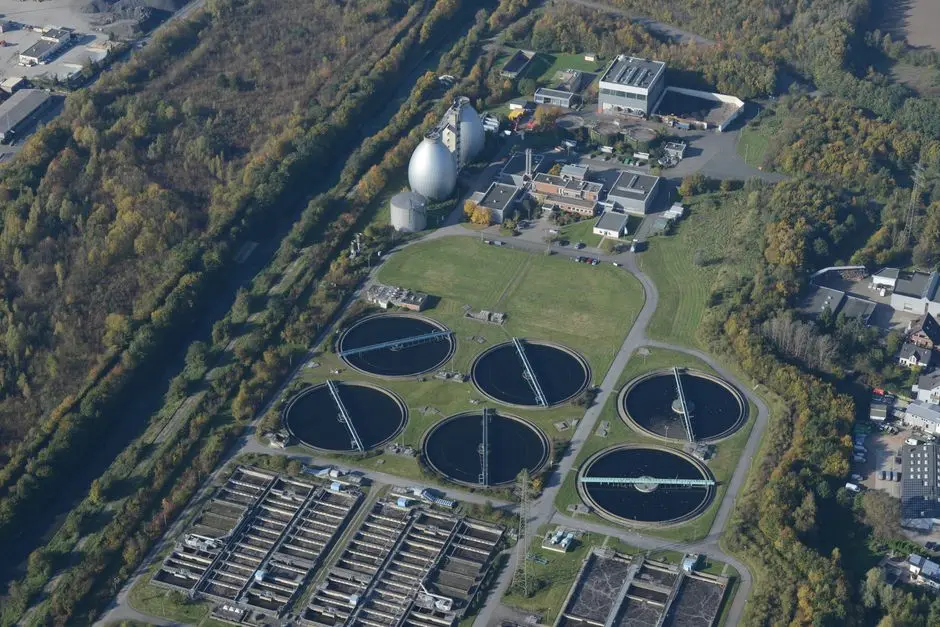
Stage 1 — Screening & Equalization. A rotary bar screen at 5 mm opening protects downstream pumps, followed by an equalization tank sized for 8–12 h HRT. Equalization is what makes the rest of the train survivable: reactive-dye batch dumps swing pH between 9 and 12 and temperature well above 40 °C, and without buffering those swings, biology collapses. Stage 2 — DAF pre-treatment. A textile-grade DAF system dosed with FeCl₃ at 80–150 mg/L and anionic PAM at 1–3 mg/L removes 80–90% of TSS, 50–70% of color, and 30–40% of COD before the water ever reaches biology. For deeper guidance on DAF removal rates and applications, see our 2026 DAF engineering guide with removal rates.
Stage 3 — Anaerobic (UASB or IC). A high-rate UASB run at HRT 18–24 h, 35–37 °C, and OLR 3–5 kg COD/m³·day achieves 50–70% COD reduction and reductive cleavage of azo dyes — the chemistry that aerobic biology cannot perform on its own. Stage 4 — MBR. A submerged MBR package running at HRT 6–10 h, MLSS 8,000–12,000 mg/L, and SRT 30–60 days delivers effluent COD ≤50 mg/L and color ≤100 ADMI. Stage 5 — RO polishing. An industrial RO polishing skid at 70–85% recovery returns permeate TDS below 50 mg/L, suitable for boiler feed or dye-house rinse reuse. For mills targeting zero-liquid discharge, Shah et al. (2026) report 96.90% COD reduction using KOH-activated Canna indica biochar combined with ozonation, an option worth evaluating as a tertiary polish.
| Stage | Unit operation | Design basis | Expected removal / effluent |
|---|---|---|---|
| 1 | Bar screen + equalization | 5 mm screen; 8–12 h HRT | pH/temp dampening; TSS capture |
| 2 | DAF + coagulant dosing | FeCl₃ 80–150 mg/L; PAM 1–3 mg/L | 80–90% TSS; 50–70% color; 30–40% COD |
| 3 | UASB / IC anaerobic | HRT 18–24 h; 35–37 °C; OLR 3–5 kg COD/m³·d | 50–70% COD; azo-dye cleavage |
| 4 | MBR (submerged PVDF) | HRT 6–10 h; MLSS 8,000–12,000 mg/L; SRT 30–60 d | COD ≤50 mg/L; color ≤100 ADMI |
| 5 | RO polishing | 70–85% recovery; feed 10–15 bar | Permeate TDS <50 mg/L; reusable |
Key Design Parameters and Equipment Sizing for Iraq
DAF unit sizing. Surface loading 15–25 m/h, hydraulic retention 20–40 min, recycle ratio 20–30%, and micro-bubble size 10–50 μm are the proven window for textile, food, and pulp applications. The recycle ratio is the single most-mistuned parameter in DAF specs coming out of the Middle East — under-speccing it starves the contact zone of bubble surface area and wrecks TSS removal.
MBR module sizing. Use a PVDF flat-sheet MBR module at 0.1 μm pore size, design flux 12–18 LMH at -10 to -30 kPa suction, with coarse-bubble aeration at 0.3–0.5 Nm³ air per m³ of permeate for membrane scouring. Pair the MBR with an automatic coagulant and polymer dosing skid calibrated to the FeCl₃/PAM windows above, plus NaOCl for in-situ chemical cleaning every 7–14 days.
RO sizing. 4040 or 8040 spiral-wound polyamide elements, feed pressure 10–15 bar, recovery 70–85%, and CIP every 4–8 weeks using a NaOH/Na-EDTA alkaline stage followed by an HCl low-pH stage. Climate adjustment is non-negotiable: ambient temperatures in Basra and Baghdad regularly hit 45–50 °C, so specify UV-resistant FRP membrane housings and oversize the cooling tower on the RO high-pressure pump to keep feed temperature below 35 °C — every 1 °C above 35 °C costs roughly 1–1.5% of normalized flux.
| Equipment | Parameter | Design value | Iraq-specific note |
|---|---|---|---|
| DAF | Surface loading | 15–25 m/h | Recycle ratio 20–30% |
| DAF | HRT | 20–40 min | Micro-bubble 10–50 μm |
| MBR | Pore size / flux | 0.1 μm; 12–18 LMH | PVDF flat-sheet, -10 to -30 kPa |
| MBR | MLSS / SRT | 8,000–12,000 mg/L; 30–60 d | Aeration 0.3–0.5 Nm³/m³ permeate |
| RO | Elements / pressure | 4040 or 8040; 10–15 bar | Feed T <35 °C — oversize cooling |
| RO | Recovery / CIP | 70–85%; every 4–8 weeks | NaOH/Na-EDTA + HCl cycle |
2026 CAPEX and OPEX Benchmarks for a 500 m³/day Iraqi Textile ETP
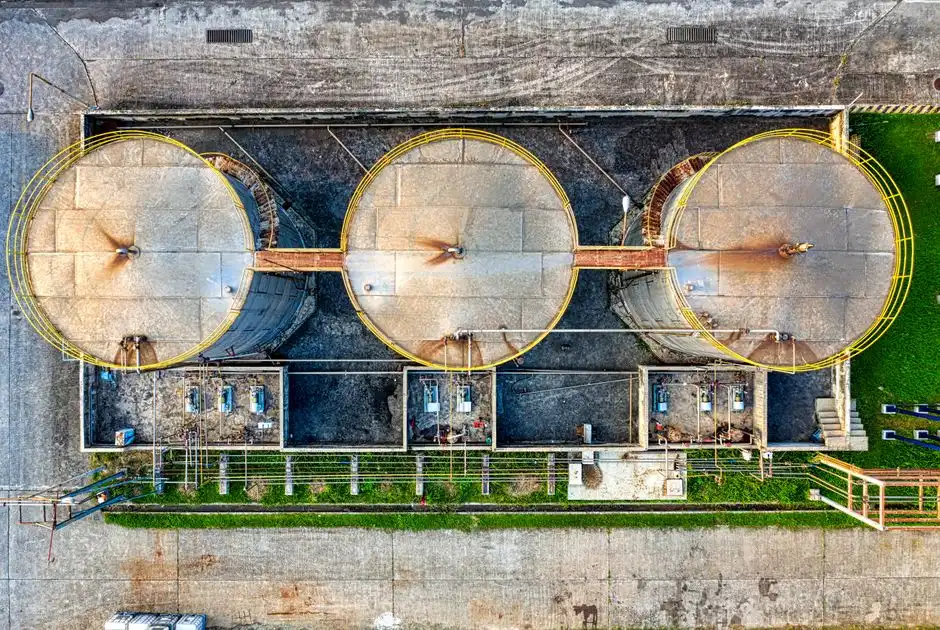
For a 500 m³/day cotton/denim effluent, 2026 CAPEX (FOB China) splits across screening + equalization $25K–$40K, DAF skid $45K–$70K, UASB/MBR package $180K–$280K, RO system $90K–$150K, chemical dosing + sludge dewatering (including a plate-and-frame sludge dewatering press) $50K–$80K, and containerized controls + installation $30K–$60K — totals $420K–$680K. These are budgetary numbers; the binding quote still has to come from a vendor referencing the basis of design.
OPEX per cubic metre of treated effluent: electrical power $0.25–$0.40 (MBR aeration dominates the bill), membrane replacement $0.10–$0.18, chemicals — coagulant, polymer, NaOCl, CIP reagents — $0.20–$0.30, labor $0.15–$0.25, summing to $0.85–$1.30/m³. Iraq adds a 12–18% cost premium for containerization, inland trucking from Um Qasr, and IECEx-rated electrical components in southern oil-and-gas regions. The economics, however, close fast in Basra: water reuse offsets $0.50–$1.20/m³ versus trucked-in potable supply, and avoided AMD fines run $5,000–$50,000 per violation.
| Cost line | 2026 range (USD) | Basis |
|---|---|---|
| Screening + equalization (CAPEX) | $25K–$40K | 500 m³/day basis, FOB China |
| DAF skid (CAPEX) | $45K–$70K | Incl. saturator + scraper |
| UASB + MBR package (CAPEX) | $180K–$280K | Reactor + membranes + blowers |
| RO system (CAPEX) | $90K–$150K | 70–85% recovery skid |
| Dosing + sludge dewatering (CAPEX) | $50K–$80K | Incl. filter press |
| Controls + installation (CAPEX) | $30K–$60K | Containerized MCC + PLC |
| Total CAPEX | $420K–$680K | Pre-Iraq logistics premium |
| Power (OPEX) | $0.25–$0.40/m³ | MBR aeration-dominated |
| Membrane replacement (OPEX) | $0.10–$0.18/m³ | MBR + RO spares |
| Chemicals (OPEX) | $0.20–$0.30/m³ | FeCl₃, PAM, NaOCl, CIP |
| Labor (OPEX) | $0.15–$0.25/m³ | 2–3 operators/shift |
| Total OPEX | $0.85–$1.30/m³ | Excludes Iraq 12–18% premium |
How to Procure and Ship Textile ETP Equipment into Iraq
- Lock the basis of design. Pull 24-h composite samples over 7 days across dye-house discharge, fix the regulatory ceiling (provincial MoH decree, AMD permit), and confirm the reuse target — boiler feed, rinse water, or zero-liquid discharge. Without this, every downstream step is guesswork.
- Issue a technical specification to 2–3 vendors. Compare DAF/MBR/RO footprints, power draws at design flux, and reference mills already running reactive-dye streams. The vendor that has not started a reactive-dye ETP is a liability regardless of price.
- Containerize for Um Qasr or Khor al-Zubair. ISO 20-ft or 40-ft skid-mounting, desiccant packs for the sea leg, and shock/tilt indicators on every crate. Inland trucking from Um Qasr to Basra or Erbil typically takes 2–5 days depending on the security corridor.
- Pre-clear chemicals with AMD/Provincial Council. FeCl₃, NaOCl, antiscalants, and CIP reagents all need import pre-clearance. File the safety data sheets and end-use declarations before the vessel sails — post-shipment amendments routinely stall Um Qasr releases by 3–6 weeks.
- Commission in sequence. Freshwater rinse → biological seed from a nearby domestic STP if available → 6–8 week performance test, with third-party lab verification of COD, BOD, color (ADMI), and TDS at each stage boundary. The MBR should not be brought online until the UASB is stably producing below 400 mg/L COD at design load.
- Operator training and remote support. Minimum 2-week on-site program covering DAF chemistry, MBR flux management, and RO CIP cycles, plus 90 days of remote PLC/SCADA support. Pair the MBR skid with an automatic coagulant and polymer dosing skid pre-commissioned on a single control platform so operators do not have to learn three separate vendor HMI screens.
Frequently Asked Questions
What influent characterization should an Iraqi cotton mill use for ETP design?
Plan on COD 800–2,500 mg/L, BOD 200–600 mg/L, color 1,000–1,500 ADMI, TDS 2,500–6,000 mg/L, pH 9–12, and reactive-dye concentration 20–50 mg/L based on Abid et al. (2012) field data from 14 Ramadhan textile industries in Iraq, cross-checked against the ~200 L/kg textile water-consumption figure from Ghaly et al. (2014).
How much does a 500 m³/day textile ETP cost in Iraq in 2026?
Budget CAPEX of $420K–$680K (FOB China, before Iraq logistics premium) and OPEX of $0.85–$1.30/m³, with the MBR + RO package — typically $180K–$280K and $90K–$150K respectively — driving the largest share of both numbers.
Does a Basra textile mill need RO even if it is only discharging to AMD?
Yes, if any portion of the flow is targeted for reuse. Seawater intrusion pushes Shatt al-Arab intake TDS above 3,500 mg/L, and only RO can bring permeate TDS below the 1,500 mg/L reuse ceiling; for discharge-only operations, RO can be deferred but the DAF + UASB + MBR core still applies.
What is the best treatment sequence for high-COD reactive-dye streams in Iraq?
DAF → equalization → UASB (anaerobic azo cleavage) → MBR (polish COD and color) → RO (TDS and final color barrier), targeting ≥95% overall COD removal, ≤100 ADMI color, and <50 mg/L permeate TDS.
What reuse economics justify the RO stage?
RO running at 70–85% recovery returns permeate suitable for boiler feed and dye-house rinse; in Basra, where potable water is trucked in, the reuse offset is $0.50–$1.20/m³, which alone typically repays the RO CAPEX within 2–4 years at 500 m³/day.