
Why Casting Wastewater Sludge Is a Different Problem
Casting wastewater sludge is a metal-hydroxide and oil-bearing cake generated after DAF, lamella clarification, and chemical precipitation of the four-contaminant casting stream (free oils 50–500 mg/L, emulsified oils 200–1,500 mg/L, TSS 500–5,000 mg/L, Zn/Pb/Cu/Ni/Cr 1–50 mg/L each). A 2026 process train — CPI → DAF → hydroxide precipitation at pH 8.5–10 → lamella → plate and frame filter press — typically drives cake dryness to 30–40% DS and sludge hauling OPEX down 20–30% versus settling-only dewatering (per the 2026 process guide at foundry wastewater sludge treatment guide).
The four-contaminant matrix maps back to specific unit operations upstream of the clarifier, which is why municipal biosolids numbers do not transfer. Quench water contributes 40–60 °C thermal load plus suspended iron scale; die release agent rinse drives the emulsified hydrocarbons and silicones at 200–1,500 mg/L; sand mold wash carries the 500–5,000 mg/L TSS and silica load; pickling rinse is the principal source of dissolved zinc, lead, and iron at 1–50 mg/L each. The Idaho National Engineering and Environmental Laboratory field demonstration at Lester Precision Die-Casting documented exactly this combination — oils, hydrocarbons, heavy metals, and silicones — in a single die casting wastewater stream, and the same conclusion applies across iron, steel, and aluminum foundries.
Generic municipal numbers do not apply. U.S. sanitary biosolids stream at roughly 12 MJ/kg calorific value (per International Plasma Technology Center) and are dominated by organics; casting cake is dominated by metal hydroxides plus entrained oil and silica, with low organics and no biogas potential. The hazardous-sludge implication is real but not automatic: metals-bearing cake from non-precious-metal iron and steel foundries typically classifies as RCRA non-hazardous, while Zn/Pb/Cu-rich cake from brass, bronze, or specialty alloy lines can shift toward state-specific hazardous waste. Any plant shipping cake off-site should run site-specific TCLP testing on the dewatered solids before classifying disposal routing.
Sludge Characterization: What Comes Out of the Clarifier
Thickened underflow leaving a well-operated lamella clarifier typically runs 1–3% DS (10,000–30,000 mg/L TSS equivalent), and that number is the anchor for every dewatering decision downstream. A 100 m³/h feed stream carrying 2,000 mg/L dissolved metals plus 1,500 mg/L TSS generates roughly 4–6 m³/h of thickened sludge before dewatering — a volumetric load that directly drives clarifier underflow pump sizing and sludge holding tank residence time.
The choice of precipitation reagent swings sludge mass dramatically. Calcium-based lime dosing generates 2–3× more sludge by dry weight than NaOH because the calcium ion itself becomes part of the cake, and the added volume multiplies hauling tonnage linearly (per the 2026 hydropure process guide). On a 100 m³/h line, that is the difference between roughly 80–120 kg DS/h and 240–360 kg DS/h going to the filter press — and every kilogram of dry solids shipped off-site carries a hauling surcharge. NaOH is the baseline reagent for that reason, with lime reserved for sites where NaOH supply or cost is constrained.
Entrained oil from inadequate upstream CPI or DAF is the silent multiplier. Oil carryover of even 50–100 mg/L into the clarifier raises sludge volume 10–20% and breaks filter press cake release because oil coats the filter cloth and reduces cake adhesion to the filter media. Quench water thermal load at 40–60 °C is the other sludge-side constraint: hot sludge dewaters poorly because lower water viscosity reduces filtration kinetics, and elevated temperature accelerates biological activity in thickeners and holding tanks, generating gas binding that disrupts the press. Cooling to below 35 °C or limiting thickener residence time to under 4 hours is the standard mitigation.
| Parameter | Typical Range | Design Implication |
|---|---|---|
| Thickened underflow DS | 1–3% (10,000–30,000 mg/L TSS) | Sets filter press feed rate |
| NaOH sludge mass | Baseline (1.0×) | Lower hauling tonnage |
| Ca(OH)₂ sludge mass | 2–3× NaOH baseline | Larger press, higher OPEX |
| Oil carryover effect | +10–20% sludge volume per 50–100 mg/L residual oil | Forces tighter upstream CPI/DAF |
| Sludge temperature | 40–60 °C from quench | Cool to <35 °C or limit HRT <4 h |
| Specific gravity of thickened cake | 1.02–1.05 | Underflow pump head calc |
Process Train for 2026: DAF → Precipitation → Lamella → Filter Press
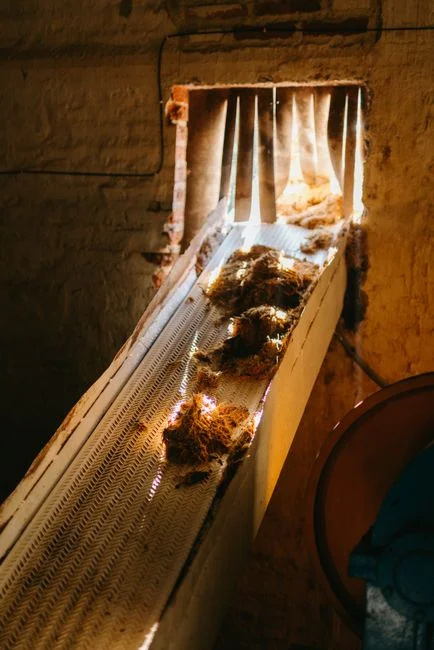
The 2026 baseline train for a casting line runs in eight sequential steps, and each one protects the next. Skipping any single stage typically shows up as a discharge failure, a press cloth failure, or an RO membrane replacement bill within the first 90 days of operation. The full chemistry and equipment selection logic is laid out in the foundry wastewater sludge treatment guide; the sludge-relevant subset is below.
- Equalization — 8–24 h HRT to dampen flow and load swings from batch discharges; the single most common retrofit gap on older foundries.
- CPI (corrugated plate interceptor) — free oil removal >100 µm at 60–80% efficiency. Residual oil above 100 mg/L exiting the CPI will foul the downstream dissolved air flotation system's air-saturation loop and float the wrong phase, so the CPI is a hard prerequisite, not an option.
- DAF — 4–300 m³/h capacity, 90–95% removal of 5–50 µm emulsified oil via micro-bubble generation at 20–30% recycle ratio; coagulant PAC 50–200 mg/L plus anionic polymer 1–5 mg/L dosed through an automatic pH and polymer dosing skid.
- Hydroxide precipitation reactor — pH 8.5–10 for Zn/Pb/Fe/Cu baseline; 10–11 for Ni/Cd, with automatic pH control to prevent amphoteric re-dissolution. NaOH is the baseline; lime is the 2–3× sludge-mass penalty option.
- Sulfide polishing reactor — sealed, off-gas scrubbed, continuous H₂S monitor at <10 ppm at the operator station per OSHA 29 CFR 1910.1000; used when Cu/Ni effluent target is <0.5 mg/L.
- Lamella clarification — HydropureWater high-efficiency lamella clarifier at 20–40 m/h surface loading; thickened underflow feeds the filter press directly.
- Plate and frame filter press — 1–500 m² filtration area, 7–15 bar feed, 60–180 min cycle, 30–40% DS cake; covered in the next section.
- Polishing (reuse line only) — multimedia filter + two-pass RO to reuse-grade water; chelating resin at USD 2,000–6,000/m³ as a trace-polish option for Cu/Ni to <0.1 mg/L.
| Unit Operation | Design Parameter | 2026 Range | Failure Mode if Skipped |
|---|---|---|---|
| CPI | Free oil >100 µm removal | 60–80% | DAF air system fouling |
| DAF | Emulsified oil 5–50 µm | 90–95% | Oily cake, cloth blinding |
| Hydroxide reactor | pH band | 8.5–10 (Zn/Pb/Fe/Cu); 10–11 (Ni/Cd) | Amphoteric re-dissolution |
| Sulfide reactor | Cu/Ni residual | <0.5 mg/L | Discharge permit exceedance |
| Lamella | Surface loading | 20–40 m/h | Solids carryover to RO |
| Filter press | Cake DS | 30–40% | Hauling tonnage penalty |
| Ion exchange | Trace polish to <0.1 mg/L | USD 2,000–6,000/m³ resin cost | RO membrane fouling |
Sludge Conditioning and Dewatering: Getting the Cake to 30–40% DS
Polymer conditioning is the bridge between the clarifier and the press. Cationic polyacrylamide at 3–10 kg per dry tonne of solids, prepared as a 0.1–0.3% stock solution and mixed in-line within 5–10 seconds of the press feed, is the 2026 baseline. Mixing too early degrades the floc; mixing too late leaves the charge demand unmet and the cake wet. Jar testing on site-specific sludge is the only way to pin the exact dose — the cast-to-cast variability in emulsified oil and silica content shifts the optimum by a factor of two across different product mixes on the same line.
The plate and frame filter press is the workhorse for casting cake. Operating envelopes in 2026: 1–500 m² filtration area, 7–15 bar feed pressure, 60–180 min cycle time, polypropylene cloth rated for pH 1–13, cake release at 30–40% DS on casting sludge. Cloth wash routine runs 2–4 wash cycles per shift depending on oil carryover; cloth replacement interval is 800–1,200 cycles when upstream oil removal is in spec. The HydropureWater plate and frame filter press is the baseline selection on a hydroxide-precipitated casting line because of three properties: high capture of fine metal-hydroxide floc, dry cake that passes TCLP stability tests more reliably than belt or screw press cake, and the only option that holds 30–40% DS on a stream with significant oil carryover.
Belt filter press and screw press each have a narrower fit. Belt press offers lower CAPEX (roughly 40–60% of an equivalent plate and frame on a m² basis) but delivers only 18–25% DS cake, and the belt wash water loop recycles fines and oil back to the head of the line — a known failure mode on metal-bearing streams. Screw press is compact and electrically efficient but only achieves 20–28% DS and struggles with high-metal-hydroxide sludge because the screw shaft cannot generate the shear needed to release bound water from the metal floc.
Every additional 5% DS on the cake cuts hauling tonnage by roughly 12–15% because the water fraction dominates mass. The lift from 25% DS (screw press baseline) to 35% DS (plate and frame target) is a 23–32% reduction in tonnage shipped, and that is the single largest OPEX lever on the line.
| Dewatering Equipment | Cake DS (%) | Polymer kg/t DS | Filtration Pressure | Best-Fit Casting Stream |
|---|---|---|---|---|
| Plate and frame filter press | 30–40 | 3–10 | 7–15 bar | Hydroxide-precipitated metal cake; oil-bearing cake |
| Belt filter press | 18–25 | 4–12 | 0.5–1 bar (gravity + low pressure) | Low-metal TSS (e.g., sand wash without precipitation) |
| Screw press | 20–28 | 5–15 | Mechanical (no external pressure) | Low-oil, low-metal sludge; space-constrained retrofits |
Plate and Frame vs Belt Press vs Screw Press: 2026 Comparison
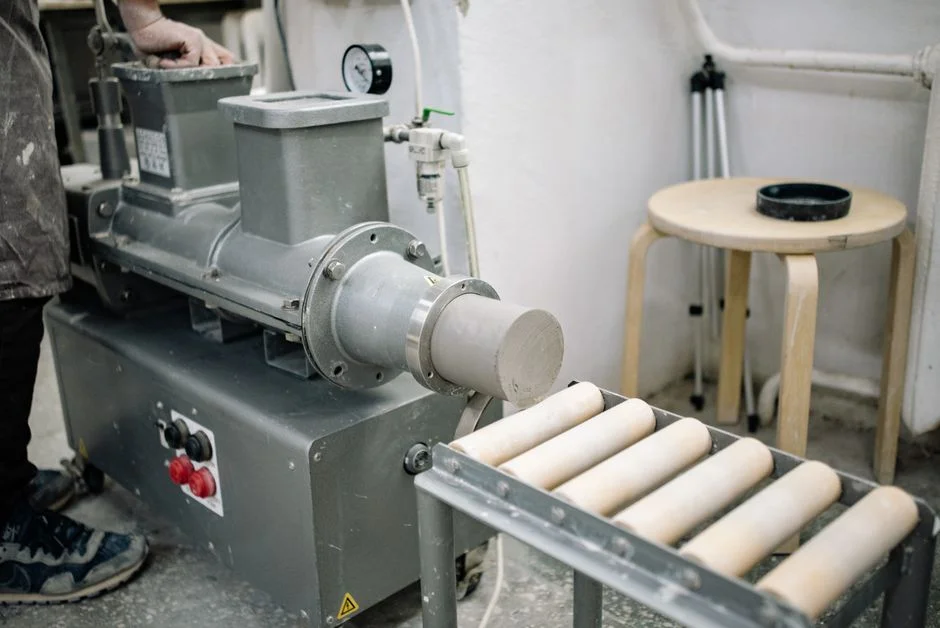
The procurement decision is rarely about one variable, and a single number never settles it. The table below maps the three options across CAPEX per m², cake dryness, polymer consumption, specific energy, footprint, oil tolerance, and OPEX per dry tonne — all anchored in 2026 numbers and the four-contaminant casting matrix. For the broader head-to-head logic see the filter press vs belt filter press comparison.
Plate and frame is the 2026 baseline for any line that includes hydroxide precipitation because cake dryness, oil tolerance, and the lowest OPEX per dry tonne all point the same direction. Belt press fits only low-metal TSS streams (sand wash water without chemical precipitation) where the CAPEX delta outweighs the wetter cake penalty. Screw press fits space-constrained retrofits where 20–28% DS is acceptable and the feed is low in emulsified oil.
| Parameter | Plate and Frame | Belt Press | Screw Press |
|---|---|---|---|
| CAPEX (USD per m² filtration area, 2026) | 3,500–6,500 | 2,000–3,500 | 2,500–4,500 |
| Cake dryness (% DS) | 30–40 | 18–25 | 20–28 |
| Polymer consumption (kg/t DS) | 3–10 | 4–12 | 5–15 |
| Specific energy (kWh/t DS) | 8–15 | 5–10 | 4–8 |
| Footprint (m² per m² filtration) | 0.8–1.2 | 1.5–2.5 | 0.4–0.7 |
| Oil tolerance (mg/L feed residual) | Up to 200 | <50 | <80 |
| OPEX per dry tonne (USD, 2026) | 35–70 | 55–95 | 50–85 |
| Recommended casting stream | Hydroxide-precipitated, oil-bearing | Sand wash only | Low-oil retrofit |
CAPEX, OPEX, and the 70%+ Reuse Case for a 100 m³/h Line
For a 100 m³/h line running 24/7 at a mid-size die casting plant producing 2,000–5,000 tonnes of castings per year, the 2026 CAPEX benchmark is: DAF + lamella + plate and frame filter press train at USD 280,000–520,000 (including chemical dosing skids and controls), an MBR polishing add-on at USD 120,000–200,000 when effluent reuse targets exceed 50%, and a two-pass RO reuse loop at USD 180,000–350,000. These figures vary by region, influent loading, and stainless-versus-carbon steel construction; confirm against vendor-specific engineering before procurement.
OPEX splits into three dominant lines: chemicals 15–25%, sludge hauling 20–30%, and energy 25–35%. The filter press is the lever that moves the hauling line — every point of cake dryness cuts tonnage shipped and the associated surcharge. Energy is dominated by DAF air compressors and RO high-pressure pumps; on a reuse line, the RO loop typically becomes the largest single energy consumer at 3–5 kWh/m³ permeate.
The reuse case reframes the sludge line from a disposal cost into a freshwater-savings asset. Closing the loop at 70%+ reuse through DAF + lamella + multimedia filter ahead of RO + RO cuts freshwater intake cost by 40–60% on a mid-size die casting plant (HydropureWater field data, 2026). For a plant drawing 100 m³/h of freshwater at USD 0.50–1.50/m³, that is USD 175,000–525,000/year in intake cost avoidance — larger than the filter press OPEX in most operating envelopes. Full ZLD adds a brine concentrator and crystallizer and is justified only above roughly 200 m³/h or where discharge permits are constrained.
Compliance must be defended against three regimes in parallel: U.S. EPA 40 CFR Part 433 (daily maximum and monthly average limits for Zn, Pb, Cu, Ni, Cr, and oil & grease), China GB 8978-1996 Class I, and EU IED 2010/75/EU BAT-AEL. A spec that survives an export audit is one that meets all three concurrently, with temperature held below 40 °C and pH inside 6–9 at the biological or membrane stage.
| Line Item | 2026 Range (USD) | Notes |
|---|---|---|
| DAF + lamella + filter press train (CAPEX) | 280,000–520,000 | Includes dosing skids and controls |
| MBR polishing add-on (CAPEX) | 120,000–200,000 | Optional; justified at >50% reuse |
| RO reuse loop (CAPEX) | 180,000–350,000 | Two-pass, reuse-grade water |
| Chemicals (OPEX share) | 15–25% | NaOH, PAC, polymer |
| Sludge hauling (OPEX share) | 20–30% | Lever the filter press moves most |
| Energy (OPEX share) | 25–35% | DAF compressors + RO high-pressure pumps |
| Freshwater intake cost reduction at 70% reuse | 40–60% | HydropureWater field data, 2026 |
Frequently Asked Questions
What cake dryness should a plate and frame filter press target on casting wastewater sludge?
The 2026 target is 30–40% DS on hydroxide-precipitated casting cake, achieved at 7–15 bar feed pressure and 60–180 min cycle time. Every additional 5% DS above 25% cuts hauling tonnage by 12–15%, which is the dominant OPEX lever on the line.
How does lime versus NaOH precipitation change sludge volume and hauling cost?
Calcium-based lime dosing generates 2–3× more dry sludge than NaOH because the calcium ion becomes part of the cake, multiplying hauling tonnage linearly. NaOH at pH 8.5–10 is the 2026 baseline for that reason, with lime reserved for sites where NaOH supply or unit cost is constrained.
When is a belt filter press acceptable on a casting wastewater line?
Only on low-metal TSS streams such as sand mold wash water without chemical precipitation, where cake dryness of 18–25% DS is acceptable and the CAPEX delta outweighs the wetter cake penalty. On any line with hydroxide precipitation, plate and frame is the baseline because the belt wash water recycles fines and oil back to the head of the train.
What influent parameters trigger a TCLP test on the dewatered cake?
TCLP testing is site-specific and should be triggered whenever the feed includes pickling rinse or brass/bronze/specialty alloy lines with Zn/Pb/Cu above roughly 10 mg/L each, because the dewatered cake can shift from RCRA non-hazardous toward state-specific hazardous waste. Iron and steel non-precious-metal cake typically classifies non-hazardous, but confirm on actual solids before classifying disposal routing.
What is the 2026 OPEX split for a 100 m³/h casting wastewater line?
OPEX is dominated by chemicals 15–25%, sludge hauling 20–30%, and energy 25–35% (per the 2026 hydropure process guide), with the filter press moving the hauling line and RO high-pressure pumps driving the energy line on reuse-equipped plants. Closing the loop at 70%+ reuse cuts freshwater intake cost by 40–60% on a mid-size die casting plant (HydropureWater field data, 2026).