Why Cooling Blowdown Drives Water Strategy for KL Data Centers
A data center in Kuala Lumpur must treat two distinct waste streams: (1) cooling-tower blowdown loaded with hardness, silica, phosphate/phosphonate inhibitors, zinc and elevated TDS from 4–6 cycles of concentration in a tropical climate, and (2) sanitary/grey wastewater from the building. The standard 2026 process train is pretreatment → lime/soda softening or weak-acid cation → side-stream RO → polishing/disinfection, designed against Malaysia DOE Industrial Effluent Regulations 2009 (Standard A/B) and increasingly paired with reclaimed-water reuse — as proven by Bridge DC's 2026 Johor facility using treated wastewater for cooling.
In Kuala Lumpur's tropical climate — 32°C ambient, 26–28°C wet-bulb, >80% relative humidity for nine months of the year — a hybrid/dry cooler-assisted wet cooling tower loses roughly 1.5–2.0% of its circulating water to evaporation and drift, and must dump another 0.2–0.5% as blowdown to control TDS, hardness and silica. Operators typically hold cycles of concentration (CoC) at 4–6 to keep silica below 180 mg/L and calcium sulfate below scaling potential; that ratio produces blowdown equal to 15–20% of makeup volume (HydropureWater field data, 2026).
The operational consequence is concrete. A 20 MW Cyberjaya or KL edge site running at PUE ~1.4 will produce 200–500 m³/day of blowdown that cannot be sewered raw under Malaysia DOE Standard B limits. At the upper end of that range, blowdown volume exceeds the site's sanitary sewage by an order of magnitude, which is why blowdown — not blackwater — sets the water-management agenda for any hyperscale build south of the Klang Valley. The Bridge DC Johor precedent (DCD, 2026) confirmed that Malaysian operators are now pivoting blowdown into a reusable resource rather than a discharge liability, and KL is the next geography where the same logic applies. The first unit operation any reuse train depends on is consistent TSS polishing, normally delivered by a multi-media filter for RO feed polishing.
Blowdown Chemistry: What's Actually in KL Cooling-Tower Discharge
Cooling water blowdown (CWBD) carries a mix of concentrated make-up ions plus the treatment chemicals added to keep the loop itself functional. The MDPI 2021 critical review by Soliman et al. classifies CWBD as a stream "containing high concentrations of various chemicals (e.g., scale and corrosion inhibitors) and pollutants" — a definition that translates directly to a KL site's discharge profile.
The dominant ions and parameters an engineer has to design against are calcium and magnesium hardness, silica (SiO₂), alkalinity, chloride and sulfate — all of which scale with CoC. Layered on top are the treatment additives: phosphate or phosphonate-based scale inhibitors (typically HEDP, ATMP), zinc-based corrosion inhibitors, biodispersants, and oxidising biocides (chlorine or bromine). In Klang Valley treated water, supply hardness sits at 80–180 mg/L as CaCO₃ and silica at 20–40 mg/L; at CoC 5, those numbers push the loop to 400–900 mg/L hardness and 100–200 mg/L silica before any blowdown is taken. KL's higher ambient temperature and longer cooling season accelerate both evaporation and biological fouling, which raises biocide demand and shortens oxidiser residuals — a kinetic effect that makes a tropical blowdown more aggressive than the same loop run in temperate air.
The design consequence is that simple TSS reduction or a clarifier is insufficient. Softening and dissolved-species removal — ion exchange, lime/soda, or RO — are required to meet either the Malaysia DOE effluent envelope or any meaningful reuse target. The same conclusion is reached in the MDPI 2021 review when it ranks RO and EDR as the dominant polishing technologies for high-recovery blowdown reuse.
Malaysia's Regulatory Envelope: DOE Industrial Effluent Regulations 2009
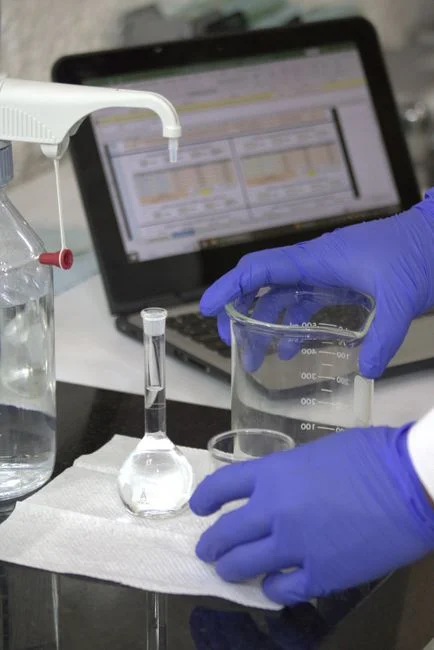
Every equipment choice downstream of blowdown generation is anchored to the Environmental Quality (Industrial Effluent) Regulations 2009, which set two discharge tiers: Standard A (downstream of treatment, discharge to inland water) and Standard B (discharge to sewer). For data-center blowdown the parameters that bite hardest are pH 5.5–9.0, TSS ≤50 mg/L under Standard B and ≤100 mg/L under Standard A, residual chlorine ≤1 mg/L, and temperature ≤40°C (per DOE IE Regulations 2009, P.U.(A) 434). Where zinc, chromium or copper-based inhibitors are in the cooling-water programme, the corresponding heavy-metal limits — Zn 1.0 mg/L (Std A) / 2.0 mg/L (Std B), Cu 0.2/1.0 mg/L, Cr 0.05/0.5 mg/L — also apply.
In Selangor and the Federal Territory of KL, the Department of Environment has increasingly imposed site-specific, tighter limits for hyperscale builds, and thermal discharge to storm drains is restricted once blowdown exits the cooling-tower basin above 40°C. A second regulatory signal is coming from Suruhanjaya Perkhidmatan Air Negara (SPAN) and the Selangor water-stress policy cycle, which has run through repeated Klang Valley water crises from 2024 into 2026. The practical effect for a 2026 design review is that blowdown reuse is moving from a sustainability nice-to-have to a near-mandatory line on a hyperscale RFP — the same trajectory already visible in the U.S. and Singapore markets.
The 2026 Process Train: From Pretreatment to Reuse
The equipment sequence below matches the order of procurement for a 20–50 MW KL hyperscale site and is justified by chemistry, regulation or reuse intent at each step.
- Screening. A rotary mechanical bar screen at the headworks captures macro-debris, leaf litter (KL sites sit near tropical vegetation), and plastic or rag carryover before the blowdown header enters the treatment building.
- Pretreatment. A DAF system for cooling-water pretreatment removes oil carryover from adjacent diesel-generator areas and a large fraction of suspended solids, followed by a multi-media filter for RO feed polishing to bring TSS below 5 mg/L ahead of the membranes.
- Softening. Lime/soda or weak-acid cation exchange drops Ca, Mg and alkalinity to keep hardness below 50 mg/L as CaCO₃ — the threshold that prevents calcium carbonate and calcium sulfate scaling on the RO membranes downstream.
- Side-stream RO. Treat 20–40% of the recirculating cooling-tower flow through a side-stream RO system for cooling-tower blowdown at 65–85% recovery, the recovery window the MDPI 2021 review confirms as standard for blowdown polishing. RO permeate (TDS reduction >95%) blends back into the cooling-tower makeup.
- Chemical dosing and side-stream filtration. PLC-controlled chemical dosing for antiscalant and biocide keeps the RO feed within the membrane supplier's envelope and maintains the cooling-loop inhibitor programme; sidestream sand or disc filters hold the RO feed SDI below 3.
- Disinfection. An on-site chlorine dioxide generator for the cooling reuse loop controls microbiological activity without elevating trihalomethane (THM) formation, which is a known issue with free chlorine on reclaimed water.
- Sludge handling. DAF and lamella clarifier sludge, plus RO concentrate, is routed to a plate-and-frame filter press for blowdown sludge dewatering for cake disposal off-site.
- Sanitary train (parallel). Office and canteen wastewater is handled by a separate MBR package plant for data center sanitary wastewater (10–500 m³/day), kept hydraulically separate from the blowdown stream so a slug of inhibitor chemistry never reaches the biological stage.
The hydraulic split between blowdown and sanitary streams is deliberate: blowdown carries biocides and heavy metals that would shock a biological plant, while sanitary sewage carries the BOD and ammonia load that has no place in a side-stream RO feed. For context, the same parallel-trains approach is now standard at mature operator campuses — see the Digital Realty data center wastewater treatment process and the Equinix data center campus wastewater treatment reference designs.
Design Parameters: Cycles of Concentration, Recovery and Reuse Targets
The table below is the single anchor an engineer needs to size a KL blowdown train. Values reflect typical operating envelopes for a 20–50 MW site drawing from Klang Valley treated water (HydropureWater field data, 2026; MDPI 2021 review).
| Parameter | Typical KL value | 2026 design target |
|---|---|---|
| Cycles of concentration (CoC) | 4–6 | 5 (with high-grade antiscalant) |
| Blowdown TDS | 2,500–4,000 mg/L | <4,000 mg/L pre-RO |
| Blowdown silica (SiO₂) | 120–200 mg/L | <180 mg/L in loop |
| Hardness (as CaCO₃) | 800–1,500 mg/L | <50 mg/L post-softener |
| Loop pH | 7.5–8.5 | 7.6–8.2 |
| Residual free Cl₂ | 0.5–1.0 mg/L | 0.5–0.8 mg/L (CT limit) |
| RO feed SDI | — | <3 |
| RO recovery | — | 65–85% |
| Reuse TDS target (cooling makeup) | — | <500 mg/L |
| Reuse fraction of blowdown | — | 50–70% |
| Site WUE | ~1.8 L/kWh (typical) | ~1.3 L/kWh with reuse |
Higher CoC means less blowdown volume, but it also means the chemistry becomes harder to treat — silica and calcium sulfate scaling risk both rise sharply above CoC 5. KL's hot climate caps CoC near 5 unless a high-grade antiscalant programme is in place. Worked example: a 20 MW site at PUE 1.4 produces roughly 300 m³/day of blowdown at CoC 5; reusing 65% of that stream cuts freshwater makeup by about 190 m³/day and lifts site WUE from ~1.8 L/kWh toward the 1.2 L/kWh target that boards are now asking for.
Three Blowdown Strategies Compared for KL Hyperscale Sites
Head-to-head, the three credible blowdown strategies for a 2026 KL hyperscale build are:
| Strategy | Treatment train | CAPEX | OPEX (water + sewerage) | Regulatory risk in Selangor | WUE outcome | Fit |
|---|---|---|---|---|---|---|
| A — Discharge to sewer after pretreatment | Screen + DAF + pH adjust + dechlor | Lowest | Highest (tariff escalation) | Rising — DOE site-specific tightening 2026–2028 | ~1.8 L/kWh | Edge/colocation <2 MW |
| B — Discharge to surface water at Standard A | A + softening + sand filter + UV | Balanced | Balanced | Moderate — monsoon-driven receiving-water sensitivity | ~1.7 L/kWh | Sites with land buffer for receiving water |
| C — Reuse for cooling makeup (RO/softener) | A + lime softening + side-stream RO + ClO₂ | Highest | Lowest (water + sewer + carbon) | Lowest — aligned with SPAN/DOE direction | ~1.3 L/kWh | KL hyperscale 20–50 MW; Bridge DC Johor precedent (2026) |
Recommendation: 2026 KL hyperscale builds should default to Strategy C with a Strategy A buffer for excursions (slug discharges, RO downtime, monsoon overflows). Edge and colocation sites under 2 MW can stay on Strategy A provided pretreatment is tightened to the TSS <50 mg/L Standard B envelope. The same conclusion shows up in the AWS hyperscale data center wastewater treatment reference design and in adjacent Malaysian industrial-water work like industrial wastewater treatment in Shah Alam.
2026 Outlook: AI Loads, Water Reuse Mandates and What KL Should Plan For
Three forces are reshaping the KL data-center water envelope between now and 2028. First, AI and HPC rack densities above 50 kW are pushing operators toward liquid cooling, which shifts the mass balance away from evaporative blowdown and toward warm-water-loop bleed-off — a smaller-volume, higher-temperature stream with different chemistry but the same reuse logic. Second, Malaysia DOE site-specific effluent limits are tightening on total nitrogen, total phosphorus and residual inhibitor chemicals as Klang Valley water-stress policies mature through 2026–2028. Third, reclaimed-water cooling makeup is moving from "innovative" (Bridge DC Johor, 2026) to baseline specification for KL hyperscale RFPs within the next 24–36 months.
What an engineer should be specifying now: a side-stream RO sized for AI-load turn-up, a chemical dosing skid that can switch inhibitor programmes, and a smart monitoring layer — flow, conductivity and ORP on the blowdown header — that is now a tender requirement rather than an optional extra. The flow meter selection for wastewater treatment guide covers the instrumentation choices that pair with this control philosophy.
Frequently Asked Questions
What pH, TSS and temperature limits apply to data-center blowdown in Malaysia?
Under the DOE Industrial Effluent Regulations 2009, Standard A (inland water discharge) sets pH 5.5–9.0, TSS ≤100 mg/L and temperature ≤40°C; Standard B (sewer discharge) tightens TSS to ≤50 mg/L. Residual chlorine is capped at 1 mg/L, and heavy-metal limits (Zn, Cu, Cr) apply wherever additive-based inhibitor programmes are used.
Can a KL data center reuse cooling-tower blowdown as cooling makeup?
Yes. A train of softening → side-stream RO at 65–85% recovery → chlorine dioxide disinfection typically reuses 50–70% of blowdown as cooling-tower makeup, lifts WUE to ~1.3 L/kWh, and is now proven in Malaysia by the Bridge DC Johor facility in 2026.
Is sanitary wastewater from a data center treated separately from blowdown?
Yes. Sanitary sewage from offices, canteens and washrooms is normally handled by a small MBR or underground WSZ package plant sized at 10–500 m³/day, kept hydraulically separate from the blowdown stream so biocides and heavy metals never reach the biological stage.
What is the difference between cycles of concentration and RO recovery?
Cycles of concentration (CoC) governs cooling-tower chemistry and the volume of blowdown that has to be discharged or treated. RO recovery governs the fraction of that blowdown that the side-stream RO converts into reusable permeate — typically 65–85% on blowdown duty per the MDPI 2021 review.
Which equipment is the single highest-impact purchase for a new KL data center water system?
The side-stream RO unit, sized with adequate pretreatment (DAF, multi-media filtration, softening). It is the unit operation that simultaneously unlocks Malaysia DOE compliance and the reuse fraction needed to hit a sub-1.5 L/kWh WUE target.