Why Baomahun Changes the Data Center Water Equation
Baomahun sits in the Delenga Section of the Valunia Chiefdom, Bo District, Southern Province, and experiences a wet semi-equatorial climate with distinct wet and dry seasons (per S4, Scientific Research Publishing, 2018). A hyperscale or colocation campus built here inherits raw water, sewer, and discharge risks that simply do not appear in a generic sub-Saharan design brief. Stream sediment loads spike during the May–October wet season, and 2015 field surveys in the Baomahun catchment documented artisanal miners handling mercury amalgam directly in stream channels, with unfilled mined pits holding standing water that flushes downstream during storms (per S4). The implication is concrete: any raw-water intake must pretreat for both turbidity and trace mercury, not for one or the other.
Discharge permitting falls under the Environmental Protection Agency–Sierra Leone (EPA-SL), and the Mines and Minerals Act 2009 (Sections 90 and 91) governs contaminant releases from mineral-bearing catchments (per S4). Municipal sewer coverage in Bo District is unreliable, so a data center cannot assume a municipal outfall as a sink. Reference WUE benchmarks published by AWS, Digital Realty, and Equinix all assume a more controlled raw-water envelope than Baomahun offers — typically TSS <50 NTU, no upstream artisanal metal working, and a stable grid-backed makeup water supply. None of those assumptions hold here.
The corrected design posture is to pretreat aggressively at the intake, treat cooling-tower blowdown as a separate stream, and treat on-site sanitary sewage with a buried package plant rather than relying on a municipal connection. That three-stream split is the single biggest deviation from a generic hyperscale spec and the reason this guide exists.
The Three Wastewater Streams a Baomahun Site Must Treat
"Wastewater" at a data center is not one stream but three, each with its own chemistry, peak load, and discharge rule. Trying to combine them into one plant is the most common early-stage mistake, because blowdown is hot and mineralized, sanitary sewage is organic and low-flow, and raw intake water is turbid and metal-bearing. The three streams are:
- Stream 1 — Raw-water intake pretreatment. Surface water from the Baomahun catchment, with total suspended solids peaking above 1,000 NTU in the wet season, dissolved organics from disturbed riparian zones, and trace mercury from artisanal gold mining activity in the upstream catchment (per S4, 2018).
- Stream 2 — Cooling-tower blowdown. Continuous purge from the cooling loop, high in total dissolved solids, calcium and magnesium hardness, silica, and biocide residues; flow driven by cycles of concentration and ambient evaporative loss.
- Stream 3 — Sanitary sewage. Blackwater and greywater from on-site staff and contractors, roughly 100 L per employee per shift, BOD₅ 200–300 mg/L, must be treated to EPA-SL acceptable limits before irrigation, reuse, or off-site disposal.
| Stream | Source | Key Contaminants | Typical Flow Driver | Discharge Path |
|---|---|---|---|---|
| 1. Raw intake | Baomahun surface water | TSS >1,000 NTU, organics, trace Hg | Cooling-tower makeup + domestic | Through pretreatment to RO/storage |
| 2. Cooling blowdown | Cooling-tower bleed | TDS, hardness, silica, biocide residues | Cycles of concentration, evap rate | Reuse, irrigation, or off-site haul |
| 3. Sanitary sewage | Staff, contractors, cafeteria | BOD₅ 200–300 mg/L, TSS, pathogens | Headcount × 100 L/shift | Irrigation under EPA-SL or haul-out |
Equipment coverage across these three streams is what ties the rest of the article together. The pretreatment side draws on the rotary bar screen, automatic chemical dosing system, lamella clarifier, multi-media filter, and industrial RO. The cooling side uses the same lamella clarifier and dosing system plus an on-site ClO₂ generator. The sanitary side is a buried WSZ A/O package plant with a plate-and-frame filter press for sludge dewatering.
Raw-Water Pretreatment for Tropical, Mining-Region Feed
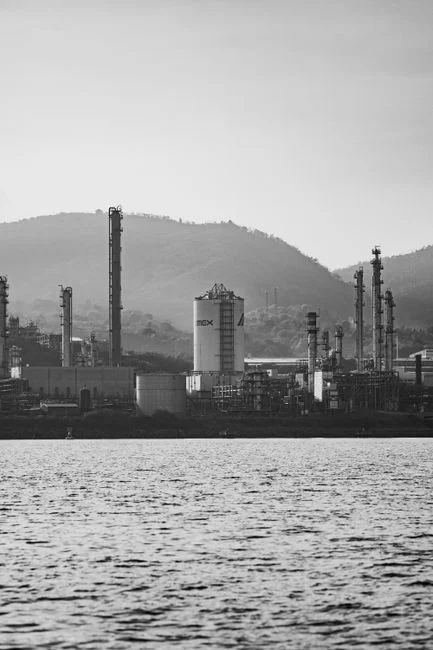
Raw-water pretreatment at Baomahun must be designed for both a high-turbidity wet season and a year-round trace-mercury risk — not for a single design point. The defensible train, in the order it should appear on a P&ID, is:
- Coarse screening. A GX rotary mechanical bar screen at the intake removes rags, plastics, and organic debris that would damage downstream pumps and foul RO membranes; bar spacing typically 3–6 mm.
- Coagulation, flocculation, and pH adjustment. The automatic chemical dosing system doses polyaluminum chloride at 10–30 mg/L, tuned by jar test on actual Baomahun raw water; pH is adjusted to 6.5–7.5 because upstream tailings runoff can shift the natural pH outside the optimal coagulation band.
- High-rate sedimentation. A lamella clarifier sized at 20–40 m/h surface loading rate drops turbidity from 1,000+ NTU to below 20 NTU before the media filter, and is small enough in footprint to fit a constrained tropical site.
- Multi-media filtration and activated carbon. A multi-media filter (anthracite over sand over garnet) polishes to below 3 NTU; an activated carbon stage follows to adsorb trace mercury and dissolved organics. This carbon stage is non-negotiable for Baomahun because of documented mercury amalgam handling upstream (per S4, 2018). Skipping it shortens RO membrane life by 30–50% through mercury fouling and biocide carry-through.
- Cartridge filtration and RO. 5 µm cartridge protection, then single-pass industrial RO at approximately 95% recovery, producing demineralized makeup water for the cooling loop and humidification system.
The practical consequence for the engineer writing the specification is that the activated carbon stage is not optional and not a "nice to have" — it is the difference between an RO train that runs three years between membrane changes and one that fails inside twelve months. For a site with no nearby membrane supplier, that delta is the dominant OPEX variable.
Cooling-Tower Blowdown Treatment and Reuse
Cooling-tower blowdown is the largest single treatable stream on a tropical hyperscale campus, and in Baomahun's climate it is non-optional. A 5 MW IT load in 25–32 °C ambient conditions loses 150–250 m³/day to evaporation; without blowdown, hardness, silica, and TDS climb until scaling and biological fouling shut the tower down. The blowdown train has four jobs: strip hardness, polish particulates, disinfect against Legionella, and reuse what it can.
First, a side-stream softener (ion exchange) on 5–10% of tower flow strips Ca²⁺ and Mg²⁺, allowing cycles of concentration to climb from 2–3 to 4–6 without exceeding calcium carbonate or silica scale limits. Second, a lamella clarifier plus the automatic chemical dosing system drops TSS and silica carryover, after which the polished blowdown is split between cooling-tower makeup (typically cutting raw-water withdrawal by 30–50%) and on-site irrigation. Third, an on-site ClO₂ generator doses 0.5–1.0 mg/L residual; ClO₂ is preferred over chlorine because it does not form trihalomethanes and remains effective against Legionella in the 25–32 °C warm-water range that ASHRAE TC 9.9 flags as the Legionella growth optimum.
| Cycles of Concentration | Ca Hardness (mg/L as CaCO₃) | Silica (mg/L as SiO₂) | Conductivity (µS/cm) | Operating Status |
|---|---|---|---|---|
| 2.0 | ~200 | ~30 | ~800 | Safe, high water use |
| 4.0 | ~400 | ~60 | ~1,600 | Target with side-stream softener |
| 6.0 | ~600 | ~90 | ~2,400 | Upper limit, monitor silica |
| 7.0+ | >700 | >105 | >2,800 | Scale and silica risk, avoid |
Because Bo District's tropical wet-bulb temperatures sit in ASHRAE TC 9.9 Class A1/A2 territory year-round, adiabatic or dry-cooler hybrids are not required — wet cooling is feasible. That makes blowdown treatment non-optional: a closed-loop or zero-liquid-discharge alternative would add 25–40% CAPEX with no operating benefit at this site.
On-Site Sanitary Sewage Treatment for Staff and Contractors
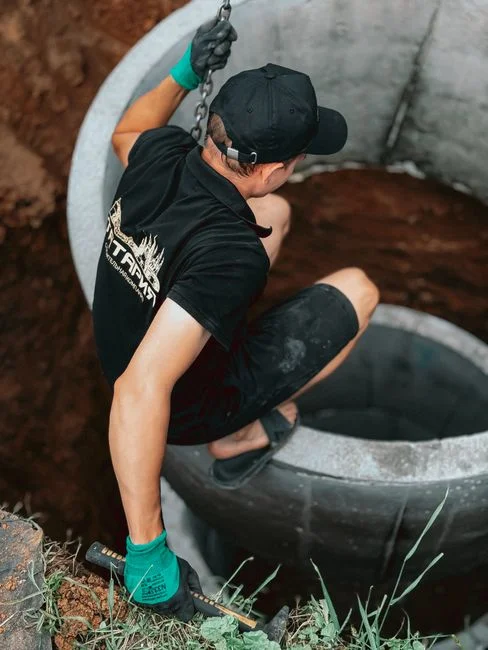
Sanitary load is the smallest of the three streams by volume but the most operationally sensitive, because it runs every day regardless of whether the IT load is online. At 100 L per employee per day and BOD₅ around 250 mg/L, with cafeteria and dormitory peaks layered on top, a 200-person campus generates a hydraulic load that the package plant must be sized for at 1.5× the commissioning-day headcount to absorb shift turnover and contractor surges.
Specify the WSZ underground A/O package sewage treatment plant in the 1–80 m³/h range, fully buried with landscaping above to suit a low-rise tropical campus. The A/O (anoxic/oxic) contact oxidation process is robust against the load swings typical of a phased build-out, and the unit is fully automatic with no dedicated operator — a practical requirement in Sierra Leone, where skilled plant operators are concentrated in Freetown and difficult to retain at remote Bo District sites. Discharge is either land-irrigated on the campus perimeter under an EPA-SL permit, or trucked to the nearest accredited off-site facility if the site footprint is tight.
Sludge is routed to a plate-and-frame filter press for dewatering before off-site disposal. This is non-negotiable: there is no municipal sludge treatment in Bo District, and un-dewatered septic sludge cannot be hauled on the Bo–Kenema highway at acceptable cost. The press brings the sludge cake to 25–35% dry solids, suitable for licensed off-site disposal or co-disposal in a permitted facility.
Putting It Together: Baomahun Process Train, CAPEX Band, and Selection Logic
End-to-end, the Baomahun process train is three parallel trains feeding one reuse loop. Raw water is screened, clarified, multi-media filtered, carbon polished, cartridge-filtered, and RO-treated before entering cooling-tower makeup. Cooling-tower blowdown is softened side-stream, clarified, and ClO₂-disinfected, with a split between makeup reuse and irrigation. Sanitary sewage is treated in the buried WSZ A/O package plant, with sludge dewatered on a plate-and-frame press before off-site haul-out.
CAPEX and OPEX for a 5 MW hyperscale campus in 2026 should be framed as a range, not a single number, because Bo District inland freight and customs carry a 25–40% logistics premium over Asian or European supply. As a 2026 engineering band, the full three-stream treatment train lands in the low single-digit USD millions for CAPEX (process equipment only, excluding site civil works and generator backup), with OPEX dominated by RO membrane replacement, ClO₂ precursor, ion exchange resin regeneration salt, and consumable carbon change-out. For a comparable African industrial reference frame, see the Gauteng industrial wastewater engineering guide for a parallel cost discussion under similar logistics conditions.
| Decision Lever | Reuse On-Site | Off-Site Disposal |
|---|---|---|
| Site footprint | >5 ha available | <2 ha or near protected catchment |
| Permit path | EPA-SL irrigation permit obtainable | Haul contract with accredited facility |
| Raw-water reduction | 30–50% via blowdown reuse | 0%, full raw-water draw |
| OPEX profile | Lower long-term, higher front-end | Higher recurring haul cost |
Decision logic: if the site footprint exceeds 5 ha and an EPA-SL irrigation permit is obtainable, reuse blowdown on-site — the 30–50% raw-water reduction is the single largest OPEX lever for a tropical West African hyperscale site. If the footprint is under 2 ha or the catchment drains to a protected water body, truck the blowdown to an accredited off-site facility. Either way, raw-water pretreatment must include the activated carbon stage, and cooling-tower blowdown must be polished before any reuse or discharge — these are not optional at Baomahun. For a peer benchmark on how AWS and Equinix run their campus trains under more controlled raw-water envelopes, see the AWS hyperscale data center wastewater process and the Equinix colocation campus water treatment references. Where site conditions require biological polishing beyond a packaged A/O train — for example, a future expansion that adds a cafeteria or laundry — the MBR integrated wastewater treatment unit and the JY integrated water purification skid cover the upgrade path without a redesign.
Frequently Asked Questions
What discharge permit does a data center in Baomahun need?
Any new discharge to land or water requires an EPA-SL permit, and any release from a mineral-bearing catchment is also subject to Sections 90 and 91 of the Mines and Minerals Act 2009 (per S4, 2018). The safest path for a hyperscale campus is on-site irrigation of treated sanitary and blowdown streams under an EPA-SL irrigation permit, with sludge hauled to a licensed off-site facility.
How many cycles of concentration can a cooling tower run safely in Bo District?
With a side-stream ion exchange softener on 5–10% of flow, a Baomahun cooling tower can operate at 4–6 cycles of concentration while keeping Ca hardness below ~600 mg/L as CaCO₃ and silica below ~90 mg/L as SiO₂, in line with ASHRAE TC 9.9 guidance. Without softening, cycles of 2–3 are the practical ceiling because silica scale trips first.
Why is mercury removal a pretreatment concern and not just an RO concern?
Trace mercury from upstream artisanal gold mining adsorbs onto RO membranes and reduces flux and rejection over time, shortening membrane life by 30–50% if not removed upstream. An activated carbon stage after the multi-media filter strips the mercury before it reaches the RO, protecting the most expensive component in the train (per S4, 2018).
Can the sanitary stream and the cooling-tower blowdown be combined?
No. Sanitary sewage is organic, low-flow, and pathogen-bearing; cooling-tower blowdown is mineralized, warm, and biocide-bearing. Combining them complicates reuse, blows pathogen counts past EPA-SL limits, and forces one technology to handle two incompatible waste profiles. Treat them on parallel trains and only blend at the irrigation reuse point if both streams independently meet the irrigation quality target.