

Why Cannon Falls Is a Capacity-Constrained POTW for New Fabs
The City of Cannon Falls owns and operates an activated-sludge WWTP designed to meet MPCA effluent limits for BOD, TSS, and Total Phosphorus, and the lift station is already running well below its nameplate rating (Cannon Falls Executive Summary, 6/12/2025, p.3). Current average use sits at 200 gpm (0.29 MGD) against a lift-station capacity of 900 gpm (1.3 MGD), with a feasible upgrade to 2,000 gpm (2.88 MGD) if pumps are replaced. That looks like headroom on paper, but a new semiconductor fab cannot assume it is theirs to use: formal capacity agreements with Gemini and Cannon Equipment, LLC are not on the record even though conversations have occurred (Executive Summary, p.1). The City has also flagged that multiple collection-system pipe sections may need to be upsized before additional flow is accepted, which means a Notice to Proceed can slip 6–18 months behind the original schedule (Executive Summary, p.3). For a fab discharging high-purity, high-fluoride process water, this combination — limited lift-station headroom, conditional allocations, and unverified downstream pipe capacity — is exactly why on-site pretreatment with flow equalization is treated as non-negotiable in the engineering scope, not an optional add-on.
MPCA and POTW Discharge Limits a Semiconductor Fab Must Hit
Before any pipe is welded, the fab has to map every process stream against two parallel limit sets: the MPCA effluent limits on the activated-sludge plant and the local POTW pretreatment limits enforced through the Industrial Pretreatment Program (IPP). The City of Cannon Falls WWTP is permitted for BOD, TSS, and Total Phosphorus under MPCA oversight (Executive Summary, 6/12/2025, p.3). Across Minnesota POTWs of this size, local limits typically fall in the 250–300 mg/L range as 30-day averages for BOD and TSS, with Total Phosphorus commonly set in the 1–2 mg/L band — confirm the exact numbers with Cannon Falls City Hall before design freeze. The narrative Minnesota Rule limits, applied through 40 CFR 133 / Minn. R. 7050 and the local sewer-use ordinance, layer pH 6.0–9.0 s.u., oil and grease below 100 mg/L, and sub-mg/L metals (Cu, Pb, Zn, Ni) on top of the conventional parameters.
Semiconductor fabs get three additional parameters added to their permit: total fluoride from HF/BOE chemistries (typical MN industrial daily max 25–50 mg/L), Total Phosphorus loading from CMP slurries that can punch well above municipal TP limits, and surfactants or post-CMP cleaning agents that show up as BOD. Whole-effluent toxicity (WET) and ammonia are increasingly enforced at MN POTWs, which matters because TMAH-based photoresist developers contribute elevated NH₃-N that can shock the POTW's activated-sludge biology. Permits are re-opened on the standard 5-year MPCA NPDES/IPP cycle, so any of these numbers can shift between design and start-up.
| Parameter | Typical Cannon Falls POTW local limit | Driver at a fab |
|---|---|---|
| BOD (30-day avg) | 250–300 mg/L | Photoresist, TMAH, IPA, NMP, surfactants |
| TSS (30-day avg) | 250–300 mg/L | CMP slurry, back-grind, wafer fragments |
| Total Phosphorus | 1–2 mg/L | CMP slurry chemistries, cleaning additives |
| pH | 6.0–9.0 s.u. | HF streams (acidic), BOE/NH₄OH (basic) |
| Total Fluoride | 25–50 mg/L daily max | HF, BOE, dilute HF cleans |
| Oil & Grease | <100 mg/L | Lubricants, pump oils, floor drains |
| Cu / Pb / Zn / Ni | Sub-mg/L each | CMP pad conditioning, plating residues |
| Ammonia (WET-related) | Site-specific | TMAH breakdown, NH₄OH etchants |
Semiconductor Wastewater Streams That Drive Pretreatment Design
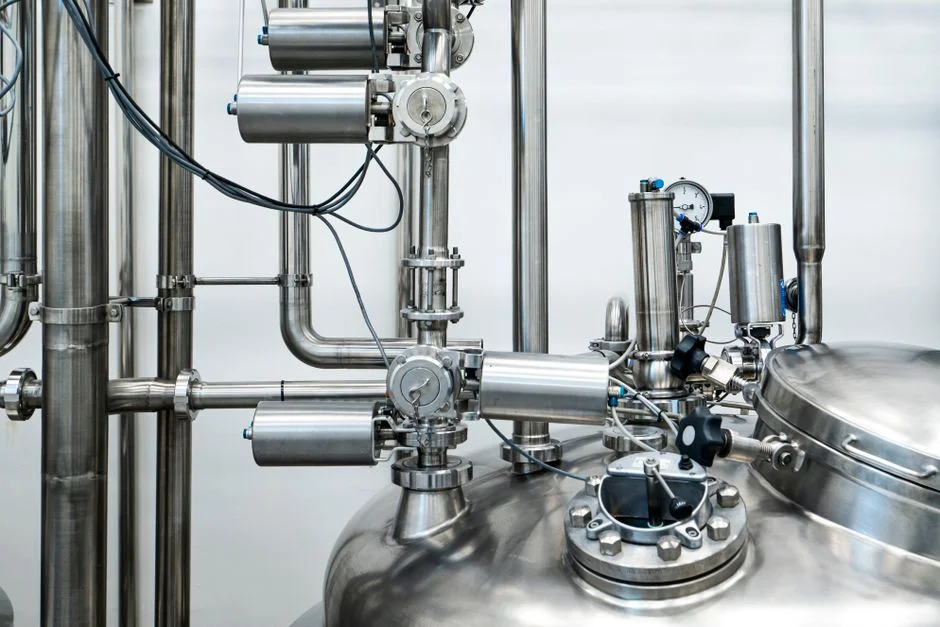
Four fab stream families set the design envelope for a Cannon Falls pretreatment skid, and each one maps to a different unit operation. CMP (chemical mechanical planarization) wastewater carries silica or ceria slurry, residual H₂O₂, and surfactants; in practice this stream runs 200–2,000 mg/L TSS and 50–500 mg/L BOD and drives the bulk of the TSS, BOD, and Total Phosphorus loadings hitting the POTW. HF and buffered oxide etch (BOE) streams carry fluoride in the 1,000–5,000 mg/L range, which is why they are segregated and treated with Ca-based precipitation (CaCl₂ or lime) to drop F⁻ below 30 mg/L before the stream is blended with general wastewater. A GX Series rotary mechanical bar screen at the head of the train protects downstream pumps and DAF units from rags, lint, and the occasional wafer fragment that finds its way into a floor drain.
Photoresist and developer streams — TMAH, NMP, IPA, ethyl lactate — are high-COD and largely biodegradable, but TMAH in particular breaks down into ammonia and can inhibit biomass at high concentration. The standard answer is segregated collection with gradual bleed-in to the biological stage, not batch dumping. Finally, spent clean chemistries from wet benches swing between pH 1–2 and pH 12–13, which makes pH adjustment with 4–8 hour equalization residence mandatory just to keep diurnal peaks from punching through the DAF.
| Stream | Key pollutants | Typical concentration | Treatment target |
|---|---|---|---|
| CMP wastewater | Silica/ceria slurry, H₂O₂, surfactants | TSS 200–2,000 mg/L; BOD 50–500 mg/L | <15 mg/L TSS post-DAF |
| HF / BOE | Fluoride, NH₄⁺ | F⁻ 1,000–5,000 mg/L | <30 mg/L F⁻ post Ca-precip |
| Photoresist / TMAH | High COD, NH₃ precursor | COD 1,000–10,000 mg/L | Gradual bleed-in, biological side-stream |
| Wet-bench cleans | pH swings, metals | pH 1–2 or 12–13 | Equalize to pH 6–9 |
The Pretreatment Process Train for a Cannon Falls Fab
The process train below is the layout a process engineer can screenshot and hand to a vendor, with each step tied to a specific operating range and a piece of equipment.
- Headworks. A rotary mechanical bar screen at 2–6 mm opening removes rags, lint, and debris before the wastewater hits the lift station. Specify a non-metallic or 316L screen for HF compatibility in case of carryover.
- Equalization and flow retention. Size the basin for 4–8× the average hourly flow, with continuous pH and conductivity monitoring and bottom aeration to keep suspended solids from settling. The 6/12/2025 Executive Summary explicitly calls out a flow retention basin as required for full buildout of any large industrial user (p.5) — so the fab's EQ tank is doing double duty as a POTW-side buffer.
- pH adjustment. Two-stage acid/base dosing controlled by a PLC-controlled chemical dosing system tied to in-line pH probes. Target a 5–15 minute hydraulic residence time per stage so the pH signal stabilizes before the wastewater hits the DAF.
- DAF for TSS and FOG. A dissolved air flotation system sized for 5–25 m³/m²·h hydraulic loading and an air-to-solids ratio of 0.02–0.06. Expect 90–95% TSS removal and effluent TSS under 15 mg/L from CMP streams when coagulant and flocculant are dosed correctly.
- Chemical precipitation for TP, fluoride, and metals. Coagulant (PAC or alum) plus flocculant feeds, followed by a lamella clarifier for chemical precipitation at 20–40 m/h surface loading. Ca-based precipitation handles fluoride while coagulant/precipitation drops Total Phosphorus 80–95% and pulls Cu, Pb, Zn, Ni below local limits.
- Polishing filtration. A multi-media filter for polishing drops TSS to under 5 mg/L and lowers SDI, which protects the POTW's activated-sludge biology from periodic spikes and keeps the fab in compliance during upset events.
- Sludge handling. DAF float and lamella underflow are sent to a plate and frame filter press for fab sludge producing 25–35% DS cake for off-site disposal. Plan on 3–6 kg DS per 1,000 L of CMP wastewater treated as the feed basis for press sizing.
Equipment Sizing Reference for Cannon Falls-Scale Fab Discharge
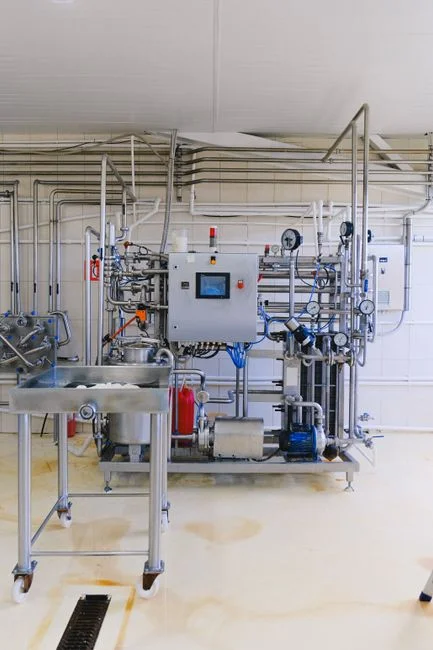
The table below uses a 50 m³/h (≈220 gpm) reference flow, which sits comfortably inside the lift station's 900 gpm nameplate once domestic and other industrial users are accounted for. Most fabs start smaller (10–30 m³/h) and grow to 100 m³/h as additional tools are installed; the EQ basin and pipe rack should be sized for the buildout case so the fab is not re-plumbed in year three. The flow numbers are matched to the operating ranges published in standard vendor datasheets and HydropureWater's 2026 package wastewater treatment plants in Minnesota 2026 guide sizing methodology.
| Unit operation | Design flow (m³/h) | Key spec | Removal / sizing metric |
|---|---|---|---|
| Bar Screen (GX Series) | 50 | 2–6 mm opening, 316L / non-metallic | <5% headloss at peak |
| Equalization Tank | 50 | 4–8 h HRT, aerated, level + pH + conductivity | 200–400 m³ working volume |
| pH Adjustment | 50 | Two-stage, 5–15 min HRT per stage | Effluent pH 6.5–8.5 |
| DAF | 50 | 5–25 m³/m²·h, A/S 0.02–0.06 | 90–95% TSS removal, <15 mg/L effluent |
| Lamella Clarifier | 50 | 20–40 m/h surface loading | 80–95% TP removal, F⁻ <30 mg/L |
| Multi-Media Filter | 50 | Sand + anthracite + garnet | <5 mg/L TSS, lower SDI |
| Filter Press | Sludge feed | Plate and frame, 25–35% DS cake | 3–6 kg DS per 1,000 L CMP treated |
For a fab that is sized for buildout, scaling the same train to 100 m³/h is a linear exercise on most unit operations; the EQ basin is the one that grows non-linearly, which is why it is the first thing to over-spec when budget allows. A modular package approach using a containerized integrated sewage treatment skid lets the fab add capacity in 25–50 m³/h blocks without re-permitting the headworks.
Compliance Risks and What the 2025 Executive Summary Tells You to Plan For
The Executive Summary is unusually direct about which POTW assets have to be upgraded before any new large user comes online, and that should drive the fab's risk register. To meet Scenario 2 interim demand, the WWTP itself must upgrade raw wastewater pumps, the final clarifier, and UV disinfection (Cannon Falls Executive Summary, 6/12/2025, p.5). For the full buildout case, a flow retention basin is required (p.5). Because the City has not committed a written capacity allocation and collection-system pipes may need upsizing (p.3), the realistic risk is a 6–18 month permit-to-discharge delay layered on top of any cost-share the City requests for the POTW upgrades. Two practical moves: lock a written capacity reservation in gpd with the City before final design, and request a copy of the most recent MPCA IPP local limits. Compare those limits against the stream table above before signing the EPC contract — the engineering effort to close a 5 mg/L TP gap is very different from closing a 0.5 mg/L TP gap.
Frequently Asked Questions
What POTW capacity does a new fab near Cannon Falls actually get?
Current average use is 200 gpm against a 900 gpm lift station, with a possible upgrade to 2,000 gpm (Cannon Falls Executive Summary, 6/12/2025, p.3). Formal allocation is conditional — written agreements with Gemini and Cannon Equipment, LLC are not on record (p.1).
What fluoride limit will the City impose on HF and BOE streams?
Minnesota POTW industrial daily-max fluoride limits typically fall in the 25–50 mg/L range; confirm the exact number with Cannon Falls City Hall before design freeze, since the City can set site-specific limits through the IPP.
What BOD and TSS targets should fab pretreatment hit before the sewer?
Design the train to sit well below typical MN POTW 30-day averages of 250–300 mg/L BOD/TSS and 1–2 mg/L Total Phosphorus, with polishing filtration dropping TSS under 5 mg/L to protect the POTW's activated-sludge biology.
Which pretreatment skids are standard for a fab-scale discharge?
Equalization (4–8 h HRT), two-stage pH adjustment, DAF, chemical precipitation with a lamella clarifier, multi-media filtration, and a plate and frame filter press for sludge — sized against the 50 m³/h reference flow in the table above.
Can the City ask the fab to help pay for POTW upgrades?
Yes. The Executive Summary requires raw wastewater pump, final clarifier, and UV disinfection upgrades for Scenario 2 interim demand (p.5), and pipe upsizing may be needed (p.3) — both are common cost-share triggers in MN IPP negotiations.