
Why adding an HPAPI suite forces a wastewater train rethink
When a pharma CDMO adds HPAPI capacity, the wastewater train must be upgraded to a closed or vented MBR polishing stage followed by RO (and typically UV254 or activated carbon), because conventional activated sludge cannot reliably destroy cytotoxic or hormetic APIs to the ng/L range demanded by EMA and FDA discharge guidance. The MBR itself should use 0.1 µm PVDF flat-sheet membranes at MLSS 8–12 g/L, with the enclosure class matched to the SafeBridge OEL band: a Category 3–4 suite typically requires a vented MBR with HEPA exhaust. A kilo-lab expansion is still a wastewater expansion, and the 200 mg–2 kg batch envelope used by Polpharma and Cerbios produces the same cytotoxic and solvent load per gram of API as a multi-kg campaign (per DCAT Value Chain Insights, 2024).
The trigger is the OEL band. ISPE OEB 3 (OEL 10–100 µg/m³) is a worker-handling problem with moderate effluent risk; OEB 4 (OEL 1–10 µg/m³, SafeBridge Category 4) is the threshold cited in the 2024 DCAT HPAPI manufacturing report for dedicated cytotoxic containment; OEB 5 (<1 µg/m³) is the hormetic/cytotoxic band where every gram handled is treated as a carcinogen-equivalent for both occupational hygiene and effluent design. An API that cannot be breathed at >1 µg/m³ is the same molecule that passes conventional activated sludge largely intact. Biotower effluent can carry 0.5–5 mg/L of API residue, well above the EMA Q3D and FDA Q3C discharge guidance that targets API residue trending below 1 µg/L and ng/L for hormones and cytotoxics.
Two parallel compliance drivers apply: occupational — the MBR enclosure must keep worker exposure below the SafeBridge band, which means HEPA exhaust and bag-in/bag-out membrane change-out above OEB 4; and environmental — the polished effluent must meet the receiving POTW or direct-discharge permit for API residue, TOC, AOX, and solvent carry-over. The same train has to satisfy EHS on one side and the discharge permit on the other, and that dual constraint is what forces the upgrade off conventional activated sludge.
Characterising HPAPI wastewater: what arrives at the biotower
Design a realistic influent envelope before sizing anything. A typical HPAPI stream arriving at the equalisation tank carries COD of 2,000–8,000 mg/L, BOD/COD ratio of 0.25–0.40 (low inherent biodegradability), bulk API of 1–50 mg/L plus trace hormones or cytotoxics in the ng/L–µg/L range, total nitrogen 50–200 mg/L, and pH swings of 3–11 across batches. Solvents — acetone, methanol, acetonitrile, DMF, DMSO — are typically present at 0.2–1.5% v/v; chlorinated solvents (DCM, chloroform) contribute 5–40 mg/L of AOX. The BOD/COD ratio below 0.30 is a clear signal that the biotower alone will not close the loop.
HPAPI suites are overwhelmingly batch — Polpharma and Cerbios reference campaigns of 200 mg to 2 kg per batch with discrete CIP and campaign turnarounds. Batch operation makes an equalisation tank of 24–48 h HRT non-negotiable before the MBR: it dampens pH and solvent slugs, and it gives operators a hold point for batch release testing. Solvent-rich slugs that pass straight to a CAS basin will foam, strip AOX, and wash out MLSS within hours; an equalised feed lets the MBR run at steady MLSS and flux. For background on how oil and solvent carry-over drives the downstream compliance picture, the Oil and Grease Discharge Limit for Industry: 2026 Global Compliance Guide covers the receiving-water thresholds that frame the equalisation objective.
| Parameter | Typical HPAPI range | Design implication |
|---|---|---|
| COD | 2,000–8,000 mg/L | Sets aeration demand and MBR organic load |
| BOD/COD | 0.25–0.40 | Low biodegradability — biotower is partial-removal only |
| Bulk API | 1–50 mg/L | Defines RO rejection target downstream |
| Trace cytotoxic/hormonal | ng/L–µg/L | Drives MBR enclosure class |
| Solvents (total) | 0.2–1.5% v/v | Foaming risk; AOX if chlorinated |
| AOX (if DCM/CHCl₃ present) | 5–40 mg/L | UV254 polishing required post-MBR |
| Total nitrogen | 50–200 mg/L | Drives nitrification design in MBR |
| pH | 3–11 (batch swings) | 24–48 h equalisation mandatory |
Why conventional activated sludge fails on HPAPI streams
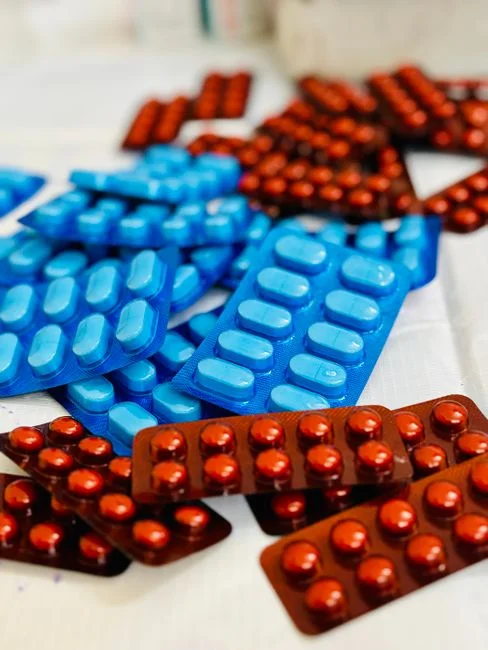
CAS is the wrong unit operation for HPAPI polishing, and the failure modes are predictable. Many HPAPIs — antineoplastics, kinase inhibitors, cytotoxics — pass CAS largely intact: an influent of 5 mg/L API typically yields effluent of 0.5–4 mg/L, which is 500–4,000× above the EMA/FDA ng/L–µg/L discharge target. Partial metabolism is not the same as destruction, and the residual sorbs onto waste-activated sludge that then becomes a hazardous-stream disposal problem in its own right.
Solvent shock and toxic slug from a cytotoxic campaign cause foaming and bulking in the aeration basin. MLSS collapses, washout events release intact API in the clarifier overflow, and recovery takes one to two sludge ages — long enough to push multiple non-compliant batches downstream. Chlorinated solvents such as DCM and chloroform strip in the aerated tank, creating both an air-emission and a worker-exposure pathway that re-enters the same OEL envelope the suite was designed to control. The secondary clarifier is the last weak point: it carries 10–30 mg/L of TSS, fines that are fine enough to sorb residual API and carry it past the discharge compliance point. None of these failure modes are addressable with more air or more sludge age; they require a physical barrier between the mixed liquor and the discharge stream, which is the MBR's job.
The MBR polishing stage: 0.1 µm PVDF flat-sheet design envelope
The MBR is the baseline polish for any HPAPI train, and the design envelope is narrow enough to lift directly into a P&ID. Membrane selection: 0.1 µm PVDF flat-sheet submerged modules — a flat-sheet PVDF flat-sheet MBR module is preferred over hollow fiber for HPAPI because it tolerates solvent slug, releases backwashable foulants under NaOCl/NaOH CIP at 0.5–1.0% active chlorine, and can be replaced module-by-module without breaking the mixed-liquor loop. Hollow fiber clogs faster on solvent-rich feeds and is harder to clean in place to the standard an HPAPI suite demands.
Operating envelope at design conditions: MLSS 8–12 g/L (vs 3–5 g/L in CAS), HRT 6–10 h, SRT 30–60 days, flux 12–18 L/m²·h at 10–25 °C, TMP 0.05–0.30 bar. The high MLSS decouples hydraulic retention from solids retention, which is what makes the API removal work — long SRT grows the slow-growing biomass that does partial degradation, while the membrane retains all biomass and most sorbed API inside the reactor. Effluent at this stage is TSS <1 mg/L, COD 50–200 mg/L, and API residue 50–500 ng/L depending on the molecule; this is the polishing ceiling, not the discharge point. Footprint is 60% smaller than CAS of equivalent capacity, and packaged submerged MBR membrane bioreactor system skids cover 10–2,000 m³/day as standard modules.
Containment class is set by the OEL band, not by effluent quality. OEB 3 (OEL 10–100 µg/m³) — enclosed MBR with local exhaust and standard membrane change-out. OEB 4 (OEL 1–10 µg/m³, SafeBridge Category 4) — closed/vented MBR with HEPA-filtered exhaust, CIP capture, and bag-out membrane change-out. OEB 5 (<1 µg/m³) — fully sealed tank, double HEPA on exhaust and aeration, and bag-in/bag-out membrane replacement with operator PPE per cytotoxic handling protocols. The enclosure cost scales with the OEL band, not with the flow — a 50 m³/day OEB 5 train can cost more than a 500 m³/day OEB 3 train.
| OEL band (ISPE / SafeBridge) | OEL (µg/m³) | MBR enclosure class | Exhaust treatment | Membrane change-out |
|---|---|---|---|---|
| OEB 3 | 10–100 | Enclosed, local exhaust | Pre-filter only | Standard |
| OEB 4 (SafeBridge Cat 4) | 1–10 | Closed/vented | HEPA on exhaust | Bag-out, PPE |
| OEB 5 | <1 | Fully sealed, double containment | Double HEPA | Bag-in/bag-out, cytotoxic PPE |
Downstream polishing train: when to add RO, UV254, or activated carbon
The MBR alone does not get the engineer to the discharge permit for cytotoxic and hormonal APIs. The post-MBR sequence is the procurement-shaping decision. The default for OEB 3–4 HPAPI suites is MBR → RO: an industrial RO polishing skid at 95% recovery pushes API residue from 50–500 ng/L to below the LC-MS/MS limit of quantitation (typically 1–10 ng/L), and the RO membrane rejects multivalent ions and high-MW organic residues that confound any downstream biotreatment.
UV254 is added when AOX or aromatic API residues pass the RO. A low-pressure Hg or medium-pressure lamp at 30–60 mJ/cm² dose breaks down chlorinated AOX fragments and many kinase inhibitors and antibiotics that survive MBR. UV254 is not a steriliser and not a standalone AOX remover; it works because the RO has already cut the organic load and clarified the water, so the UV photons reach the target molecules instead of being absorbed by background COD. For a chemistry-side decision framework on the oxidant choice, the Chlorine Dioxide vs Ozone for Industrial Wastewater: Engineering Comparison & Decision Framework article covers when an AOP-stage chlorine dioxide generator substitutes for or supplements UV.
Granular activated carbon (GAC) is added only when solvent tail breakthrough appears — a post-RO TOC above 2 mg/L, a specific VOC alarm, or a periodic exceedance on the discharge permit. A 2–4 m GAC contactor handles most carry-over from acetone, methanol, and acetonitrile tails, and carbon life is typically 6–12 months under HPAPI CIP discipline. Decision framework: hormonal or cytotoxic API → MBR + RO + UV (mandatory); non-cytotoxic OEB 3 with low AOX → MBR + RO sufficient; OEB 3 with high solvent load → MBR + RO + GAC. Going past UV254 to AOP or GAC without a driver just adds CAPEX and OPEX without moving the permit needle.
| Suite profile | Polishing train | Discharge target met |
|---|---|---|
| Hormonal / cytotoxic (OEB 4–5) | MBR + RO + UV254 | API |
| Non-cytotoxic OEB 3, low AOX | MBR + RO | API |
| OEB 3, high solvent load | MBR + RO + GAC | API |
2026 CAPEX envelope: a worked example at 200 m³/day
A reference plant at 200 m³/day HPAPI polishing, OEB 4, MBR + RO + UV254, with equalisation included, sets the following installed-cost envelope at 2026 pricing (HydropureWater field data, 2026): MBR skid (closed, HEPA exhaust) $0.9–1.2M; RO skid with CIP $0.5–0.7M; UV254 reactor $0.15–0.25M; equalisation tank and a PLC-controlled chemical dosing system $0.25–0.45M; total installed $1.8–2.6M. A sludge-handling line using a plate-frame filter press for the cytotoxic waste-activated sludge is typically added at $0.15–0.25M and changes both the OPEX (dewatering reduces disposal volume 70–80%) and the hazardous-waste classification.
OPEX is dominated by membrane replacement and RO element change-out. PVDF flat-sheet modules under disciplined CIP (NaOCl/NaOH weekly, acid wash monthly) last 5–7 years; RO elements last 3–5 years. Power, chemicals, and labour add to a 2026 OPEX of $0.18–0.28/m³. For comparison, a non-potent MBR-only train of the same hydraulic capacity is $1.1–1.5M installed — the HPAPI upgrade premium is 35–50%, and it buys the enclosure class, HEPA exhaust, RO skid, and UV reactor that the OEB 4 band and the discharge permit jointly require. That premium is the number to anchor the CAPEX memo.
Frequently Asked Questions
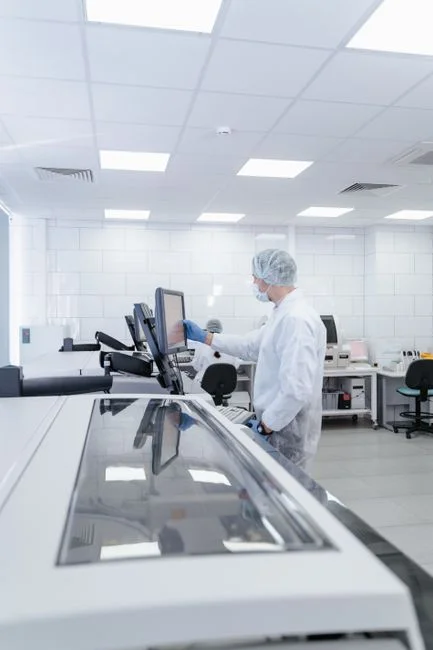
What MBR membrane specification is required for HPAPI wastewater? A 0.1 µm PVDF flat-sheet submerged module, operated at MLSS 8–12 g/L, flux 12–18 L/m²·h, and TMP 0.05–0.30 bar, with CIP at 0.5–1.0% active NaOCl/NaOH. The PVDF flat-sheet MBR module geometry is preferred over hollow fiber because it tolerates solvent slug and is CIP-friendly under the cleaning regime an HPAPI suite demands (HydropureWater field data, 2026).
Does an OEB 3 HPAPI suite require a closed MBR? Not necessarily. OEB 3 (OEL 10–100 µg/m³) can use an enclosed MBR with local exhaust; closed/vented MBR with HEPA-filtered exhaust is required from OEB 4 (OEL 1–10 µg/m³, SafeBridge Category 4) upward. The submerged MBR membrane bioreactor system enclosure class is set by the SafeBridge band, not by the flow rate.
Can RO alone polish MBR effluent to the ng/L API discharge target? Yes for most cytotoxic and hormonal APIs at 95% recovery with a brackish-water RO element: post-MBR API of 50–500 ng/L drops below the LC-MS/MS LOQ of 1–10 ng/L. The industrial RO polishing skid is the default post-MBR step for OEB 3–4 HPAPI trains, with UV254 added when AOX or aromatic API residues are a permit concern (HydropureWater field data, 2026).


