Why Oil and Grease Limits Matter in 2026 Industrial Compliance
Oil and grease (O&G) discharge limits for industrial facilities in 2026 typically range from 5 mg/L to 30 mg/L depending on jurisdiction, receiving water classification, and industry sector. The U.S. EPA generally enforces 10–29 mg/L monthly average under 40 CFR Part 435, China's GB 8978-1996 sets 10–30 mg/L by effluent class, and India's CPCB standard is 10 mg/L for inland surface water discharge. The standard analytical method is EPA Method 1664 (n-Hexane Extractable Material). Meeting these limits typically requires API oil-water separation followed by Dissolved Air Flotation (DAF), which removes 50–90% of FOG depending on influent loading.
FOG — fats, oils, and grease — causes three documented failure modes in receiving waters and collection systems: surface film that blocks oxygen transfer (typically a 1 mm film reduces reaeration by ~20% in quiescent waters), bacterial oxygen demand during decomposition that drives dissolved oxygen crashes, and sewer blockages from solidified grease deposits that have historically caused SSOs (sanitary sewer overflows) in municipalities with significant food-processing input. Four sectors carry the highest compliance exposure: food processing (dairy, meat, edible oil refining), metalworking (cutting and quench oils, often highly emulsified), petrochemical refining (desalter brine, spent caustics), and textile (dyeing bath lubricants, print pastes).
The 2026 enforcement trend is tightening. State EPA equivalents in watersheds under nutrient TMDL pressure — including the Chesapeake Bay, Long Island Sound, and San Francisco Bay regions — are pushing local NPDES limits from the historical 10–15 mg/L band down to 5–10 mg/L for O&G and total petroleum hydrocarbons combined. China's 2024 revision to GB 8978 tightened the Class I petrochemical limit to 5 mg/L for new facilities, and India's CPCB draft amendment (2025-11) proposes 5 mg/L for inland discharges in critically polluted industrial clusters. Plants still designing to pre-2022 limits face near-term retrofit exposure.
Sampling and analytical method are part of the compliance posture. EPA Method 1664 (n-HEM) is the U.S. standard for NPDES reporting; the older EPA 413.1 and 418.1 gravimetric methods using Freon-113 were invalidated in 2010 following the Montreal Protocol phase-out. Labs still advertising "EPA 413" are running a non-equivalent test — verify the method on the lab's chain-of-custody before submitting permit samples.
Global Oil and Grease Discharge Limits by Jurisdiction
Oil and grease discharge limits vary by an order of magnitude across jurisdictions, and the limit that applies to a specific facility depends on three variables: the national or regional standard, the receiving water body classification, and the industry-specific subcategory. The table below consolidates the major 2026 standards; verify against the local permit, since individual NPDES or equivalent permits may impose limits stricter than the underlying regulation.
| Jurisdiction | Standard / Reference | Limit (mg/L) | Notes |
|---|---|---|---|
| United States — oil & gas | 40 CFR Part 435 | 29 mg/L monthly avg, 42 mg/L daily max | Produced water; subcategory-specific |
| United States — refining | NPDES typical permit | 10–15 mg/L monthly avg | Varies by state; CA, NJ stricter |
| China — petrochemical | GB 8978-1996 Class I | 10 mg/L (5 mg/L for new builds post-2024) | Tightening under 2024 amendment |
| China — general industrial | GB 8978-1996 Class II | 20 mg/L | Standard industrial discharge |
| China — Class III zones | GB 8978-1996 Class III | 30 mg/L | Least stringent receiving waters |
| India — inland surface water | CPCB Schedule VI | 10 mg/L | Strictest for inland discharge |
| India — marine coastal | CPCB Schedule VI | 100 mg/L | Marine outfalls only |
| European Union — refineries | IED 2010/75/EU BAT-AEL | 0.1–5 mg/L TPH | BAT-AEL range, not single value |
| World Bank — petroleum refining | EHS Guidelines | 10 mg/L free oil | Project-financing benchmark |
| Indonesia | PP 22/2021 | 10 mg/L | Most industrial categories |
| Brazil | CONAMA 430/2011 | 20 mg/L | Mineral oils and greases |
These limits are expressed as "oil and grease" — the analytical test method (not the chemistry of the discharge) defines what is actually captured. A facility measuring 8 mg/L by EPA 1664 and 12 mg/L by ISO 9377-2 is in different compliance positions depending on which method the permit cites. This is a non-trivial source of audit findings.
How Oil and Grease Is Measured: EPA Method 1664 and International Equivalents
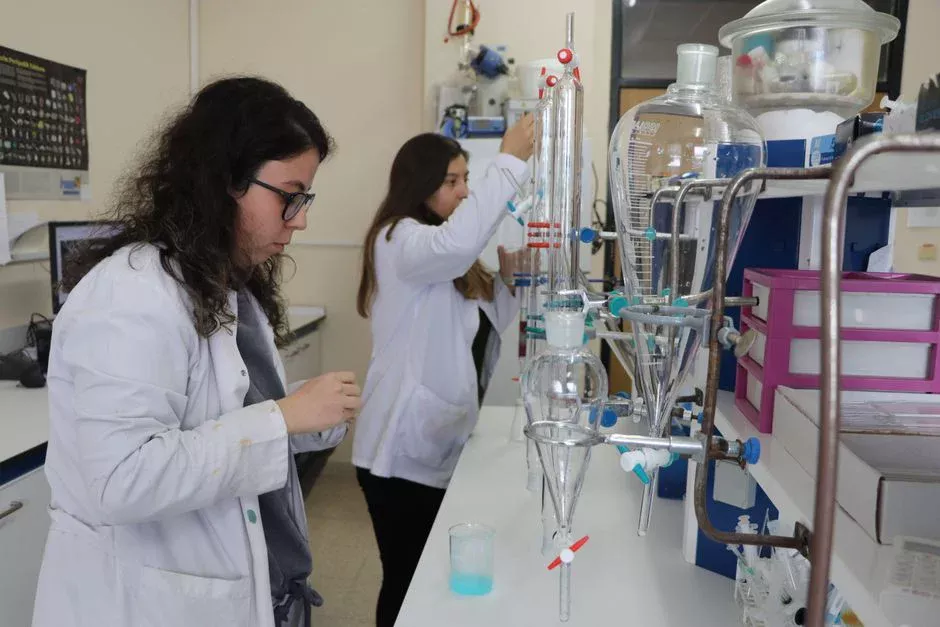
EPA Method 1664 is the U.S. regulatory standard for oil and grease in wastewater. The procedure is a gravimetric determination: liquid-liquid extraction with n-hexane at pH ≤2 (acidified to protonate fatty acids and recover them in the organic phase), followed by drying and weighing of the extracted residue. The method has a method detection limit (MDL) of approximately 5 mg/L — any permit limit set below 5 mg/L requires larger sample volumes, lower-contamination glassware, and labs running the low-level variant. Practical reporting limits of 1.0–2.0 mg/L are achievable but increase per-sample cost by 2–3×.
EPA 1664 replaced EPA 413.1 (total recoverable oil and grease) and EPA 418.1 (total recoverable petroleum hydrocarbons) in 2010. Both predecessors used Freon-113 as the extraction solvent; the Montreal Protocol phase-out forced the switch. The practical impact on compliance data: n-hexane is a more polar solvent than Freon, so recovery of polar fatty acids is slightly better, while recovery of certain heavy petroleum fractions is slightly lower. Historic pre-2010 data and current 1664 data are not perfectly comparable — a facility with "historically compliant" 8 mg/L readings on 413.1 may now read 10–12 mg/L on 1664 without any process change.
ISO 9377-2 is the European equivalent: hexane extraction with Florisil cleanup to remove polar biogenic compounds before gravimetric weighing. The Florisil step means ISO 9377-2 is a better proxy for true petroleum hydrocarbons, while EPA 1664 captures a broader fraction including vegetable oils. Permit writers in jurisdictions using ISO 9377-2 typically phrase the limit as "total hydrocarbons" rather than "oil and grease."
Sampling protocol matters as much as the lab method. NPDES compliance for O&G uses a 24-hour flow-weighted composite sample, not a grab. A grab sample taken at 7 a.m. from a batch-discharge food processor will read near-zero even when the daily composite would fail — this asymmetry is the single most common sampling error in self-monitoring reports.
The Standard Treatment Train: From API Separator to Polishing
The conventional three-stage train for industrial FOG removal is API separator → DAF → polishing. Each stage has a defined operating envelope, and skipping the upstream stage is the most common cause of underperforming DAF skids in the field.
| Stage | Equipment | Function | Design Parameters | Typical Effluent O&G |
|---|---|---|---|---|
| 1 | API oil-water separator | Gravity removal of free oil | HRT 30–60 min; design droplet rise velocity 0.3–1.0 mm/s (Stokes' law); API 421 design basis | 50–100 mg/L |
| 2 | Dissolved Air Flotation (DAF) | Removal of emulsified oil and suspended FOG | Air-to-solids ratio 3–6 mg/mg; hydraulic loading 4–25 m³/m²·h; recycle rate 20–50% | 10–20 mg/L |
| 3 | Biological (MBR/SBR) or membrane UF | Polishing for sub-10 mg/L compliance | MBR MLSS 8,000–12,000 mg/L; UF pore size 0.01–0.1 μm | <5 mg/L |
The API separator (Stage 1) is sized on Stokes' law: a 100 µm oil droplet with a density difference of 0.05 g/cm³ against water rises at roughly 0.5 mm/s, giving a 30-minute residence time in a 1-meter-deep separator. It removes only free oil — droplets large enough to float without intervention. Emulsified oil (droplets <20 µm, often stabilized by surfactants) passes straight through.
The DAF (Stage 2) is the workhorse. Pressurized air is dissolved into a recycle stream at 4–6 bar, then released at atmospheric pressure inside the flotation tank; the resulting micro-bubbles (10–100 µm) attach to oil droplets and suspended solids, floating them to the surface for skimming. Performance data from operating facilities show 50–90% FOG removal on a single pass, with the range driven by influent characteristics. Coagulant dosing (typically polyaluminum chloride or cationic polymer at 5–50 mg/L) is essential for breaking oil-bubble attachment; DAF without chemical dosing underperforms by 30–50% on emulsified streams. For facilities with tight existing footprints evaluating a DAF skid for industrial oil and grease removal, the upstream API stage is non-negotiable if influent FOG exceeds 500 mg/L.
Polishing (Stage 3) is only required when the limit drops below 10 mg/L or when the DAF is underspecified for the influent. A common bypass: many small facilities try to run DAF on raw wastewater with no upstream separator. This fails because oil slugs shock the saturator, coating the bubble surfaces with free oil and collapsing the air-bubble interface — the DAF tank turns into a heated, mixed emulsifier. For high-temperature waste streams above 60°C (edible oil refining, hot rinse water from metalworking), a cooling stage to below 40°C must precede DAF to maintain micro-bubble integrity. Preliminary DAF selection guidance for regional projects covers site-specific cooling and hydraulics in more detail.
When DAF Alone Is Not Enough: Advanced Polishing Options
DAF is a robust bulk-removal technology, but three influent conditions reliably push it outside its effective range: emulsified cutting oils from metalworking, refinery desalter brine with high temperature and TDS, and very-high-strength edible oil or rendering wastewater.
Emulsified cutting oils (metalworking) are the most common DAF underperformance case. Stabilized by surfactants at droplet sizes of 1–10 µm, they achieve only 70–80% removal in a single DAF pass — usually enough for a 20 mg/L permit, not enough for a 10 mg/L limit. The fix is chemical demulsification: drop pH to 3–4 with sulfuric acid to protonate the emulsifying surfactants and break the emulsion, then dose a cationic polymer to flocculate the released oil before DAF. An alternative is membrane ultrafiltration (UF) with 0.01–0.1 µm pore size; UF reliably achieves <5 mg/L on emulsified streams, but membrane fouling is the operational headache — flux declines to 30–50% of clean-water values within weeks without aggressive pretreatment.
Refinery desalter brine runs hot (>60°C) and saline (TDS 50,000–200,000 mg/L). Standard DAF saturators cannot maintain dissolved-air supersaturation at these conditions; the air comes out of solution inside the saturator vessel, not in the flotation tank. Induced Gas Flotation (IGF) is the standard upgrade: gas is educted directly into the flotation cell via an induction sparger, with hydraulic residence of 5–15 minutes. IGF handles the temperature and salinity, achieving 80–95% oil removal on desalter effluents.
Edible oil refining and rendering wastewater has influent FOG of 5,000–50,000 mg/L — orders of magnitude above the DAF envelope. Primary DAF after API separation gets the stream to 50–100 mg/L; achieving a 10 mg/L permit then requires either a granular activated carbon (GAC) polish (carbon usage 0.5–2 kg per m³ treated) or an MBR. For sub-10 mg/L targets, an MBR polishing stage for sub-10 mg/L oil and grease limits combines activated sludge biodegradation with UF membrane solids separation, reliably delivering <5 mg/L at higher capital cost but lower operator burden than GAC changeout.
Decision rule: if influent O&G exceeds 1,000 mg/L or droplet size is below 20 µm, plan for two-stage DAF or DAF + UF. Reverse osmosis (RO) achieves the lowest oil rejection but membrane fouling from residual oil is severe — only viable with aggressive pretreatment to <1 mg/L upstream of the RO.
Compliance Cost in 2026: CAPEX and OPEX Benchmarks
Budgeting for compliance requires both the capital cost of the treatment equipment and the recurring operating expense (chemicals, sludge handling, energy, lab testing). The table below consolidates 2026 cost ranges; figures include equipment, installation, and commissioning but exclude civil works, which vary dramatically by site.
| Facility Scale | Treatment Train | CAPEX (USD) | OPEX (USD per m³ treated) | Notes |
|---|---|---|---|---|
| Small (10–50 m³/h) | API + DAF skid | $80,000–$180,000 | $0.10–$0.25 | Skid-mounted; chemical + sludge OPEX |
| Mid-scale (50–200 m³/h) | API + DAF + sludge press | $180,000–$420,000 | $0.12–$0.30 | Includes chemical dosing system |
| Large refining/petrochemical (200+ m³/h) | Full train: API + DAF + bio + polish | $500,000–$2,000,000+ | $0.20–$0.50 | Multi-stage; often custom-engineered |
| Lab/compliance overhead | EPA 1664 testing, quarterly | — | $3,000–$8,000 per year per facility | Per-sample $80–$200 |
Non-compliance penalties dwarf compliance costs. Under the U.S. Clean Water Act, civil penalties for permit violations are adjusted annually for inflation; the 2026 maximum is approximately $64,000 per day per violation (adjusted from the 2023 statutory baseline of $60,000). A single quarter of exceedances on a 5-out-of-6-sample NPDES DMR (discharge monitoring report) creates penalty exposure in the hundreds of thousands of dollars, before considering state-level enforcement and permit revocation risk. Oily sludge handling — a downstream cost often missed in initial budgeting — typically requires a filter press for oily sludge dewatering to bring the waste to 25–35% dry solids for off-site disposal, and the disposal tipping fee alone can run $80–$200 per wet ton.
For facilities with TSS compliance problems running in parallel with O&G, the same DAF skid typically addresses both, which improves the CAPEX case. Similarly, where Fenton chemistry is already in use for other contaminants, the Fenton oxidation stage can be tuned to polish residual FOG as a tertiary step, though this is a niche application.
Selecting the Right Oil and Grease Treatment System: A Decision Framework
Vendor selection should start with five engineering questions, asked in order. Each one narrows the equipment class before any vendor quote is requested.
Question 1 — Influent O&G concentration. Below 500 mg/L points to DAF-only treatment. Between 500 and 5,000 mg/L requires DAF with coagulant and polymer dosing, plus a sludge-handling plan. Above 5,000 mg/L — typical for edible oil, rendering, and refinery desalter brines — requires API separation upstream of the DAF, or a two-stage DAF with intermediate sludge removal. The 5,000 mg/L threshold also drives whether a buried concrete API separator (preferred for high-flow, free-oil streams) or a packaged steel API (preferred for retrofit and tight sites) is the right Stage 1 choice.
Question 2 — Discharge limit. A limit above 20 mg/L is satisfied with a single DAF skid and a downstream clarifier. A 10–20 mg/L target requires DAF with optimized chemistry plus a polishing clarifier or sand filter. Sub-10 mg/L compliance requires DAF plus biological treatment (MBR or SBR) or membrane ultrafiltration. State-level permits in TMDL-pressured watersheds increasingly fall in the sub-10 mg/L category.
Question 3 — Free oil versus emulsified. Free oil (large droplets, no surfactant stabilization) is removable in a simple API separator. Emulsified oil (small droplets, surfactant- or pH-stabilized) requires DAF at minimum, and almost always benefits from chemical demulsification. If the upstream process generates emulsions — metalworking cutting fluids, wool-scouring liquor, refinery desalter brine — the treatment train must be designed for emulsified loading from day one.
Question 4 — Temperature sensitivity. Standard DAF operates at inlet temperatures below 40°C; above that, micro-bubble yield drops sharply. Streams above 40°C require either a cooling tower / heat exchanger upstream of DAF, or a switch to IGF (induced gas flotation) which tolerates higher temperatures. This decision is non-negotiable for edible oil refining and many metalworking rinse streams.
Question 5 — Space constraints. Buried package plants fit tight sites with poor surface area availability; skid-mounted above-grade systems are faster to install and easier to inspect, but require a concrete pad and weather protection. For a brownfield retrofit, an above-grade screening and DAF skid with a rotary bar screen upstream is typically the lowest-disruption installation path, and the rotary screen also protects the DAF from ragging and solids overload — a frequent cause of unplanned downtime on industrial FOG streams. For pH-sensitive streams governed by regional effluent rules (e.g. Indonesian facilities operating under PP 22/2021), the same decision tree applies, and the pH compliance framing under PP 22/2021 should be reviewed in parallel since pH correction interacts with the coagulant dosing program.
Frequently Asked Questions
What is the typical oil and grease discharge limit for industry? The 2026 range is 5–30 mg/L, with the most common regulatory targets being 10 mg/L (US NPDES for refining, India CPCB inland, China GB 8978 Class I, Indonesia PP 22/2021), 15 mg/L (many US state NPDES permits), 20 mg/L (China Class II, Brazil CONAMA), and 30 mg/L (China Class III). Permits in TMDL-pressured watersheds and EU IED BAT-AEL ranges can be stricter — as low as 0.1–5 mg/L TPH for European refinery installations.
Which treatment method is most effective for industrial FOG removal? DAF is the workhorse technology, achieving 50–90% removal in a single pass with chemical dosing. For limits at or above 20 mg/L, a single DAF skid is sufficient. For 10–20 mg/L targets, optimize DAF chemistry (coagulant + polymer selection) and add a clarifier polish. For sub-10 mg/L compliance — typical under modern US state permits and EU BAT-AEL — escalate to DAF plus biological (MBR/SBR) or membrane (UF) polishing. Gravity-only API separators are inadequate alone; they remove free oil but cannot break emulsions.
How is oil and grease measured in wastewater? The U.S. standard is EPA Method 1664 (n-Hexane Extractable Material), a gravimetric method using n-hexane at pH ≤2. The European standard is ISO 9377-2, which adds a Florisil cleanup step to remove polar biogenic compounds and reports total hydrocarbons. Both methods have a method detection limit of approximately 5 mg/L. NPDES compliance samples are 24-hour flow-weighted composites, not grabs. Confirm the cited method on the permit and on the lab's chain-of-custody before drawing compliance conclusions.
What is the penalty for exceeding oil and grease discharge limits? U.S. Clean Water Act civil penalties reach approximately $64,000 per day per violation in 2026 (adjusted for inflation from the 2023 baseline of $60,000). State agencies layer additional enforcement: consent orders with multi-million-dollar supplemental environmental projects, NPDES permit revocation, and in severe cases criminal referral under the CWA knowing-endangerment provisions. China's enforcement under the revised Environmental Protection Law (2015) imposes daily automatic fines without an upper cap. India CPCB can revoke Consent to Operate, effectively shutting a facility.
Do small food processors need oil and grease treatment? Yes, with limited exceptions. Most jurisdictions apply the same O&G limit regardless of facility size; what varies is the permit type (general vs. individual NPDES in the U.S., for example). Some jurisdictions offer simplified permits for very small discharges (typically under 10 m³/day), but even those require pretreatment if the discharge enters a municipal sewer with a fats-oil-grease (FOG) program. Food processors discharging to a POTW should expect a local FOG limit (often 100–200 mg/L) and a grease trap/interceptor requirement regardless of state-level O&G rules.