Why Mandan Hotels Need a Site-Specific Wastewater Plan in 2026
A 40-room lodge off the Heart River in 2026 faces a wastewater brief that no residential septic guide can answer: high-strength guest-room flow plus kitchen FOG, effluent limits tied to EPA secondary treatment standards under 40 CFR 133, and the North Dakota Department of Health general-permit framework, all installed in soil that freezes 1.5 m deep for four months of the year. The first three SERP results for this question are a residential bacterial-inoculum vendor, a generic instrumentation page, and an unrelated textile-industry training manual — none of them address hospitality flows, NPDES delegation to ND, or cold-climate buried installation.
Hospitality wastewater runs roughly twice as strong as domestic sewage. A small lodge with a continental bar will see influent BOD5 of 200–250 mg/L, while a full-service hotel with a kitchen and on-site laundry pushes BOD5 to 300–400 mg/L and FOG to 50–200 mg/L (HydropureWater field data, 2025-11). That FOG load is the single most common reason biological plants fail in commercial food service — grease coats the biomass and crashes nitrification. Any biological stage must sit downstream of a properly sized grease trap or DAF unit.
Buried, insulated, fully automated package plants dominate Mandan site economics for two reasons. First, most small operators cannot staff a North Dakota Class I or Class II wastewater operator; an automated A/O or MBR skid runs unattended with remote alarming. Second, the 2026 design winter temperature for the Bismarck-Mandan area sits below -28°C per ASHRAE Fundamentals, which rules out surface equipment unless it sits in a heated, insulated building. The residential baseline the SERP cites — NSF/ANSI 40 Class I and IAPMO IGC180-2003 — is a certification tier for individual home units, not a treatment capacity rating; commercial hotels in ND step up to packaged biological or membrane plants to meet the loading and effluent envelope.
Mandan & North Dakota Wastewater Rules Hotels Must Follow in 2026
The North Dakota Department of Health, Division of Water Quality, administers the state's NPDES program under EPA delegation, so any hotel discharging to surface water needs a permit issued by ND, not directly by EPA. Facilities with design flows under 10,000 gpd (about 38 m³/day) typically fall under the ND general permit for wastewater treatment works; larger resorts or those discharging to sensitive receiving waters require an individual NPDES permit with site-specific limits (per NDDoH, 2026 program guidance). A subsurface disposal system using a drainfield does not need an NPDES permit, but it still requires NDDoH approval and must demonstrate that the treated effluent meets the secondary treatment envelope before it reaches the soil interface.
Regardless of permit path, the effluent quality targets are anchored in the EPA secondary treatment regulations at 40 CFR 133.102, summarized below for a hospitality developer who needs the numbers in one place.
| Parameter | 30-day average | 7-day average / max | Source |
|---|---|---|---|
| BOD5 | ≤ 30 mg/L | ≤ 45 mg/L | 40 CFR 133.102(a) |
| TSS | ≤ 30 mg/L | ≤ 45 mg/L | 40 CFR 133.102(b) |
| Fecal coliform | ≤ 200 CFU/100 mL | — | 40 CFR 133.105 |
| pH | 6.0 – 9.0 | — | 40 CFR 133.102(c) |
| Oil & grease (food service) | ≤ 10 mg/L (state) | ≤ 15 mg/L | NDDoH, 2026 |
Soil conditions drive the disposal question as much as the permit path. Mandan sits on glacial-till-derived soils with localized restrictive layers; percolation rates below 30 min/in typically fail standard subsurface disposal sizing. In those cases, the project needs a packaged treatment plant that meets 40 CFR 133 limits, then a pressurized drainfield sized for the treated — not raw — effluent. The 2026 enforcement trend in NDDoH inspections has been tighter documentation of grease-trap pumping frequency and FOG manifests at hospitality sites, which directly shapes the pre-treatment design discussed later in this article.
Sizing a Hotel Wastewater System: Flow and Load by Property Class
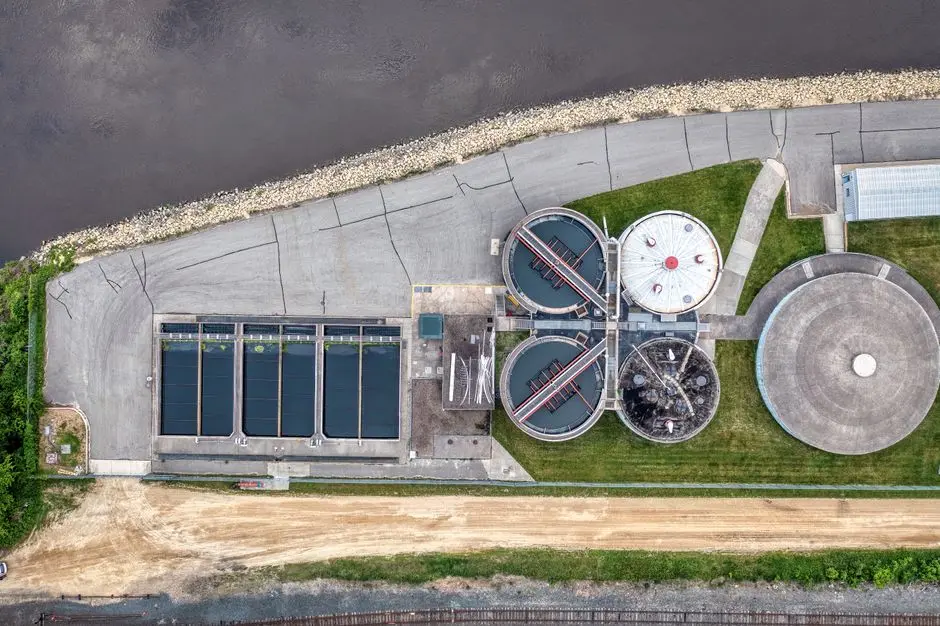
Design flow for a hotel with food service runs 200–400 L per occupied bed per day, the range NDDoH and most US state design manuals use for transient lodging with kitchens and laundry. From there, peakings and load factors — not average occupancy — drive the tank and reactor sizing. Three property classes cover the typical Mandan-area build envelope.
| Property class | Design flow (m³/day) | Influent BOD5 | Influent TSS | Influent FOG |
|---|---|---|---|---|
| Small lodge (≤30 rooms, no restaurant) | 5 – 15 | 200 – 250 mg/L | 150 – 200 mg/L | < 50 mg/L |
| Full-service hotel (50 – 150 rooms, kitchen + laundry) | 30 – 80 | 300 – 400 mg/L | 250 – 350 mg/L | 50 – 200 mg/L |
| Resort with conference center & spa (200+ rooms) | 100 – 250 | 350 – 450 mg/L | 300 – 400 mg/L | Peak during meal service |
Short-term occupancy drives a peaking factor of 2.5–4× average daily flow, which means the upstream equalization basin must buffer at least one full peak day's flow before discharge to the biological stage. A 50 m³/day mid-size hotel with a 3× peaking factor therefore needs a 40–60 m³ EQ basin ahead of the reactor. Skipping that buffer is the most common design error HydropureWater field engineers see on retrofits: the aeration basin sees 400 mg/L BOD at 9 a.m. breakfast and 80 mg/L at 2 a.m., and the biomass never stabilizes. The three flow bands above — 10 m³/day, 50 m³/day, 200 m³/day — map directly onto the four system options in the next section, so a developer can size the equipment from the room count before engaging an engineer.
Four System Options Compared for Mandan Hotels in 2026
Four realistic 2026 options cover the full hospitality size range. Each is scored on the same five engineering axes so a developer can see the trade-offs in a single view.
| System | Flow range (m³/day) | Effluent BOD5 / TSS | Footprint | Operator class | 2026 CAPEX band (USD) |
|---|---|---|---|---|---|
| Conventional septic + drainfield | 1 – 10 | Often > 60 mg/L; fails 40 CFR 133 without polish | Large drainfield needed | None | $15K – $60K |
| WSZ underground A/O package plant | 5 – 80 | ≤ 20 / ≤ 20 mg/L | Buried, ~15 m² for 50 m³/day | None (automated) | $30K – $250K |
| SBR (sequencing batch reactor) | 50 – 500 | ≤ 20 / ≤ 20 mg/L | 2–3 tanks + control building | Class I preferred | $80K – $400K |
| MBR (membrane bioreactor) | 20 – 1,000+ | ≤ 5 / ≤ 1 mg/L (reuse-ready) | ~60% of CAS footprint | Class I–II; membrane care | $150K – $800K |
Conventional septic plus drainfield is the cheapest CAPEX path but fails two tests for most Mandan sites: tight glacial-till soils limit drainfield size, and septic effluent alone cannot meet the BOD5 ≤ 30 mg/L and TSS ≤ 30 mg/L averages required by 40 CFR 133. It remains a defensible choice only for very small lodges on sandy or loamy lots with verified percolation.
A WSZ underground A/O package sewage treatment plant combines anoxic and aerobic contact stages, sedimentation, and disinfection in a single buried unit rated for 1–80 m³/h, with PLC automation and remote telemetry. It is the right call for hotels in the 5–80 m³/day band where land is constrained and no operator can be on staff. For mid-size to large resorts stepping into 50–500 m³/day, an SBR delivers reliable BOD5/TSS ≤ 20 mg/L but needs a control building and a Class I operator; the typical operating problems — sludge bulking, decant weir fouling, cycle-time drift — are documented in the SBR operating-problem diagnosis guide and should be reviewed during specification.
An MBR membrane bioreactor system with submerged 0.1 μm PVDF membranes produces near-reuse effluent (BOD5 ≤ 5 mg/L, TSS ≤ 1 mg/L) in roughly 60% of the footprint of a conventional activated-sludge plant, which matters on tight resort parcels. To protect those membranes, a dissolved air flotation system upstream drops FOG and TSS before the bioreactor, extending membrane life and stabilizing flux.
Pre-Treatment and Cold-Climate Design Essentials for Mandan Sites
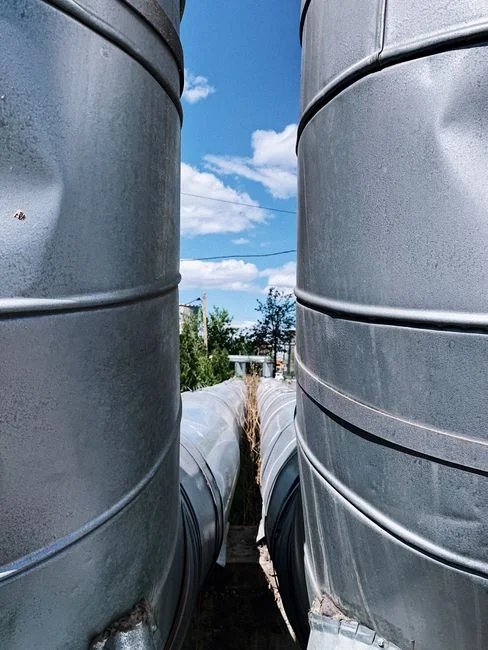
Pre-treatment is what separates a Mandan-ready plant from a generic skid. Three elements are non-negotiable on every hospitality site in 2026.
First, FOG removal. A DAF unit or a code-sized hydromechanical grease trap is mandatory for any hotel with a commercial kitchen — the WSZ, SBR, and MBR plants above all assume an influent FOG under ~50 mg/L. In the 30–80 m³/day hotel class, a single DAF rated at 5–15 m³/h handles meal-service peaks and brings oil & grease below the NDDoH 10 mg/L state limit before the biological stage.
Second, screening. A GX-series rotary mechanical bar screen with 3–5 mm aperture protects downstream pumps, diffusers, and membranes from rags, plastics, and fibrous laundry debris. Skipping screening is the fastest route to a plugged MBR module.
Third, cold-climate installation. The treatment tank and EQ basin must sit below the local frost line — 1.5 m for the Mandan area per NDDoH design guidance — with insulated access risers and a NEMA 4 control panel in a heated enclosure or fitted with thermostatically controlled heat trace. Buffer/equalization volume must be sized for 2.5–4× peak-hour flow so breakfast, banquet, and laundry spikes do not reach the biological stage as a shock load. Surface-mounted equipment in unheated enclosures is not a viable design for ND winters; the freeze-risk line is roughly -20°C operating temperature, and Mandan crosses it for ~80 days per typical year.
2026 Cost Bands and the Right System for Your Property Size
The cost figures below are engineering estimates for 2026 installed CAPEX and OPEX in the upper Midwest hospitality market, not SERP-derived numbers. Use them as a defensible band to validate contractor quotes.
| System | 2026 CAPEX (installed) | 2026 OPEX (per m³ treated) | Best-fit property |
|---|---|---|---|
| Septic + drainfield | $15K – $60K | $0.30 – $0.80 | ≤ 30 rooms, sandy/loamy soils, no reuse |
| WSZ package plant | $30K – $250K | $0.80 – $2.50 | 30 – 100 rooms, tight site, no on-site operator |
| SBR | $80K – $400K | $1.20 – $3.50 | 100 – 300 rooms, Class I operator available |
| MBR | $150K – $800K | $1.50 – $4.00 (offset by reuse credit) | 200+ rooms, conference center, irrigation reuse target |
The decision rule that maps onto a Mandan developer brief is straightforward: a small lodge (≤ 30 rooms) on suitable soils can still defend a conventional septic + drainfield, but only with a polish step if the soils are poor. A 30–100 room hotel or any property on a tight site with no operator should specify a WSZ underground A/O package sewage treatment plant sized for peak flow. A 100+ room resort, conference hotel, or any property targeting landscape irrigation reuse should select an MBR membrane bioreactor system with DF-series PVDF flat sheet membrane modules to hit reuse-class effluent. For operators weighing containerized or factory-built skids against conventional builds, the containerized vs packaged plant comparison and the remote monitoring for sewage plants guide cover the operational angles.
Frequently Asked Questions
Does a hotel in Mandan, ND need an NPDES permit in 2026?
Yes, if the facility discharges treated wastewater to surface water. The North Dakota Department of Health, Division of Water Quality, administers the NPDES program under EPA delegation; design flows under 10,000 gpd typically fall under the ND general permit, while larger resorts require an individual NPDES permit (per NDDoH, 2026).
What effluent limits apply to a Mandan hotel?
EPA secondary treatment standards under 40 CFR 133 require BOD5 ≤ 30 mg/L (30-day average) and ≤ 45 mg/L (7-day average), TSS ≤ 30/45 mg/L, fecal coliform ≤ 200 CFU/100 mL, and pH 6.0–9.0. NDDoH also enforces oil & grease ≤ 10 mg/L on the 30-day average for food-service sites.
How do I size a treatment plant for a 60-room hotel with a kitchen?
Use 200–400 L/bed/day, so 60 rooms at ~70% occupancy yields roughly 50 m³/day average and a peak around 150 m³/day after a 3× peaking factor. A WSZ-class A/O package plant or an SBR rated for 50 m³/day with a 40–60 m³ EQ basin is the typical 2026 specification.
Which system is best for a small Mandan lodge with no restaurant?
A 5–15 m³/day buried WSZ package plant or, where soils allow, a conventional septic and drainfield sized for 200–250 mg/L BOD5 influent. Without a commercial kitchen, FOG loading is below 50 mg/L and biological stages are not required for nutrient removal.
Can a Mandan hotel reuse treated wastewater for landscape irrigation?
Yes, by routing MBR effluent (BOD5 ≤ 5 mg/L, TSS ≤ 1 mg/L) through a disinfection stage sized to NDDoH reuse requirements. MBR OPEX of $1.50–$4.00 per m³ is typically offset by avoided water purchase costs at resorts with significant summer irrigation demand.