Why Gaborone Hotels Need a Dedicated Wastewater Strategy in 2026
A hotel or resort in Gaborone in 2026 cannot be designed against a generic "domestic sewage" curve. The city sits inside the Notwane and Segoditshane catchments, classified as semi-arid with mean annual rainfall of roughly 450–550 mm, and Botswana's Department of Water Affairs — operating under the Water Apportionment Act — actively encourages treated-effluent reuse for irrigation rather than discharge to surface water. That single policy decision changes the design target: a hospitality plant in Gaborone should be specified for reuse quality, not just BOBS discharge compliance.
Tourism seasonality creates the second pressure. Conference blocks (BoCCO-hosted events, Gaborone International Music Festival week), December–January holiday peaks, and the Kasane–Maun feeder traffic that overruns Gaborone lodges on Friday nights push peak-to-average flow ratios to between 1.8× and 2.5× — well above the 1.3–1.5× peaking factor used in residential design. A conventional activated-sludge tank sized on average dry-weather flow will hydraulically overload during these windows and wash out biomass.
The third pressure is the Water Utilities Corporation's Khutswe Sewerage Works itself. In peri-urban and resort catchments east of the Notwane (Phakalane, Tlokweng fringe, Mmopane), WUC trunk sewer capacity is constrained and new connections may be denied or queued — making on-site packaged treatment the only practical path in 2026. Where a gravity connection under ~1 km is available, off-site discharge still costs a one-off Khutswe connection fee plus volumetric sewer tariff, so the on-site decision is rarely just about hydraulics; it is about the 5-year cost of water and effluent combined.
Effluent limits in 2026 follow the Botswana Bureau of Standards BOS 900-series (confirm against the latest BOBS gazette before procurement): pH 6.0–9.0, BOD₅ ≤30 mg/L, COD ≤125 mg/L, TSS ≤30 mg/L, ammoniacal nitrogen ≤10 mg/L, and faecal coliform ≤1,000 CFU/100 mL for land disposal (≤100 CFU/100 mL where reuse is unrestricted). These are not aspirational — the Department of Water Affairs and the Department of Environmental Affairs both use them as commissioning hand-over criteria.
How to Size a Hotel or Resort Sewage Treatment Plant in Gaborone
The sizing workflow below is the one a Botswana consulting engineer should be able to run against a room count and occupancy rate inside an hour. It is built on southern-African lodge benchmarks and cross-checked against the WSZ 1–80 m³/h design envelope and MBR systems in the 10–2,000 m³/day class.
Step 1 — Per-guest water demand. Use 150–250 L/guest-day for a mid-market Gaborone property (200 L is a defensible default for a 3-star business hotel; 250 L covers resort-style occupancy with pools, irrigated gardens, and laundry). Source: southern-African hospitality water-audit practice, supported by HydropureWater field data on 30–120 room lodge installations through 2025-12.
Step 2 — Convert water demand to wastewater flow. Wastewater is typically 80–90% of metered water demand. A workable planning number is 0.5–0.8 m³/room-day at average occupancy — so an 80-room property at 1.6 guests/room and 65% occupancy generates roughly 42–50 m³/day average.
Step 3 — Apply the peaking factor. Tourism-skewed lodges: 2.0–2.5×. Business hotels with stable corporate occupancy: 1.5×. Document the chosen factor in the design basis — it is the single number that determines whether the equalisation tank and biological stage are right-sized.
Step 4 — Calculate the organic load. Use 0.3–0.6 kg BOD/guest-day and 60–110 g COD/guest-day as the per-capita biological load (after a kitchen grease trap removes 60–80% of FOG; add a DAF unit upstream if the property runs a full-service restaurant with more than 200 covers/day). The 80-room worked example below lands at roughly 38–50 kg BOD/day and 8–12 kg COD/day average.
Step 5 — Worked sizing example (80-room lodge, Gaborone).
| Parameter | Value | Source / basis |
|---|---|---|
| Rooms | 80 | Owner brief |
| Average occupancy | 1.6 guests/room × 65% = 83 guests | Industry benchmark |
| Per-guest water demand | 200 L/guest-day | Southern-African lodge range 150–250 L |
| Average daily flow | ~56 m³/day | 0.9 × metered water |
| Peaking factor | 2.2× | Tourism-peak profile |
| Peak daily flow | ~124 m³/day (~5.2 m³/h) | Design basis |
| Organic load | ~45 kg BOD/day, ~9 kg COD/day | 0.4 kg BOD × 1.6 × 80 × 0.65 |
| Equipment class | WSZ-50 buried A/O or MBR-100 cassette | Map to standard skid ratings |
The peak figure of ~124 m³/day is the one that selects the plant. Both the WSZ underground packaged sewage treatment plant family and the MBR membrane bioreactor system family have standard models that absorb this flow, but they are right-sized against peak, not average — a common error is to specify against the average 56 m³/day and lose biomass during the December peak.
The Standard Process Train for a Botswana Resort Sewage Plant
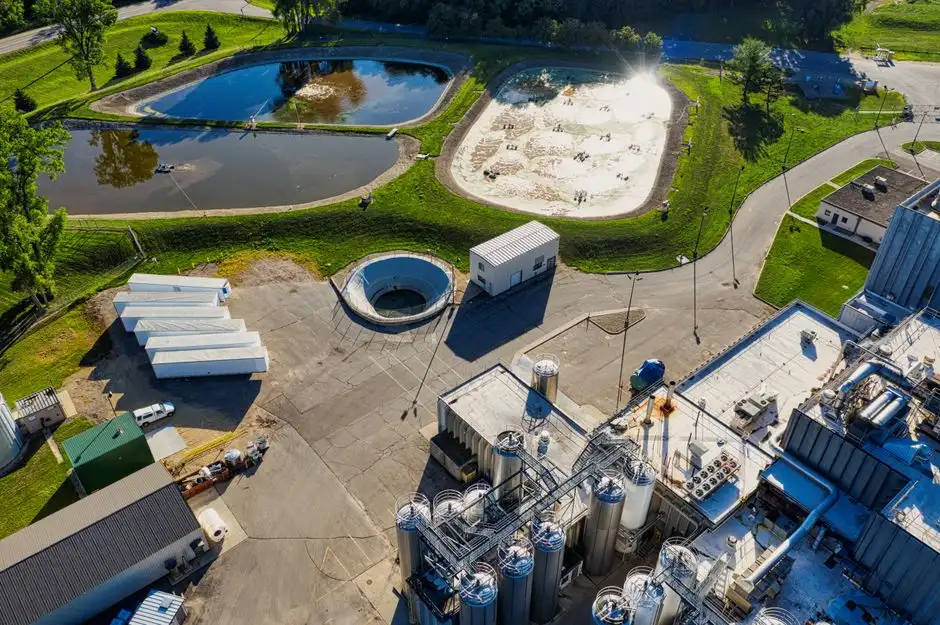
A defensible 2026 process train for a Gaborone hospitality plant has four stages, and each stage has a specific Botswana-driven reason for being there.
Stage 1 — Pre-treatment. A rotary mechanical bar screen (GX series, 3–5 mm aperture) handles rags, plastics, and pool filtration backwash solids. Downstream, a kitchen grease trap sized to 40 L/min peak removes 60–80% of fats, oils, and grease before the biological stage. A dissolved air flotation unit is justified for any property running a conference banquet kitchen of more than 200 covers/peak day, because emulsified FOG is the most common cause of MBR membrane fouling in hospitality service.
Stage 2 — Biological treatment. Either an anoxic/aerobic (A/O) flow scheme — the basis of the WSZ buried plant — or a fully mixed MBR activated-sludge reactor. Both oxidise BOD/COD to <30 mg/L and achieve ammonia nitrification to <5 mg/L with a 10–15 day sludge age at 18–25 °C. Gaborone's winter air temperature drops to 4–8 °C overnight from June to August, so designers should specify either buried tanks (insulated by backfill) or a minimum mixed liquor temperature of 12 °C — a sub-12 °C basin halves nitrification rate and the plant will fail BOBS ammoniacal-nitrogen limits in August without trace.
Stage 3 — Tertiary clarification. A lamella clarifier or high-efficiency sedimentation tank drops TSS to <30 mg/L on a conventional A/O plant. The MBR route skips this: the DF series MBR flat sheet membrane module delivers <1 μm filtrate at TSS <1 mg/L and SDI <3 — well within reuse spec.
Stage 4 — Disinfection. A chlorine dioxide disinfection generator (50 g/h to 20,000 g/h) is the correct 2026 choice for a Botswana reuse plant. ClO₂ holds residual at high organic loading, does not form trihalomethanes (THMs) the way chlorine does, and is effective at pH 6–9 — covering the full BOBS envelope. UV is acceptable as a polishing step for hotel-irrigation reuse where residual chlorine is undesirable (e.g., golf-course greens).
Sludge handling. A plate-and-frame filter press dewatered weekly to monthly fits the remote-lodge operator model; cake at 18–22% dryness goes to a covered drying bed or off-site disposal. WAS from MBR at typical 0.3–0.5 kg DS/kg BOD removed translates to roughly 13–22 kg dry sludge/day for the 80-room worked example — about one filter-press cycle per week.
MBR vs SBR vs Buried WSZ Packaged Plant: Which Fits a Gaborone Hotel?
The buying decision in 2026 comes down to five variables: room count, available footprint, reuse intent, proximity to WUC sewer, and operator skill on site. The matrix below is the one I walk a client through in the first scoping meeting.
| Criterion | WSZ buried A/O | MBR membrane bioreactor | SBR batch reactor |
|---|---|---|---|
| Flow envelope | 1–80 m³/h | 10–2,000 m³/day | 20–500 m³/day per basin |
| Footprint vs conventional AS | ~40% smaller | ~60% smaller | ~30% smaller (single basin) |
| Effluent TSS / BOD | ≤30 / ≤30 mg/L | ≤1 / ≤5 mg/L | ≤20 / ≤20 mg/L |
| Reuse-ready (BOBS irrigation) | With tertiary add-on | Direct | With filtration add-on |
| Operator skill required | Low (buried, automated) | Medium (membrane CIP) | High (cycle tuning) |
| CAPEX band, 30–120 m³/day | $15K–$80K | $90K–$260K | $70K–$180K |
| OPEX band | $0.10–$0.20/m³ | $0.25–$0.55/m³ | $0.20–$0.45/m³ |
| Best-fit hotel profile | 20–80 room, tight budget, soakaway discharge | 30–120 room boutique resort, golf course, irrigation reuse | 100+ room conference hotel, extreme peak/off-peak swing |
The WSZ underground packaged sewage treatment plant wins on CAPEX, footprint (it can be sited under a car park or staff courtyard), and operator simplicity. It is the right answer when the property has a soakaway or is connecting to WUC. The MBR membrane bioreactor system wins on reuse quality: if the business case depends on 60–80% of treated effluent replacing potable irrigation water, MBR pays back the CAPEX premium in 3–5 years. SBR sits between the two — flexible hydraulics, but it needs an operator who understands cycle timing and sludge wasting, which most remote lodges do not have.
A pragmatic 2026 hybrid is also worth specifying: a WSZ biological stage in Phase 1 sized for BOBS discharge, with a downstream DF series MBR flat sheet membrane module cassette retrofit in Phase 2 once the irrigation area is established. This defers ~$60K–$110K of CAPEX by 18–36 months and lets the operator team stabilise on the simpler A/O plant first.
Botswana Compliance, Reuse, and Water Utilities Corporation Connection in 2026
Three approvals run in parallel before a hospitality WWTP can be commissioned in 2026. The first is the Botswana Bureau of Standards effluent compliance certificate against BOS 900-series limits, which the design engineer signs into the design report. The second is the water-use and reuse permit issued by the Department of Water Affairs (DWA) under the Water Apportionment Act — required whenever the treated effluent is reused for irrigation or discharged to a watercourse in the Notwane catchment. The third is the Water Utilities Corporation connection permit, which in 2026 still requires a hydraulic capacity confirmation from Khutswe Sewerage Works for any property inside the Gaborone sewered zone.
The WUC connection decision is the one that should be settled before equipment selection. If the lodge is within gravity reach of a WUC trunk sewer (typically <1 km and at invert depth <4 m) and Khutswe has hydraulic headroom, off-site discharge is cheaper than on-site treatment — even after a 2026 connection fee typically in the BWP 25K–60K bracket plus a volumetric tariff of ~BWP 4–7/kL of sewered effluent. If the property is on a private game farm, in the peri-urban fringe, or in a Tlokweng / Mmopane pocket where WUC has issued a capacity-hold notice, on-site treatment is the default. Botswana's National Water Policy explicitly supports recycling, and DWA treats reuse permits as routine rather than exceptional.
The typical 2026 permit pack: design report with hydraulic and pollution-load calculations, BOBS effluent compliance table, irrigation area sizing (mm/m² of landscaped area vs. daily effluent volume), an O&M manual, and a commissioning plan with sampling points. Lead time is 8–14 weeks depending on DWA workload, so this should be running in parallel with vendor selection rather than after it.
2026 CAPEX, OPEX, and ROI for a Gaborone Hotel Sewage Treatment System
The 2026 numbers below are equipment-and-instrumentation bands, not turnkey EPC pricing — site civil works, electrical reticulation, and DWA permitting are excluded and typically add 30–55% on top.
| System class | CAPEX (equipment only) | OPEX (per m³ treated) | 5-year total, 50-room lodge at 35 m³/day |
|---|---|---|---|
| WSZ buried A/O, 10–50 m³/day | $15K–$80K | $0.10–$0.20 | $40K–$105K |
| MBR cassette, 30–120 m³/day | $90K–$260K | $0.25–$0.55 | $145K–$315K |
| SBR batch, 50–200 m³/day | $70K–$180K | $0.20–$0.45 | $115K–$240K |
| Ancillary (sludge press, DAF, ClO₂, dosing skid) | +15–25% of equipment CAPEX | — | — |
The ROI math is what closes the sale in 2026. A 50-room Gaborone lodge running at 65% occupancy and a 2.0× peaking factor will treat on the order of 30–40 m³/day. Reusing 60–80% of that for landscape irrigation — at Gaborone 2026 municipal potable tariffs of roughly BWP 8–14/kL (water plus sewer levy), or about $0.055–$0.10/kL at current Pula exchange rates — displaces 18–32 m³ of purchased water per day. That is BWP 200–400 per day in avoided water cost, or roughly BWP 73K–146K per year. Against a $90K–$260K MBR CAPEX, the payback is 3–5 years for the MBR route and 5–8 years for the WSZ route where reuse is partial. The automatic chemical dosing skid and the DAF pre-treatment unit add 15–25% to equipment CAPEX but are the difference between a clean membrane in year three and a chemistry-related CIP every quarter.
Frequently Asked Questions
What wastewater treatment system does a Gaborone hotel need in 2026?
A packaged biological plant — typically an MBR or buried WSZ A/O unit — sized at 150–250 L per guest-day with a 1.8–2.5× peaking factor, followed by chlorine dioxide or UV disinfection, designed to meet BOBS BOS 900-series limits (BOD ≤30 mg/L, COD ≤125 mg/L, TSS ≤30 mg/L, faecal coliform ≤1,000 CFU/100 mL) and to support reuse under the Water Apportionment Act. For a 30–120 room property the MBR membrane bioreactor system is the default where reuse is intended.
How many litres per guest-day should I design for in Botswana?
Plan on 150–250 L/guest-day for a southern-African lodge, with 200 L as the working default for a mid-market Gaborone property; wastewater flow is 80–90% of metered water. A hospitality wastewater design below 150 L/guest-day is unrealistic once kitchen, laundry, and pool backwash are included (HydropureWater field data, 2025-12).
Do I need a WUC connection if I install a packaged plant?
Not necessarily. If the property sits inside the WUC sewered zone and Khutswe has hydraulic capacity, a gravity connection is often cheaper; if the lodge is on a private game farm, in the peri-urban fringe, or in a WUC capacity-hold area, on-site treatment with a reuse permit is the 2026 default. See the MBR vs activated sludge comparison for the engineering trade-offs.
What are the BOBS effluent limits for reuse in 2026?
BOS 900-series for land disposal: pH 6.0–9.0, BOD ≤30 mg/L, COD ≤125 mg/L, TSS ≤30 mg/L, faecal coliform ≤1,000 CFU/100 mL (≤100 CFU/100 mL for unrestricted reuse). Confirm against the latest BOBS gazette and the DWA reuse permit conditions before procurement.
What does a packaged MBR cost for a 50-room lodge?
Approximately $90K–$260K CAPEX for the equipment at 30–120 m³/day, with OPEX of $0.25–$0.55/m³ including membrane cleaning and aeration energy. Against Gaborone 2026 municipal water tariffs of BWP 8–14/kL, reuse of 60–80% of treated effluent pays the system back in 3–5 years (per the MBR effluent quality and ROI guide).
Is chlorine or chlorine dioxide better for a reuse plant in Botswana?
Chlorine dioxide is the 2026 default for hospitality reuse: it tolerates high organic loading, does not form trihalomethanes, and is effective across the BOBS pH 6–9 envelope. A generator sized at 50 g/h to 20,000 g/h covers everything from a 30-room lodge to a 200-room resort.
What approvals are required before commissioning a hotel WWTP in Gaborone?
Three parallel approvals: BOBS effluent compliance certification, a Department of Water Affairs water-use and reuse permit under the Water Apportionment Act, and (if connecting to sewer) a WUC connection permit with Khutswe hydraulic confirmation. Typical lead time 8–14 weeks. For an external compliance reference, the hospital wastewater treatment compliance guide walks through a comparable BOBS-equivalent approval pack.