Meat Processing Wastewater Characteristics: Why UF is Non-Negotiable in 2026
Meat processing wastewater carries FOG loads of 500–2,000 mg/L, TSS of 800–3,500 mg/L, COD of 2,500–12,000 mg/L, and BOD of 1,000–5,000 mg/L — far above what biological treatment alone can polish to discharge limits (per EPA 40 CFR Part 432, 2024 update). Ultrafiltration (UF) has become the baseline technology for meat plant effluent treatment because it physically rejects emulsified fats, proteins, and suspended solids that bypass biological stages. A 30 kDa polyethersulfone (PES) membrane operated at 2 bar delivers TSS ≤30 mg/L and FOG ≤10 mg/L in the permeate, clearing EPA's 100 mg/L ceiling for both parameters with a comfortable margin.
The regulatory gap is widening. EPA permits allow ≤100 mg/L TSS and ≤100 mg/L FOG; the EU's Directive 2020/2184 implementation framework caps TSS at 50 mg/L and COD at 125 mg/L for indirect dischargers; China's GB 18918-2002 sets 70 mg/L TSS and 100 mg/L COD for Class 1A reuse. UF permeate meets all three regimes on TSS, and on FOG/COD when paired with a prior biological step. A Texas slaughterhouse retrofit (2025) cut TSS from 2,800 mg/L to 22 mg/L, eliminating $120K/year in municipal surcharges and avoiding a consent-order trigger. FOG and dissolved proteins are the primary foulants: they adsorb onto hydrophobic PES surfaces and form gel layers that collapse flux within hours without pretreatment, which is why every credible meat-plant UF design starts upstream of the membrane rack.
| Parameter | Slaughterhouse Influent | Rendering Plant Influent | UF Effluent (30 kDa PES) | EPA 40 CFR 432 Limit |
|---|---|---|---|---|
| TSS (mg/L) | 800–3,500 | 1,500–4,200 | ≤30 | ≤100 |
| FOG (mg/L) | 500–2,000 | 800–3,500 | ≤10 | ≤100 |
| COD (mg/L) | 2,500–8,000 | 4,000–12,000 | 200–600 | No hard cap (BOD-based) |
| BOD (mg/L) | 1,000–3,500 | 2,000–5,000 | 80–200 | ≤150 (BOD) |
UF Membrane Selection for Meat Wastewater: Pore Size, Material, and Configuration
30 kDa PES membranes (effective pore size 0.01–0.001 µm) are the workhorse for meat processing because they retain dissolved proteins and emulsified lipids while maintaining fluxes of 50–80 LMH at 2 bar transmembrane pressure (per the 30 kDa FE10-FC-FUS0382 pilot data, 2020). 50 kDa cutoffs are acceptable when FOG stays below 800 mg/L after DAF, but at higher organic loads the looser pore structure fouls faster and lets more COD slip into the permeate. For protein recovery applications (blood plasma, surimi wash water), the 30 kDa cutoff also captures a sellable retentate stream that offsets membrane replacement cost.
Material selection is a CAPEX-versus-lifespan trade. PES polymeric modules cost $180–$350/m² and last 3–5 years with proper CIP; ceramic (Al₂O₃, TiO₂) modules run 3× that price but survive 10+ years, tolerate pH 0–14, and handle temperatures up to 80°C — useful in rendering plants where hot condensate streams arrive at 55–70°C. Spiral-wound configurations handle the high-solids feed typical of slaughterhouse primary effluent; hollow fiber is reserved for low-turbidity post-DAF polishing or for plants blending meat lines with clearer dairy effluent. Each spiral module typically carries 5.0 m² of active area, so a 50 m³/h system (flux 60 LMH) needs 10–14 modules in parallel, sized using:
Required Area (m²) = Flow (m³/h) × 1,000 / [Flux (LMH) × 0.06]
Always oversize by 15–20% to accommodate flux decline between CIP cycles.
| Specification | PES (30 kDa Spiral) | PES (50 kDa Spiral) | Ceramic (50 kDa Monolith) |
|---|---|---|---|
| Pore size | 0.001 µm | 0.01 µm | 0.01 µm |
| Module area | 5.0 m² | 5.0 m² | 0.5–2.5 m² |
| Max temperature | 40°C | 40°C | 80°C |
| pH tolerance | 2–11 | 2–11 | 0–14 |
| Lifespan | 3–5 years | 3–5 years | 10+ years |
| Relative CAPEX | 1× | 0.9× | 3× |
| Best fit | High-FOG slaughterhouse | Low-FOG (<800 mg/L post-DAF) | Rendering plant, hot streams |
Pretreatment Requirements: DAF, Screens, and Chemical Conditioning for UF
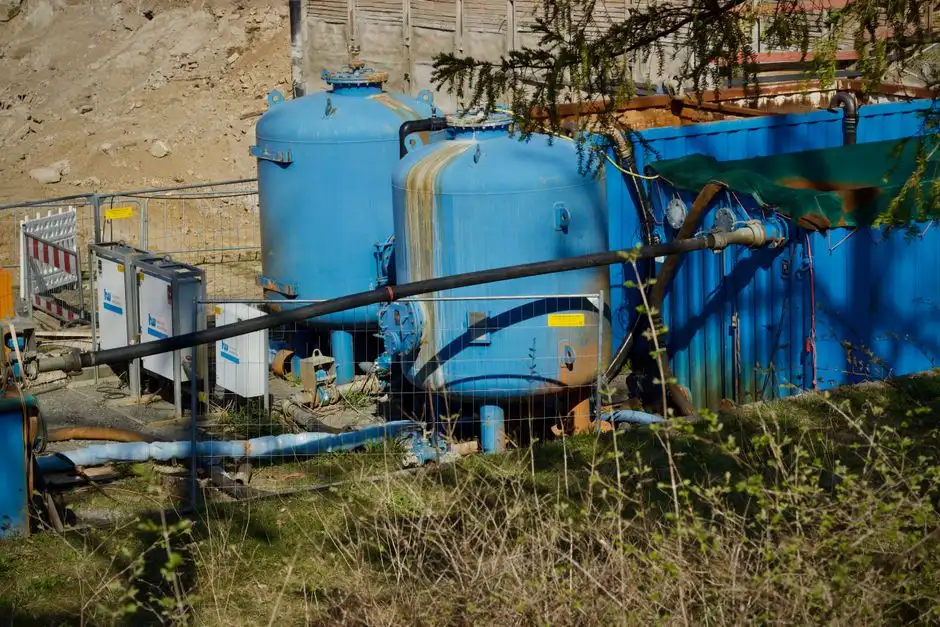
Skipping pretreatment is the fastest way to halve membrane life. DAF is mandatory when FOG exceeds 1,000 mg/L, and a well-tuned DAF system for meat processing wastewater pretreatment removes 90–95% of FOG and 60–80% of TSS at hydraulic loading rates of 4–6 m/h, with air-to-solids ratios of 0.015–0.040 (m³ air/kg TSS). Below 1,000 mg/L FOG, GX series rotary screens for coarse solids removal in meat processing with 0.5–2 mm openings can knock out 70–90% of visible solids at lower CAPEX, but they will not break emulsified fats — DAF or a CPI (corrugated plate interceptor) must follow for FOG-bearing streams.
Chemical conditioning bridges the gap between mechanical removal and membrane protection. Polyaluminum chloride (PAC) dosed at 50–150 mg/L destabilizes colloidal proteins and improves floc capture in the DAF float (per Aderibigbe et al., 2017). Anionic or cationic polymer at 1–5 mg/L as a flocculant aid tightens the float and reduces TSS carryover to the UF feed. pH control at 6–8 is the operating sweet spot: PES hydrolyzes outside this band, and calcium phosphate scaling accelerates above pH 7.5 in hard-water regions (per Alspach et al., 2008). Size the DAF unit by peak hourly flow plus 25% turndown, and verify that the underflow TSS to the UF feed tank stays below 150 mg/L — anything higher and CIP frequency doubles.
UF System Design Parameters: Flux, Pressure, and Cleaning Protocols
Design flux for meat processing UF runs 40–80 LMH, with the lower end applied to high-FOG or high-TSS feeds and the upper end reserved for post-DAF polishing (per Adham et al., 2006). Operating pressure of 1.5–3 bar is standard; 2 bar is the sweet spot for 30 kDa PES — pushing to 3 bar lifts flux only 10–15% while accelerating cake compaction. Temperature matters more than most spec sheets admit: every 1°C rise above 25°C cuts viscosity ~2% and lifts flux proportionally, but protein denaturation above 35°C fouls PES membranes irreversibly. Keep feed temperature at 20–35°C with a plate heat exchanger if rendering condensate is hotter.
CIP protocols are the difference between a 3-year and a 5-year membrane life. A standard alkaline wash (NaOH 0.5–1% at 35°C, 30–60 min) removes organic foulants, followed by an acid wash (citric acid 0.2–0.5% at 30°C) to dissolve metal oxides. CIP every 2–4 weeks depending on feed quality; recovery cleaning (NaOCl 200–500 ppm soak overnight) is reserved for irreversible biofouling, typically every 6–12 months. Energy consumption sits at 0.5–1.2 kWh/m³ for PES systems and drops to 0.3–0.7 kWh/m³ for ceramic at higher flux. Flux decline of 10–20% per month is normal; CIP restores 90–95% of initial flux. If post-CIP flux drops below 70% of start-of-life, the membrane is at end of life.
| Parameter | Operating Range | Design Value (30 kDa PES) | Notes |
|---|---|---|---|
| Flux | 40–80 LMH | 60 LMH | Lower for high FOG; higher for post-DAF |
| Transmembrane pressure | 1.5–3 bar | 2 bar | Higher pressure risks cake compaction |
| Temperature | 20–35°C | 28°C | Heat exchanger if feed >35°C |
| pH | 6–8 | 7 | Outside range: hydrolysis or scaling |
| Backwash interval | 15–60 min | 30 min | Forward flush + air-scour optional |
| CIP frequency | 2–4 weeks | 3 weeks | Alkaline + acid sequence |
| Energy consumption | 0.5–1.2 kWh/m³ | 0.8 kWh/m³ | Ceramic: 0.3–0.7 kWh/m³ |
| Recovery rate | 85–95% | 90% | Concentrate sent to sludge handling |
2026 Cost Models: CAPEX, OPEX, and ROI for Meat Processing UF Systems
CAPEX for a meat-plant UF system lands at $3,500–$6,500 per m³/h of treatment capacity in 2026, covering membrane racks, feed/backwash pumps, CIP skid, PLC controls, and installation (HydropureWater field data, Q1 2026). A 50 m³/h slaughterhouse system typically checks in at $220K–$310K; a 100 m³/h rendering plant at $420K–$580K. OPEX runs $0.85–$2.10/m³ treated, broken down as membrane replacement ($0.30–$0.70/m³ amortized over 4 years), energy ($0.15–$0.40/m³), CIP chemicals ($0.10–$0.30/m³), and labor plus maintenance ($0.30–$0.70/m³).
ROI drivers stack quickly. Discharge-fine avoidance runs $50K–$200K/year depending on enforcement history; water reuse at $0.50–$1.50/m³ versus $1.80–$3.50/m³ potable purchase cuts operating cost 30–60% for plants reusing UF permeate for washdown or boiler feed. Sludge disposal drops 30–50% by volume because UF concentrate dewaters to 18–25% dry solids versus 12–15% for DAF float alone. A 100 m³/h rendering plant in Lower Saxony (2025 install) saved €180K/year in avoided surcharges and reused 280,000 m³ of process water, paying back the €480K CAPEX in 2.1 years. To model your own payback: (Annual savings from fines + water + sludge) ÷ (CAPEX + Year 1 OPEX) = payback in years.
| System Size | CAPEX (2026) | OPEX ($/m³) | Annual Fine Avoidance | Water Reuse Savings/yr | Typical Payback |
|---|---|---|---|---|---|
| 25 m³/h (small sausage plant) | $110K–$165K | $1.10–$2.10 | $30K–$60K | $15K–$40K | 2.5–3.5 years |
| 50 m³/h (slaughterhouse) | $220K–$310K | $0.95–$1.80 | $60K–$120K | $40K–$90K | 1.8–2.8 years |
| 100 m³/h (rendering plant) | $420K–$580K | $0.85–$1.50 | $100K–$200K | $80K–$180K | 1.5–2.5 years |
| 200 m³/h (integrated facility) | $800K–$1.1M | $0.80–$1.30 | $150K–$300K | $150K–$350K | 1.2–2.2 years |
Compliance Checklist: Meeting 2026 Discharge Limits with UF
UF permeate meets the TSS and FOG limits across EPA, EU, and Chinese frameworks; COD and BOD compliance may require a biological polish upstream or downstream. Use this checklist before commissioning:
- EPA 40 CFR Part 432 (US direct discharge): TSS ≤100 mg/L, FOG ≤100 mg/L, BOD ≤150 mg/L. UF alone meets TSS and FOG; verify BOD with a 5-day BOD test on permeate.
- EU Directive 2020/2184 / urban wastewater implementing acts: TSS ≤50 mg/L, COD ≤125 mg/L for indirect discharge. UF delivers TSS compliance; pair with MBR or activated sludge if permeate COD exceeds 125 mg/L.
- China GB 18918-2002 (Class 1A): TSS ≤70 mg/L, COD ≤100 mg/L. UF + MBR is the standard compliant train; standalone UF may need integrated MBR system for combined biological treatment and UF.
- Local reuse limits: California Title 22, Singapore PUB, and several EU member states require ≤10 mg/L TSS for unrestricted reuse. Add nanofiltration for UF permeate polishing if this is the target.
- Monitoring: Install online TSS and COD monitoring for UF systems on the permeate line and the feed line. Calibrate monthly; replace lamps and probes per manufacturer schedule (typically 6–12 months).
- Recordkeeping: Log CIP dates, flux trends, and permeate quality daily; required for EPA permit renewal and EU IED compliance audits.
| Regulation | TSS Limit | FOG/COD Limit | UF Permeate (Typical) | Additional Treatment Needed? |
|---|---|---|---|---|
| EPA 40 CFR 432 | ≤100 mg/L | FOG ≤100 mg/L | TSS ≤30, FOG ≤10 | None for TSS/FOG; BOD check |
| EU Directive 2020/2184 | ≤50 mg/L | COD ≤125 mg/L | TSS ≤30, COD 200–600 | Biological step for COD |
| China GB 18918-2002 | ≤70 mg/L | COD ≤100 mg/L | TSS ≤30, COD 200–600 | MBR recommended |
| California Title 22 (reuse) | ≤10 mg/L (turbidity ≤2 NTU) | — | TSS ≤30 | NF or RO polishing |
Frequently Asked Questions
Can UF handle high FOG loads? Yes, but DAF pretreatment is required for FOG >1,000 mg/L to prevent irreversible membrane fouling. UF alone handles post-DAF FOG of 20–50 mg/L comfortably.
What's the lifespan of a PES membrane in meat processing? 3–5 years with proper CIP every 2–4 weeks and feed TSS <150 mg/L. Ceramic membranes last 10+ years but cost roughly 3× more upfront.
How does UF compare to MBR for meat wastewater? UF alone costs $0.85–$2.10/m³ versus $1.20–$2.80/m³ for MBR, but MBR combines biological treatment and membrane filtration in one tank, reducing footprint. For facilities with high COD (≥6,000 mg/L), MBR is often more cost-effective despite higher unit cost. For polishing low-flow DAF effluent, standalone UF wins on simplicity and CAPEX.
What's the typical flux decline rate? 10–20% per month without cleaning, driven by cake-layer buildup. CIP restores 90–95% of initial flux; if post-CIP recovery falls below 70%, the membrane is at end of life.
Are there emerging UF technologies worth specifying in 2026? Ceramic membranes with photocatalytic TiO₂ coatings show 40–60% lower fouling rates under UV-assisted operation (per Athanasekou et al., 2015), but the 3× CAPEX premium and limited commercial module availability keep them niche. For most meat plants, optimized PES with robust pretreatment remains the lowest lifecycle cost option through 2026.