Why a Disc Filter Is Not Just a Strainer
A disc filter separates suspended solids from water using a stack of flat, grooved plastic rings compressed together inside a cylindrical pressure vessel. Water flows from the outside of the stack inward through the diagonal grooves, and particles are trapped both on the surface and within the depth of the groove channels. This depth filtration mechanism prevents the element from blinding the way a simple screen would. When the pressure differential across the stack rises, the vessel automatically decompresses, spins the disc pack, and backwashes with filtered water to release the captured solids. This principle is the basis for commercial units such as the Veolia Hydrotech Discfilter used in wastewater reuse and stormwater applications.
Most engineers first meet a disc filter on a datasheet that lists a single micron rating and assume it behaves like a finer version of a wedge-wire screen. A screen is a two-dimensional barrier: every particle that does not pass through the aperture is captured on the surface, and once that surface is covered, head loss climbs steeply and the element blinds. A disc filter uses depth filtration — particles are intercepted not on a single plane but throughout a three-dimensional network of intersecting grooves cut into stacked rings. According to a product overview of disc media filters, "all disc filters utilize this proven depth filtration technology which increases efficiency and protects the system from clogging" (S4, disc media filter overview). The geometry of the groove makes depth filtration physically possible, whereas a screen lacks the necessary depth.
The practical consequence is dirt-holding capacity. Because solids lodge inside the groove channels as well as on the outer face, a disc filter can hold an order of magnitude more captured mass per unit area than a comparable screen before differential pressure becomes a problem. Disc filters are used in duties where a screen would plug immediately — municipal reuse polishing, stormwater particulate removal, and as a guard filter upstream of an ultrafiltration pretreatment system — rather than as a substitute for fine polishing screens.
Anatomy of a Disc Filter Element
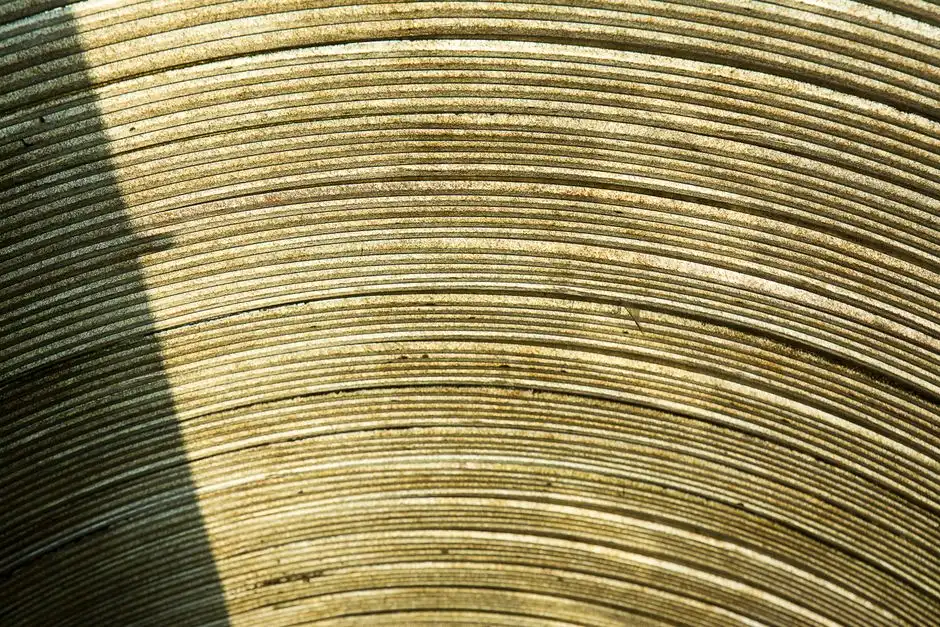
The individual filtration element is a thin plastic ring, molded on both faces with a pattern of diagonal grooves. The grooved faces are the filtration medium: there is no woven mesh, no sintered powder, and no fibre mat. The shape of the groove — its depth, pitch, and angle — defines the micron rating of the element; this rating is a property of the molded geometry, not an aperture size stamped on a sheet.
Dozens or hundreds of these rings are threaded onto a central hollow spine and compressed axially so the grooves on one disc cross the grooves on the adjacent disc. Where the diagonals intersect, they form a three-dimensional interception network — narrow channels that force water to twist and turn as it passes inward. Particles above the channel size are stopped both on the outside of the pack and at successive intersections deeper in the stack. The compression force is held by a spring-loaded end cap, which is released during the backwash cycle so the pack can spin freely.
The whole assembly sits inside a cylindrical pressure vessel. Influent enters an outer chamber that surrounds the disc pack, so dirty water contacts the outside of the stack first. Filtered water collects in the central spine and leaves through the outlet port at the top of the vessel. A drain port at the bottom carries backwash water and released solids out of the system. This layout — outer inlet, central filtered outlet, bottom drain — is consistent with commercial disc-filter product lines such as the Veolia Hydrotech Discfilter (S3, Hydrotech product page). For plants already using a multi-media filter alternative upstream, the disc filter is normally installed as a polishing step rather than as a replacement.
Because the supplied research did not include a specific micron value for a commercial disc element, treat any micron rating on a quotation as something to confirm with the supplier and to tie back to the geometry of their disc rather than to a mesh count.
How Water Passes Through the Disc Pack
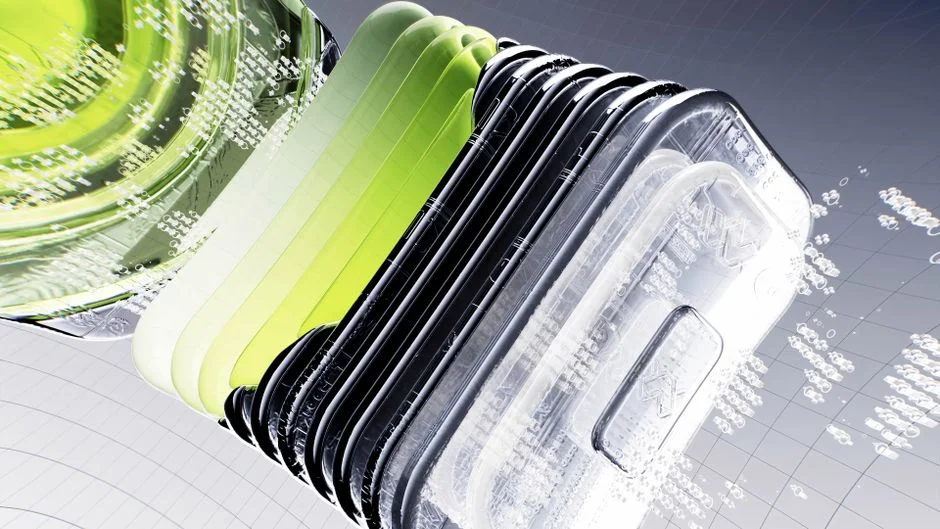
Filtration proceeds in a fixed sequence that the operator can map directly onto the pressure profile across the vessel.
Step 1 — Inlet to outer face. Influent enters the outer chamber of the pressure vessel and contacts the outside face of the compressed disc pack. At this point the disc stack looks like a solid cylinder of plastic; the only path inward is through the crossed grooves.
Step 2 — Inward through the groove network. Differential pressure drives water diagonally across each disc, then across the next, weaving through the intersection channels. Particles larger than the channel size are intercepted at the first surface they meet, and particles that slip past the outer surface are caught deeper in the stack. The disc media filter product description states explicitly that the discs "utilize this proven depth filtration technology which increases efficiency and protects the system from clogging" (S4), and this dual capture — surface plus depth — gives the element its dirt-holding capacity.
Step 3 — Collection in the spine. Filtered water reaches the central hollow spine, rises to the outlet port, and leaves the vessel as clarified water. From the spine outward, the only path for a particle is back through the disc pack, which is full of already-trapped solids, so backward migration is not a concern during normal operation.
Step 4 — Rising differential pressure. As solids accumulate, the effective cross-section of the groove network narrows and the pressure drop across the vessel climbs. That rising ΔP is the trigger for the backwash sequence. S4 ties the clogging protection behavior directly to depth filtration, which means the system can tolerate a long loading phase before the trigger is reached — unlike a surface screen, which reaches its terminal ΔP almost immediately.
The Backwash Cycle: Why Depth Filtration Pays Off
The backwash turns a depth filter from a high-capacity element into a continuously operating one via an automatic, pressure-driven cycle.
When ΔP across the disc pack reaches the setpoint, a control valve opens the drain and the vessel depressurizes. The spring-loaded end cap relaxes, the disc pack is free to rotate, and an internal drive spins the stack. Centrifugal force throws water and captured solids off the disc faces. A small volume of filtered water — or, in some designs, air-assisted water — is pushed outward through the grooves in reverse, flushing the released solids to drain. The disc pack then recompresses, the vessel repressurizes, and filtration resumes. In a multi-vessel battery, one vessel backwashes at a time so downstream flow is not interrupted.
Because the discs are mechanically cleaned and reused, the consumable in a disc filter is backwash water, not filter media. There is no sand to replace, no cartridge to discard, and no element to change out at the end of a run. That is the operational payoff of the depth-filtration geometry described in S4: the same three-dimensional network that captures the solids also releases them under spin and reverse flow, so the medium survives the backwash intact. Spare parts exposure is limited to seals, valves, and drive components — handled through a stock of disc filter spare parts and valves.
| Backwash phase | What happens inside the vessel | Operator-visible signal |
|---|---|---|
| Trigger | ΔP across disc pack reaches setpoint | High-ΔP alarm or backwash initiation light |
| Depressurize | Drain valve opens, end-cap spring releases compression on disc pack | Inlet pressure to vessel drops |
| Spin and flush | Drive motor rotates disc pack; filtered water (or air-assisted water) flows outward through grooves, carrying solids to drain | Discharge at drain port, motor current spike |
| Recompress and return to service | End cap re-seats, vessel repressurizes, filtration resumes | ΔP returns to baseline, outlet flow restored |
Where Disc Filters Fit in an Industrial Treatment Train
Disc filters are placed where a screen would blind but a multimedia filter is over-specified or too large. Common placements in an industrial or municipal train include pretreatment, reuse polishing, and stormwater capture.
As pretreatment, a disc filter protects downstream membranes by removing the finer suspended solids that escape a multimedia filter. Units such as the Veolia Hydrotech Discfilter (S3) are routinely specified upstream of an ultrafiltration pretreatment system or a reverse osmosis train, where the cost of a membrane clean-in-place justifies polishing the feed.
As a reuse and recycling step, disc filters appear in approved water-recycling criteria referenced in academic coverage of the technology (S1, Mark Allen Group, 2008) and in stormwater particulate removal studies (S2, OpenAlex, undated access). These are mature duties where the disc filter acts as a polishing barrier rather than as the primary clarifier.
Versus a multimedia filter, a disc filter has a much smaller footprint for the same flow, no media to replace or classify, and a finer, more consistent removal because the groove geometry does not shift with backwash. Versus a self-cleaning wedge-wire screen, the disc filter captures fines inside the depth of the element, so it holds more dirt and tolerates feed spikes that would blind a screen. Against a DAF system upstream of the disc filter, the disc filter is the polishing step that catches residual suspended solids; it is not a replacement for biological treatment and should sit after coarse screening and DAF, not before primary clarification.
For plants that already run a comparison of MBR versus conventional activated sludge upstream, the disc filter is typically positioned after the biological step and before any membrane or reverse osmosis unit. Engineers weighing a finer separation duty can also review a nano filtration system for wastewater guide to see where disc filtration ends and membrane separation begins, and a belt filter press troubleshooting reference for the dewatering side of the train.
Specifying a Disc Filter: Parameters to Request
The following checklist defines the requirements to request from any short-listed supplier, as the supplied research did not include specific numeric values.
- Micron rating of the disc pack, with the disc geometry referenced (groove depth and pitch) and a typical particle-removal curve at design flow.
- Design flow rate at the specified ΔP, and the maximum allowable ΔP before the backwash trigger fires.
- Backwash water consumption per cycle and per 24 hours at design loading, including whether air-assisted flushing is offered.
- Vessel material, number of discs per stack, and maximum operating pressure and temperature.
- Single vessel or parallel battery configuration, and whether the supplier's control panel handles the duty rotation and ΔP interlocks.
Frequently Asked Questions
What is the difference between depth filtration and surface straining in a disc filter?
Surface straining catches particles only on a two-dimensional barrier, so the element blinds as soon as that surface is covered. Depth filtration uses the three-dimensional network of crossed grooves on stacked discs to capture particles throughout the body of the element, which raises dirt-holding capacity and allows disc filters to tolerate feed solids that would plug a screen. The disc media filter product description states that "all disc filters utilize this proven depth filtration technology which increases efficiency and protects the system from clogging" (S4).
What micron rating should I specify for a disc filter on a reuse or pretreatment duty?
The supplied research does not include a numeric micron value for any commercial disc element, so the rating must be requested from the supplier together with the groove geometry and a particle-removal curve. Ask the supplier to tie the rating to the disc mold rather than to a generic mesh count, and confirm the rating at the design flow and ΔP for your train.
How does a disc filter compare with a multimedia or sand filter for the same duty?
A multimedia filter relies on a graded bed of sand or anthracite and removes solids through a deep bed; it is larger, requires media replacement, and tolerates feed spikes by absorbing them in the bed. A disc filter uses the depth-filtration geometry of stacked grooved rings, holds more dirt per unit footprint, and backwashes automatically without media loss. S4 ties the higher dirt-holding capacity directly to the depth-filtration mechanism, which is the technical basis for the comparison.
What should I check when comparing disc filter suppliers before I buy?
Ask each supplier to document, in writing, the disc-pack micron rating with the supporting groove geometry, the design flow at a stated ΔP, the backwash water consumption per cycle and per 24 hours, and whether the unit is supplied as a single vessel or a parallel battery so one vessel can backwash without shutting down the train. Request price and lead time as line items on the quotation. Confirm that the offered unit