

The 15-Minute Triage Order for a Down Belt Press
Mechanical faults cause more than half of belt filter press downtime in 2024 industry surveys, and the 2025 WEMA dataset ties about 68% of issues to uneven belt tension (42%), clogged filter cloths (31%), and misaligned rollers (27%). A defensible 15-minute triage is to verify belt tracking and tension first, then check polymer and cloth condition, and only then move to sensors and motor load. Spare parts run about $2,500–$5,000 per belt, $800–$1,500 per roller, and $300–$800 per cloth, while a major break can cost roughly $1,200 per hour in downtime over an 8–16 hour window. The goal of the first quarter hour is to stop guessing, layer the three failure families, and resolve the symptom in one shift.
Start with belt tracking across the full width. A polyester belt that wanders more than 2 mm is already past its safe band, and a 5 mm wander can turn into edge fray within a single shift. Verify tracking with the belt running empty at low speed, then with sludge feed, because loaded wander often points to roller geometry that unloaded wander hides. Cross-check with a tension meter, not by feel; uneven pull across the width is the most common root cause behind the 42% tension figure in the WEMA data.
Only after geometry and tension read clean should you touch polymer, wash cycles, or feed pressure. Changing chemistry on a wandering belt is wasted polymer and lost time, as the same symptom will return. Sensors and motor trips come last: about 8% of sensor faults trace to moisture ingress at the connector, not to a failed probe, so a quick cabinet humidity check often saves a sensor replacement order.
Mechanical Problems: Tracking, Rollers, Belt Breaks
Belt tracking errors show up as side spill or visible wander and trace to two root causes in 2025 WEMA data: uneven belt tension at 42% and misaligned rollers at 27%. The corrective action is to re-tension the belt evenly with a meter and to re-align any roller whose axis sits more than 0.5 mm off perpendicular to the belt run. Recurrence is the diagnostic signal: a roller that drifts out of alignment more than twice per year should be shimmed or replaced, not just realigned.
Tension targets split by reference class. Many polyester belt installations target about 150–200 N/cm across the width as a practical OEM band, while municipal training ranges cite about 10–30 psi belt tension with cake appearance as the final governor (ERIC ED224718). Use the supplier data sheet for the specific belt and verify even pull across the full width with a tension meter. Higher tension dries cake further but shortens belt life, so the right number is the lowest even tension that holds tracking.
Splice failures often initiate near a 45° stress line when tension or impact is uneven, and a single bad splice can cascade into cloth blinding and motor overload downstream. A major belt break costs about $1,200 per hour in downtime for an 8–16 hour window, and average belt life is about 12–18 months in continuous 24/7 service, so recurring breaks have a quantifiable cost. Replace a belt after more than three breaks per year, or when a single repair exceeds 60% of replacement cost. A misaligned roller also loads the drive motor, so an electrical trip with hot bearing scans usually points back to a mechanical cause.
Process Problems: Wet Cake, Cloth Blinding, Side Spill

Wet cake almost always points back to conditioning rather than belt speed. Hold polymer near 0.3–0.5% w/w, pH 6.5–7.5, and sludge temperature near 20–30°C before you change anything mechanical. Below 0.3% w/w, flocs are weak and cake stays wet; above 0.5% w/w, sticky residue blinds the cloth and inflates chemical cost. Confirm floc strength with a jar test before raising feed pressure on a dirty belt, because the symptom you see is often two layers deep.
Filter cloth blinding shows up first as turbid filtrate and rising vacuum, not as a hard alarm. Clean cloths weekly with a high-pressure wash or a 5% citric acid soak on grease or fine-fouled weaves, and replace cloths every 6–12 months or sooner if tears appear. Persistent weekly chemical cleans usually mean pore size, polymer dose, or feed fines are wrong. Match cloth pore size to the sludge particle cut during the next scheduled change-out, and tie the wash cadence to filtrate turbidity, not the calendar alone.
Belt speed belongs in a 10–16 fpm working band from municipal belt-filtration training, and out-of-band speed hides conditioning problems until they become spills. Dry-polymer dose should land near 6–12 lb per ton solids, and cake dryness typically lands near 16–28% solids by sludge and fabric. If you find yourself outside any of these windows, hold belt speed steady and correct the upstream variable first; a fast belt on weak flocs only moves the spill point.
| Parameter | Target band | Symptom if low | Symptom if high |
|---|---|---|---|
| Polymer dose (w/w) | 0.3–0.5% | Wet cake, poor flocculation | Cloth blinding, sticky residue |
| Sludge pH | 6.5–7.5 | Weak flocs, poor release | Polymer waste, corrosion |
| Sludge temperature | 20–30 °C | Slow dewatering kinetics | Premature polymer degradation |
| Feed solids | 2–4% typical | Low filtration rate | Excessive belt wear, side spill |
| Belt speed | 10–16 fpm | Throughput loss | Belt damage, wet cake |
| Dry polymer per ton solids | 6–12 lb/ton | Wet cake, high filtrate turbidity | Blinding, high chemical cost |
| Cake dryness | 16–28% solids | Hard to achieve, high haul cost | Poor release, high disposal cost |
Electrical Problems: Trips, Overloads, Sensor Drift
Electrical failures account for about 10% of belt filter press incidents, but they stop the press immediately. The trap is replacing a motor or sensor before proving the mechanical load is free, because mechanical binding, blinded cloth, and seized rollers are common upstream causes of motor overload trips. A thermal imaging scan of the roller bearings usually shows the upstream fault before the motor nameplate does.
About 8% of sensor faults trace to moisture ingress at the connector rather than a failed probe, so a tripped limit on a dry belt is more often a wet connector than a bad instrument. Control-cabinet faults can freeze setpoints even when belts and rollers look fine, so verify PLC inputs and cabinet humidity before recalibrating anything. A cabinet humidity above about 60% RH, condensation on the backplane, or white residue at terminal blocks is a faster diagnosis than a sensor swap.
Stable dosing on a 24/7 line usually needs a PLC-controlled chemical dosing system rather than manual batching, because drift in polymer concentration is the most common process fault behind a wet-cake shift. Diagnostic tool budgets sit well below the cost of one unscheduled outage: tension meters run about $200–$800, laser alignment tools $1,500–$5,000, and thermal imaging cameras for roller hotspots about $500–$2,000. Spend the tool budget before the next outage, not during it.
Repair vs Replace: A Decision Table You Can Defend
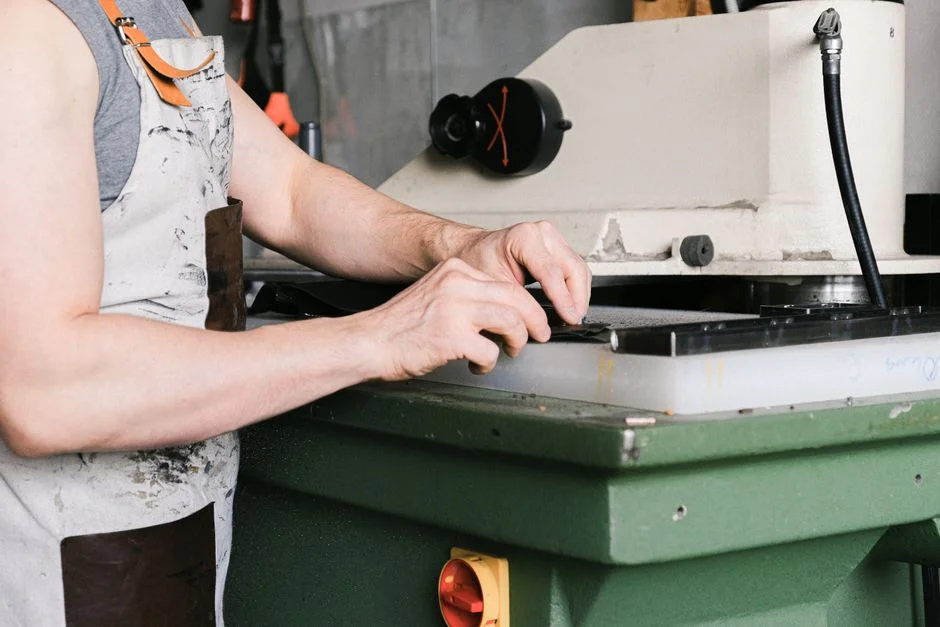
Repair-versus-replace decisions should use failure recurrence and repair-to-replace cost, not optimism about one more splice. A practical rule: if a component exceeds its recurrence threshold, or a single repair exceeds 60% of replacement cost, replace it, because the next outage will be more expensive than the savings. Run the math against unit costs: belt about $2,500–$5,000, roller about $800–$1,500, cloth about $300–$800, and downtime on a major break roughly $1,200 per hour for an 8–16 hour window.
| Component | Replace when | Repair when | Unit cost band |
|---|---|---|---|
| Belt | >3 breaks/year OR repair >60% of $2,500–$5,000 | Single splice, <60% of replacement | $2,500–$5,000 |
| Roller | Misalignment recurs >2x/year OR repair >60% of $800–$1,500 | One-off alignment, bearings good | $800–$1,500 |
| Filter cloth | Cleaning needed >1x/week OR repair >60% of $300–$800 | Weekly wash holds, no tears | $300–$800 |
| Drive motor / sensor | Recurring trips after mechanical proof | One-off trip, dry connector | Per quote |
Diagnostic tools pay back quickly against that math. A tension meter at $200–$800, laser alignment at $1,500–$5,000, and a thermal camera at $500–$2,000 together sit well under the cost of one unscheduled 8-hour outage. If your recurrence data does not yet exist, start logging break, alignment, and cleaning events by date on the same sheet as the tension readings. For duties that keep tripping the table, evaluate a plate and frame filter press for sludge dewatering against the same thresholds.
When the Belt Press Is the Wrong Tool
If conditioning is dialed in and the cake still misses target, the duty may need a fixed-volume plate press rather than another belt tweak. UFC 3-280-03 notes that fixed-volume plate presses often produce about 6–10 percentage points drier cake than continuous belt presses on comparable municipal sludges, which is the gap that decides hauling and disposal cost. Abrasive or oily sludges are the most common reason a belt train never reaches design dryness even with correct polymer, because the cloth blinds faster than weekly washing can recover.
For incineration-grade cake targets, plan for a plate-frame press from the specification stage rather than retrofitting later, because feed solids, polymer window, and cake-handling downstream all shift with the change in technology. The trade-off is batch cycle time versus continuous throughput, so size from dry-solids load, not influent flow. A plate frame filter press specifications and selection guide gives the duty-sizing inputs that a continuous belt train cannot meet.
30-Day Prevention Checklist
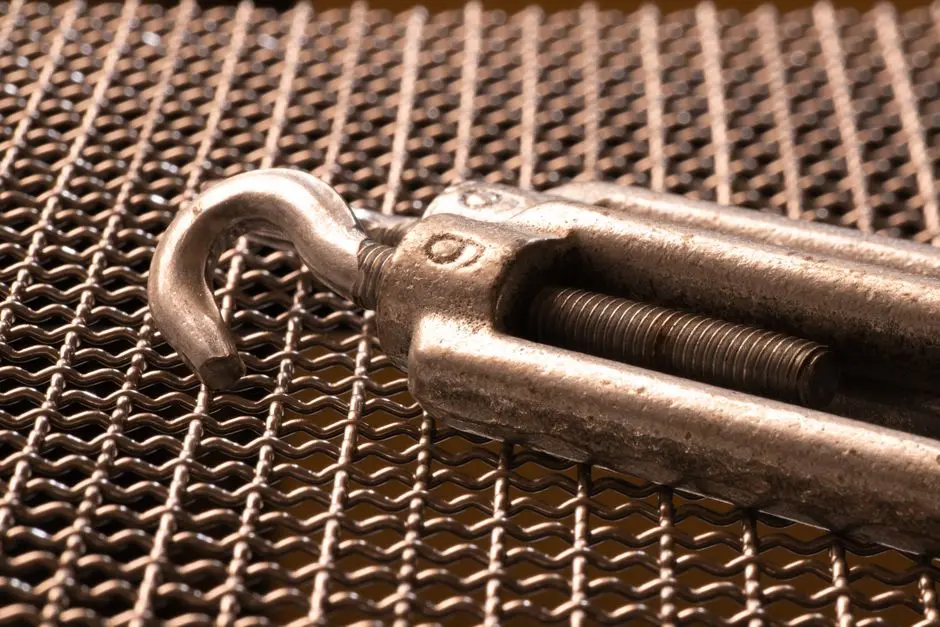
A fixed daily-to-quarterly routine catches tracking, cloth blinding, and motor load before they stack into a single shift-stopping event. Daily: hold belt tracking within ±2 mm, log tension meter reading, record motor amperage, confirm polymer dose, and inspect filtrate clarity. Weekly: run a high-pressure cloth wash, or a 5% citric acid soak on grease or fine-fouled weaves, do an alignment visual check, and inspect scraper blade wear. Monthly: scan roller bearing temperatures, inspect splices for 45° stress-line cracks, and run a polymer jar test to confirm the 0.3–0.5% w/w window.
Quarterly: run a laser alignment pass (tool cost $1,500–$5,000) on the full belt train, check cabinet humidity, and run a replace-versus-repair cost review against the 60% rule using the same unit costs. Plants that book $50,000–$200,000 per year in downtime and repairs, per 2025 industry data, usually find that the first quarter of this checklist pays for the diagnostic tools. Log every break, alignment, and cleaning event on one sheet so the decision table in the previous section remains accurate.
Frequently Asked Questions
What does a typical belt filter press repair budget look like in 2026?
Belt filter press cost is dominated by belt, roller, and cloth wear plus downtime, not only the purchase invoice. Reference unit costs are about $2,500–$5,000 per belt, $800–$1,5
Frequently Asked Questions
What is the most common cause of belt filter press downtime?
The most frequent cause of downtime is belt blinding or premature fabric wear resulting from improper polymer conditioning and excessive belt tension. When the flocculated sludge does not release correctly, solids become trapped in the belt weave, leading to increased hydraulic resistance and "blinding."
Operational data suggests that neglecting the spray bar system—specifically nozzle clogging or low pressure below the recommended 60-80 PSI—is the primary mechanical trigger for these failures, often leading to tracking issues and catastrophic belt tearing.
How much does it cost to replace a belt filter press belt in 2026?
As of 2026, replacement belt costs typically range between $3,500 and $12,000 per belt, depending on the material composition (polyester vs. poly-monofilament), belt width, and seam type. Custom-engineered belts for high-abrasion applications or specific chemical resistance requirements often sit at the higher end of this spectrum.
Labor costs for installation generally add an additional $1,500 to $4,000 per belt depending on the equipment size and the need for specialized technicians to ensure proper alignment and tracking calibration during the commissioning of the new fabric.
How do I decide between repairing and replacing a belt filter press belt?
Repairing a belt via patching or re-seaming is only advisable if the damage is localized to less than 5% of the total surface area and the belt has retained at least 70% of its original tensile strength. If the belt exhibits widespread fraying, significant thinning of the warp yarns, or chronic tracking issues due to fabric stretching, repair is usually a false economy.
A rule of thumb is to replace the belt if the repair cost exceeds 30% of the total cost of a new unit or if the belt has already exceeded 80% of its manufacturer-rated operational lifespan, typically measured in 4,000 to 6,000 service hours.
What polymer dose should I use for belt filter press dewatering?
Optimal polymer dosing generally falls between 5 and 20 pounds of active polymer per ton of dry solids processed. The exact dosage must be determined through onsite jar testing to achieve a clear filtrate and a well-defined, robust floc that resists the shear forces applied by the press rollers.
Operators should target a polymer solution concentration of 0.1% to 0.5% for optimal activation. Over-dosing often results in "slick" sludge that causes belt slippage, while under-dosing leads to poor cake solids and high suspended solids carryover in the filtrate.
When should I switch from a belt filter press to a plate and frame filter press?
A switch to a plate and frame filter press is recommended when your facility requires cake solids concentrations exceeding 35-40%, which are generally unattainable with standard belt filter press technology. If your sludge composition changes to include higher percentages of fine, inorganic, or difficult-to-dewater materials, the higher pressure capability of a plate and frame system—often 100-225 PSI—becomes necessary.
Additionally, if the cost of polymer consumption or the volume of filtrate recycling is negatively impacting operational overhead, the plate and frame press offers superior moisture removal efficiency, albeit with a batch-process workflow rather than the continuous processing provided by a belt filter press.