What the Philippines Actually Says About Cyanide Discharge
Under DAO 2005-18, the Philippine cyanide discharge limit is 0.1 mg/L for Total Cyanide in Class C inland waters and 0.05 mg/L in Class SC (saline) waters. Mining effluents under DAO 2013-22 must not exceed 0.1 mg/L free cyanide and 1.0 mg/L total cyanide at the mine outfall. The Masbate gold operation targets <0.1 mg/L discharge and 0.2 mg/L as its maximum environmental allowance (per Turtle Tough case study, Masbate Gold Project, 2024 operating disclosure). The three DENR issuances that govern a cyanide discharge in the Philippines are:
- DAO 2005-18 — Revised Water Usage and Classification/Water Quality Criteria. Sets the receiving-water numeric by class (AA, A, B, C, D, SC). This is what an inspector checks when the receiving water body is classified.
- DAO 2013-22 — Philippine Mining Act IRR effluent rules. Sets industry-specific mine outfall numbers: Free CN ≤ 0.1 mg/L, WAD CN ≤ 0.5 mg/L, Total CN ≤ 1.0 mg/L at the final discharge point.
- DAO 1990-35 — the older DENR effluent standards regulation, still referenced in legacy ECC conditions and pre-2005 permits.
DAO 2005-18 is class-based, DAO 2013-22 is industry-based, and DAO 1990-35 is the historic baseline. A self-monitoring report that quotes the wrong one is rejected on first review by the DENR Environmental Management Bureau (EMB) regional office. The numeric values in the table below are the figures EMB uses to score SMR compliance.
| Regulation | Parameter | Limit (mg/L) | Applies to |
|---|---|---|---|
| DAO 2005-18, Class AA | Total Cyanide | 0.05 | Protected watersheds, national parks |
| DAO 2005-18, Class A | Total Cyanide | 0.05 | Water supply with complete treatment |
| DAO 2005-18, Class B | Total Cyanide | 0.1 | Recreational, fisheries |
| DAO 2005-18, Class C | Total Cyanide | 0.1 | Industrial/agricultural supply, most inland receiving waters |
| DAO 2005-18, Class D | Total Cyanide | 0.2 | Navigational, irrigation only |
| DAO 2005-18, Class SC | Total Cyanide | 0.05 | Saline coastal, shellfish-farming areas |
| DAO 2013-22, mine outfall | Free Cyanide | 0.1 | Mining final discharge point |
| DAO 2013-22, mine outfall | WAD Cyanide | 0.5 | Mining final discharge point |
| DAO 2013-22, mine outfall | Total Cyanide | 1.0 | Mining final discharge point |
| DAO 1990-35 (legacy) | Total Cyanide | 0.3 (typical ECC citation) | Pre-2005 permits still under renewal |
Most SMR rejections come from the species-mismatch error. EMB orders Total Cyanide for compliance against DAO 2005-18, but the lab is reporting Free Cyanide, or the operator is testing only WAD. The four species that matter for Philippine compliance are Total Cyanide (everything that liberates HCN under acid reflux distillation, per APHA 4500-CN⁻ C), Free Cyanide (HCN + CN⁻ measured at pH 6 without distillation), WAD / Weak Acid Dissociable cyanide (the toxicologically relevant fraction measured at pH 4.5, includes CN⁻, HCN, and weak metal-cyanide complexes like Zn, Cd, Cu), and Total Residual Cyanide (post-treatment residual after chlorination or peroxide, often reported as TRC-bound cyanide). If the ECC condition specifies Total Cyanide and the lab delivers Free Cyanide, the report is non-compliant on paper even with a destruction system that is performing correctly.
Which Industries in the Philippines Hit the Cyanide Limit and Why
Six industrial categories generate the cyanide-bearing waste streams that flow into the DENR system. Each has a different influent envelope, a different discharge pattern, and a different sampling risk profile. The compliance envelope is the same (0.1 mg/L Total CN at the receiving water class), but the engineering approach and the lab protocol must be matched to the source.
| Industry | Influent Total CN (mg/L) | Discharge pattern | Sampling risk |
|---|---|---|---|
| Gold/copper cyanidation mines | 50–500 (leach circuit); 100–300 (SART/ADR bleed) | Continuous, high-flow | Low if composite used |
| Electroplating (Cu, Zn, Ag, Au plating) | 10–100 (rinse dumps); 50–200 (bath drag-out) | Batch, tied to plating shifts | High — single grab misses spikes |
| Steel hardening / case hardening shops | 1–5 (cyanide salt bath rinse) | Batch, weekly to monthly | Moderate |
| Coke-oven by-product plants | 1–5 (ammonia liquor, coke gas scrubber) | Continuous | Low |
| Jewelry manufacturing (Marikina, Meycauayan, Cebu) | 200–1,000 free CN (stripping baths) | Batch, intermittent, very high short-term | Very high — composite mandatory |
| Electronics (gold plating for connectors) | 20–80 free CN (drag-out + rinse) | Batch | High |
Gold-cyanidation mines are the largest volume source. The Masbate operation, one of the country's larger gold mills, runs a continuous leach-adsorption-desorption circuit with Total CN at 150–250 mg/L going into the destruction loop, and reports the <0.1 mg/L target against a 0.2 mg/L maximum environmental allowance (Turtle Tough case study, 2024). Electroplating shops generate a smaller volume but at higher and more variable concentration — a single drag-out event from a cyanide copper bath can dump 50 L of 100,000 mg/L free CN into a 5 m³ rinse tank in under a minute, and that tank goes to drain within the hour. The California 4.3 µg/L WET-based limit cited in the U.S. NPDES Order R7-2014-0004 is roughly 23× more stringent than the Philippine 100 µg/L Class C number, so Philippine operators have a wider margin on paper, but the same engineering attention is required because influent concentrations exceed 0.1 mg/L by three to four orders of magnitude before any treatment.
How to Measure Cyanide Correctly for DENR Compliance
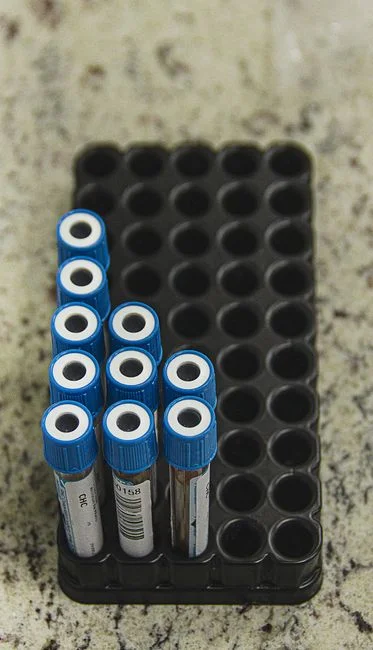
The most common reason an otherwise functional cyanide treatment plant fails its SMR is not equipment performance — it is sampling and species selection. EMB-accredited laboratories are mandatory; an in-house spectrophotometer at the plant does not satisfy DAO 2005-18 reporting, even if the method is identical. The current EMB list of accredited labs is published by the EMB Environmental Quality Division and is the only acceptable source. The analytical method recognised by EMB for Total Cyanide is APHA 4500-CN⁻ C (acid reflux distillation followed by colorimetric or titrimetric finish) and ASTM D7511-12 for WAD using gas-diffusion amperometry. For Free Cyanide, APHA 4500-CN⁻ D or E is acceptable.
Sampling protocol is where the second-largest failure rate sits. A single grab sample is not representative for any batch-discharge source. EMB inspectors expect 24-hour composite sampling using an automatic sampler, or a minimum of four grab samples per day spaced across operating hours, with flow-weighted compositing. Sample preservation: raise the sample to pH > 12 with NaOH, store in a dark amber glass bottle, hold at 4 °C, and analyse within 14 days for Total CN, 24 hours for WAD (per APHA 1060 preservation tables). At low µg/L concentrations, false positives from sulfide, carbonate, or aldehyde interferences are common — the lab report must include method blanks, spike recoveries, and a method detection limit (MDL). For compliance against a 0.1 mg/L limit, the lab MDL must be ≤ 0.02 mg/L, otherwise the report cannot distinguish a passing result (0.05 mg/L) from a failing result (0.15 mg/L). A lab that reports 0.1 mg/L as "not detected" is masking a measurement, not producing a measurement.
Treatment Trains That Reliably Hit <0.1 mg/L Total Cyanide
Four destruction technologies have a Philippine track record, and the choice between them is set by influent concentration, flow rate, reagent logistics, and the ECC condition (Total CN, Free CN, or WAD CN). The table below summarises operating windows, and the paragraphs that follow give the actual process flow that a design engineer can build against.
| Technology | pH window | Reagent ratio | HRT | Best-fit application |
|---|---|---|---|---|
| Alkaline chlorination (Cl₂ + NaOH) | 10.5–11.0 | Cl₂:CN mass ≥ 8:1 | 30–60 min | Electroplating, small mines, batch shops |
| INCO SO₂/air process | 9–10 | SO₂:CN 3:1 to 4:1, Cu²⁺ 50–100 mg/L catalyst | 60–120 min | Large mining, high-flow continuous |
| H₂O₂ + Cu catalyst (Caro's acid variant) | 9–10 | H₂O₂:CN 3:1 to 5:1 | 30–90 min | Jewelry, indoor electroplating (no Cl₂ gas) |
| Biological (packed-bed / SBR) | 6.5–8.5 | No chemical reagent; nutrient dosing N:P | 6–24 h | Low-strength (< 10 mg/L CN) mine drainage |
Alkaline chlorination is the most common in Philippine electroplating and smaller mining operations because chlorine and caustic are both locally available in drums and the equipment footprint is small. CN⁻ is oxidised first to cyanate (OCN⁻) at pH 10.5–11.0, then to CO₂ and NH₃. The Cl₂:CN mass ratio of 8:1 is the practical floor; dropping below that leaves cyanate in solution, and cyanate can revert to cyanide under UV or biological action downstream. A automatic chemical dosing system for Cl₂ and NaOH control is the difference between holding the ratio and over-dosing by 30–50%, which is the difference between an SMR pass and an EMB finding.
The INCO SO₂/air process uses SO₂ (or sodium metabisulfite) and air with a Cu²⁺ catalyst at pH 9–10 to oxidise free and WAD cyanides to cyanate. It is the preferred primary stage for large Philippine gold operations because reagent cost at multi-thousand m³/d flow is roughly 40–60% of the chlorination cost at the same CN load. The biological approach is viable for mine drainage that has already been through primary destruction and now sits at < 10 mg/L CN; a packed-bed or sequencing batch reactor (SBR) with acclimated microbial consortia will polish to < 0.1 mg/L Total CN at HRT 6–24 h, with no chemical reagent cost beyond nutrient dosing.
The standard process train for a Masbate-type gold operation is: equalisation tank (HRT 8–12 h, pH 10–11) → primary destruction (INCO SO₂/air, HRT 60–120 min) → secondary destruction (alkaline chlorination as polisher, HRT 30–60 min) → coagulation/clarification using a DAF system for coagulation and cyanide sludge removal or a lamella clarifier for post-chlorination sedimentation → pH neutralisation (CO₂ or H₂SO₄ to 6.5–7.5) → sand/multimedia filter → discharge (or RO reuse for the cleaner side-stream). The DAF or lamella stage is non-negotiable: the metal-cyanide complexes and the iron-hydroxide sludge carry residual WAD CN through the column otherwise, and the post-clarifier sample will fail even when the reactor sample passes. This same train, scaled down, is the one used in Philippine electroplating shops where a single DAF unit plus a chemical dosing skid replaces the full clarifier/filter train.
How to Build a Compliance and Monitoring Program That Passes First Time
A compliant cyanide discharge program is a chain of seven operational checkpoints, each with a defined trigger and a defined record. The list below is a copy-paste scope for an SMR template or a contractor bid sheet.
| # | Checkpoint | Trigger / Frequency | Record |
|---|---|---|---|
| 1 | Discharge Monitoring Report (DMR) point at final outfall, upstream of any non-contact water dilution | Continuous; defined in ECC | DMR location diagram in SMR |
| 2 | Total CN, Free CN, WAD CN sampling | Monthly minimum; weekly during commissioning or upset; daily grab during batch discharge | Lab certificate (EMB-accredited) |
| 3 | In-process alarm at Total CN > 0.5 mg/L post-primary destruction (10× the 0.05 mg/L DAO 2005-18 Class SC limit, or 5× the Class C 0.1 mg/L limit) | Continuous online analyzer | Alarm log + corrective action |
| 4 | Online CN analyzer calibration | Every 14 days minimum | Calibration record signed by plant chemist |
| 5 | Chain-of-custody for all samples | Every sampling event; retain 5 years | COC forms, sample receipt signatures |
| 6 | Third-party split-sample validation | Quarterly; compare in-house vs EMB-accredited lab | Side-by-side results, %RPD calculation |
| 7 | Internal audit: lab is EMB-accredited, MDL ≤ 0.02 mg/L, NaOH preservation confirmed, correct species reported, chain-of-custody intact | Quarterly + pre-SMR submission | Audit checklist signed by EHS manager |
Online monitoring is mandatory for cyanide-bearing flows above 100 m³/d in major Philippine mines per DAO 2013-22, and the in-process trigger (Total CN > 0.5 mg/L post-primary, set at 5–10× the discharge limit) gives the dosing pump enough time to ramp chlorine or peroxide before the outfall sample is taken. Quarterly third-party split sampling protects the operator against lab drift and gives the EMB inspector a defensible audit trail. The single most common audit finding on Philippine cyanide discharges remains species mismatch — the lab measured Free CN, the ECC condition requires Total CN, and the SMR was returned for revision. The species is set by the DAO, not by what the operator happens to be testing.
Frequently Asked Questions
What is the Philippine Total Cyanide limit for industrial discharge under DAO 2005-18?
DAO 2005-18 sets Total Cyanide at 0.1 mg/L for Class C inland waters, 0.05 mg/L for Classes AA, A, and SC, and 0.2 mg/L for Class D. The class of the receiving water body determines which number applies at the monitoring point.
What is the free cyanide limit for Philippine mining effluents?
DAO 2013-22 sets Free Cyanide at 0.1 mg/L, WAD Cyanide at 0.5 mg/L, and Total Cyanide at 1.0 mg/L at the mine final discharge point. The Masbate operation targets < 0.1 mg/L against a 0.2 mg/L maximum environmental allowance (Turtle Tough case study, 2024).
Which cyanide species does DENR test for in a Self-Monitoring Report?
EMB tests Total Cyanide (APHA 4500-CN⁻ C) for compliance against DAO 2005-18, and Free CN plus WAD CN for compliance against DAO 2013-22 mine-outfall conditions. The species is named in the ECC and must match the SMR.
What method detection limit does the DENR-EMB require for cyanide analysis?
The lab MDL must be ≤ 0.02 mg/L to verify compliance against a 0.1 mg/L limit. Labs reporting "not detected" at 0.1 mg/L do not satisfy the rule and the SMR will be returned.
What is the standard treatment to hit < 0.1 mg/L Total Cyanide in the Philippines?
A two-stage train of alkaline chlorination (Cl₂ + NaOH at pH 10.5–11.0, Cl₂:CN ≥ 8:1) followed by coagulation/clarification and sand filtration, with the INCO SO₂/air process as an alternative primary for high-flow mining effluents, is the proven path to < 0.1 mg/L Total CN with margin.