Which Rules Apply to a Rockford Fabricated Metals Plant in 2026
Federal authority sits at 40 CFR Part 433, the Metal Finishing Effluent Guidelines, which is triggered whenever a plant performs any one of six core metal finishing operations on site (EPA, 2026). Once triggered, the rule extends coverage to 46 listed operations under 40 CFR 433.10(a), regardless of which specific process is generating the discharge (EPA, 2026). The Part 433 framework is process-defined rather than sector-defined, but the EPA notes that regulated facilities are typically drawn from SIC Major Groups 34 through 39, covering Fabricated Metal Products, Industrial and Commercial Machinery, Electronic and Other Electrical Equipment, Transportation Equipment, Measuring and Analyzing Controlling Instruments, and Miscellaneous Manufacturing Industries (EPA, 2026).
The local layer in the Rockford area is the Rock River Water Reclamation District (Rock River WRD), the publicly owned treatment works (POTW) that administers the local sewer use ordinance on top of the federal categorical standards. Rock River WRD may impose limits on parameters such as metals, pH, flow, and total suspended solids that are tighter than the federal ceiling, so any plant sizing a pretreatment system must confirm the local limits with their POTW before locking in equipment selection. Federal categorical pretreatment standards and local sewer use limits both have to be met at the monitoring point on the industrial side of the meter; the POTW does not give a free pass on metals just because the plant is connected to a municipal sewer.
The Six Core Operations That Trigger Part 433
According to the EPA, Part 433 applies when any of the following six core operations is performed on site: electroplating, electroless plating, anodizing, chromate conversion coating, chemical etching, and chemical milling (EPA, 2026). A single chromate conversion coating tank is enough to pull the entire facility under the rule, and once triggered, discharges from any of the 46 listed operations in 40 CFR 433.10(a) fall under the categorical standards (EPA, 2026). Each operation generates a different mix of dissolved metals, oils, and process chemistry, so pH, metals profile, and flow rate are site-specific inputs that a buyer must collect before specifying equipment.
For chrome plating, chromium anodizing, chromic acid etching, and chromate conversion coating lines, the EPA has identified these operations as the predominant PFAS discharge source within the Metal Finishing and Electroplating point source categories, which is the reason an active PFAS rulemaking is targeting them under Docket EPA-HQ-OW-2022-0869 (EPA, 2026). A stamping shop that does only blanking and forming is not covered, but a shop that adds a chromate conversion coating line for corrosion protection crosses the trigger, and so does a powder coater that runs a chemical etch pretreatment step before coating. The trigger is the operation, not the SIC code or the discharge volume.
| Operation | Typical Contaminants in Wastewater | Part 433 Coverage |
|---|---|---|
| Electroplating | Zinc, copper, nickel, chrome, cyanides, acids | Direct — one of six core operations |
| Electroless plating | Nickel, copper, reducing agents (e.g., hypophosphite) | Direct — one of six core operations |
| Anodizing | Aluminum, sulfuric acid, chromic acid (chromium anodizing) | Direct — one of six core operations |
| Chromate conversion coating | Hexavalent chromium, trivalent chromium, acids | Direct — one of six core operations; PFAS rulemaking applies |
| Chemical etching | Acids, dissolved metals, fluoride complexes | Direct — one of six core operations |
| Chemical milling | Acids, dissolved metals, etchants | Direct — one of six core operations |
The Chemistry Train: How Dissolved Metals Get Out of Solution
Conventional filtration alone cannot remove dissolved heavy metals — the metal ions pass through filter media and need a chemical step first to convert them into a settleable or floatable solid (ALAR Corp., alarcorp.com/metals/). Every compliant metal finishing pretreatment train therefore runs the same four-step sequence: pH adjustment, precipitation, coagulation or flocculation, and solid–liquid separation.
- pH adjustment: Acid is added first to lower pH and break emulsions, followed by caustic to raise pH into the precipitation range. The majority of ALAR wastewater treatment systems are pH driven, and the sequence of acid then caustic is standard for metal-bearing streams (ALAR Corp., alarcorp.com/metals/).
- Precipitation: Dissolved metals such as zinc, copper, nickel, and chrome drop out of solution as metal hydroxides once the pH is in the target range. The chemistry is straightforward — raising pH converts soluble metal ions into insoluble hydroxide solids — but the target pH window is metal-specific and must be controlled tightly.
- Coagulation and flocculation: Polymers (coagulants and flocculants) or clay are dosed to build settleable or floatable floc from the precipitated hydroxide particles. Without this step, the fine hydroxide precipitate does not separate cleanly in the downstream device.
- Solid–liquid separation: The precipitated floc is removed by dissolved air flotation, a lamella clarifier, a rotary vacuum drum precoat filter, or a plate-and-frame filter press. The choice of separator is driven by flow rate, solids loading, FOG content, and how the sludge will be handled downstream (ALAR Corp., alarcorp.com/metals/).
This is why every compliant metal finishing plant runs a chemical step first. Mechanical filtration without precipitation passes the dissolved metals straight through to the sewer; the filter media has no mechanism to capture ions in solution.
2026 PFAS Rulemaking: What Chrome Finishers Must Track
The EPA is conducting an active rulemaking to regulate PFAS discharges from chrome finishing facilities, tracked under Docket EPA-HQ-OW-2022-0869, with supporting materials on regulations.gov (EPA, 2026). The rulemaking was announced in the Preliminary Effluent Guidelines Program Plan 15, issued in September 2021, and follows the Multi-Industry PFAS Study that identified the underlying chemistry (EPA, 2026).
The driver is straightforward: PFAS are used by some metal finishing and electroplating facilities to control hexavalent chromium emissions, which EPA classifies as a known human carcinogen and inhalation hazard (EPA, 2026). The operations identified as the predominant PFAS sources within the Metal Finishing and Electroplating categories are chromium plating, chromium anodizing, chromic acid etching, and chromate conversion coating (EPA, 2026). For a Rockford-area chrome plater or a fabricator running a chromate conversion coating tank, the implication is that PFAS suppression alternatives and on-site destruction or treatment should be on the equipment spec sheet now, not retrofitted later once the rule lands.
EPA contacts for the rulemaking are Phillip Flanders ([email protected], 202-566-8323) for the PFAS rulemaking, and Ahmar Siddiqui ([email protected], 202-566-1044) for general Metal Finishing Effluent Guidelines questions (EPA, 2026). Plant engineers should track the docket directly rather than rely on secondary summaries, because the proposed limits, affected operations, and compliance timelines are still moving through the rulemaking process.
Choosing the Right Solid–Liquid Separation Step
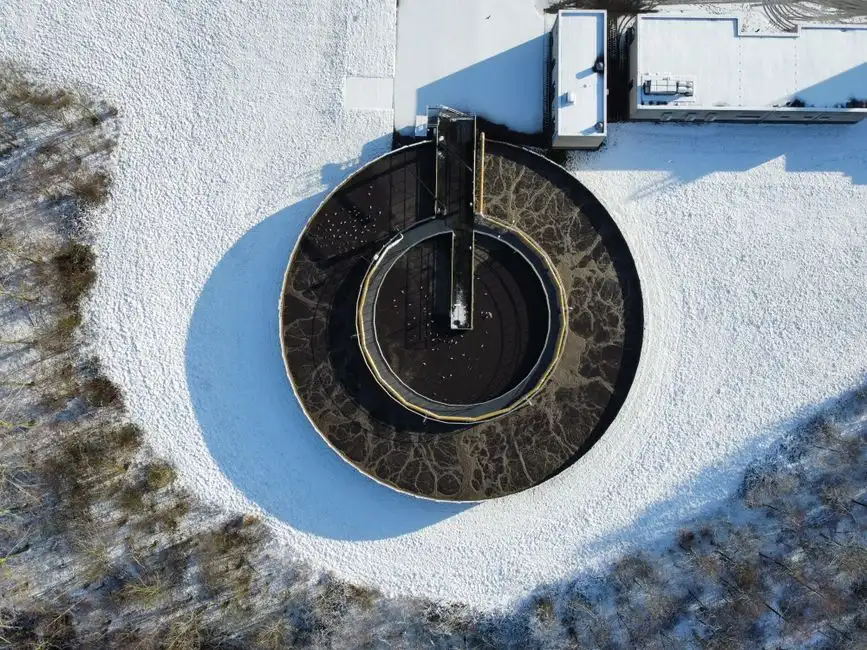
The four standard separators used in metal finishing pretreatment each handle a different combination of flow rate, solids loading, FOG, and downstream sludge handling. A DAF system for metalworking pretreatment is the workhorse for high-flow streams carrying FOG, oils, soaps, surfactants, and light floc, because the micro-bubbles attach to the floated solids and lift them to the surface for skimming (ALAR Corp., alarcorp.com/metals/). A lamella clarifier for metal hydroxide sludge uses gravity settling and decant, with concentrated heavy solids sinking to the bottom and pumped onward to dewatering, which suits lower-flow, higher-solids streams (ALAR Corp., alarcorp.com/metals/).
For dewatering, the rotary vacuum drum precoat filter (such as the ALAR Auto-Vac) is self-cleaning, produces high filtrate clarity, handles virtually any industrial waste, and is skid-mounted and pre-wired for installation (ALAR Corp., alarcorp.com/metals/). A plate-and-frame filter press for sludge dewatering produces a dry cake for landfill disposal and is available in manual, hydraulic, or fully automatic PLC-controlled configurations (ALAR Corp., alarcorp.com/metals/). Dewatered dry solids are typically disposed of at a local landfill without further drying (ALAR Corp., alarcorp.com/metals/).
The research does not provide unit cost or footprint figures for any of these technologies, so the article does not quote them. A buyer should request site-specific sizing from each shortlisted supplier, because pricing depends on flow rate, solids loading, materials of construction, and the level of automation, none of which can be assumed generically.
| Technology | Best Suited For | Sludge Output | Notes |
|---|---|---|---|
| Dissolved air flotation (DAF) | High flow, FOG/oils/soaps/surfactants, light floc | Floated sludge skimmed to a sludge tank | Standard for metalworking streams; skidded systems available |
| Lamella (plate) clarifier | Lower flow, high-solids, heavy metal hydroxide | Concentrated settled solids pumped to dewatering | Gravity-driven; smaller footprint than conventional clarifiers |
| Rotary vacuum drum precoat filter | Wide range of industrial wastes; high filtrate clarity | Dewatered dry solids for landfill | Self-cleaning with each revolution; skid-mounted, pre-piped, pre-wired; 16 filter sizes |
| Plate-and-frame filter press | Final dewatering to dry cake | Dry cake; filtrate returned to sewer or pretreatment | Available in manual, hydraulic, or PLC-controlled; 2 to 20 ft³ size options |
Inline Equipment: Chemical Dosing, Screening, and Sludge Handling
The chemistry train only works if the chemical dose is consistent. A PLC-controlled chemical dosing skid handles precise, automated injection of coagulants, flocculants, and pH adjusters, and skid-mounted, pre-wired dosing skids reduce installation time on a retrofit (ALAR Corp., alarcorp.com/metals/). Without controlled dosing, the pH window for metal precipitation drifts, and downstream limits get missed.
Upstream of the chemistry train, a rotary mechanical bar screen for headworks protects downstream chemical and separation equipment from rags, plastics, and fibrous debris that would otherwise foul pumps, plug lines, and contaminate filter media. Headworks screening is a standard first step on any industrial sewer line before chemical treatment.
Sludge generated at the separator must be dewatered on site or hauled liquid. The plate-and-frame filter press for sludge dewatering produces a dry cake for landfill disposal, with manual, hydraulic, or PLC-controlled options, and the filtrate can be returned to the sewer or to the chemical pretreatment cycle for polishing (ALAR Corp., alarcorp.com/metals/).
What a Rockford Plant Should Have Ready Before Talking to a Supplier
Comparable quotes from different vendors start with comparable inputs. Before requesting sizing or pricing, a plant engineer should have the following assembled:
- Influent characterization: pH range, dissolved metals profile (zinc, copper, nickel, chrome, etc.), flow rate (m³/h), peak versus average flow, total suspended solids, FOG, and whether any PFAS-containing suppressants are used on a chrome line (per the EPA's identification of PFAS sources under Docket EPA-HQ-OW-2022-0869).
- Effluent targets: Federal Part 433 categorical limits plus any tighter Rock River WRD local limits — confirmed in writing with the POTW.
- Site constraints: Footprint available, indoor versus outdoor installation, skid versus containerized, power supply, and whether sludge is hauled off site or dewatered on site.
- Compliance horizon: Timeline alignment with the EPA PFAS rulemaking under Docket EPA-HQ-OW-2022-0869, announced in the Preliminary Effluent Guidelines Program Plan 15 (September 2021).
- Operating model: Batch versus continuous flow, PLC versus manual control preference, and staffing level for operations and maintenance.
Suppliers that quote a packaged system without these inputs are guessing. The buyer who delivers this package gets comparable, defensible quotes and a system sized to the actual waste stream rather than a generic curve.
Frequently Asked Questions
Does a stamping shop with no plating or coating still fall under 40 CFR Part 433?
No. Part 433 is triggered only when a plant performs at least one of the six core operations: electroplating, electroless plating, anodizing, chromate conversion coating, chemical etching, or chemical milling (EPA, 2026). A pure stamping or machining shop with no chemical surface treatment step is not covered, even if it falls within SIC Major Groups 34 through 39. Adding a chromate conversion coating tank for corrosion protection, or a chemical etch step before powder coating, is what pulls a fabricator under the rule.
What does the 2026 PFAS rulemaking under Docket EPA-HQ-OW-2022-0869 actually change for a chrome finisher?
It changes the equipment and chemistry list, not just the discharge limits. Because PFAS are used to suppress hexavalent chromium emissions from chromium plating, chromium anodizing, chromic acid etching, and chromate conversion coating, the EPA is building a rule around those four operations (EPA, 2026). A Rockford-area chrome plater should put PFAS suppression alternatives and on-site destruction or treatment on the spec sheet now, track the docket on regulations.gov, and contact EPA's Phillip Flanders ([email protected], 202-566-8323) for rulemaking-specific questions, rather than wait for a final rule to retrofit.
How do DAF, lamella clarifier, rotary precoat, and filter press compare for a metal finishing pretreatment train?
DAF handles high-flow streams with FOG, oils, soaps, and surfactants; a lamella clarifier uses gravity settling for lower-flow, high-solids streams; the rotary vacuum drum precoat filter (such as the ALAR Auto-Vac) is self-cleaning, skid-mounted, and produces high filtrate clarity across a wide range of wastes; and the plate-and-frame filter press dewaterers sludge to a dry cake for landfill (ALAR Corp., alarcorp.com/metals/). The right choice depends on the influent characterization the buyer assembles, not on a generic recommendation.
What inputs should a Rockford plant request from a supplier before accepting a quote?
Request site-specific sizing based on the plant's actual flow rate, dissolved metals profile, FOG, and TSS, along with materials of construction, level of automation, footprint, and lead time. The research does not provide unit cost or footprint figures for any of the four standard separation technologies, so a supplier quoting a packaged system without seeing these inputs is estimating. Two comparable quotes require two comparable input packages; the buyer controls that by sending the same characterization data to each vendor. Also confirm in writing with the Rock River WRD that the proposed effluent quality will meet any local limits tighter than the Part 433 federal ceiling before signing a purchase order.