Why Vietnam's Industrial Wastewater Cannot Be Approached Like a Generic Plant
An industrial wastewater treatment plant in Vietnam must be designed around QCVN 40:2011/BTNMT discharge limits, with typical 2026 CAPEX of USD 250K–4.5M for 100–2,000 m³/day capacity. The standard process train is screening + equalization + DAF flotation + biological treatment (A/O or MBR) + disinfection, with optional RO for water reuse. Three binding standards govern effluent quality: QCVN 40:2011/BTNMT (national industrial wastewater), QCVN 14:2008/BTNMT (domestic wastewater for mixed discharges), and QCVN 13-MT:2015/BTNMT for prioritized pollutants including heavy metals and persistent organics. Column A limits apply when effluent enters a water body used as a domestic supply source; Column B limits apply to discharges used for irrigation, aquaculture, or other non-potable purposes. In practice, more than 60% of Vietnam's roughly 750 industrial parks and export processing zones discharge into receiving waters that require Column A compliance.
Enforcement has tightened measurably since 2024. MONRE (Ministry of Natural Resources and Environment) inspections under Decision 880/QĐ-TTg of 2022 have shifted many parks from self-reporting to continuous telemetry, and automatic effluent monitoring systems (AEMS) are now mandatory for Class I and Class II industrial parks per MONRE Circular 01/2016/TT-BTNMT. Plants that submitted designs before 2023 frequently need retrofit work to meet both the AEMS data-transmission protocol and the revised sampling frequencies. A second regional reality: influent temperatures of 28–34°C and monsoon-driven flow swings of 2–4× daily mean that equalization and biological stage HRT must be sized to tropical conditions, not temperate reference curves.
Common Industrial Influent Profiles in Vietnam (Textile, Seafood, Paper, Steel, Electronics)
Influent characterization drives every downstream design decision, and Vietnam's priority industries differ enough that a single process train cannot serve all of them. The table below summarizes typical 24-hour composite values drawn from MONRE-licensed discharge permits and HydropureWater field data, 2024–2026.
| Industry | COD (mg/L) | BOD₅ (mg/L) | SS (mg/L) | pH | Key stress parameters |
|---|---|---|---|---|---|
| Textile / dyeing | 800–2,500 | 200–700 | 200–600 | 6–10 | Color 500–3,000 Pt-Co; temperature 30–45°C; reactive dyes resist biological oxidation |
| Seafood processing | 2,000–5,000 | 1,000–2,500 | 500–1,500 | 6.5–8.5 | Salinity 1.5–3.5%; ammonia 50–200 mg/L; FOG 200–800 mg/L; high TSS from shells and flesh |
| Pulp & paper | 1,500–4,000 | 400–1,200 | 800–2,500 | 6–9 | Refractory lignin; high color; periodic black-liquor spikes |
| Steel / metal finishing | 100–500 | 30–150 | 50–300 | 2–9 | Cr, Ni, Zn, Cu each 5–100 mg/L; cyanide possible in plating lines |
| Electronics / PV | 200–800 | 50–200 | 20–100 | 3–8 | Fluoride 50–500 mg/L; ammonia 100–300 mg/L; low BOD/COD ratio; HF risk in TFT lines |
Three implications follow. First, seafood and textile flows must have a robust oil/water or color-removal step before biology, or the biological stage will fail on FOG shock or dye toxicity. Second, paper and steel mills need chemical precipitation stages that most generic WWTP designs omit. Third, electronics plants have a low BOD/COD ratio (often below 0.2), which means a biological stage is justified mostly for ammonia and fluoride polishing rather than carbon removal. Confirming influent with a 7-day composite sampling campaign before final design is non-negotiable in Vietnam, where production schedules shift seasonally around Lunar New Year, mid-year harvests (seafood), and export order cycles.
The Standard Process Train for an Industrial WWTP in Vietnam

A defensible process train for an industrial WWTP in Vietnam runs headworks → equalization → DAF → biological (A/O or MBR) → tertiary filtration → disinfection, with optional RO when the plant needs reuse-quality water. The stage-by-stage rationale is below.
- Headworks — rotary bar screen. A rotary bar screen with 3–5 mm aperture protects downstream pumps and membranes from rags, plastics, and fibrous debris that arrive in textile and seafood streams. Bar screens cost USD 8K–25K and prevent roughly 80% of pump impeller damage in seafood plants.
- Equalization and pH adjustment. A 6–12 hour HRT equalization basin with mechanical mixing absorbs batch-process spikes common in seafood and textile plants. Inline pH dosing keeps influent between 6.0 and 9.0 before biology.
- DAF flotation. A DAF flotation unit rated 4–300 m³/h removes 90–95% of FOG, suspended solids, and colloidal matter. For seafood and textile lines, skipping DAF typically doubles the biological-stage HRT needed to meet QCVN COD and TSS. Trade-offs are covered in this DAF system engineering trade-offs reference.
- Biological treatment — A/O or MBR. An anoxic + aerobic (A/O) configuration using MBBR or conventional activated sludge handles carbon and ammonia removal. Where footprint is constrained or reuse is planned, an MBR membrane bioreactor system with submerged PVDF membranes at 0.1 μm pore size delivers effluent TSS below 5 mg/L and BOD₅ below 5 mg/L in a single step. MBR guidance for high-FOG lines is detailed in this hollow fiber MBR design guidance.
- Tertiary filtration and disinfection. A sand or multi-media filter polishes residual SS, followed by a chlorine dioxide disinfection system (50–20,000 g/h ClO₂ output) for fecal coliform compliance under QCVN 40:2011. ClO₂ is preferred over chlorine at seafood and textile plants because it does not generate trihalomethanes with dye residues.
- Optional RO for reuse. An industrial RO system operating at 95% recovery produces reuse water suitable for textile rinsing, electronics rinsing, and boiler feed. RO concentrate is typically 5–15% of the feed and requires separate management.
| Stage | Typical removal | Engineering note |
|---|---|---|
| DAF | 90–95% FOG, 70–85% TSS | Air-to-solid ratio 0.02–0.05; recycle 20–30% |
| A/O biological | 85–95% COD, 80–95% NH₃-N | MLSS 3,000–5,000 mg/L; HRT 8–18 h |
| MBR | Effluent TSS <5 mg/L; BOD₅ <5 mg/L | Flux 12–18 LMH; mixed liquor 8,000–12,000 mg/L |
| ClO₂ disinfection | Fecal coliform <3,000 MPN/100 mL | Dose 2–5 mg/L; contact 30 min |
| RO | 95–99% TDS removal | Recovery 70–95%; CIP every 3–6 months |
The same design logic applies across the region, as documented for industrial wastewater treatment in a regulated regional market.
Vietnam QCVN Discharge Limits Every Plant Must Hit in 2026
QCVN 40:2011/BTNMT column A is the binding target for most industrial parks that discharge into rivers, lakes, or canals feeding domestic water intakes. Column B applies where effluent is used for irrigation or other non-potable purposes. The table below consolidates the principal parameters.
| Parameter | Unit | Column A | Column B |
|---|---|---|---|
| pH | — | 6.0–9.0 | 6.0–9.0 |
| BOD₅ | mg/L | 90 | 100 |
| COD | mg/L | 150 | 200 |
| Total suspended solids | mg/L | 100 | 200 |
| Ammonia (as N) | mg/L | 10 | 20 |
| Total nitrogen | mg/L | 40 | 60 |
| Total phosphorus | mg/L | 6 | 10 |
| Sulfide (as H₂S) | mg/L | 1.0 | 4.0 |
| Oil & grease (animal/vegetable) | mg/L | 20 | 30 |
| Oil & grease (mineral) | mg/L | 10 | 15 |
| Fecal coliform | MPN/100 mL | 3,000 | 5,000 |
| Color | Pt-Co | 50 | — |
| Total heavy metals (Cr, Pb, Cu, Zn, Ni) | mg/L | 0.1–5 (per metal) | 0.5–10 (per metal) |
Column A is the design benchmark for any plant discharging to a river, lake, or canal that feeds a domestic water intake. Column B is acceptable only for irrigation reuse or where the receiving water has no domestic abstraction. Total coliform must be verified against the standard's sampling protocol, not a single grab sample. Sub-limits for fluoride, residual chlorine, and total residual oxidants apply separately and are enforced through AEMS telemetry to the provincial DONRE.
2026 CAPEX and OPEX Benchmarks for an Industrial WWTP in Vietnam
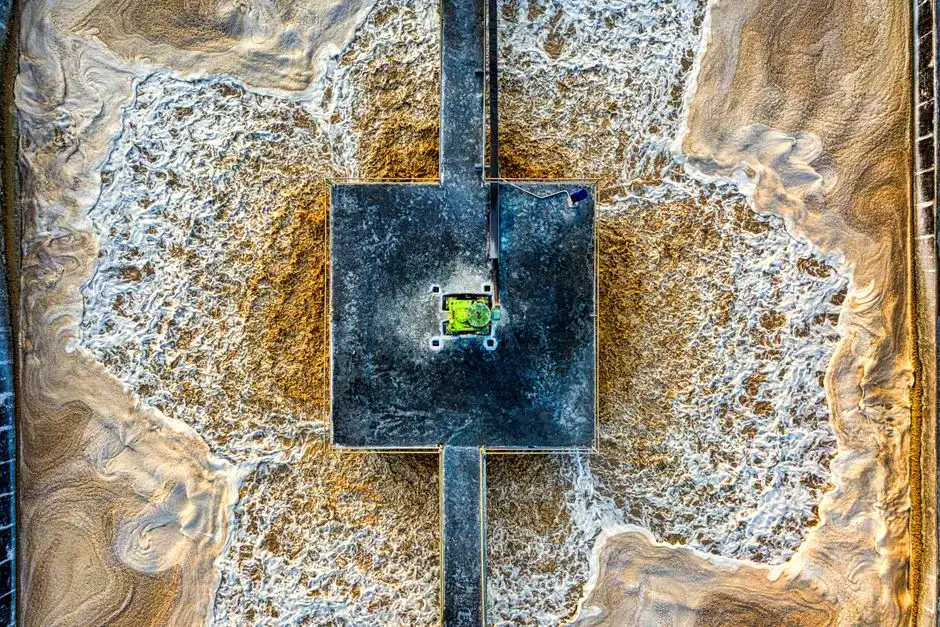
The cost envelope below applies to a turnkey scope: civil works, equipment, installation, instrumentation, commissioning, and one year of O&M support. Prices are in USD and reflect 2026 Vietnamese market conditions (HydropureWater field data, 2026). Land cost, ĐTM (environmental impact assessment) fees, and grid-connection upgrades are excluded.
| Capacity | CAPEX (USD) | OPEX (USD/m³) | Dominant OPEX driver |
|---|---|---|---|
| 100 m³/day | 250K–450K | 0.22–0.35 | Labor + chemicals (electricity smaller share) |
| 500 m³/day | 1.1M–1.8M | 0.18–0.32 | Electricity 45–55% |
| 1,000 m³/day | 2.0M–3.2M | 0.16–0.28 | Electricity 50–60% |
| 2,000 m³/day | 3.2M–4.5M | 0.14–0.24 | Electricity 50–60%; MBR favored over CAS |
Three points sharpen the budget discussion. First, electricity is the single largest OPEX line in every size class — aeration accounts for 45–60% of total power — so the choice between conventional activated sludge and MBR matters financially: MBR's higher capital cost is often recovered within 4–7 years at 1,000+ m³/day through smaller tankage, lower sludge yield, and tighter effluent that reduces environmental fines. Second, add a 12–18% contingency on top of CAPEX for MONRE documentation, ĐTM updates, pilot testing, and the AEMS integration that provincial DONRE departments increasingly require as a permit condition. Third, water reuse via RO can offset 30–60% of freshwater intake costs in textile and electronics plants; at 2026 industrial water tariffs of USD 0.35–0.55/m³ in HCMC, Binh Duong, and Hai Phong, payback on the RO add-on typically falls between 2.5 and 4 years.
How to Choose a Vietnam-Experienced WWTP Supplier in 2026
A shortlist of three to five suppliers is the right size for a Vietnamese industrial WWTP procurement. Score each candidate on the criteria below, not on marketing claims.
- Vietnam MONRE documentation track record. Require at least three reference projects with approved ĐTM reports and operational discharge permits under QCVN 40:2011 column A. Ask for the permit numbers and contact details of the plant managers — a credible supplier will provide them.
- QCVN 40:2011 column A performance data, not design claims. Request third-party or provincial DONRE water-quality certificates for a comparable plant in continuous operation for at least 12 months. A 30-day pilot with composite sampling is the minimum acceptable substitute for greenfield sites.
- In-country service capability. Confirm Vietnam-based commissioning engineers, Vietnamese-language O&M manuals, and a guaranteed 48-hour on-site response for warranty issues. Exporters without local representation typically take 7–14 days to mobilize, which is unacceptable when MONRE penalties accrue daily.
- AEMS integration. The supplier must provide a monitoring system that transmits flow, pH, COD, TSS, and NH₃-N to the provincial DONRE server under Circular 01/2016/TT-BTNMT. Verify the AEMS hardware and data protocol have been accepted on at least one prior Vietnam project.
- Sludge dewatering in scope. A plate-and-frame filter press and a paired automatic chemical dosing system for polymer conditioning must be in the supplier's scope. Sludge handling is the most commonly omitted line item, and a 1,000 m³/day plant generates 8–15 tonnes of dry cake per month that has to be transported off-site.
Weighting: MONRE documentation (25%), column A performance (25%), in-country service (20%), AEMS integration (15%), sludge scope (15%). Suppliers scoring below 70% on this matrix are high-risk regardless of headline price.
Frequently Asked Questions
What is the standard discharge limit for COD in Vietnam's industrial parks? QCVN 40:2011/BTNMT column A sets COD at 150 mg/L and column B at 200 mg/L. Most industrial parks discharging into rivers or lakes used for downstream water supply must meet column A.
How much does a 500 m³/day industrial wastewater treatment plant cost in Vietnam in 2026? Turnkey CAPEX ranges from USD 1.1M to USD 1.8M, with OPEX of USD 0.18–0.32 per m³. Add 12–18% contingency for MONRE documentation and ĐTM.
Which industries in Vietnam need DAF flotation before biological treatment? Seafood processing (FOG 200–800 mg/L), textile dyeing (color and variable pH), and edible-oil operations are the priority candidates. DAF typically removes 90–95% of FOG and 70–85% of TSS.
Is an MBR worth the higher cost versus conventional activated sludge in Vietnam? For flows above 500 m³/day, MBR pays back within 4–7 years through smaller tankage, lower sludge yield, and tighter effluent. Below 100 m³/day, conventional activated sludge typically wins on lifecycle cost.
Does an industrial WWTP in Vietnam need an automatic effluent monitoring system? Yes. AEMS is mandatory for Class I and Class II industrial parks under MONRE Circular 01/2016/TT-BTNMT, with data transmitted to the provincial DONRE.