Why Bahrain Wastewater Treatment Design Is Different in 2026
Bahraini wastewater treatment plant design for 2026 is no longer a BOD-removal exercise — it is a nutrient-removal and reuse-compliance problem driven by a single regulatory shift. The Supreme Council for Environment (SCE) has tightened its 2026 municipal discharge envelope to align with treated wastewater (TWW) reuse standards: TSS ≤50 mg/L, BOD ≤40 mg/L, COD ≤150 mg/L, and TN ≤20 mg/L for plants discharging toward Northern Governorate reuse zones. That is roughly 30–40% tighter than the 2018 envelope, and it forces every retrofitter and greenfield designer to revisit biological process selection rather than recycle a Western temperate-climate basis of design.
Climate imposes the second design load. Summer ambient temperatures of 38–46°C accelerate biological kinetics (typical µmax correction factor 1.8–2.2 versus 20°C reference) but cut oxygen solubility to ~6.8 mg/L at 40°C versus 8.7 mg/L at 25°C. Aeration basins must be sized to maintain DO ≥2 mg/L at the actual basin temperature, not at textbook 25°C — a common cause of nitrification failure in Gulf plants. Bahrain groundwater and many industrial side streams run at 5,000–15,000 mg/L TDS, so biomass must be halophilic or at minimum halotolerant; conventional mesophilic inocula bulk and foam above ~8,000 mg/L TDS.
Water scarcity seals the design. Bahrain's per-capita renewable freshwater supply sits below 100 m³/year — among the lowest globally — and the Electricity and Water Authority's industrial tariff of roughly $0.65/m³ makes reuse a financial decision, not an environmental gesture. The 2026 target exceeds 80% reuse of treated effluent for landscape and industrial cooling, which means every plant is being designed as a water-recovery facility first and a discharge facility second. Tubli Bay's historical nitrogen-driven eutrophication is the political reason behind that shift: the regulator will not accept a new plant that simply moves the nutrient load offshore.
Bahrain SCE 2026 Discharge Limits and Reuse Standards
Three compliance tiers govern a 2026 Bahrain design: municipal discharge to sea or marine outfall, industrial discharge to sewer, and TWW reuse for irrigation or cooling. Each tier carries different envelope values, and selecting the wrong tier at concept stage is the most expensive mistake an EPC can make on a Bahraini project.
| Parameter | Municipal Discharge (2026) | Industrial Discharge to Sewer | TWW Reuse (Unrestricted Irrigation / Cooling) |
|---|---|---|---|
| BOD₅ | ≤ 40 mg/L | ≤ 500 mg/L | ≤ 20 mg/L |
| COD | ≤ 150 mg/L | ≤ 800 mg/L | ≤ 80 mg/L |
| TSS | ≤ 50 mg/L | ≤ 200 mg/L | ≤ 10 mg/L |
| Total Nitrogen (TN) | ≤ 20 mg/L | ≤ 60 mg/L | ≤ 15 mg/L |
| Total Phosphorus (TP) | ≤ 3 mg/L | — | ≤ 2 mg/L |
| FOG | ≤ 15 mg/L | ≤ 100 mg/L | ≤ 5 mg/L |
| Fecal coliforms | ≤ 1,000 CFU/100 mL | — | < 200 CFU/100 mL |
| Residual chlorine | 0.5–1.0 mg/L | — | < 0.2 mg/L (dechlorination if exceeded) |
| pH | 6.5–8.5 | 6.0–9.0 | 6.5–8.5 |
| TDS | ≤ 2,000 mg/L | ≤ 3,000 mg/L | ≤ 1,500 mg/L (irrigation); < 500 mg/L (boiler feed) |
| Turbidity | — | — | ≤ 2 NTU |
The municipal TN ≤20 mg/L envelope tracks the EU UWWTD 91/271/EEC sensitive-area threshold of 15 mg/L but with a 5 mg/L relaxation for non-Tubli outfalls — enough to keep SBR viable but tight enough to push most greenfield designs toward MBR or MBBR with integrated denitrification. Industrial discharges to the municipal sewer (BAPCO, ALBA, food processors) face a BOD ≤500 mg/L, TSS ≤200 mg/L gate at the source, and pretreatment is non-negotiable: the Tubli and Sitra POTWs will not accept flows outside this envelope without surcharge or rejection. For the reuse tier, the <200 CFU/100 mL fecal coliform and ≤2 NTU turbidity pair is what forces a chlorine dioxide disinfection system or UV stage after multimedia filtration, not before it — a sequencing error that wastes 20–30% of the disinfection capacity on already-filtered water.
Step-by-Step Process Train for a Bahrain WWTP
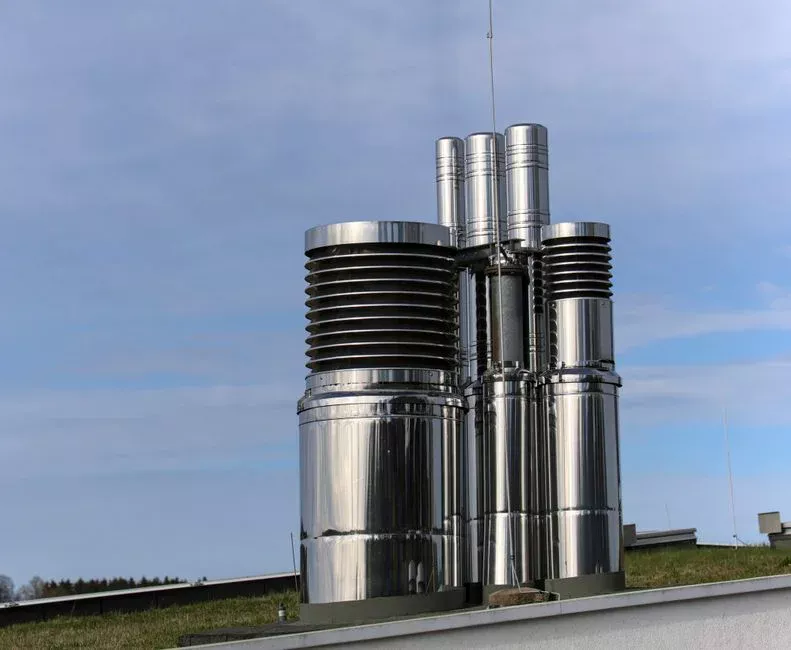
A 2026 Bahrain train runs headworks → primary clarification → biological treatment → tertiary filtration → disinfection → reuse/RO. Each stage carries a Bahrain-specific design rationale that the rest of this article will reference.
- Headworks. A rotary mechanical bar screen for headworks with 6 mm openings handles rags, grit, and the high debris load typical of mixed municipal-industrial catchments in Manama and Muharraq. Stainless rake teeth and an integrated self-cleaning brush reduce manual intervention during sandstorms, when grit loading can spike 3–5× over design.
- Primary treatment. A lamella clarifier for primary treatment running at 20–40 m/h surface loading rate replaces conventional rectangular settlers in most 2026 Bahrain designs. The inclined-plate geometry delivers a 30% chemical savings on coagulant and shrinks footprint by ~60% versus an equivalent circular clarifier — a critical trade in Manama where land costs run $800–$1,500/m².
- Biological treatment. Select MBR for flows under 2,000 m³/day and any site with <1,500 m² of available biological footprint; SBR for 1,000–5,000 m³/day industrial flows with variable load; MBBR for retrofits and seasonal tourism loads around 2,000–20,000 m³/day; and conventional activated sludge only for brownfield expansions above 20,000 m³/day where land is already committed. An MBR membrane bioreactor system with 0.1 μm pore-size PVDF or PES hollow-fiber modules delivers a 60% footprint reduction and 10–20× lower specific energy than cross-flow configurations at the cost of a higher membrane replacement line item.
- Tertiary filtration. Multimedia filtration targeting SDI <5 protects downstream RO membranes; the MBR effluent typically meets this without coagulation, but a 10–20 mg/L coagulant dose is standard insurance for industrial flows. An MBR-protected membrane bioreactor module arrangement eliminates a separate clarification stage between the bioreactor and the multimedia filter.
- Disinfection and reuse. Chlorine dioxide at 50–20,000 g/h ClO₂ capacity handles the largest reuse plants with a 2–5 mg/L dose, while UV at 30–40 mJ/cm² suits sites with chlorinated discharge concerns or where the reuse envelope requires residual-free water. RO follows disinfection when the reuse target is industrial cooling with TDS <500 mg/L.
Comparing MBR, SBR, MBBR, and Activated Sludge for Bahrain Conditions
Biological process selection for a Bahrain 2026 plant is a four-way trade between footprint, energy, effluent quality, halotolerance, and 40°C climate fit. The matrix below is tuned to local influent — 250–500 mg/L COD, 150–300 mg/L BOD, 30–60 mg/L TN, 5,000–15,000 mg/L TDS — not to textbook values.
| Process | Footprint (m²/m³/day) | Energy (kWh/m³) | Effluent COD | Effluent TN | Halotolerance | Capital Cost Index (M=1.0) | Climate-Fit Score (40°C+) |
|---|---|---|---|---|---|---|---|
| MBR | 0.05–0.10 | 0.30–0.60 | ≤ 50 mg/L | ≤ 15 mg/L | High (with acclimated biomass) | 1.4 | 9/10 |
| SBR | 0.15–0.25 | 0.25–0.45 | ≤ 80 mg/L | ≤ 20 mg/L | Moderate–High | 1.0 | 8/10 |
| MBBR | 0.12–0.20 | 0.30–0.55 | ≤ 80 mg/L | ≤ 20 mg/L | Moderate | 1.1 | 8/10 |
| Activated Sludge | 0.20–0.40 | 0.35–0.60 | ≤ 100 mg/L | ≤ 25 mg/L | Low–Moderate | 0.9 | 6/10 |
MBR wins on every climate-and-quality axis except capital cost: the $1.4 index reflects membrane replacement amortized over 8–10 years. SBR is the best 1,000–5,000 m³/day industrial option because the batch cycle adapts to diurnal refinery and food-processing load swings without an external equalization tank. MBBR is the right choice for brownfield retrofits where existing basin geometry cannot be expanded, and conventional activated sludge is reserved for the 20,000+ m³/day class where land is committed and the operator has a trained in-house team. For dense urban sites in Manama and Muharraq, an MBR membrane bioreactor system or a packaged underground integrated sewage treatment unit typically beats a civil-build AS on 20-year NPV once land cost is capitalized.
Industrial Wastewater Design: Oil & Gas, Aluminum, Petrochemical, Food
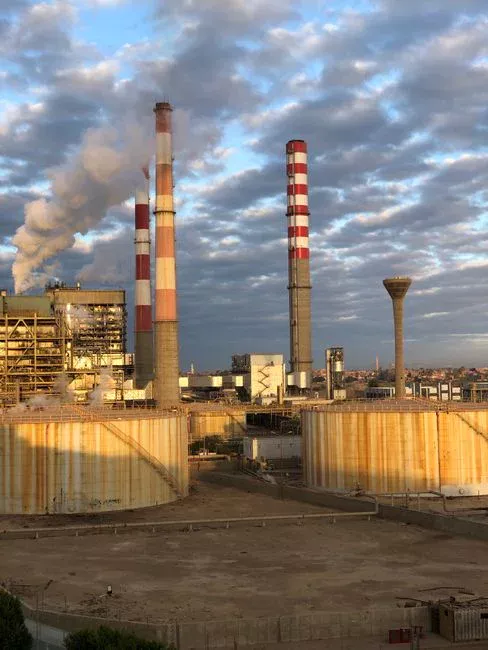
Generic municipal trains fail on Bahrain's industrial flows. The four largest generators each need a vertical-specific treatment train sized to their influent envelope.
Oil & gas / BAPCO refinery. Produced water and desulfurization wastewater hit the plant with 100–500 mg/L free oil, 5,000–15,000 mg/L TDS, and intermittent H₂S spikes. The train is oil-water separation (API or CPI) → DAF pretreatment system rated 4–300 m³/h → equalization → MBR. The DAF stage alone typically removes 90–95% of FOG and 60–80% of TSS, taking the load off the membranes and cutting MBR fouling rate by 40%.
Aluminum smelter / ALBA. Pot-line and anode-bake wastewater carries 50–200 mg/L fluoride, 500–1,500 mg/L TSS, and pH excursions to 3–4. Pretreatment uses lime–soda chemical precipitation (the limestone-gypsum FGD process is the operational analog: Ca²⁺ + 2F⁻ → CaF₂) followed by a lamella settler for the calcium fluoride sludge. Biological polishing handles residual COD but cannot remove fluoride, so the precipitation step must hit <8 mg/L F on the first pass.
Petrochemical. Catalytic cracker and aromatics wastewater runs at 2,000–8,000 mg/L COD with 50–200 mg/L phenols. A three-stage anaerobic + anoxic + aerobic biological train removes 95%+ of COD; activated carbon polishing for industrial effluent strips residual phenols and color to meet the reuse envelope's COD ≤80 mg/L.
Food processing. Dairy, dates, and seafood processors push 1,500–4,000 mg/L BOD and 200–600 mg/L FOG. DAF with polyaluminum chloride cuts FOG to <30 mg/L, after which an anaerobic MBR or a packaged underground integrated sewage treatment unit at 1–80 m³/h finishes the job at low OPEX.
2026 CAPEX, OPEX, and Payback for Bahrain WWTPs
Bahrain CAPEX is roughly 15–25% above equivalent UAE and Saudi builds because of the smaller supplier base and higher import duty on electromechanical skids. The benchmarks below are anchored to 2026 bids for plants under design review across the GCC (HydropureWater field data, 2026).
| Plant Class | Capacity (m³/day) | CAPEX (USD per m³/day) | OPEX (USD per m³) | Typical Configuration |
|---|---|---|---|---|
| Modular / package | 100–500 | $380–$720 | $0.18–$0.32 | Containerized MBR + ClO₂ |
| Mid-scale civil-build | 500–5,000 | $300–$520 | $0.14–$0.24 | SBR or MBBR + multimedia + UV |
| Large civil-build | 5,000–50,000 | $250–$450 | $0.10–$0.20 | Activated sludge + tertiary + RO |
| Reuse upgrade retrofit | any | + $80–$150 (membrane stage) | + $0.04–$0.07 | Add RO + ClO₂ to existing plant |
Energy is 40–55% of OPEX, and aeration dominates that line. Fine-bubble membrane diffusers paired with VFD-driven positive-displacement blowers cut aeration energy 20–30% versus fixed-speed centrifugal blowers — the single largest OPEX lever on a Bahrain plant. Sludge hauling runs $40–$80 per wet ton; a plate-and-frame filter press at 1–500 m² chamber area reduces wet cake volume by 70–80% and slashes hauling cost 50–70% versus drying beds, an important line item for any Manama-area plant. The financial case for the reuse upgrade is straightforward: a 10,000 m³/day plant reusing 80% of its effluent displaces ~$2.4M/year in freshwater purchase at the $0.65/m³ industrial tariff, which means the reuse skid pays back in 3–6 years even before accounting for discharge-fee avoidance. For sludge dewatering in Manama specifically, the same payback math applies with the additional benefit of closing the solids loop to municipal landfill capacity.
Frequently Asked Questions
What are the Bahrain SCE 2026 effluent limits for a municipal WWTP?
BOD ≤40 mg/L, COD ≤150 mg/L, TSS ≤50 mg/L, TN ≤20 mg/L, TP ≤3 mg/L, FOG ≤15 mg/L, fecal coliforms ≤1,000 CFU/100 mL, pH 6.5–8.5, and TDS ≤2,000 mg/L for discharge to marine outfall. Plants targeting Northern Governorate reuse zones must additionally meet the TWW reuse tier: TSS ≤10 mg/L, BOD ≤20 mg/L, TN ≤15 mg/L, turbidity ≤2 NTU, fecal coliforms <200 CFU/100 mL.
Which biological process is best for a 2,000 m³/day Bahrain plant at 40°C+?
MBR delivers the best effluent quality (COD ≤50 mg/L, TN ≤15 mg/L) and the smallest footprint (0.05–0.10 m² per m³/day) with high halotolerance once biomass is acclimated to local TDS. SBR is the cost-effective alternative for industrial flows with variable loading.
How much does a Bahrain WWTP cost in 2026?
Modular 100–500 m³/day package plants run $380–$720 per m³/day CAPEX with $0.18–$0.32/m³ OPEX. Civil-build 5,000–50,000 m³/day plants run $250–$450 per m³/day CAPEX with $0.10–$0.20/m³ OPEX, dominated by aeration energy.
How do you handle high salinity in a Bahrain WWTP?
Use halophilic or halotolerant biomass acclimated over 4–8 weeks to the actual plant TDS (typically 5,000–15,000 mg/L). Design aeration for DO ≥2 mg/L at 40°C, not 25°C, and specify stainless or FRP internals to manage chloride-induced corrosion above 8,000 mg/L TDS.
Chlorine dioxide vs UV — which disinfection for TWW reuse in Bahrain?
Chlorine dioxide at 2–5 mg/L provides a residual for the reuse distribution network and handles 50–20,000 g/h capacity in a single skid. UV at 30–40 mJ/cm² suits sites with residual-free discharge requirements but offers no residual protection downstream; pairing ClO₂ primary with UV polishing is common on the largest reuse plants.