Why Enzyme Manufacturing Wastewater Challenges Conventional Pre-Treatment
Enzyme fermentation broth is one of the more demanding industrial wastewater streams a DAF system will see, and the design numbers from a municipal or slaughterhouse DAF do not transfer cleanly. A typical enzyme campaign runs as a batch: 3–14 day fermentations of Aspergillus, Bacillus, or yeast on a substrate of corn steep liquor, soybean meal, or molasses, followed by cell removal (centrifuge or rotary vacuum filter), downstream chromatography or precipitation, and CIP. The streams that arrive at the DAF inlet are spent fermentation broth, CIP washwater, and ion-exchange regenerant — and they are not steady.
The influent is characterized by high organic load (COD 8,000–25,000 mg/L), high suspended solids (TSS 1,500–5,000 mg/L), moderate FOG (200–800 mg/L), pH 4.0–7.5, and temperatures of 25–45°C. The suspended solids are not a single population — they are a mix of biomass (yeast, Bacillus, Aspergillus mycelia), insoluble substrate residues (corn steep liquor solids, soybean meal fines), and precipitated protein — each fraction responds differently to flocculation and each carries different attached water.
Antifoam agents are the single biggest DAF design driver in this stream. Silicone- or polyol-based antifoam is dosed at 50–500 mg/L directly into the fermenter to control foam, and a fraction survives into the spent broth. These surfactants suppress the micro-bubbles a DAF depends on, which is why an enzyme-duty DAF must run a higher recycle ratio and almost always needs a coagulant pre-stage. Add the batch nature of the upstream process — flow and load swing by 2–3× across a campaign — and a flow equalization tank ahead of the flotation cell becomes mandatory, not optional.
Influent Parameters That Determine DAF Performance in Enzyme Plants
The table below summarizes the influent ranges a process engineer will see at the DAF inlet of an enzyme plant. Values are drawn from typical enzyme fermentation broth profiles and the food-processing DAF benchmark cited in the May 2017 Critical Review on the Australian Meat Processing Industry (slaughterhouse and enzyme broth behave similarly on TSS and FOG because both are protein- and lipid-rich).
| Parameter | Low | Typical | High | Design implication |
|---|---|---|---|---|
| TSS (mg/L) | 1,500 | 3,000 | 5,000 | Drives A/S ratio and float scraper torque |
| COD (mg/L) | 8,000 | 15,000 | 25,000 | Determines downstream biological loading |
| BOD₅ (mg/L) | 4,000 | 8,000 | 14,000 | BOD/COD ≈ 0.5 indicates biodegradable fraction |
| FOG (mg/L) | 200 | 450 | 800 | FOG/TSS > 0.15 requires coagulant pre-stage |
| Total nitrogen (mg/L) | 200 | 500 | 1,200 | Sets nutrient dosing for downstream biotreatment |
| Total phosphorus (mg/L) | 30 | 80 | 200 | Often underdosed in anaerobic — check before UASB |
| pH | 4.0 | 5.5 | 7.5 | Neutralize to 6.5–7.5 ahead of flocculation |
| Temperature (°C) | 25 | 35 | 45 | Above 40°C reduces polymer performance |
| Conductivity (mS/cm) | 2 | 5 | 12 | High conductivity pushes polymer demand up |
The FOG-to-TSS ratio is the most under-appreciated design input in this list. A ratio above 0.15 — common in enzyme broth where residual soybean lipids and antifoam carriers accumulate — almost always requires a coagulant stage (PAC or ferric chloride at 50–150 mg/L) ahead of the flocculation reactor, otherwise the float carries too much oil back into the clarifier underflow and re-stabilizes the emulsion downstream. DAF on this stream consistently delivers 85–95% TSS removal and 70–90% FOG removal (per the May 2017 Critical Review on Australian Meat Processing Industry wastewater).
Where the DAF System Fits in the Enzyme Wastewater Treatment Train
A correctly specified DAF earns its slot because it solves four distinct problems in the same vessel. The standard enzyme wastewater train is equalization → DAF → anaerobic (UASB or IC) or aerobic (MBR) → polishing (RO or reuse) → sludge dewatering. Each downstream unit imposes a specific demand on the DAF outlet: anaerobic digesters want TSS below 500 mg/L to avoid washout and granule blinding; MBR membranes want FOG below 50 mg/L to control irreversible fouling; an RO polish wants SDI below 5, which a DAF alone cannot guarantee but which it must not make worse.
The four functions DAF performs are TSS reduction (protecting anaerobic digesters and MBR membranes from fouling), FOG and antifoam removal (preventing scum blinding and biological activity loss in biotreatment), COD pre-reduction (cutting aeration energy in downstream aerobic steps by 20–30% by stripping the readily floatable fraction), and flow buffering for batch discharges when equalization is undersized. The slaughterhouse DAF context referenced earlier is instructive: protein- and fat-rich waste streams with high TSS behave similarly to enzyme broth, which is why DAF is the standard primary clarification step in both industries. Without DAF, downstream MBR and RO systems typically show 40–60% faster membrane fouling, based on standard industrial wastewater pre-treatment benchmarks — and that translates directly into membrane replacement cost. For reference, the MBR membrane bioreactor downstream of DAF is the most common polishing step on enzyme plants up to ~50,000 t/yr.
Engineering Sizing: A/S Ratio, Hydraulic Loading, and Polymer Dose
The sizing math for an enzyme-duty DAF is tighter than for municipal or low-FOG industrial duty, and the four numbers that govern it are A/S ratio, hydraulic loading rate, polymer dose, and recycle ratio. The table below summarizes the working ranges.
| Parameter | Enzyme duty range | Municipal DAF (reference) | Why the difference |
|---|---|---|---|
| A/S ratio (mass air / mass solids) | 0.02–0.05 | 0.005–0.02 | Antifoam suppresses bubble attachment; more air needed |
| Hydraulic loading (m³/m²·h) | 5–10 | 10–20 | Mycelial solids carry more attached water; longer residence |
| Polymer dose (mg/L, anionic PAM) | 5–20 | 1–5 | Higher TSS and FOG demand more flocculant |
| Coagulant dose (mg/L, PAC or FeCl₃) | 50–150 | 0–30 | FOG destabilization requires coagulant pre-stage |
| Recycle ratio (% of forward flow) | 20–40 | 10–20 | Higher A/S plus micro-bubble density |
| Saturation pressure (bar) | 2–4 | 3–5 | Lower pressure gives 30–80 µm bubbles ideal for flotation |
| Micro-bubble size (µm) | 30–80 | 20–50 | Larger bubbles overcome antifoam surface tension |
The A/S ratio (air-to-solids, by mass) is the single most important number. Below 0.02 the float layer becomes thin and unstable; above 0.05 the excess air wastes recycle pump energy without improving TSS removal. Hydraulic loading of 5–10 m³/m²·h is tighter than municipal DAF because enzyme solids — particularly Aspergillus mycelia and precipitated protein — carry more attached water and need longer residence to rise cleanly. Polymer is anionic polyacrylamide at 8–14 MDa molecular weight, dosed at 5–20 mg/L, almost always paired with 50–150 mg/L of PAC or ferric chloride ahead of the flocculation reactor for FOG destabilization. The dissolved air flotation (DAF) system covers 4–300 m³/h across 13 standard models, which is the full range from a pilot fermenter skid to a 50,000-tonne enzyme complex. The polymer and coagulant feed is normally delivered by an automatic chemical dosing skid paced off the DAF inlet flowmeter.
DAF Model Selection for Typical Enzyme Plant Capacities
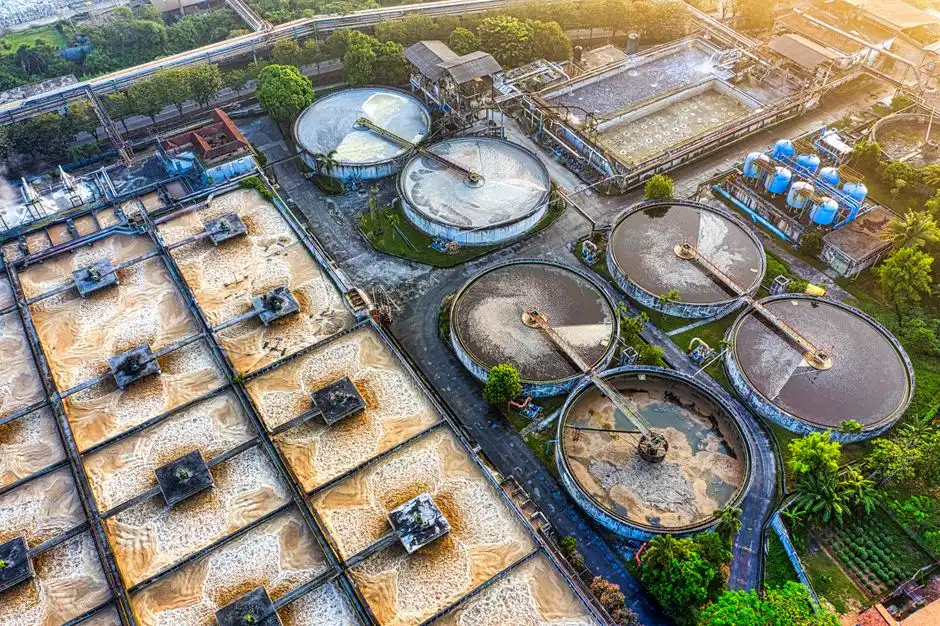
The selection table below maps three reference flows to a specific DAF model. The footprint, installed power, and saturation water values are pulled from the standard DAF catalog; the matching flocculation reactor volume assumes 15 minutes of flocculation residence at peak flow, which is the minimum for enzyme duty.
| Plant size | Peak flow (m³/h) | DAF model | Footprint (m²) | Installed power (kW) | Saturation water (m³/h) | Flocculation reactor (m³) |
|---|---|---|---|---|---|---|
| Specialty enzyme producer (~5,000 t/yr) | 20 | DAF-20 | ~8 | 4.5 | 6 | 5 |
| Mid-scale industrial enzyme plant (~30,000 t/yr) | 80 | DAF-80 | ~22 | 11 | 24 | 20 |
| Large enzyme complex / contract manufacturer | 200 | DAF-200 | ~45 | 22 | 60 | 50 |
Material selection is the second decision. SS304 is standard; SS316L is specified wherever chloride or low-pH cleaning is routine, which is common in enzyme plants running periodic CIP with nitric or phosphoric acid. FRP is used for the most corrosive broths, particularly those with high residual solvent or low-pH regenerant. The automatic skimmer and PLC package are standard on DAF units — and they are not optional in enzyme duty. The float layer from enzyme broth is thick and sticky; manual skimming cannot keep up on a continuous-duty plant, and the PLC must pace skimmer speed to float thickness to avoid carryover. For plants already running a starch or sweetener line, the same selection logic is covered in the DAF system for starch wastewater design guide; the operating envelopes overlap closely.
2026 CAPEX, OPEX, and ROI for DAF on Enzyme Wastewater
The 2026 budget numbers below are ex-works HydropureWater for a complete skid including the chemical dosing system and PLC panel, but excluding civil works, piping, and installation. They assume SS304 construction and the standard 380 V / 50 Hz electrical package.
| Item | 50 m³/h DAF skid | 200 m³/h DAF skid |
|---|---|---|
| CAPEX (ex-works, USD) | 28,000–65,000 | 90,000–180,000 |
| Polymer (USD/m³) | 0.02–0.04 | 0.02–0.04 |
| Coagulant (USD/m³) | 0.01–0.02 | 0.01–0.02 |
| Energy (USD/m³) | 0.01–0.02 | 0.01–0.02 |
| Total OPEX (USD/m³ treated) | 0.04–0.09 | 0.04–0.09 |
| Typical payback (months) | 14–22 | 14–22 |
OPEX is dominated by polymer, and stays well below the biological OPEX in the downstream UASB/IC stage, which is why a properly sized DAF almost always pays back inside two years. The three savings streams to model in a board paper are: reduced aeration energy in the downstream aerobic step (USD 0.02–0.05/m³ saved, because DAF strips the readily floatable COD before it reaches the blower), lower sludge hauling (USD 0.01–0.03/m³ saved, because float sludge dewaters to 18–22% DS versus 12–15% for biological sludge), and avoided MBR membrane replacement (USD 0.05–0.10/m³ equivalent, by extending membrane life from ~3 years to ~5 years). For cross-checking against your own estimate, the broader DAF cost benchmark in the DAF clarifier cost price guide uses the same unit-cost logic and is worth a read before procurement. The chemical feed skid is the automatic chemical dosing skid referenced in the sizing section.
Frequently Asked Questions
What COD removal can a DAF achieve on enzyme fermentation wastewater?
30–50% COD removal, with 85–95% TSS removal being the primary function. The COD that leaves with the float is the readily floatable fraction — oils, antifoam carriers, and attached biomass — which is precisely the fraction that causes the most damage downstream.
Can a DAF handle antifoam residues from the fermenter?
Yes, but only with coagulant pre-treatment (50–150 mg/L PAC or ferric chloride) and an A/S ratio held at 0.02–0.05. Without both, antifoam suppresses bubble formation at the nozzle and removal efficiency collapses; this is the most common under-performing DAF we see on enzyme duty.
How is a DAF different from a lamella clarifier for enzyme duty?
DAF handles FOG and high-TSS streams reliably up to 5,000 mg/L TSS; lamella struggles above 2,000 mg/L TSS and does not remove FOG. Lamella is cheaper and has a smaller footprint, but it is limited to low-FOG, settled-solids duty — a high-efficiency sedimentation tank may be the better fit if FOG is below 100 mg/L and the plant already has a good upstream screening step.
What is the typical polymer dose for enzyme wastewater DAF?
5–20 mg/L anionic polyacrylamide (8–14 MDa molecular weight), plus 50–150 mg/L coagulant (PAC or ferric chloride) for FOG-bearing streams. Dose is paced off the DAF inlet flowmeter and trimmed by jar testing on the actual broth at production temperature.
Does DAF effluent require further treatment before discharge?
Yes — DAF is pre-treatment only. Biological polishing (UASB, IC, MBBR, or MBR) is required to meet typical COD discharge limits of 100–250 mg/L. The DAF outlet typically still runs 4,000–12,000 mg/L COD, which is the load the biological stage is sized for. A side-by-side technology view is in the DAF vs oil water separator comparison for plants still deciding between primary clarification technologies.