The key difference between a DAF system and an oil water separator is the separation mechanism and the removal range: a DAF unit uses micro-bubbles to float fine solids and FOG at 85–95% removal, while oil water separators use gravity and coalescence and typically remove 60–80% free oil. The right choice depends on influent FOG load, droplet size, and whether emulsified oils are present.
What Are DAF and Oil Water Separators?
Dissolved Air Flotation (DAF) and oil water separators are both industrial pre-treatment tools, but they work on different principles and target different contaminants. A DAF system dissolves air in wastewater under pressure, then releases millions of microscopic bubbles when pressure drops. Those micro-bubbles attach to suspended solids, fats, oils, and grease (FOG) and lift them to the surface for skimming. That mechanism reaches emulsified oils and fine solids that gravity alone rarely removes.
An oil water separator uses gravity separation and coalescing plates to separate free oil from water by density difference, as documented in API Publication 421, 1990. Free-floating oils rise because they are lighter than water and collect at the surface. The same units are generally ineffective against emulsified oils or very fine suspended solids. Both technologies suit industrial pre-treatment, but suitability tracks the influent contamination profile.
How DAF Systems Work: Mechanism and Performance
DAF systems raise effluent quality by adding buoyancy with micro-bubbles, which helps plants meet tighter discharge limits. In a typical DAF train, a portion of clarified effluent (typically 20–50%) is pressurized to 4–6 bar and saturated with air. That supersaturated recycle mixes with raw wastewater through a pressure-relief valve, forming 20–50 micron bubbles. The bubbles attach to suspended solids, FOG, and other low-density solids and float them to the surface.
DAF systems commonly deliver 85–95% FOG removal and 90–97% Total Suspended Solids (TSS) removal on demanding food-processing and metalworking streams. Capacities scale from 4 m³/h up to 300 m³/h. For colloids and emulsified oils, most plants we size add coagulants and flocculants upstream of automatic skimming. Those chemicals destabilize emulsions, grow flocs, and improve bubble attachment inside a Dissolved Air Flotation (DAF) System.
How Oil Water Separators Work: Design and Limitations

Oil water separators rely on gravity and density difference to split immiscible liquids, which limits performance on emulsified oils and fine particulates. API 421-compliant separators use baffles and parallel plate packs to add surface area. Smaller oil droplets coalesce into larger ones and rise faster for skimming. Stokes' Law governs that rise rate: larger, less dense droplets climb through the water column more quickly.
For free oil, these separators typically reach only 60–80% oil removal and struggle with stable emulsions or particles smaller than 50 microns. Above-ground versus below-ground models mainly change installation, not separation performance. Most plants deploy them on stormwater runoff, vehicle wash, and low-FOG industrial streams, typically less than 100 mg/L FOG. They are a poor standalone choice for complex industrial wastewater with high emulsified oil or fine TSS.
DAF vs Oil Water Separator: Head-to-Head Comparison
Selecting between DAF and oil water separators starts with removal efficiency, footprint, chemicals, and cost against the plant's wastewater goals. DAF units outperform oil water separators on FOG and fine TSS. A DAF unit can remove 85–95% of FOG and over 90% of TSS, while a standard oil water separator typically removes 60–80% free oil and misses emulsified forms. That gap often decides compliance and the load sent to biological treatment.
On footprint, DAF units are more compact and can handle the same flow in 30–50% less space because separation is faster. Maintenance differs: oil water separators need less chemical feed but more frequent desludging of oil and solids. DAF systems often use an automatic chemical dosing system, yet automated skimming cuts manual labor. Capital cost for oil water separators is typically 20–30% lower upfront. On high-load industrial streams, lower compliance risk from a high-efficiency DAF system for FOG and TSS removal often improves lifecycle return.
| Feature | DAF System | Oil Water Separator |
|---|---|---|
| Primary Separation Mechanism | Micro-bubble flotation (air saturation & pressure release) | Gravity separation & coalescence (density difference) |
| FOG Removal Efficiency | 85–95% | 60–80% (free oil only) |
| TSS Reduction | 90–97% | Minimal (ineffective against fine solids) |
| Emulsified Oil Removal | Highly effective (with chemical pre-treatment) | Ineffective |
| Target Contaminants | FOG, fine suspended solids, colloidal matter, emulsified oils | Free-floating oils, some settleable solids |
| Footprint (for equivalent flow) | Compact (30–50% less space) | Larger |
| Chemical Requirement | Often required (coagulants, flocculants) | Generally not required |
| Maintenance Focus | Automated skimming, chemical management, air system checks | Frequent desludging, plate cleaning |
| Capital Cost (relative) | Higher (20–30% more) | Lower |
| OPEX (for high loads) | Lower (due to higher efficiency, less compliance risk) | Higher (due to lower efficiency, more compliance risk) |
Which Technology Should You Choose?
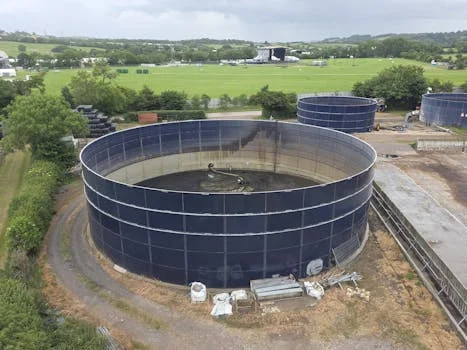
Technology choice follows your wastewater profile and discharge limits. Choose DAF when FOG is high (typically >100 mg/L), emulsified oils are present, or fine suspended solids dominate. DAF also protects downstream biology by cutting BOD and COD load. Food processing, meatpacking, dairy, and metal finishing plants commonly need that removal range.
Oil water separators fit stormwater, industrial runoff with consistently low FOG, or a coarse first stage ahead of DAF. They handle free-floating oils when emulsions and fine solids are not the main risk. For petrochemical or some food plants, a hybrid train—oil water separator then DAF—removes bulk free oil first and leaves emulsified oil and fine solids to flotation. DAF better supports stringent TSS and BOD limits under US EPA permits and EU Industrial Emissions Directive (IED) BAT-based water emission limits. For cost detail, review our real 2025 DAF clarifier pricing and ROI analysis, or see why high-efficiency DAF clarifier systems are preferred by industrial wastewater manufacturers. Where bulk free-oil removal must precede flotation, see our comparison of daf vs coalescence separator for oil removal.
Who This Is For and Next Step
This guide suits plant engineers, EPC contractors, and procurement managers sizing pre-treatment for food processing, metalworking, petrochemical, or stormwater streams. Decision checklist for your spec sheet: influent FOG concentration (free vs emulsified), TSS target (mg/L), required footprint at peak flow, chemical dosing capability, and downstream biological load. Main cost drivers are tank material, plate-pack vs flotation vessel, skimmer automation, and coagulant/polymer consumption. Oil water separators remain appropriate for vehicle wash and stormwater at FOG below 100 mg/L, while DAF is the safer pick once emulsions or fine solids enter the stream. For a sized recommendation and price band, send your flow rate and influent data through our inquiry form or review the complete DAF maintenance checklist for reliability if DAF is already on site.
Frequently Asked Questions
What is the difference between DAF and SAF?
DAF dissolves air under pressure and releases micro-bubbles when pressure drops. SAF (Suspended Air Flotation) uses mechanical aeration to introduce larger bubbles directly into the wastewater. DAF is usually more efficient on fine particles and emulsified oils because the bubbles are smaller and more numerous.
What is DAF used for in oil separation?
DAF separates emulsified oils and FOG by attaching micro-bubbles to oil particles so they float for skimming. Plants use it when free-oil gravity separators cannot break emulsions or capture fine oil droplets. Removal rates are high when chemical pre-treatment prepares the solids for bubble attachment.
Can an oil water separator replace a DAF system?
No. An oil water separator cannot replace a DAF system on most industrial streams with emulsified oils or fine TSS. Gravity separators remove free-floating oil only. DAF targets emulsions and fine solids that API-style separators leave behind.
Do DAF systems require chemicals?
Yes. Most DAF trains dose coagulants and flocculants upstream to break emulsions and aggregate fine solids. Those chemicals improve bubble attachment and raise overall FOG and TSS removal. Chemical demand falls when the influent already contains large free-oil droplets only.
Is API 421 applicable to DAF systems?
API Publication 421 is a design guide for gravity oil water separators that separate free oils by density difference. It does not cover DAF flotation design. Plants judge DAF performance against EPA or local discharge limits for effluent quality, not against API 421 geometry rules.