Why Electroplating Effluent in Pakistan Demands Engineered Treatment
Discharging untreated rinse water to a Karachi nullah or a Lahore drain triggers Pakistan EPA enforcement under NEQS S.R.O. 549(I)/2000 and its 2005 revision S.R.O. 1062(I)/2005, which tightened chromium to total Cr ≤1.0 mg/L and Cr(VI) ≤0.05 mg/L — limits no small auto-parts or sanitaryware plater can meet without a purpose-built ETP. Sindh EPA and Punjab EPPCB have issued show-cause notices and shutdown orders repeatedly across the SITE Karachi, Kot Lakhpat Lahore, and Gujranwala industrial clusters over the 2024–2025 period, with typical fines ranging PKR 50,000–200,000 per violation plus production halts lasting 7–30 days (per provincial EPA enforcement summaries). The business case for engineered treatment has flipped: a properly designed 10 m³/day ETP reuses 60–70% of treated water and recovers PKR 200–400/m³ in raw water and discharge fees, paying back its capital cost in 18–30 months. A 5–50 m³/day Pakistani electroplating shop typically generates pH 2–5 effluent with COD 100–500 mg/L, TSS 50–200 mg/L, Cr 5–50 mg/L, Ni 2–20 mg/L, Cu 5–30 mg/L, and Zn 10–40 mg/L — concentrations that exceed NEQS by 5–100× and require staged chemical precipitation plus sludge handling. Plants that skip equalization or co-mingle cyanide and hexavalent chromium streams produce a discharge that is both non-compliant and acutely toxic to operators handling the sludge.
Contaminant Profile of Pakistani Electroplating Wastewater
Electroplating shops in Pakistan operate four distinct bath chemistries, each producing a characteristic wastewater signature that the ETP must address in separate or sequenced unit operations. Hard-chrome and decorative chrome baths contribute Cr(VI) 5–50 mg/L at pH 1–3; nickel plating (Watts bath, sulfamate) contributes Ni 2–20 mg/L at pH 3.5–4.5; acid copper and acid zinc baths contribute Cu 5–30 mg/L and Zn 10–40 mg/L at pH 1–3; cyanide copper and zinc baths contribute free CN⁻ 1–10 mg/L at pH 10–12 plus associated metal-cyanide complexes. Precious-metal shops (jewelry, electronics) add Au and Ag but at trace levels below 1 mg/L. Rinse water accounts for 80–95% of total wastewater volume by flow, but drag-out carryover from plating tanks can spike influent metal concentrations by 10–100× during a single batch. Pakistani facilities commonly mix all rinse streams into a single equalization tank — a design shortcut that creates a process problem: acid chrome rinse drops pH below 3 and releases HCN gas if cyanide rinse is co-mingled, while alkaline cyanide rinse forces the entire equalization tank to pH 10–11 and precipitates metals prematurely as hydroxides before chromium reduction. The influent envelope for a typical mixed-stream equalized flow is shown below.
| Parameter | Range in Pakistani Mixed Plating Effluent | Notes |
|---|---|---|
| Flow (m³/day) | 5–50 | Dominant size bracket in SITE Karachi, Kot Lakhpat, I-9 Islamabad |
| pH | 1–5 (often 2–3 after chrome rinse) | Alkaline CN streams raise batch pH to 10–12 |
| Cr(VI) | 5–50 mg/L | From hard chrome and decorative chrome baths |
| Total Cr | 10–60 mg/L | Sum of Cr(VI) + Cr(III) carryover |
| Ni | 2–20 mg/L | Watts and sulfamate nickel baths |
| Cu | 5–30 mg/L | Acid copper and cyanide copper |
| Zn | 10–40 mg/L | Acid zinc and cyanide zinc |
| CN⁻ (free) | 1–10 mg/L | Cyanide copper/zinc baths only |
| COD | 100–500 mg/L | Rarely above 800 mg/L in rinse streams |
| TSS | 50–200 mg/L | Spikes during tank dumps and filter backwashes |
| TDS | 500–5000 mg/L | Driven by bath salt carryover |
The 5-Stage Treatment Train for NEQS Compliance
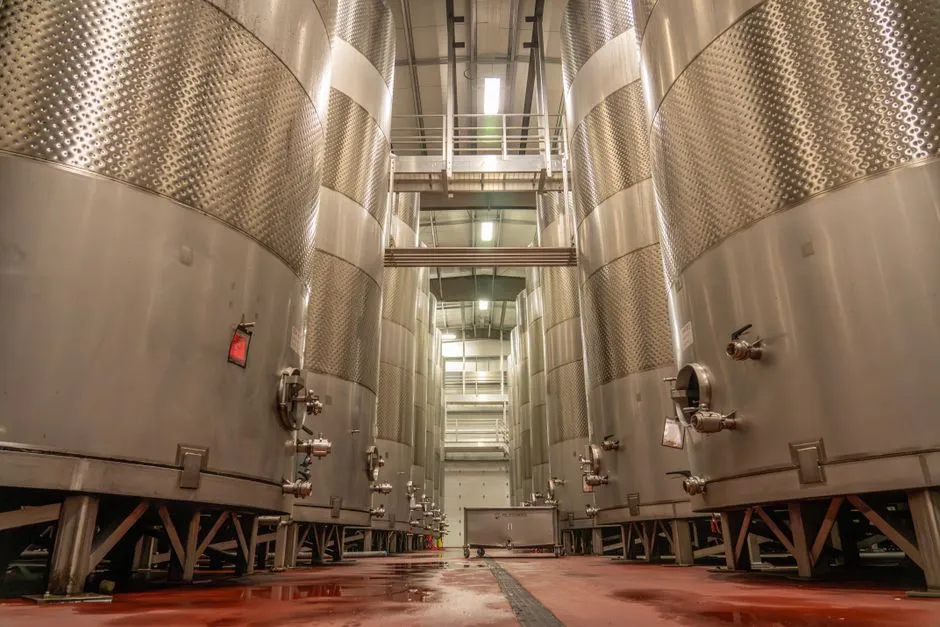
A 5-stage process train — equalization, Cr(VI) reduction, hydroxide precipitation, cyanide destruction (where applicable), and solid-liquid separation — is the lowest-cost configuration that reliably meets NEQS S.R.O. 1062(I)/2005 for mixed Pakistani plating effluent. Stage 1 is an 8–24 hr HRT equalization tank with a pH probe feeding a PLC-controlled chemical dosing system that doses NaOH or H₂SO₄ to hold pH within ±0.5 of setpoint; the tank buffers batch swings from drag-out dumps and shift-end rinses. Stage 2 is the Cr(VI) reduction step: dose FeSO₄·7H₂O at a stoichiometric FeSO₄:Cr(VI) mass ratio of 3:1 (actual operating dose 3.5–5:1 to account for side reactions with DO), hold pH 2.0–3.0 for 30 minutes, and use an ORP probe to confirm reduction is complete at <+200 mV before advancing; NaHSO₃ is an alternative reductant (1.6:1 mass ratio) when downstream RO reuse is planned and residual iron must be minimized. Stage 3 raises pH to 8.5–9.5 with NaOH or Ca(OH)₂ to precipitate Cr(OH)₃, Ni(OH)₂, Cu(OH)₂, and Zn(OH)₂, then doses polyaluminum chloride (PAC) 50–200 mg/L followed by anionic polyacrylamide 1–5 mg/L for floc growth. Stage 4 — cyanide destruction via alkaline chlorination — must run on a segregated cyanide stream, never combined with the Cr(VI) stream: dose NaOCl or Cl₂ at pH 10–11 to a target CN⁻ <0.1 mg/L (the breakpoint reaction CN⁻ → CNO⁻ → CO₂ + N₂ requires 2.73 mg Cl₂ per mg CN⁻ at pH 10–11), and only after verification can the streams merge. Co-chlorination of Cr(VI) and CN⁻ generates cyanogen chloride (CNCl), a toxic gas. Stage 5 uses a lamella clarifier for bulk hydroxide sludge removal, a DAF system for polishing residual suspended solids, and a multi-media filter to drive TSS below 10 mg/L ahead of any reuse. Hydroxide sludge at 1–2% solids is dewatered on a plate and frame filter press to 25–35% cake solids, then consigned to a hazardous-waste facility under a Sindh or Punjab EPA manifest — landfill disposal without manifest tracking is the most common compliance gap auditors flag in 2024–2025 inspections (per HydropureWater field data, 2026).
NEQS Discharge Limits vs. Achievable Treatment Performance
The gap between the regulatory ceiling and the 5-stage train's typical treated-effluent concentration is narrow but non-zero, and that margin dictates the design safety factor. The table below compares NEQS S.R.O. 1062(I)/2005 limits against typical treated values reported by Pakistani ETP operators and the heavier US EPA 40 CFR Part 413 Electroplating Point Source Category limits, which several ISO 14001-certified export shops in Karachi's Korangi Industrial Area target voluntarily.
| Parameter | NEQS S.R.O. 1062(I)/2005 limit (mg/L) | US EPA 40 CFR 413 limit (mg/L) | Typical post-treatment (5-stage train) | Removal efficiency |
|---|---|---|---|---|
| Total Cr | 1.0 | 1.10 | 0.1–0.4 | 99.0–99.8% |
| Cr(VI) | 0.05 | 0.31 | <0.02 (ND) | 99.5–99.9% |
| Ni | 1.0 | 1.19 | 0.2–0.6 | 95–99% |
| Cu | 2.0 | 0.86 | 0.1–0.5 | 97–99% |
| Zn | 5.0 | 1.48 | 0.3–1.5 | 90–98% |
| Cd | 0.1 | 0.69 | <0.05 | 95–99% |
| CN⁻ (free) | 1.0 | 0.65 | <0.1 (after chlorination) | >99% |
| pH | 6–9 | 6–9 | 7.0–8.5 | — |
| TSS | 200 | 60 | 10–30 (post multi-media filter) | 90–97% |
| COD | 150 | — | 50–120 | 60–85% |
US EPA values are stricter than NEQS on Cu (0.86 vs 2.0), Zn (1.48 vs 5.0), TSS (60 vs 200), and CN⁻ (0.65 vs 1.0); a Pakistani plant exporting plated components to EU or US buyers will likely need to design against the EPA table rather than the NEQS table to satisfy buyer-side audits. Removal efficiencies are aggregated from vendor case studies and operator-reported lab data; actual performance at a given site depends on stoichiometric dosing accuracy and ORP/pH control loop tuning (per industry literature and HydropureWater field data, 2026).
Equipment Selection for a Pakistani ETP: Capacity, Footprint, and Cost
Sizing the equalization tank at 8–12 hours of design flow is the conservative starting point — a 10 m³/day plant needs 4–5 m³ of EQ volume, and a 50 m³/day plant needs 20–25 m³ — and this single tank absorbs 60–80% of the hydraulic and load variability that destroys downstream unit operations. The lamella clarifier is preferred over a conventional rectangular clarifier on space-constrained SITE Karachi or I-10 Islamabad plots: at a surface loading of 20–40 m³/m²/h (vs 1–2 m³/m²/h for conventional), a lamella clarifier delivers roughly 80% smaller footprint for the same throughput. DAF unit sizing for the 4–15 m³/h range covers most small-to-medium Pakistani plating shops and matches the published 4–300 m³/h DAF system catalog range. Sludge dewatering on a 1–3 m² plate and frame filter press is adequate for 5–30 m³/day plants producing 0.2–0.8 m³/day of hydroxide sludge; hydraulic automatic variants cut operator labor by roughly 50% relative to manual plate shifting. The multi-media filter (anthracite over sand over garnet) is the final TSS polish step before RO or discharge. CAPEX ballparks in 2026 PKR exclude civil works, electrical interconnection, and the hazardous-waste disposal contract; OPEX is dominated by FeSO₄ (PKR 60–90/kg), NaOH (PKR 80–120/kg), and NaOCl for cyanide plants.
| Plant size | EQ tank | Lamella clarifier | DAF unit | Filter press | CAPEX (PKR, 2026 est.) | OPEX (PKR/m³ treated) |
|---|---|---|---|---|---|---|
| 5 m³/day | 2–3 m³ | 2–3 m³/h | 4 m³/h | 1 m² | 4–6 million | 120–180 |
| 10 m³/day | 4–5 m³ | 4–5 m³/h | 5 m³/h | 1.5 m² | 8–12 million | 110–170 |
| 25 m³/day | 10–13 m³ | 8–10 m³/h | 8 m³/h | 2–3 m² | 18–28 million | 100–160 |
| 50 m³/day | 20–25 m³ | 15–20 m³/h | 15 m³/h | 3 m² (or two units) | 35–50 million | 90–150 |
OPEX items include chemicals (PKR 80–150/m³), power (PKR 25–40/m³ at 2026 industrial tariffs), and one shift operator per 8-hour day at PKR 100,000–250,000/month fully loaded (per HydropureWater field data, 2026). Plants handling cyanide add NaOCl at PKR 40–60/m³ of treated flow.
Water Reuse and Zero-Liquid-Discharge Options for Electroplating Plants
An RO polishing stage after the 5-stage train can recover 60–75% of treated water for rinse-tank reuse, cutting raw-water consumption in Karachi and Lahore — where industrial tariffs now run PKR 200–400/m³ — by roughly two-thirds. The RO unit typically operates at 65–75% recovery with the concentrate stream returned to the equalization tank for re-treatment, which creates a closed-loop option for plants with sufficient EQ volume. The mass-balance caveat: TDS accumulates in any recirculating loop, so a periodic blowdown of 5–15% of recirculated flow is mandatory to prevent osmotic scaling on the RO membranes and rising TDS in the rinse tanks. Evaporator-based zero-liquid discharge (ZLD) is rarely economic for sub-50 m³/day Pakistani plating shops because mechanical-vapor-recompression units require a minimum 100 m³/day feed to amortize a PKR 80–150M capital cost; the ZLD case is viable only for export-oriented 100+ m³/day operations in Korangi or Port Qasim where zero-discharge permits are mandatory (per industry literature, 2025-11). For plants evaluating reuse versus discharge, a simple decision rule applies: if combined raw-water and discharge-fee cost exceeds PKR 250/m³, RO reuse pays back in under 3 years at current membrane replacement costs.
Frequently Asked Questions
What are the Pakistan EPA NEQS discharge limits for electroplating effluent in 2026? The applicable regulation is NEQS S.R.O. 1062(I)/2005: total Cr ≤1.0 mg/L, Cr(VI) ≤0.05 mg/L, Ni ≤1.0 mg/L, Cu ≤2.0 mg/L, Zn ≤5.0 mg/L, Cd ≤0.1 mg/L, free CN⁻ ≤1.0 mg/L, TSS ≤200 mg/L, COD ≤150 mg/L, pH 6–9. Export-oriented plants should also benchmark against US EPA 40 CFR Part 413 for stricter Cu, Zn, TSS, and CN⁻ values.
How much FeSO₄ is needed to reduce hexavalent chromium? The stoichiometric FeSO₄·7H₂O:Cr(VI) mass ratio is 3:1; in practice, operators dose 3.5–5:1 to account for dissolved oxygen side reactions, holding pH 2.0–3.0 for 30 minutes and confirming reduction with an ORP probe reading below +200 mV before raising pH for precipitation.
What CAPEX does a 10 m³/day electroplating ETP require in Pakistan? A 10 m³/day ETP sized for the 5-stage train runs PKR 8–12 million in 2026, excluding civil works and the hazardous-waste disposal contract. OPEX runs PKR 110–170/m³, dominated by FeSO₄ and NaOH consumption.
Can treated electroplating wastewater be reused in the rinse tanks? Yes — an RO unit downstream of the 5-stage train can recover 60–75% of treated water for rinse reuse, cutting raw-water cost by PKR 200–400/m³ in Karachi and Lahore. A 5–15% blowdown is required to control TDS accumulation in the closed loop.
How is cyanide destroyed in electroplating wastewater? Alkaline chlorination at pH 10–11 with NaOCl or Cl₂ oxidizes free CN⁻ to cyanate (CNO⁻) and then to CO₂ and N₂, requiring roughly 2.73 mg Cl₂ per mg CN⁻ dosed at the breakpoint. The cyanide stream must be chlorinated separately from the Cr(VI) stream to avoid generating toxic cyanogen chloride (CNCl) gas.
Related Equipment
- PLC-controlled chemical dosing system — specifications, capacity range, and technical data
- lamella clarifier — specifications, capacity range, and technical data
- DAF system — specifications, capacity range, and technical data
- multi-media filter — specifications, capacity range, and technical data
- plate and frame filter press — specifications, capacity range, and technical data