Why Petrochemical Wastewater in Myanmar Needs a Dedicated Treatment Train
Petrochemical wastewater in Myanmar is not a municipal stream, and generic packaged plants fail on it within weeks of startup. Refinery and petrochemical desalter effluent typically carries 500–3,000 mg/L COD, 100–500 mg/L oil & grease, 50–200 mg/L sulfides, 20–100 mg/L phenols, pH 6–9, and a temperature window of 30–45°C. The influent also swings hard: a single batch dump from a deslugger can push oil above 1,000 mg/L for an hour, and monsoon infiltration into open process drains can double the hydraulic load overnight.
Discharge to watercourse is policed by the Ministry of Natural Resources and Environmental Conservation (MONREC) through its Environmental Conservation Department (ECD), and inspectors typically apply ASEAN-aligned targets: COD ≤ 200 mg/L, TSS ≤ 100 mg/L, oil & grease ≤ 10 mg/L, sulfide ≤ 1 mg/L, pH 6–9. These are not aspirational — non-compliance has resulted in production curtailment orders at Yangon-region facilities in recent years. Two Myanmar-specific realities make the design basis harsher than a generic Asian refinery design:
- Grid instability. National grid frequency excursions of 48–51 Hz and 4–8 hour outages per week are common outside Thilawa SEZ. Transfer pumps, DAF recycle pumps, and MBR aeration blowers all need UPS or diesel backup sized for at least 24 hours of islanded operation, or the membranes foul irreversibly.
- Monsoon-driven flow swings. June–September rainfall can drive 2–3× the dry-season hydraulic load through open process drains. A 24-hour equalization basin with oil-skimming baffle and pH-adjustment dosing is mandatory, not optional, and the downstream biological stage should be sized on peak wet-weather COD, not average dry-season COD.
Skip either of these and the plant will either violate effluent limits during monsoon or foul its membranes during a grid dip.
Influent Characterization: Building the Design Basis
Any defensible design starts with a 7-day composite sampling campaign — single-day grabs on a Myanmar refinery are misleading because of batch desalting and intermittent desalter dumps. The table below gives typical low and peak values for a Myanmar refinery or petrochemical plant, anchored to the high-COD envelope documented by Qin et al. (2007) for PetroChina's submerged MBR study, where influent COD reached 2,800 mg/L with routine swings to 4,000 mg/L during upset conditions.
| Parameter | Typical (low) | Peak / upset | Design basis |
|---|---|---|---|
| COD | 500 mg/L | 3,000 mg/L | 3,000 mg/L |
| BOD₅ | 250 mg/L | 1,500 mg/L | 1,500 mg/L |
| TSS | 150 mg/L | 600 mg/L | 600 mg/L |
| Oil & grease | 100 mg/L | 500 mg/L (occasional 1,000+) | 500 mg/L |
| Sulfides | 20 mg/L | 200 mg/L | 200 mg/L |
| Phenols | 10 mg/L | 100 mg/L | 100 mg/L |
| Ammonia-N | 20 mg/L | 80 mg/L | 80 mg/L |
| pH | 6.0 | 9.0 | 6.0–9.0 |
| Temperature | 30°C | 45°C | 40°C |
| Flow (refinery 50–200 m³/d) | 50 m³/d | 200 m³/d (wet season) | 200 m³/d |
Sample at the outlet of the desalter API separator, on a 24-hour composite basis, for at least 7 consecutive days covering both a dry week and a wet-weather event. Anything less will undersize the DAF or oversize the MBR — both are common errors in Myanmar-region feasibility studies we have reviewed.
Process Train Selection: DAF, Biological, and Polishing Stages
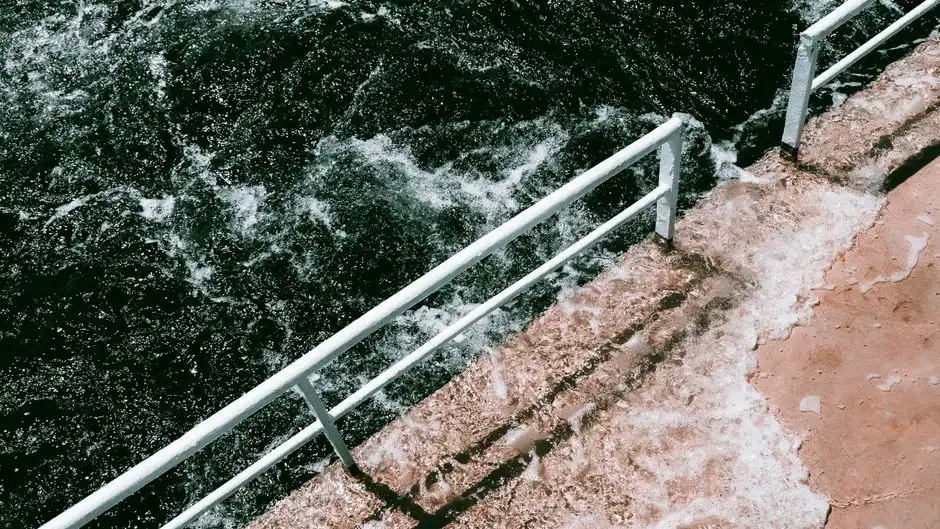
A defensible treatment train for a Myanmar refinery at 50–200 m³/d runs in this order: equalization → DAF → biological (MBR or SBR) → polishing → sludge handling. Each stage has a sizing logic the engineer should be able to defend in a P&ID review.
Equalization. A 24-hour HRT concrete or coated-steel tank, mechanically mixed or air-sparged, with a corrugated oil-skimming baffle at the outlet and a pH-adjustment dosing port for caustic or sulfuric acid trim. At 200 m³/d this is roughly an 8.3 m³/hour basin — small enough to be factory-built, large enough to absorb a full deslugger event without shocking the DAF.
DAF (Dissolved Air Flotation). Sized for 4–6 m³/m²·h hydraulic loading with a 15–25% recycle ratio. An industrial DAF system for oil and grease removal typically removes >95% of free oil and 60–80% of emulsified oil, taking the load from 100–500 mg/L down to 20–60 mg/L. Coagulant dosing is PAC at 50–150 mg/L, with anionic polymer at 1–5 mg/L fed through a PLC-controlled dosing skid. Skimmings route to an oil-recovery sump where free oil is decanted back to the slop oil tank.
Biological — MBR vs. SBR. Both work; the choice is a footprint-versus-flexibility trade. A submerged MBR system for petrochemical effluent polishing is preferred below 500 m³/d and where footprint is constrained — membrane cassettes deliver a sub-1 μm effluent with consistent COD removal >95% on petrochemical feed, as documented in the Qin et al. (2007) MBR study. SBR is preferred above 500 m³/d or where the plant operates intermittently; the sequencing flexibility handles shock loads better but the footprint is 30–50% larger. For most Myanmar refineries in the 50–200 m³/d band, MBR wins on footprint and effluent quality.
Polishing. Activated carbon on the MBR permeate knocks down residual COD and phenolics to below 50 mg/L — the threshold at which the effluent becomes usable as cooling-tower makeup. If the discharge route is a receiving water rather than reuse, chlorination/dechlorination is sufficient.
Sludge handling. DAF skimmings to oil-recovery sump; biological waste and chemical sludge to a plate-and-frame filter press for cake disposal at 25–35% dry solids.
| Stage | Key sizing parameter | Typical value | Outlet target |
|---|---|---|---|
| Equalization | HRT | ≥24 h | Flow + load dampening |
| DAF | Hydraulic loading | 4–6 m³/m²·h | Oil & grease ≤ 20–60 mg/L |
| MBR | MLSS / Flux | 8,000–12,000 mg/L / 10–15 LMH | COD ≤ 100 mg/L, TSS ≈ 0 |
| Polishing (carbon) | EBCT | 10–20 min | COD ≤ 50 mg/L, phenols ≤ 0.5 mg/L |
| Sludge press | Cycle time | 2–4 h | Cake 25–35% DS |
2026 Cost Benchmarks: CAPEX and OPEX for Myanmar Projects
Budget defensibility matters as much as process defensibility. The 2026 numbers below are based on landed equipment pricing for Southeast Asian skid-mounted systems, with Myanmar-specific adjustments for inland logistics and import duty. The SUEZ PetroChina Sichuan reference plant — 40,000 m³/d petrochemical reuse train — confirms that large-scale petrochemical reuse is technically and commercially proven in the regional supply chain.
| Capacity | 50 m³/d | 100 m³/d | 200 m³/d | 500 m³/d |
|---|---|---|---|---|
| EQ tank | USD 12,000 | USD 25,000 | USD 40,000 | USD 80,000 |
| DAF unit | USD 28,000 | USD 45,000 | USD 72,000 | USD 140,000 |
| MBR skid | USD 65,000 | USD 110,000 | USD 180,000 | USD 360,000 |
| Dosing system | USD 10,000 | USD 18,000 | USD 28,000 | USD 55,000 |
| Sludge press | USD 22,000 | USD 35,000 | USD 55,000 | USD 95,000 |
| MCC / PLC | USD 15,000 | USD 28,000 | USD 42,000 | USD 80,000 |
| Install & commissioning | USD 30,000 | USD 60,000 | USD 95,000 | USD 180,000 |
| Skid FOB total | USD 180,000 | USD 320,000 | USD 510,000 | USD 990,000 |
Adjustments for Myanmar delivery:
- Inland logistics: add 8–15% for Yangon port haul, Thilawa SEZ delivery, or upcountry haul to Mandalay or Thanlyin.
- Import duty: add 5–10% for commercial import duty plus customs broker fees. Siting inside the Thilawa or Kyaukphyu SEZ can reduce this to near-zero for export-oriented refineries, but the SEZ operator must approve the wastewater scope in advance.
- Monsoon contingency: add 3–5% to install cost if civil work crosses June–September.
OPEX for a properly designed MBR plant runs USD 0.45–0.85 per m³ treated, dominated by energy (MBR aeration is roughly 60% of OPEX) and membrane replacement on a 5–7 year cycle. For a deeper look at the line items, see the 2026 refinery wastewater CAPEX and OPEX breakdown. The full engineering envelope for high-COD petrochemical streams is mapped in the petrochemical wastewater engineering blueprint.
Equipment Selection: Containerized vs. Skid-Mounted vs. Civil Build
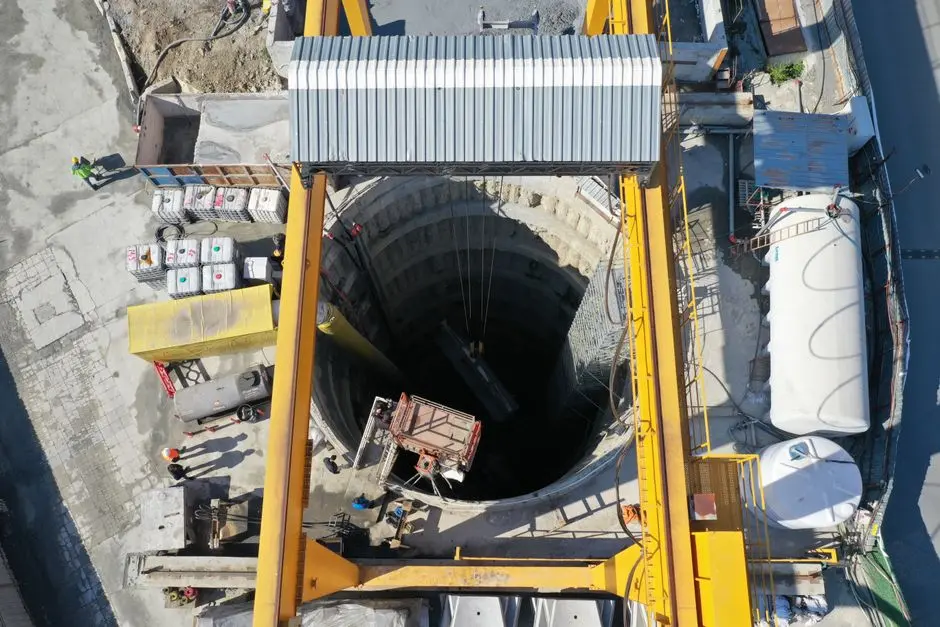
Delivery format drives both schedule risk and per-m³ cost. The three formats serve different site conditions, and Myanmar's monsoon makes the wrong choice expensive.
| Format | Flow band | Lead time | Per-m³ cost | Best fit |
|---|---|---|---|---|
| Containerized (20–40 ft ISO) | 10–100 m³/d | 8–12 weeks | Highest | Fast deploy, temporary, remote sites |
| Skid-mounted (open-frame) | 100–500 m³/d | 12–18 weeks | Mid | Greenfield with existing pad, export refineries |
| Civil build (concrete + loose) | > 500 m³/d | 6–9 months | Lowest | Brownfield, large integrated complex |
The Myanmar-specific trade-off is the monsoon. A civil build that crosses June–September will pour concrete in standing water and lose 6–10 weeks of schedule. A containerized plant, by contrast, can be commissioned before the rains and start treating early-production wastewater — a real economic advantage when the refinery itself is racing to first-oil. A practical decision tree:
- Flow < 100 m³/d AND need online within 6 months → containerized.
- Flow 100–500 m³/d AND existing civil pad is ready → skid-mounted.
- Flow > 500 m³/d OR integrating into a brownfield tank farm → civil build.
For a deeper framework, the containerized vs skid-mounted vs civil build comparison walks through the same logic with site-photo examples.
Compliance, Reuse, and Frequently Asked Questions
MONREC's ECD discharge framework is converging with ASEAN-harmonized industrial effluent limits through 2026, and inspectors in Yangon, Mandalay, and Thilawa have been applying tighter enforcement year-on-year. Plan for COD ≤ 200 mg/L, TSS ≤ 100 mg/L, oil & grease ≤ 10 mg/L, sulfide ≤ 1 mg/L on day one — not as a stretch target. Reuse economics tip the balance further: treated effluent at < 50 mg/L COD is suitable for cooling-tower makeup, saving roughly USD 0.80–1.20 per m³ of freshwater cost. At 200 m³/d, that is USD 60,000–90,000 in annual freshwater offset, which pays back an MBR polishing stage in under three years. Coagulant and polymer dosing should be metered by a PLC-controlled coagulant and polymer dosing skid sized for the peak flow band, not average flow, to keep performance stable through monsoon swings.
FAQ
1. What import duty and customs costs should we budget for a wastewater treatment skid into Myanmar? Commercial import runs 5–10% of CIF value plus broker fees. Siting inside Thilawa SEZ or Kyaukphyu SEZ can reduce this to near-zero for export-oriented projects, but SEZ operator approval and a separate customs broker are still required.
2. Can a vendor realistically commission a packaged plant in Myanmar, and what support should we contract for? Yes, for skid and containerized plants in the 50–500 m³/d band. Contract for 8–12 weeks of on-site commissioning with a resident engineer, plus a one-year spares-and-service package that includes membrane cleaning chemicals and a hot-standby aeration blower. Travel rotations typically run 6 weeks on / 3 weeks off for expat engineers.
3. Is reuse or discharge the better economic case for a 100 m³/d Myanmar refinery? Reuse. At 100 m³/d, cooling-tower makeup reuse saves USD 30,000–45,000 per year in freshwater cost, with a 2–3 year payback on the polishing stage. Discharge is viable only where freshwater is cheap and the receiving water body has capacity — increasingly rare in the dry-zoned sites around Magwe and Shwe.