What Is a Printing Ink Wastewater Recycling System
A printing ink wastewater recycling system is an integrated treatment train — equalization, coagulation–flocculation, dissolved air flotation (DAF), chemical oxidation, and membrane polishing — whose final effluent is reused as press wash water, boiler make-up, or rinse supply rather than discharged to sewer. For a 50 m³/day flexo or gravure plant, the full train achieves 75–95% water recovery with permeate below 50 mg/L COD (HydropureWater field data, 2026).
The four standard stages that distinguish a recycling system from a one-pass discharge system are: (1) flow and pH equalization, (2) coagulation–flocculation followed by DAF for pigment and oil capture, (3) Fenton or advanced oxidation process (AOP) for residual COD and color, and (4) ultrafiltration (UF) plus two-pass reverse osmosis (RO) for closed-loop polishing. Each stage is sized to a specific influent envelope. Per the Springer 2022 study on currency-press wastewater, raw ink effluent typically carries 1,500–3,500 mg/L COD, 200–800 mg/L BOD, 100–400 NTU turbidity, and ADMI color of 1,500–5,000 — these numbers set the hydraulic and chemistry loads for every downstream unit.
"Recycling" is operationally distinct from "reuse to drain": a recycling loop returns 75–95% of treated water to the press room, while a reuse-to-drain system only qualifies the water for irrigation or cooling. A dedicated recycling system becomes the only viable path when zero liquid discharge (ZLD) is mandated, when freshwater tariffs exceed $1.50/m³, or when municipal discharge surcharges escalate above 5% year-over-year.
Why Printing Ink Wastewater Cannot Be Treated by Municipal Plants
Ink wastewater carries a toxic and color load that municipal activated-sludge plants cannot meet under 2026 discharge rules — a dedicated on-site ink wastewater treatment process is non-optional for any plant discharging more than 10 m³/day.
Three constituents drive the gap. First, organic solvents — isopropanol, glycol ethers, and residual photoinitiators from UV-cured inks — pass through municipal biological stages largely intact, adding 200–500 mg/L of slowly biodegradable COD that exceeds the typical 250 mg/L plant headworks tolerance. Second, color measured in ADMI units is the defining parameter: municipal plants typically require <400 ADMI for discharge consent, while untreated flexo and gravure effluent runs 1,500–5,000 ADMI. Decolorization across a biological plant is typically <30%, leaving the stream visibly pigmented in the receiving sewer. Third, heavy-metal pigments shift the classification entirely — copper-phthalocyanine blue, chromium-based azo reds, and lead chromate yellows can push the wastewater into hazardous-waste thresholds under EU IED 2010/75/EU and equivalent 2026 jurisdictional rules.
The volumetric load is also larger than most engineers assume. A flexo plant uses 0.4–0.6 L of wash water per kg of ink consumed, generating 30–80 m³/day for a single mid-sized press line. Gravure operations run higher — 0.5–0.8 L/kg — because of the solvent-borne ink carrier. Sending this stream to a municipal plant in 2026 typically triggers a surcharged trade-effluent tariff of $3–$8/m³ on top of standard conveyance, which alone justifies a recycling loop in water-stressed regions.
Stage 1: Equalization and Coagulation–Flocculation Pre-Treatment
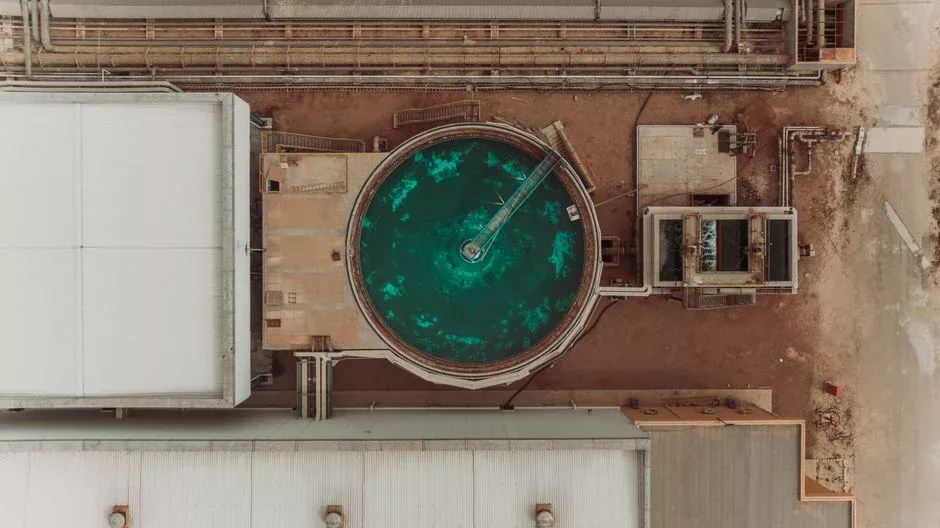
Equalization and coagulation–flocculation is the front-end of every recycling train, sized to flatten batch-cycle swings before any mechanical separation stage.
The equalization basin is sized at 8–24 hours of mean flow, with mechanical mixing at 30–60 rpm to keep suspended pigments in suspension without re-shearing flocs. Target operating pH is 7.0–8.0, per the Springer 2022 currency-press study, because coagulation efficiency for organic-bound ink pigments collapses below pH 6.5. Chemical dosing typically uses polyaluminum chloride (PAC) at 100–500 mg/L or ferric chloride (FeCl₃) at 50–200 mg/L, paired with anionic polyacrylamide flocculant at 1–5 mg/L. Jar testing on the actual ink wash stream is mandatory — PAC performance varies by ±25% across different pigment chemistries, and a vendor generic dose will overspend on H₂O₂ downstream by 15–30%.
Single-stage coagulation–flocculation achieves 40–60% COD reduction and 50–70% color removal — explicitly not enough for a recycling loop, where permeate COD must drop below 50 mg/L. The clarified liquor therefore flows forward to DAF, while the settled sludge routes to a filter press for DAF float and Fenton iron sludge dewatering. For plants chasing tight chemistry control, a PLC-controlled coagulant and H₂O₂ dosing skid cuts chemical overuse by 10–18% versus manual dosing.
| Parameter | Typical Range | Notes |
|---|---|---|
| Equalization HRT | 8–24 h | Buffer for batch wash cycles |
| Target pH | 7.0–8.0 | Per Springer 2022 |
| PAC dose | 100–500 mg/L | Jar-test on actual stream |
| FeCl₃ dose | 50–200 mg/L | Alternative to PAC |
| Anionic PAM | 1–5 mg/L | Flocculant aid |
| COD removal | 40–60% | Single stage; insufficient alone |
| Color removal | 50–70% | ADMI basis |
Stage 2: Dissolved Air Flotation for Pigment and Oil Removal
DAF is the workhorse separation stage that removes buoyant pigment, free oil, and emulsified ink before the stream reaches oxidation and membrane units.
A well-sized DAF removes 85–95% of suspended solids, free oil, and emulsified ink at a hydraulic retention time of 20–30 minutes. Surface loading rate runs 5–20 m/h, and a recycle ratio of 20–30% is the industry standard — the recycle stream is saturated with air at 5–7 bar and then depressurized through needle valves, generating micro-bubbles in the 10–50 μm range that maximize pigment-bubble attachment without shearing the fragile flocs produced upstream. The DAF system for pigment and ink removal covers 4–300 m³/h, which maps to roughly 30–80 m³/day influent from a mid-sized press line at single-shift operation.
The floated sludge (3–8% dry solids) is skimmed automatically and pumped directly to a plate-and-frame filter press for dewatering to 25–35% dry cake. The filtrate returns to the equalization basin for re-treatment. Two operating details matter: keep the DAF reactor at positive pressure to prevent micro-bubble collapse, and route the air saturator water through a side-stream cartridge filter at 50–100 μm to prevent nozzle fouling. A filter press for DAF float and Fenton iron sludge typically operates at 6–8 bar and produces a cake that passes the EPA paint-filter test for non-hazardous disposal in most U.S. jurisdictions.
Stage 3: Fenton or AOP Oxidation for COD and Color
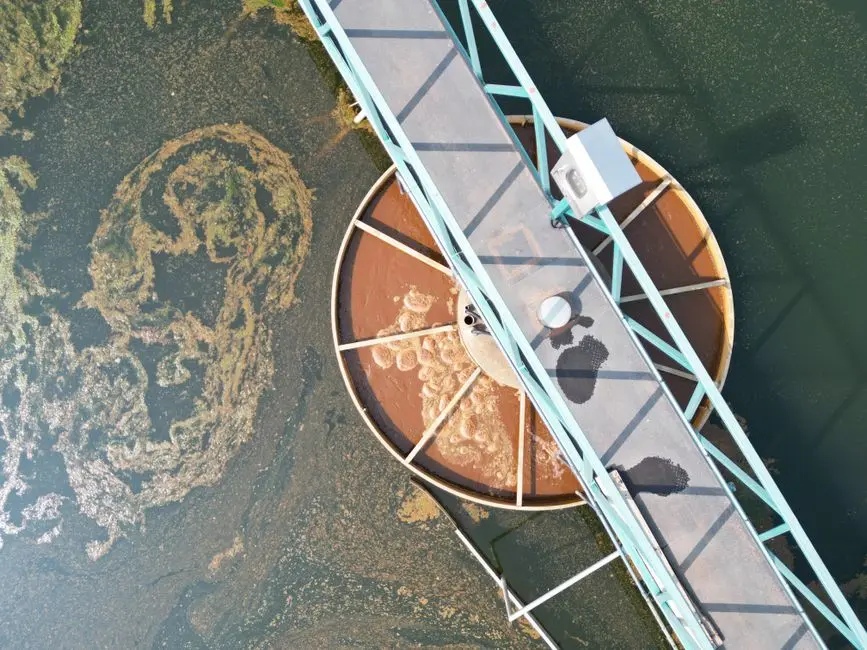
Chemical oxidation is the workhorse stage that drops COD below 200 mg/L and decolorizes the stream so the membrane stages can run without rapid fouling.
Fenton oxidation uses Fe²⁺ catalyzed with hydrogen peroxide at pH 2.5–3.5, with an H₂O₂:Fe molar ratio of 5:1 to 10:1 and a peroxide dose of 0.5–2.5 g per gram of COD removed. Reaction time runs 60–120 minutes. Under these conditions, Fenton reliably delivers 60–85% COD reduction and >90% color (ADMI) removal — the hydroxyl radical attacks both the chromophore and the residual organic binder, which is why Fenton outperforms ozone alone on highly pigmented streams. The trade-off is iron sludge: every kg of Fe²⁺ dosed generates 2–4 kg of dry iron hydroxide sludge, which must be dewatered and hauled. For a 50 m³/day plant removing 1,500 mg/L of COD, that translates to 40–60 kg/day of dry iron cake.
Alternative AOPs — O₃/UV, O₃/H₂O₂, and UV/H₂O₂ — avoid the iron carryover entirely and can reach <50 mg/L COD on a single pass, but they raise power OPEX by 30–60% versus Fenton. For currency-press or high-security printing operations, AOP without iron carryover is preferred to avoid recycled-water staining on printed stock — even <0.5 mg/L of residual iron is visible on high-gloss substrates. Fenton effluent must be neutralized to pH 7–8 in a high-efficiency sedimentation tank ahead of UF, which captures the iron floc and drops turbidity below 5 NTU. The clarifier underflow joins the DAF float at the filter press, while the overflow moves forward to membrane polishing. For a deeper look at Fenton chemistry on dye-type streams, the Fenton oxidation system for dye wastewater process guide covers the kinetic model in detail.
| Oxidation Mode | H₂O₂ Dose | Reaction pH | COD Removal | Color Removal | Sludge Yield |
|---|---|---|---|---|---|
| Fenton (Fe²⁺/H₂O₂) | 0.5–2.5 g/g COD | 2.5–3.5 | 60–85% | >90% | 2–4 kg/kg Fe |
| O₃/UV AOP | None | 7–8 | 55–75% | 85–95% | None |
| O₃/H₂O₂ AOP | 0.2–0.8 g/g COD | 7–8 | 65–80% | 90–98% | None |
| UV/H₂O₂ AOP | 1.0–2.0 g/g COD | 7–8 | 50–70% | 80–90% | None |
Stage 4: UF Pre-Filtration and Two-Pass RO for Closed-Loop Recovery
Membrane polishing turns oxidized effluent into reusable process water — this is the stage that turns a treatment system into a recycling system.
UF operates at 0.01–0.1 μm pore size and protects the RO from any residual iron floc, biological growth, or pigment breakthrough. The UF permeate should achieve a silt density index (SDI) below 3 — above SDI 5, RO membrane life drops by 40–60% on typical ink wastewater. UF runs at 40–80 LMH flux with backwash every 20–30 minutes and a CIP cycle every 4–8 weeks using citric acid followed by NaOH. The UF reject (5–10% of feed) returns to the equalization basin.
Two-pass RO is the workhorse of water reuse printing industry applications. The first pass runs at 70–80% recovery with concentrate re-pressurized into the second pass, giving an overall system recovery of 85–95% per the two-pass RO for closed-loop water recovery design spec. Permeate quality is <10 mg/L COD, <1 mg/L TDS, and <50 μS/cm conductivity — suitable for press wash water, fountain solution make-up, and most boiler-feed specs without further polishing. For plants requiring high-purity rinse water, a multi-media filter for ultrapure rinse water polishes the RO permeate to <0.1 μS/cm.
RO concentrate is 5–15% of feed, which is the volume that determines whether the plant needs a downstream evaporator. For a 50 m³/day influent at 90% recovery, concentrate is 5 m³/day — small enough to route to a plate-and-frame press for partial volume reduction, but large enough to warrant a multiple-effect evaporator for ZLD concentrate management in water-stressed basins.
System Performance Benchmarks: Removal Efficiencies at Each Stage
A 50 m³/day flexo plant running the full train should hit <10 mg/L COD and <50 ADMI color on the RO permeate, with 85–95% water recovery (HydropureWater field data, 2026).
The table below shows the cumulative removal at each stage for a typical flexo ink wastewater influent. The numbers are conservative midpoints; plants running hotter ink loads (gravure with toluene carriers) will see slower kinetics at the Fenton stage and may need a 20–30% larger oxidation reactor.
| Parameter | Raw Influent | After DAF | After Fenton | After UF | After RO (Permeate) |
|---|---|---|---|---|---|
| COD (mg/L) | 1,500–3,500 | 600–1,400 | 90–280 | 80–260 | <10 |
| BOD (mg/L) | 200–800 | 80–320 | 15–60 | 12–55 | <2 |
| TSS (mg/L) | 300–1,200 | 15–60 | 10–40 | <1 | <1 |
| Color (ADMI) | 1,500–5,000 | 600–2,000 | 30–150 | 25–140 | <10 |
| Turbidity (NTU) | 100–400 | 5–20 | 3–12 | <0.5 | <0.1 |
| Conductivity (μS/cm) | 1,500–4,000 | 1,400–3,800 | 1,600–4,200 | 1,600–4,200 | <50 |
| Oil & grease (mg/L) | 50–200 | 5–15 | <2 | <1 | <0.5 |
Total system water recovery is 75–95% depending on RO configuration — single-pass RO at 70% recovery is the budget option, while two-pass with concentrate recycle hits 90–95%. For a 50 m³/day plant, concentrate volume is 1–3 m³/day, which is the line item that drives the ZLD decision.
2026 CAPEX and OPEX Benchmarks for a Printing Ink Wastewater Recycling System
For a 50 m³/day flexo or gravure plant in 2026, total installed CAPEX runs $180,000–$420,000 and OPEX runs $0.85–$2.40 per m³ treated (HydropureWater field data, 2026). The CAPEX spread is driven mainly by RO skid size, Fenton reactor material (SS316 vs lined carbon steel), and the PLC scope.
OPEX breaks down as: H₂O₂ at 40–50% (the dominant line), electricity at 20–25% (pumps, RO high-pressure pump, mixers), sludge hauling at 15–20%, PAC and PAM at 5–10%, and membrane replacement at 5–8%. For a benchmark comparison against dye wastewater, the textile dyeing wastewater OPEX benchmark shows similar H₂O₂ dominance but higher thermal OPEX from a hotter dyeing influent.
| Cost Line | 50 m³/day Plant | 100 m³/day Plant | Driver |
|---|---|---|---|
| CAPEX (installed) | $180,000–$420,000 | $320,000–$680,000 | RO skid, SS316 Fenton, PLC |
| OPEX (per m³ treated) | $0.85–$2.40 | $0.70–$1.90 | Economy of scale at 100 m³/day |
| H₂O₂ share of OPEX | 40–50% | 40–50% | 0.5–2.5 g/g COD removed |
| Electricity share | 20–25% | 22–28% | RO pump dominates |
| Sludge hauling share | 15–20% | 15–20% | Iron + DAF float cake |
| Payback trigger | Freshwater + discharge > $1.50/m³ | Same | Site-specific |
Payback rule of thumb: a recycling loop is justified when (a) combined freshwater plus discharge cost exceeds $1.50/m³, (b) the plant sits in a ZLD-mandated basin such as parts of India, China, the U.S. Southwest, or the Middle East, or (c) the discharge tariff is escalating above 5% year-over-year. Under those conditions, payback is typically 2–4 years for a 50 m³/day plant at 2026 chemical prices.
Choosing the Right Configuration: Discharge, Recycling, or Full ZLD
The right configuration depends on three inputs: whether ZLD is mandated, what the freshwater tariff looks like, and whether the plant has a use for the recovered water on-site.
Option A — DAF + Fenton only, no membranes — runs $80,000–$160,000 CAPEX, achieves 30–40% water recovery (typically as cooling-tower make-up or landscape irrigation), and suits plants with cheap discharge and no reuse demand. Option B — DAF + Fenton + UF/RO recycling — is the recommended default for most 2026 water-stressed regions: $180,000–$420,000 CAPEX, 75–95% water recovery, permeate suitable for press wash water directly. Option C — full ZLD with multiple-effect evaporator (MEE) and crystallizer — runs $600,000–$1,200,000 CAPEX, achieves 99%+ recovery, and is the only option in arid or zero-discharge jurisdictions. The MEE cost line is detailed in the MEE operating cost for ZLD concentrate breakdown.
| Configuration | CAPEX (50 m³/day) | Water Recovery | Best Fit |
|---|---|---|---|
| A: DAF + Fenton only | $80,000–$160,000 | 30–40% | Cheap discharge, no reuse demand |
| B: DAF + Fenton + UF/RO | $180,000–$420,000 | 75–95% | Default for water-stressed regions |
| C: Full ZLD with MEE | $600,000–$1,200,000 | 99%+ | ZLD mandate, arid jurisdictions |
Decision tree: confirm ZLD mandate — if yes, Option C; if no, check freshwater tariff — if above $1.50/m³ or rising above 5%/year, Option B; otherwise Option A. Plants running gravure with toluene carriers should always default to Option B at minimum, because the volatile organic load rules out most reuse-to-drain consents.
Frequently Asked Questions
What COD removal does a printing ink wastewater recycling system achieve?
The full train — coagulation–flocculation, DAF, Fenton, UF, two-pass RO — removes 99%+ of influent COD, taking a typical 2,500 mg/L flexo effluent to under 10 mg/L on the RO permeate (HydropureWater field data, 2026).
What is the typical 2026 CAPEX for a 50 m³/day flexo or gravure plant?
Installed CAPEX runs $180,000–$420,000 for a DAF + Fenton + UF/RO recycling system, with the RO skid and SS316 Fenton reactor as the main cost drivers.
What OPEX should be budgeted for H₂O₂ alone?
Hydrogen peroxide accounts for 40–50% of total OPEX, driven by the 0.5–2.5 g H₂O₂ per gram of COD removed at the Fenton stage. For a 50 m³/day plant removing 1,500 mg/L COD, that is $0.35–$1.20/m³ of treated water at 2026 H₂O₂ prices.
What water recovery rate makes a recycling loop economic?
A two-pass RO system with concentrate recycle achieves 85–95% recovery. The minimum economic recovery is around 70% — below that, the capital cost of the RO skid does not pay back against the freshwater it displaces, unless the site is in a ZLD-mandated basin.
How much iron sludge does a Fenton stage generate?
Fenton produces 2–4 kg of dry iron hydroxide sludge per kg of Fe²⁺ dosed. For a 50 m³/day plant removing 1,500 mg/L COD, expect 40–60 kg/day of dry iron cake routed to a filter press for dewatering.
When is full ZLD with an MEE the right choice?
Full ZLD is required when discharge to any drain is prohibited — typical in parts of India, China, the U.S. Southwest, and the Middle East. The 50 m³/day concentrate volume of 1–3 m³/day is small enough that a 2-effect MEE handles it at 0.3–0.5 m³ of steam per m³ of concentrate.