Direct Lithium Extraction DLE Wastewater Design: Why It Differs from Pond-Based Processing
Brine lithium extraction wastewater treatment process design in 2026 pairs DLE pre-treatment, NF/RO, and hybrid ZLD to recover ≥95% of feed water and cut spent-brine volume 75–90%. Raw brine, raffinate, and CIP or camp streams are sized as separate envelopes.
A DLE plant generates three wastewater envelopes that must stay segregated on the P&ID. Raw brine pre-treatment upstream of the DLE contactor knocks down suspended solids, oil and grease, and scaling cations that poison selective sorbents. Lithium-depleted raffinate carries the bulk of the original dissolved salts after Li stripping. Auxiliary streams include CIP rinses, ion-exchange regenerant acid and caustic, cooling-tower blowdown, and workforce camp sanitary wastewater.
Each envelope has a different flow, TDS, and discharge limit. Mixing them is still the most common reason evaporators get oversized in 2026 designs. Most plants we size for keep the raffinate and regenerant trains on separate tanks from day one.
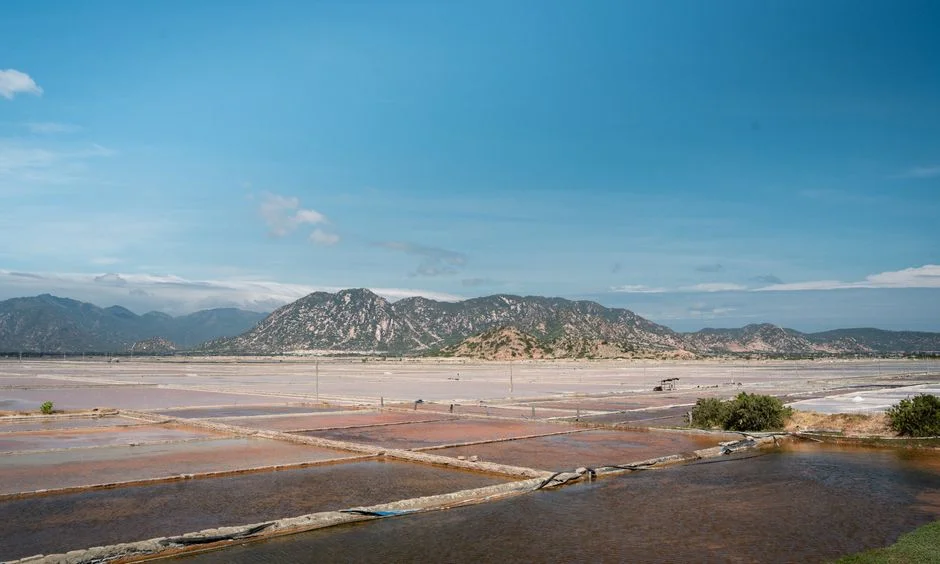
The legacy solar-pond baseline is harsh on water and schedule. Conventional ponds consume 100–800 m³ of water per 1,000 kg of Li₂CO₃ produced and need 10–24 months of residence time (Fluence, citing Nature 2022). Published figures span a wide range depending on the accounting boundary: Wikipedia's lithium overview notes extraction "could lead to unsustainable water consumption in arid regions (1.9 million liters per ton), such as in northwestern Argentina," and that evaporation enrichment "may require up to one-and-a-half years, when the brine reaches a lithium content of 6%." Battery-grade lithium demand, IRMA and ESG water-intensity clauses on tenders, Chilean brine-extraction caps aiming at net-zero freshwater uptake by 2030, and US Permian produced-water reuse rules all push owners off that baseline. The engineering trade-off is fixed: maximize lithium to product while minimizing freshwater intake and final solid waste to landfill or backfill.
Feed Chemistry by Brine Source: Salt-Flat, Geothermal, and Oilfield Produced Water
Salt-flat (Salar) brines from the Chilean Atacama and Argentine Hombre Muerto typically run 200,000–400,000 mg/L TDS. Mg/Li ratios of 6:1 to 20:1 plus high sulfate force aggressive lime/soda softening ahead of any selective sorbent. Magnesium competes directly with lithium on aluminum-based layered double hydroxides (LDH) and manganese-oxide sorbents.
Geothermal brines from the US Salton Sea and European sites are far more dilute at 2,000–20,000 mg/L TDS. They still carry 100–500 mg/L silica and 20–80 mg/L boron, and arrive at 60–180 °C, which is free heat for downstream evaporation. The Salton Sea is the reference case for this class: according to Wikipedia, its brine contains "lithium (202 ppm ± 20%, i.e. more than in the Dead Sea, which is 30–40 ppm)," and "the California Energy Commission estimates the Salton Sea might produce 600k metric tons of lithium carbonate (Li2CO3) per year." That single field anchors most US geothermal-lithium wastewater sizing work in 2026.
Oilfield produced water spans 10,000–300,000 mg/L TDS, with oil and grease up to 200 mg/L, suspended solids to 500 mg/L, and barium or strontium that foul membranes without adequate pre-treatment.
Ceramic Membrane Pre-Treatment for Geothermal Brine
Silica at 100–500 mg/L is the geothermal-specific membrane risk in any ceramic membrane pre-treatment for geothermal brine. Polyamide NF and RO surfaces scale on silica at high recovery unless the feed is softened or the recovery is capped. Sites that already run ceramic membrane water polishing for silica-rich feeds often keep that stage ahead of polyamide NF/RO when geothermal and oilfield brines share a plot. On oilfield feeds, ceramic UF or DAF upstream of any membrane is mandatory, because free oil permanently fouls polyamide surfaces within hours.
Patent US20250145497A1 (published 2025) frames the design space explicitly. It states that brine may originate from natural or artificial sources, including tailings, wastewater, battery recycling, oilfield streams, seawater, and hard rock leachate. For an EPC team in 2026 that means the DLE feed is no longer just salar brine. The pre-treatment train must be parameterized for at least three distinct feed envelopes.
| Parameter | Salt-flat (Salar) | Geothermal | Oilfield Produced Water |
|---|---|---|---|
| TDS (mg/L) | 200,000–400,000 | 2,000–20,000 | 10,000–300,000 |
| Mg/Li ratio | 6:1 – 20:1 | 1:1 – 4:1 | 2:1 – 50:1 |
| Temperature (°C) | 15–30 | 60–180 | 30–80 |
| Oil & grease (mg/L) | <5 | <5 | 20–200 |
| Silica (mg/L) | 5–30 | 100–500 | 10–100 |
| Key pre-treatment risk | Mg competition on sorbent | Silica scaling on RO | O&G fouling, Ba/Sr scaling |
The Brine Lithium Extraction Wastewater Treatment Process Train for 2026
The 2026 reference flowsheet uses six unit operations an EPC team can drop onto a P&ID in the order below. Each step has a defined inlet target and outlet specification, which is what makes the train a train rather than a loose set of "treatment stages."
- Pre-treatment. Rotary drum screens (2 mm aperture) are followed by a DAF oil and TSS removal stage for oilfield feeds. A multi-media pre-filter (anthracite over sand over garnet) then brings turbidity below 1 NTU and SDI under 5. That pair is the guard spec for any downstream RO or NF (HydropureWater field data, 2026).
- Bulk softening. Lime (Ca(OH)₂) at 0.8–1.2 g/L drops magnesium as Mg(OH)₂; soda ash (Na₂CO₃) at 0.4–0.8 g/L drops calcium as CaCO₃. A PLC-controlled lime and soda-ash dosing skid with on-line pH and conductivity feedback is the 2026 default.
- DLE contactor. Selective sorbent — aluminum-based LDH, manganese oxide, or titanium-lithium-ISE resin — loads into a packed or fluidized contactor with 15–60 minute residence. Acid strip with 0.5–2% HCl or H₂SO₄ yields a 1,000–5,000 mg/L Li eluate. Solvent extraction remains the alternative for high-TDS salar feeds.
- Eluate polishing and crystallization. Cation-exchange removes residual divalents (Ca, Mg, Na bleed-through). Na₂CO₃ reactive crystallization at 90–95 °C then drops Li₂CO₃ at ≥99.5% purity. Mother liquor returns to the eluate tank to push overall Li yield above 95%.
- Raffinate treatment. NF or RO treats the Li-stripped raffinate. Retentate recycles upstream of the DLE contactor to recover any entrained Li (typical 3–5% loss to raffinate without recycle). Permeate is reused as process wash water or cooling-tower makeup at 60–80% recovery.
- ZLD polish. An MVR evaporator plus forced-circulation crystallizer treats the NF/RO concentrate. It produces reusable distillate (<10 mg/L TDS) and a solid salt cake (NaCl, CaSO₄, mixed sulfate-chloride) for lined landfill or paste backfill. Sanitary wastewater from the workforce camp is handled separately in a containerized MBR package or an Underground Package Sewage Treatment Plant (WSZ Series). Permeate is reused for toilet flushing and dust suppression, matching the architecture Fluence documented at the Carlsbad, New Mexico lithium work camp. For MBR permeate targets on camp duty, see also MBR effluent quality and working principle benchmarks.
One engineering caution belongs next to this flowsheet. Wikipedia's lithium overview still notes that DLE technologies "have not been tested at industrial scale and their relative cost is unknown," even as US projects push toward first commercial production. Treat vendor recovery claims as pilot-scale until a reference plant on the same brine class is demonstrated.
DLE Raffinate Nanofiltration Reverse Osmosis Train: NF vs. RO vs. EDR
The DLE raffinate nanofiltration reverse osmosis train is the largest equipment decision on a 2026 DLE flowsheet, sitting between the spent-brine tank and the evaporator. The choice turns on divalent rejection, lithium passage to permeate, and scaling propensity at the recovery target. Nanofiltration delivers 90–98% divalent rejection with 85–95% monovalent passage — including Li⁺ — so it fits when the goal is to break the Mg/Li ratio and send lithium to a polishing step.
Reverse osmosis, with >99% divalent rejection but 30–70% Li rejection, fits when freshwater recovery is the priority. The Li-bearing retentate must recycle upstream of the DLE contactor to keep overall Li loss under 5%. Electrodialysis reversal sits in between, with 70–90% monovalent selectivity and lower scaling risk than RO because polarity reversal dislodges scale. Capex is roughly 1.5–2× an equivalent RO train at the same Li throughput (HydropureWater field data, 2026). High-COD organic streams need a different RO fouling plan than DLE raffinate. Compare that duty with high-strength organic wastewater RO design benchmarks.
| Parameter | NF | RO | EDR |
|---|---|---|---|
| Divalent rejection | 90–98% | >99% | 80–95% |
| Li⁺ rejection / passage | 5–15% rejection (85–95% passage) | 30–70% rejection | 10–30% rejection (70–90% passage) |
| Operating pressure | 5–20 bar | 15–40 bar | <1 bar electrical |
| Specific energy | 0.3–1.0 kWh/m³ | 0.5–2.5 kWh/m³ | 1.0–3.0 kWh/m³ |
| Best fit | High Mg/Li ratio salar brines | High water-recovery targets | High scaling potential, dilute Li streams |
For high-Mg/Li salar brines the 2026 default is NF first, dropping Mg²⁺ from a 6:1–20:1 ratio to under 1:1. An industrial RO system then cuts volume, and RO retentate returns to the DLE feed tank.
MVR Crystallizer Zero Liquid Discharge for Lithium Brine: Cost, Water, and Energy Trade-offs
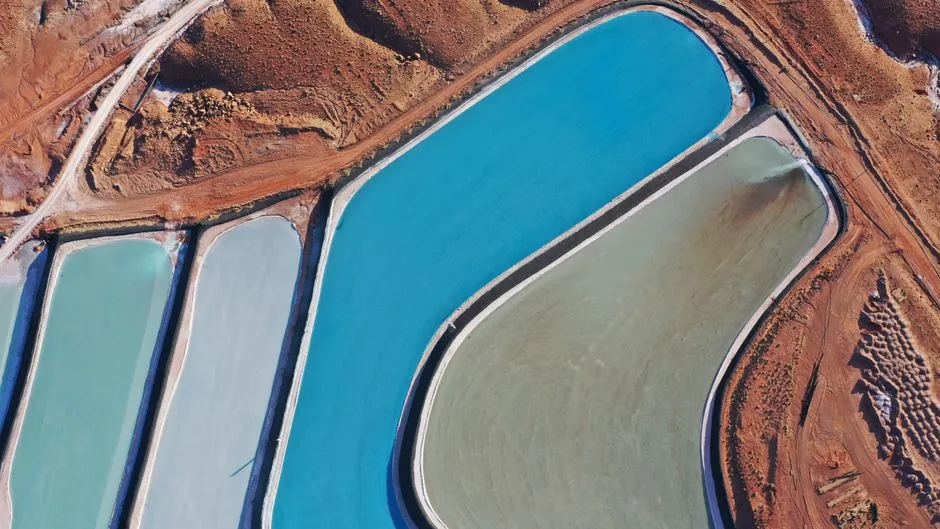
Full ZLD on a DLE raffinate delivers ≥95% water recovery and 75–90% spent-brine volume reduction. MVR/crystallizer CAPEX sits at $5–15 million per 10,000 m³/d of brine feed. OPEX runs $2–6/m³, driven by 15–30 kWh/m³ of distillate for the evaporator plus steam for the crystallizer. Partial reuse uses RO with permeate recycle and concentrate sent to deep-well injection or a salt-flat pond. That path costs $1–4 million per 10,000 m³/d and recovers 60–80% of the water, but keeps disposal liability if Chilean or Argentine caps later close the pond option.
The 2026 default for new DLE projects is a hybrid. NF then RO treat the bulk raffinate, and the RO concentrate (15–25% of raffinate flow) feeds a smaller MVR crystallizer sized only for the final brine volume. Energy benchmarks explain the logic. A mechanical vapor recompression evaporator draws 15–30 kWh/m³ of distillate. Reverse osmosis draws 0.5–2.5 kWh/m³ of permeate. Evaporation therefore starts only where membranes cannot concentrate further, typically above 70,000–80,000 mg/L TDS retentate.
2026 Compliance Snapshot: Water, Discharge, and ESG Rules Affecting DLE Wastewater
Regulatory pressure on DLE wastewater tightened materially in 2025 and is binding in 2026. Chile ties lithium extraction quotas to brine-extraction caps and requires net-zero freshwater uptake by 2030 for any new quota allocation. Argentina and the US Permian Basin govern produced-water reuse and Class II injection-well volumes, which decides whether DLE raffinate can be reinjected or must crystallize to a solid.
The EU Battery Regulation (2023/1542, in force February 2026) and US Inflation Reduction Act feedstock rules create a documented premium. Low-water-intensity lithium typically earns $1–3/kg Li₂CO₃ when verified against 2026 industrial water-reuse trends. IRMA water-intensity KPIs now appear in project-finance due-diligence checklists for greenfield DLE debt and offtake agreements. Chip-fab ultrapure trains face a different purity stack than DLE raffinate. Keep those scopes separate when comparing chip fab wastewater treatment CAPEX benchmarks.
Lithium Brine Wastewater Treatment EPC 2026 Guide: Selection Checklist and Next Step
This lithium brine wastewater treatment EPC 2026 guide condenses to seven checks before the P&ID is frozen for brine duty. Run them in order, because each one fixes a number the next one depends on.
- Map three envelopes: raw brine pre-treatment, DLE raffinate, and CIP/regenerant/camp flows.
- Confirm Mg/Li, silica, boron, oil and grease, and Ba/Sr against the feed table above.
- Set turbidity <1 NTU and SDI <5 before any NF or RO skid.
- Choose NF when Mg/Li must fall below 1:1; choose RO when freshwater recovery is the driver.
- Recycle RO retentate to the DLE contactor so Li loss stays inside 3–5%.
- Size MVR only for the 15–25% concentrate slice above ~70,000–80,000 mg/L TDS.
- Permit disposal early: Class II injection, lined landfill, or paste backfill — not as an afterthought.
Who this is for: EPC process leads and owners building or retrofitting DLE plants on salar, geothermal, or oilfield brines. The fit is ≥95% water recovery with documented Li yield. Who should look elsewhere: battery-recycling leachate projects with high COD, fluoride, and Ni/Co/Mn. That chemistry needs a different upstream train. Next step: send feed assays and target recovery to request a DLE wastewater treatment quote so the membrane and ZLD block can be sized on your actual TDS envelope.
Frequently Asked Questions
What is the typical water footprint of a DLE plant in 2026?
A 2026 DLE flowsheet that combines media filtration, NF/RO on the raffinate, and MVR crystallization targets ≥95% feed-water recovery and 75–90% spent-brine volume reduction. That footprint is roughly one to two orders of magnitude lower than legacy solar ponds. Those ponds evaporate 100–800 m³ per 1,000 kg Li₂CO₃ (Fluence, citing Nature 2022). Owners usually report the KPI as m³ water per tonne Li₂CO₃ equivalent under the site's offtake contract.
What lithium loss to raffinate should an engineer target?
With an RO retentate recycle loop back to the DLE contactor, total Li loss to raffinate should sit between 3% and 5% by mass in 2026 designs. Without the recycle loop, NF-only configurations can lose 10–15% of loaded lithium to the raffinate (HydropureWater field data, 2026). Most plants we size for include the recycle line on the first issue of the P&ID rather than as a later retrofit.
Should NF or RO sit in front of the DLE evaporator?
Use NF when the goal is to break a high Mg/Li ratio on a salar brine. NF rejects 90–98% of divalents and lets 85–95% of Li⁺ pass. Use an industrial RO system when freshwater recovery is the priority. Retentate recycle then captures the 30–70% of rejected Li. For comparison data, see our RO recovery and energy benchmarks.
How does DLE wastewater treatment differ from lithium battery recycling wastewater treatment?
DLE feed brines are typically 2,000–400,000 mg/L TDS with low organics. Battery-recycling leachate carries 2,000–10,000 mg/L TDS plus high COD, fluoride, and nickel/cobalt/manganese. The trains may share an MBR or RO step, but upstream chemistry differs sharply. See our lithium battery recycling wastewater treatment guide for the recycling-side detail.
What CAPEX band should owners expect for raffinate ZLD?
Full MVR plus crystallizer CAPEX typically sits at $5–15 million per 10,000 m³/d of brine feed. OPEX is about $2–6/m³ at 15–30 kWh/m³ of distillate. Hybrid NF → RO with a smaller crystallizer on only the 15–25% concentrate cut is the usual 2026 default. RO energy stays near 0.5–2.5 kWh/m³ of permeate until TDS forces evaporation.