A dicing wastewater ultrafiltration system removes about 99% of colloidal silica, holds COD below 30 mg/L on typical fab loads, and returns 90–95% of the flow as reuse-quality permeate using 0.01–0.1 µm membranes. A 500 m³/day train typically costs $120,000–$350,000 installed.
Ultrafiltration for Semiconductor Dicing Wastewater: Contaminants and Compliance Risks
Ultrafiltration for semiconductor dicing wastewater removes 99%+ colloidal silica and holds COD below 30 mg/L on typical 200–800 mg/L influent. Membranes rated 0.01–0.1 µm retain abrasive fines that gravity clarifiers miss. At 500 m³/day, CAPEX usually lands between $120,000 and $350,000 with 18–36 month payback when reuse credits apply.
Dicing wastewater contains 500–2,000 mg/L silica from wafer sawing, 100–300 mg/L abrasive particles (SiC, diamond), and 200–800 mg/L COD from dicing fluids (per SEMI S23-0718). Sub-micron silica forms a colloidal suspension that settles poorly in conventional clarifiers. Left untreated, those fines abrade high-pressure pumps and foul reverse osmosis (RO) membranes downstream.
The planning ceiling most fabs cite for semiconductor discharge is COD below 50 mg/L. That figure traces to EPA 40 CFR Part 469 permitting practice, while ultrafiltration achieves <30 mg/L without chemical dosing (HydropureWater field data, 2025). Silica and abrasives foul downstream RO membranes, increasing cleaning frequency by 3–5x and reducing lifespan by 40%. Most plants we size for 200–400 mm wafer lines run UF flux at the lower end of the published band to keep SDI below 3.0. A 300 mm wafer fab in Taiwan cut RO membrane replacement costs by 65% after UF pretreatment stabilized feed SDI at <3.0.
| Contaminant | Influent Range (mg/L) | UF Effluent (mg/L) | Removal Rate (%) | Compliance Target (EPA/SEMI) |
|---|---|---|---|---|
| Colloidal Silica | 500 – 2,000 | <10 | 99%+ | <10 mg/L (SEMI S23) |
| COD (Dicing Fluids) | 200 – 800 | <30 | 92% – 97% | <50 mg/L (EPA 469) |
| Abrasive Particles | 100 – 300 | <1 | 99.9% | <5 mg/L (SEMI S23) |
| TSS | 100 – 500 | <5 | 99.5% | <30 mg/L (EPA 469) |
PVDF Membrane for Wafer Dicing Wastewater, or a Ceramic Membrane Water Upgrade?
Membrane pore size for dicing service follows the particle size distribution of silicon fines and fluid emulsions, typically 0.01–0.1 µm for silica and abrasive rejection. Membranes at 0.001–0.01 µm can reject viruses, yet they raise transmembrane pressure (TMP) sharply under the high solids load of sawing lines. Surfactants in dicing fluids also change surface wetting, so material choice matters as much as pore rating.
Polyvinylidene fluoride (PVDF) remains the usual polymer choice, with a 5–7 year service life and strong tolerance to Clean-in-Place (CIP) oxidants. PVDF flat-sheet ultrafiltration membranes for dicing wastewater offer high mechanical strength and fewer fiber breaks than older cellulose acetate types. Ceramic membrane water modules (Al2O3) extend life to 10–15 years and tolerate pH 0–14, at roughly 30% higher capital cost, so they fit hot or aggressive CIP regimes. Hollow-fiber packs hold about 90% of dicing installs because packing density and backpulse cleaning are high; flat-sheet layouts appear when organic load pushes an integrated MBR path.
Surface charge still decides long-term flux. Silica fines usually carry a negative zeta potential near neutral pH, so a membrane zeta of about −30 to −50 mV reduces electrostatic attachment. That repulsion keeps flux steadier between chemically enhanced backwashes. When polymer UF cannot hold flux above 25 L/m²/h on abrasive loads, ceramic membrane water is the upgrade path most fabs evaluate next.
| Material | Pore Size (µm) | Lifespan (Years) | Relative Cost | Chemical Resistance |
|---|---|---|---|---|
| PVDF | 0.01 – 0.1 | 5 – 7 | Moderate | High (pH 1-12) |
| Ceramic (Al2O3) | 0.05 – 0.1 | 10 – 15 | High (+30%) | Extreme (pH 0-14) |
| PES (Polyethersulfone) | 0.01 – 0.05 | 3 – 5 | Low | Moderate |
Engineering Specs for a Dicing Wastewater Ultrafiltration System: Flow Rates, Pressure, and Recovery Rates
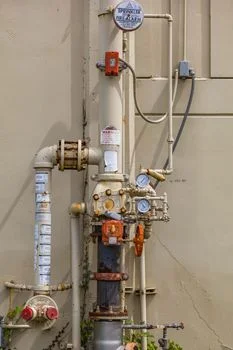
Design flux for dicing wastewater systems ranges from 20–200 L/m²/h, wider than municipal bands because dicing fluid strength swings hard. For standard semiconductor sawing, target a conservative 25–40 L/m²/h between CIP cycles. Sizing a 500 m³/day flow usually needs 250–300 m² of membrane area after backwash and maintenance downtime are booked.
Transmembrane pressure (TMP) is the main health metric, with operating bands of 0.5–2.5 bar. A sharp TMP jump in dicing duty often means a silicon cake layer on the skin. Plants counter that with automated pH adjustment and cleaning chemical dosing for ultrafiltration systems that run chemically enhanced backwashes (CEB) every 24–48 hours. Recovery stays high at 90–95% because solids are mostly inorganic and biological fouling risk stays lower than in municipal UF.
| System Parameter | Small Scale (50 m³/day) | Medium Scale (250 m³/day) | Large Scale (1,000 m³/day) |
|---|---|---|---|
| Membrane Area (m²) | 30 – 45 | 150 – 180 | 600 – 750 |
| Operating TMP (bar) | 0.5 – 1.2 | 0.6 – 1.5 | 0.8 – 2.0 |
| Recovery Rate (%) | 92% | 94% | 95% |
| Backwash Frequency | Every 30 min | Every 30 min | Every 20 min |
Performance Benchmarks: COD, Silica, and TSS Removal in Dicing Wastewater
Ultrafiltration forms a physical barrier that keeps effluent quality steady when influent swings. COD removal typically reaches 92–97% (influent 200–800 mg/L, effluent <30 mg/L) by rejecting emulsified oils and long-chain polymers in cooling lubricants. Those organics often ride on suspended solids, so 99.5% TSS removal tracks the oxygen-demand cut almost one-to-one.
Silica removal is the fab benchmark. UF trains routinely hit 99% removal, cutting 2,000 mg/L influent to <10 mg/L permeate when pH stays in range. Above pH 9.0, silica solubility rises and more silica slips through as dissolved species. Optimal removal sits at pH 6–8; outside that window, removal can fall 20–30%.
"By maintaining a stable pH of 7.2 and utilizing a 0.03 µm PVDF membrane, the facility achieved an effluent TSS of <1 mg/L, effectively eliminating the need for frequent RO membrane replacements." (Industry Benchmark, 2024).
Colloidal Silica Removal Ultrafiltration 99%: How Fabs Verify the Benchmark
A Singapore fab reported 99.2% silica removal and 96% COD reduction with UF as dedicated pretreatment for reclaim. Verification should pair permeate silica readings with pH logging, because the 99% rejection figure holds only while feed pH stays between 6 and 8. Plants that drift above pH 9.0 see dissolved silica pass the 0.01–0.1 µm barrier regardless of flux setting. Sample feed and permeate at the same hour each shift, since a single grab pair can miss the pH drift that quietly cuts rejection.
Ultrafiltration Pretreatment for RO in Semiconductor Fab Reclaim Loops
Ultrafiltration pretreatment for RO in semiconductor fab reclaim loops holds feed SDI below 3.0 and cuts RO cleaning frequency by 3–5x, because silica and abrasive fines never reach the spiral elements. The Taiwan fab above trimmed RO membrane replacement spending by 65% once UF stabilized feed SDI at <3.0. Protected trains stretch RO membrane life from about 18 months toward 48 months, which is where the OPEX savings compound. Most reclaim trains we commission put UF ahead of RO with no intermediate clarifier, since UF permeate already meets the RO supplier's feed clarity spec.
Monitoring on the UF skid should track TMP rise per CIP cycle, permeate turbidity, and SDI at the RO inlet. A creeping TMP baseline with steady turbidity points to compaction or scaling, not particle breakthrough. Operators who log these three daily catch fouling events before the spiral elements show damage.
Ultrafiltration vs. Alternative Technologies: DAF, RO, and Coagulation for Dicing Wastewater
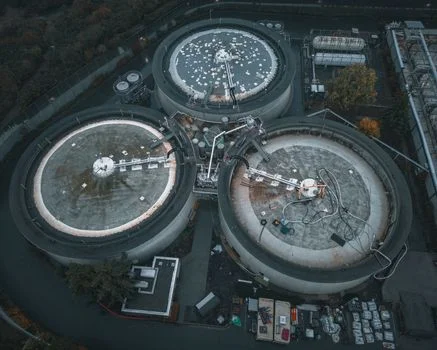
Comparing ultrafiltration with alternatives shows clear trade-offs in sludge mass and chemical demand. Dissolved air flotation (DAF) handles high solids but usually reaches only 70–85% COD removal and needs polymer dosing. DAF as an alternative to ultrafiltration for dicing wastewater is often selected for very large flows when CAPEX dominates, yet it rarely meets <10 mg/L silica for reuse. Broader Chip Fab Wastewater Treatment: 2026 Engineering Specs, Zero-Fouling Design trains often place UF ahead of RO rather than relying on flotation alone.
Coagulation and sedimentation remain common, but they generate 5–10% sludge by volume and create a dewatering burden. UF concentrates existing solids without adding chemical bulk, so the residual stream is concentrate rather than chemical sludge. The same abrasive-exclusion logic applies to ultrafiltration for grinding wastewater (similar contaminants to dicing), where fines control protects pumps and RO. Electronics sites that need hybrid skids should compare DAF–RO–MBR CAPEX bands before locking a flowsheet.
| Technology | Silica Removal | COD Removal | Energy Cost ($/m³) | Sludge Production |
|---|---|---|---|---|
| Ultrafiltration | 99% | 92-97% | $0.10 – $0.20 | Zero (Concentrate only) |
| DAF | 60-80% | 70-85% | $0.15 – $0.25 | High (Chemical sludge) |
| RO (Direct) | 99.9% | 99% | $0.50 – $1.00 | None (High fouling risk) |
| Coagulation | 70-85% | 60-80% | $0.05 – $0.10 | Very High |
Cost Models and ROI for Dicing Wastewater Ultrafiltration
Capital expenditures (CAPEX) for industrial UF systems range from $240 to $700 per m³/day of capacity. For a standard 500 m³/day installation, $120,000 to $350,000 covers skids, membranes, and controls. Operating expenditure (OPEX) typically sits at $0.15–$0.30/m³, covering power at 0.3–0.6 kWh/m³, membrane replacement amortized over five years, and CIP chemicals.
ROI rests on water reuse, lower disposal fees, and protection of downstream assets. Where industrial water exceeds $1.00/m³, reclaiming 95% of dicing water can save more than $150,000 per year on a mid-size line. Stretching RO membrane life from about 18 months to about 48 months can trim total water-plant OPEX by roughly 15%. Most plants running a dicing wastewater ultrafiltration system above 500 m³/day reach full payback in 18–36 months when those credits are booked honestly.
| System Size (m³/day) | CAPEX Range ($) | OPEX ($/m³) | Payback Period (Months) |
|---|---|---|---|
| 100 | $45,000 – $80,000 | $0.28 | 30 – 42 |
| 500 | $120,000 – $350,000 | $0.22 | 18 – 36 |
| 2,000 | $400,000 – $950,000 | $0.16 | 12 – 24 |
Compliance Blueprint: Meeting EPA 40 CFR Part 469 and SEMI S23 Standards for Semiconductor Wastewater
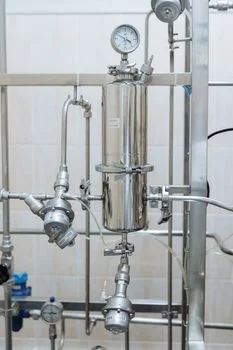
Compliance for semiconductor facilities splits between environmental discharge (EPA) and process-water reuse (SEMI). Fluoride, arsenic, and organic compounds are the listed pollutants of concern.
EPA 40 CFR Part 469 targets the semiconductor subcategory, and the planning limits used above — TSS <30 mg/L and pH between 6.0 and 9.0 — mirror how those federal limitations translate into local permit conditions. The federal tables are written as daily-maximum and 30-day-average values for TSS and pH rather than a COD concentration cap, so the site permit is the binding document. The rule also defines total toxic organics (TTO) as the sum of listed solvents counted only above 10 µg/L each (40 CFR §469.12). Ultrafiltration effluent with <5 mg/L TSS leaves a clear margin against those limits. For reuse, SEMI S23-0718 is tighter, often requiring silica <10 mg/L and abrasive particles <5 mg/L to prevent wafer defects during subsequent rinse and polish steps.
Operators should log TMP, permeate turbidity, and silica daily, then confirm COD and TSS against the discharge permit weekly. Keep CIP residuals within the membrane vendor's pH and oxidant windows so Part 469 pH limits are not breached during wash return. When reclaim water feeds tools, verify SEMI silica and particle counts on the UF permeate before the RO stage, not only at the final UPW polish.
Dicing Wastewater Reuse and Zero Liquid Discharge
Dicing wastewater reuse and zero liquid discharge both start with the same UF step, which returns 90–95% of the sawing flow as reuse-quality permeate. For zero-liquid-discharge (ZLD) goals, UF + RO commonly reaches 99.9% silica removal and about 98% overall water recovery, leaving only a mineral concentrate for the press. Most reclaim retrofits keep UF as the first barrier and add RO once permeate SDI holds below 3.0.
Concentrate handling sets the practical recovery ceiling in ZLD retrofits. The UF reject stream carries the rejected silica and abrasives at 3–8% solids after thickening, and the press cycle must clear before the next CIP interval fills the tank. Plants that skip this balance end up throttling UF recovery regardless of membrane capacity.
What Sludge Thickener Specs Fit Dicing Concentrate?
Dicing UF concentrate thickener specs usually target 3–8% solids feed, 2–6 hour hydraulic residence time, and polymer dose only if free water will not drain in the downstream press. Because UF already rejects silica and abrasives without coagulant bulk, the thickener sees a mineral-rich slurry rather than chemical sludge. Most plants we commission keep thickener underflow below the torque limit of the selected dewatering press and size the tank for at least one CIP-interval of concentrate production.
Use this concentrate-train checklist before freezing equipment. Measure concentrate solids after a 90–95% recovery UF run. Confirm abrasive hardness so rake and pump metallurgy match SiC and diamond fines. Set thickener HRT from 2–6 h at the design temperature, and reserve polymer only when free water will not release. Match underflow to press chamber volume, add a sealed cover if silica dust is a concern, and return thickener supernatant to UF equalization.
How should plants handle dicing sludge?
Dicing sludge is UF concentrate plus any grit settled in equalization, not coagulant cake. Handle it as an abrasive slurry: settle or thicken first, then dewater on a Plate and Frame Filter Press for Sludge Dewatering rated for mineral fines. Keep grit traps ahead of UF so thickener and press see fewer large shards.
Who This Is For and Next Step
Dicing UF flowsheets fit semiconductor and precision-machining plants with dicing or sawing wastewater above about 50 m³/day that must hit SEMI silica reuse targets or EPA Part 469 COD/TSS limits. Facilities with oily, low-silica wastewater and no reuse goal may size DAF or simple coagulation instead. If you need a duty-specific membrane area, TMP band, and concentrate press size for your fab load, send the influent silica, COD, and flow to our team via the dicing wastewater ultrafiltration inquiry form.
Frequently Asked Questions
What pore size should UF use on dicing wastewater?
Most dicing lines run 0.01–0.1 µm pores to reject silica and abrasives while limiting TMP spikes. Finer 0.001–0.01 µm ratings can raise pressure too fast under high solids. Target flux of 25–40 L/m²/h keeps CIP intervals practical, and most sawing lines hold TMP between 0.5 and 2.0 bar at that rating.
Can ultrafiltration meet EPA 40 CFR Part 469 for semiconductor discharge?
Yes. UF commonly delivers COD <30 mg/L and TSS <5 mg/L when influent COD is 200–800 mg/L and TSS is 100–500 mg/L. Part 469 references COD <50 mg/L and TSS <30 mg/L with pH 6.0–9.0 in local permits. Keep wash returns inside that pH window after CIP.
When is ceramic better than PVDF for dicing UF?
Ceramic Al2O3 modules fit aggressive pH (0–14), hot CIP, or abrasive campaigns that wear polymer fibers. Expect about 30% higher CAPEX and 10–15 year life versus 5–7 years for PVDF. Choose ceramic when polymer flux cannot stay above 25 L/m²/h between cleans.
How much does a 500 m³/day dicing UF system cost?
Budget $120,000–$350,000 CAPEX for skids, membranes, and controls at 500 m³/day, or about $240–$700 per m³/day of capacity. OPEX typically runs $0.15–$0.30/m³ including 0.3–0.6 kWh/m³ power and CIP chemicals. Payback often falls in 18–36 months when reuse and RO-protection credits are included.
Does UF create chemical sludge from dicing wastewater?
UF concentrates existing silica and abrasives; it does not add coagulant bulk like sedimentation trains that yield 5–10% sludge by volume. The residual is mineral-rich concentrate that thickens and presses as dicing sludge. Pair UF with a plate-and-frame press when cake haul-off is required.