Why Third-Generation Semiconductor Wastewater Demands Specialized Ammonia-Nitrogen Treatment
Third-generation semiconductor manufacturing generates ammonia-nitrogen wastewater with concentrations up to 1000 mg/L—far exceeding discharge limits (e.g., China’s GB 21900-2008: ≤15 mg/L for new plants). Unlike traditional silicon-based fabs that typically produce 100–200 mg/L NH₃-N, the production of Wide Bandgap (WBG) materials like Silicon Carbide (SiC) and Gallium Nitride (GaN) involves intensive ammonia-based epitaxy and chemical cleaning cycles. This creates a high-strength influent that is inherently toxic to standard biological treatment plants. Ammonia toxicity becomes a critical failure point when NH₃-N exceeds 50 mg/L, as it inhibits the very nitrifying bacteria required for its removal, while free ammonia (NH₃) at pH levels above 8.0 becomes lethal to aquatic ecosystems (LC50 for fish: 0.02–0.05 mg/L).
Compliance risks are substantial for facility managers, with the U.S. Clean Water Act permitting fines up to $50,000 per day for direct discharge violations where limits often sit at ≤1.9 mg/L. In the EU, the Urban Waste Water Directive mandates thresholds as low as ≤10 mg/L. To mitigate these risks, industry leaders have shifted toward resource recovery. Operational data from TSMC’s 2024 system demonstrates that a "Precise Diversion" strategy can reduce wastewater conductivity by 40% and chemical reagent use by 30%, resulting in annual savings of NT$102 million. This proves that high-concentration ammonia is not merely a waste liability but a recoverable asset when treated with specialized engineering specs.
| Parameter | Traditional Silicon Fabs | Third-Gen (SiC/GaN) Fabs | Regulatory Limit (Typical) |
|---|---|---|---|
| Influent NH₃-N (mg/L) | 100 – 200 | 500 – 1,000 | ≤10 – 15 (Discharge) |
| TDS (mg/L) | 500 – 1,500 | 2,000 – 5,000+ | <500 (Reuse) |
| pH Range | 6.0 – 9.0 | 9.0 – 11.5 | 6.0 – 9.0 |
| Primary Concern | Organic Load | Nitrification Inhibition | Eutrophication Risk |
Biological Treatment: SBR vs. MBR for Ammonia-Nitrogen Removal in Semiconductor Wastewater
The choice between SBR and MBR systems depends on several factors, including influent concentration and footprint constraints.Biological treatment using a Sequencing Batch Reactor (SBR) achieves a 97.2% ammonia removal efficiency when inoculated with specific microbial strains such as Staphylococcus warneri. In third-generation semiconductor applications, the SBR process operates through a defined cycle: Fill, React (alternating aerobic and anaerobic phases), Settle, Decant, and Idle. For high-strength wastewater, a Hydraulic Retention Time (HRT) of 12–24 hours and a Sludge Retention Time (SRT) of 15–30 days are required to maintain a stable population of nitrifying bacteria. Research into microbial density confirms that Staphylococcus warneri outperforms other strains like Micrococcus luteus (79.2% removal) and Bacillus pumilus (60.7% removal), particularly when influent NH₃-N is at 1000 mg/L (HydropureWater Engineering Data, 2025).
For facilities with footprint constraints, MBR systems for semiconductor ammonia-nitrogen wastewater provide a 60% reduction in land requirements compared to SBR. MBR technology maintains a significantly higher Mixed Liquor Suspended Solids (MLSS) concentration—typically 8–12 g/L versus 3–5 g/L in SBR systems. This high microbial density allows the system to handle shock loads and achieve effluent NH₃-N levels of ≤5 mg/L, which is near-reuse quality. However, MBR membranes are susceptible to fouling if the influent contains high Total Suspended Solids (TSS >10 g/L) or residual oils. Effective pretreatment via precise pH adjustment and chemical dosing for ammonia removal is essential to maintain a pH between 7.5 and 8.5, the optimal range for nitrification.
| Engineering Spec | SBR (Sequencing Batch) | MBR (Membrane Bioreactor) |
|---|---|---|
| MLSS Concentration | 3,000 – 5,000 mg/L | 8,000 – 12,000 mg/L |
| HRT (Hydraulic Retention) | 12 – 24 Hours | 6 – 10 Hours |
| Effluent NH₃-N | ≤30 mg/L | ≤5 mg/L |
| Footprint Requirement | High (Large Tanks) | Low (Compact) |
| Membrane Flux Rate | N/A | 15 – 25 L/m²·h |
Membrane Degassing: How TSMC’s System Recovers Ammonia as Ammonium Sulfate
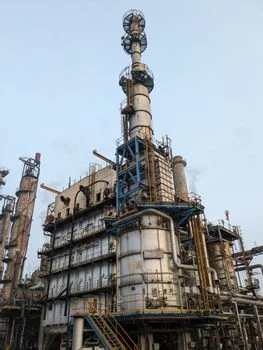
Degassing membranes operate on the principle of gas-liquid phase separation, where hydrophobic hollow-fiber membranes (typically PP or PTFE) allow NH₃ gas to pass while retaining the liquid phase. For this process to be effective, the wastewater must first be adjusted to a pH >11.5 using precise pH adjustment and chemical dosing for ammonia removal, which shifts the chemical equilibrium from ammonium ions (NH₄⁺) to dissolved ammonia gas (NH₃). TSMC’s breakthrough system utilizes a three-stage approach: precise diversion of high-concentration streams, real-time inspection, and resource regeneration. By passing the NH₃ gas through a sulfuric acid (H₂SO₄) absorption solution, the system produces high-purity ammonium sulfate (≥99%), which can be sold as industrial-grade fertilizer.
Operational parameters for membrane degassing in semiconductor fabs require a membrane flux rate of 10–20 L/m²·h. While the system achieves 95%+ removal for influent concentrations between 500 and 2000 mg/L, the OPEX is largely driven by the consumption of NaOH for pH elevation, adding approximately $0.50–$1.00/m³ to the treatment cost. The CapEx for a 50 m³/h degassing system, including the necessary pretreatment and acid absorption towers, ranges from $1.5M to $3M. This technology is particularly effective as a "front-end" treatment for the most concentrated streams, preventing the inhibition of downstream biological processes.
| Design Parameter | Specification Value | Operational Note |
|---|---|---|
| Membrane Material | PTFE or PP (Hydrophobic) | PTFE offers higher chemical resistance |
| Operating pH | 11.5 – 12.0 | Required for 98% NH₃ conversion |
| Removal Efficiency | 95% – 99% | Dependent on temperature and flux |
| Byproduct Purity | ≥99% Ammonium Sulfate | Saleable as agricultural fertilizer |
| Cleaning Frequency | Every 3 – 6 Months | Acid/Base CIP (Clean-in-Place) |
Hybrid ZLD Systems: Combining Biological Treatment, Membrane Degassing, and RO for 99%+ Removal
Hybrid Zero Liquid Discharge (ZLD) systems integrate multiple technologies to achieve high removal rates.The process flow begins with rigorous pretreatment, including fluoride and heavy metal pretreatment for semiconductor wastewater, followed by membrane degassing for the high-concentration streams. The combined effluent then enters an MBR for polishing organic nitrogen and residual ammonia. The final stage utilizes RO systems for ZLD and water reuse in semiconductor fabs to produce permeate with NH₃-N ≤1 mg/L and TDS ≤50 mg/L, meeting the stringent standards required for ultrapure water (UPW) makeup.
The CapEx for a 100 m³/h hybrid ZLD system is estimated between $5M and $7M. This includes the SBR/MBR biological core ($2.5M), the degassing membrane units ($2M), and the RO/Automation suite ($2.3M). While the initial investment is high, the OPEX is optimized through resource recovery. Total operational costs average $1.45/m³, broken down into energy (55%), chemicals (21%), membrane replacement (14%), and labor (10%). For fabs located in water-stressed regions, the ability to reuse 95% of treated wastewater provides a significant ROI by reducing raw water procurement costs and eliminating discharge permitting fees.
| Cost Component | Estimated Cost (100 m³/h System) | Percentage of Total OPEX |
|---|---|---|
| Energy Consumption | $0.80 / m³ | 55% |
| Chemical Dosing | $0.30 / m³ | 21% |
| Membrane Replacement | $0.20 / m³ | 14% |
| Labor & Maintenance | $0.15 / m³ | 10% |
| Total OPEX | $1.45 / m³ | 100% |
Selecting the Right System: Decision Framework for Ammonia-Nitrogen Wastewater Treatment
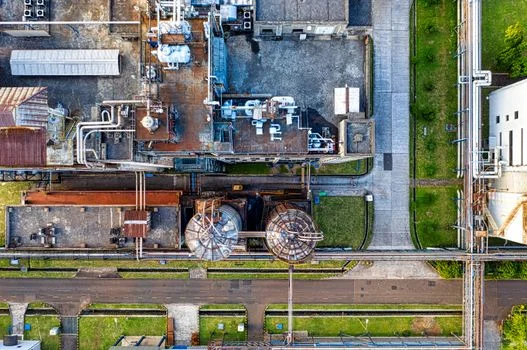
Selecting an ammonia treatment strategy requires a multi-variable analysis of influent concentration, flow rate, and the desired final water quality. Engineers should first categorize their waste streams: low-concentration streams (<200 mg/L) are best suited for SBR systems due to their lower CapEx and simplicity. Mid-range concentrations (200–500 mg/L) demand the higher biomass stability of an MBR. For the high-concentration streams characteristic of GaN and SiC epitaxy (>500 mg/L), membrane degassing is mandatory to prevent biological inhibition. A hybrid approach is the only viable solution when the goal is ZLD or high-purity reuse.
The decision framework also considers the presence of co-contaminants. If the wastewater contains significant heavy metals, copper and other heavy metal removal in semiconductor wastewater