Why Third-Generation Semiconductor HF Wastewater Is Harder to Treat Than Silicon-Based Waste
Third-generation semiconductor fabrication processes, particularly those utilizing Silicon Carbide (SiC) and Gallium Nitride (GaN), introduce unique and significant challenges to wastewater treatment compared to traditional silicon-based fabs. The effluent from these advanced manufacturing lines is characterized by substantially higher concentrations of hydrofluoric acid (HF) and a complex mix of other contaminants. Specifically, SiC/GaN HF wastewater can contain up to 1,000 ppm of HF, 1,000 ppm of sulfuric acid (H₂SO₄), 400 ppm of phosphoric acid (H₃PO₄), and 300 ppm of acetic acid. This fluoride concentration is often 2–5 times higher than that found in silicon-based processes, demanding more robust and efficient removal strategies.
A critical differentiator is the presence of silicon carbide (SiC) particles in the wastewater from SiC fabs. These particles, typically ranging in size from 0.1 to 10 μm, are abrasive and can readily clog filtration membranes and foul equipment, significantly reducing the efficiency and lifespan of treatment systems. the etching processes involved in SiC and GaN fabrication also release substantial amounts of silica. At typical wastewater treatment pH levels (above 7), dissolved silica readily forms colloidal gels. These silica gels are notorious for fouling membranes and electrodialysis reversal (EDR) systems. For instance, a case study by Veolia in Singapore highlighted the necessity of specialized pre-treatment to manage silica concentrations in their EDR system handling semiconductor wastewater.
The chemical matrix of third-generation HF wastewater also differs significantly. Beyond the elevated fluoride and silica, it may contain GaN-specific contaminants such as gallium hydroxide, which can precipitate and add to the solids load. The pH range of influent wastewater can also be wider, and the fluoride-to-acid ratio is often more challenging to manage, requiring precise chemical dosing for effective precipitation. In contrast, traditional silicon-based HF wastewater, while still requiring careful treatment, generally presents lower fluoride concentrations and fewer problematic particulate and colloidal contaminants.
| Parameter | Third-Generation (SiC/GaN) | Silicon-Based |
|---|---|---|
| HF Concentration (ppm) | Up to 1,000 | Typically < 500 |
| Other Acid Concentrations (ppm) | H₂SO₄: ~1,000, H₃PO₄: ~400, Acetic Acid: ~300 | Generally lower, primarily HF and nitric acid |
| Silicon Carbide Particles | Present (0.1–10 μm) | Rarely present |
| Silica Concentration | Significant (colloidal gel formation risk) | Lower, less prone to fouling |
| GaN-Specific Contaminants | Potential (e.g., Gallium Hydroxide) | Not present |
| pH Range (Influent) | Broader, variable | More consistent |
Fluoride Removal Methods: Calcium Precipitation vs. EDR vs. Membrane Systems
Effective treatment of third-generation semiconductor HF wastewater hinges on selecting the appropriate technology capable of achieving high fluoride removal efficiencies while managing complex contaminants. The primary methods employed are calcium precipitation, electrodialysis reversal (EDR), and advanced membrane systems, each with distinct advantages and limitations.
Calcium Precipitation remains a foundational technology for fluoride removal. By adding calcium chloride (CaCl₂) or calcium hydroxide (Ca(OH)₂) to the wastewater and adjusting the pH to approximately 8.0–8.5, insoluble calcium fluoride (CaF₂) precipitates out. Data from a 2000 study (Top 1 PDF) showed that precipitation could reduce fluoride levels from 920 ppm to as low as 6.8 ppm at pH 8. However, this method generates significant volumes of CaF₂ sludge. For every kilogram of fluoride removed, approximately 1.2 kg of CaF₂ sludge is produced. The disposal of this hazardous sludge is a major operational cost, typically ranging from $150 to $300 per ton, and requires careful management. For precise chemical dosing in this process, PLC-controlled chemical dosing systems are essential.
Electrodialysis Reversal (EDR) offers a more advanced, non-precipitative approach. Veolia's EDR system, as demonstrated in a Singapore semiconductor fab (Top 5), effectively handles wastewater with fluoride concentrations exceeding 50 ppm and significant silica content. EDR utilizes ion-selective membranes to remove dissolved salts, including fluoride ions, by applying an electric potential. The "reversal" aspect of EDR periodically reverses the flow direction and polarity, helping to mitigate membrane fouling. EDR systems typically consume 0.5–1.2 kWh/m³ of energy and can produce permeate with fluoride levels below 1 ppm. This technology is particularly attractive for water reuse applications due to the high quality of the recovered water.
Membrane Systems, such as Vibratory Shear Enhanced Processing (VSEP®), are also employed, offering high water recovery rates (exceeding 90% per VSEP's claims, Top 3). VSEP's unique vibratory motion creates high shear forces at the membrane surface, significantly reducing fouling compared to conventional cross-flow systems. However, these systems are highly sensitive to suspended solids and colloidal fouling, necessitating robust pre-treatment stages for SiC particles and silica. Without adequate pre-treatment, fouling can lead to frequent cleaning cycles (1–2 times per month) and reduced system performance.
The Crystalactor technique represents a near-zero waste production method, suitable for lower-flow applications (typically under 10 m³/h). This process involves controlled precipitation and pelletization of CaF₂, resulting in a dense, easily handled solid product rather than a slurry. While offering excellent sustainability benefits, its high capital expenditure (CapEx), estimated at $1.2 million for a 50 m³/day system, and flow rate limitations restrict its application in larger semiconductor fabs.
| Technology | Typical Fluoride Removal Efficiency | Sludge/Waste Generation | Water Recovery | CapEx (Estimated) | OPEX (Estimated) | Key Limitations |
|---|---|---|---|---|---|---|
| Calcium Precipitation | 92–99.9% (to <10 ppm) | High (CaF₂ sludge) | Low (depends on downstream processes) | Low to Moderate | Moderate (chemical, sludge disposal) | Sludge disposal costs, secondary contamination from chemicals |
| Electrodialysis Reversal (EDR) | >99% (to <1 ppm) | Low (concentrate stream) | Up to 95% | High | Moderate (energy, membrane replacement) | Susceptible to fouling if pre-treatment is inadequate |
| Membrane Systems (e.g., VSEP) | >99% (to <5 ppm) | Low (concentrate stream) | >90% | High | Moderate (energy, membrane replacement, pre-treatment chemicals) | Requires extensive pre-treatment for silica and particles |
| Crystalactor | >99.9% (to <1 ppm) | Very Low (pelletized CaF₂) | Low | Very High | Low (minimal chemicals, no sludge disposal) | Limited flow rates, high CapEx |
2025 Engineering Specs for Third-Gen Semiconductor HF Wastewater Treatment
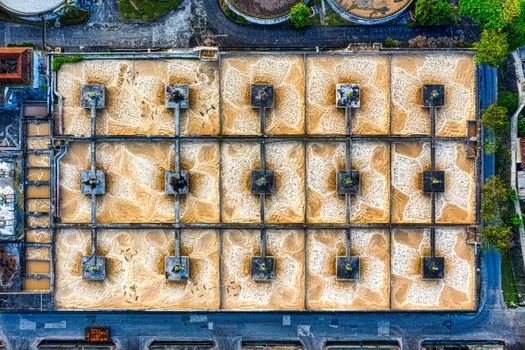
Designing an effective HF wastewater treatment system for third-generation semiconductor fabs requires adherence to stringent, forward-looking engineering specifications. These parameters ensure compliance with current and anticipated environmental regulations and optimize operational performance. The influent characteristics for such systems, based on projected 2025 EPA semiconductor guidelines, typically target fluoride concentrations below 1,000 ppm, silica (SiO₂) below 200 ppm, and total suspended solids (TSS) below 500 mg/L. These figures represent the raw wastewater before any treatment is applied.
Effluent compliance is paramount and varies by region. The U.S. Environmental Protection Agency (EPA) generally mandates fluoride levels below 5 ppm. China's discharge limits are typically around 10 ppm, while the European Union often sets limits around 15 ppm. Understanding these regional variations is crucial for fabs operating globally or planning for future regulatory changes. Achieving these stringent effluent standards often necessitates multi-stage treatment processes, potentially involving precipitation followed by advanced filtration like Reverse Osmosis (RO).
Chemical dosing rates are critical for efficient precipitation. For achieving approximately 99% fluoride removal via calcium precipitation, a dosing rate of approximately 2.2 kg of CaCl₂ per kilogram of fluoride is required. pH adjustment is equally vital; maintaining a pH range of 8.5–9.0 is optimal for CaF₂ precipitation while minimizing silica gel formation. This typically requires the addition of sodium hydroxide (NaOH) at concentrations of 50% w/w, with dosing rates ranging from 0.5 to 1.0 liters per cubic meter of wastewater.
Equipment sizing must be carefully calculated. For high-efficiency sedimentation tanks (lamella clarifiers) used in removing precipitated CaF₂ and SiC particles, a surface loading rate of 20–30 m/h is recommended. For EDR systems, the membrane area required typically falls between 0.1 to 0.2 m² per m³/h of flow. For membrane systems like VSEP, the optimal vibration frequency is usually between 50–60 Hz to maximize shear forces and minimize fouling.
| Parameter | Influent Target | Effluent Compliance | Chemical Dosing (for Precipitation) | Equipment Sizing |
|---|---|---|---|---|
| Fluoride (F⁻) | < 1,000 ppm | < 5 ppm (EPA) | CaCl₂: 2.2 kg/kg F⁻ | N/A |
| Silica (SiO₂) | < 200 ppm | < 50 ppm (typical pre-RO) | N/A | N/A |
| TSS | < 500 mg/L | < 10 mg/L (typical pre-RO) | N/A | N/A |
| pH | Variable | 6.5–8.5 (discharge) | NaOH (50%): 0.5–1.0 L/m³ to pH 8.5–9.0 | N/A |
| Lamella Clarifier | N/A | N/A | N/A | Loading Rate: 20–30 m/h |
| EDR System | N/A | N/A | N/A | Membrane Area: 0.1–0.2 m²/m³/h |
| VSEP System | N/A | N/A | N/A | Vibration Frequency: 50–60 Hz |
ZLD Compliance for HF Wastewater: Cost Breakdown and ROI Calculator
Achieving Zero Liquid Discharge (ZLD) for hydrofluoric acid wastewater from third-generation semiconductor fabs represents a significant investment but offers substantial long-term economic and environmental benefits. For a typical ZLD system designed to treat 500 m³/day of HF wastewater, the capital expenditure (CapEx) in 2025 is projected to range from $2.5 million to $4.5 million. This cost is distributed across various treatment stages: a precipitation and clarification system might account for $300,000, an EDR system for $1.2 million, and a thermal evaporator (often used as a final stage in ZLD) for $1.5 million.
The operational expenditure (OPEX) for ZLD systems can range from $0.8 to $1.2 per cubic meter of treated wastewater. This includes costs for chemicals (approximately $0.3/m³), energy consumption (around $0.4/m³), labor (about $0.2/m³), and sludge disposal (around $0.1/m³ for CaF₂ sludge, assuming efficient dewatering via filter presses).
The primary driver for ZLD investment is water reuse savings. In key semiconductor manufacturing hubs like Singapore, Taiwan, and Arizona, the cost of municipal water can range from $1.5 to $3.0 per cubic meter. By treating wastewater to a quality suitable for reuse in non-critical applications or even for polishing to ultrapure water standards via RO, fabs can significantly reduce their reliance on expensive freshwater sources. The use of industrial RO water purification systems can polish EDR permeate to meet the demanding requirements of semiconductor processes.
The Return on Investment (ROI) for ZLD systems can be compelling, with payback periods typically falling between 3 to 5 years. The ROI calculation is fundamentally: (Annual Water Savings - Annual OPEX) / CapEx. For example, a fab saving $2.0/m³ on water costs for 500 m³/day of treated water would realize annual savings of approximately $365,000. If the annual OPEX is $400,000 and CapEx is $3 million, the ROI is (365,000 - 400,000) / 3,000,000 = -0.014, indicating a longer payback. However, with higher water costs or lower OPEX, the payback is significantly accelerated. A comprehensive ROI analysis should also factor in avoided regulatory fines and enhanced corporate sustainability metrics.
| Category | Estimated Cost (USD) | Notes |
|---|---|---|
| CapEx (Total) | $2.5M – $4.5M | Includes precipitation, EDR, evaporation, ancillary equipment |
| Precipitation/Clarification | $300,000 | Reaction tanks, clarifiers, chemical dosing |
| EDR System | $1,200,000 | Membrane stacks, pumps, controls |
| Thermal Evaporator | $1,500,000 | Concentrates brine to solid salt |
| OPEX (per m³) | $0.80 – $1.20 | Total operational cost |
| Chemicals | ~$0.30 | NaOH, CaCl₂, coagulants |
| Energy | ~$0.40 | Pumps, EDR, evaporator |
| Labor | ~$0.20 | Operators, maintenance |
| Sludge Disposal | ~$0.10 | CaF₂ cake disposal |
| Water Reuse Savings (per m³) | $1.50 – $3.00 | Municipal water cost savings |
| Estimated ROI Payback | 3–5 Years | Based on savings vs. CapEx/OPEX |
Pre-Treatment Strategies for SiC/GaN HF Wastewater: Handling Silica and Particles
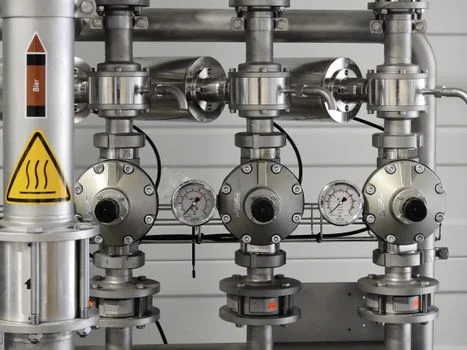
Effective pre-treatment is non-negotiable for the successful operation of advanced HF wastewater treatment systems in third-generation semiconductor fabs, particularly for membrane-based technologies like EDR and RO. The primary challenges are the removal of abrasive silicon carbide (SiC) particles and the management of dissolved silica, which can readily form fouling gels. Without robust pre-treatment, these contaminants can lead to premature membrane failure, reduced treatment efficiency, and increased operational costs.
Silica removal is typically addressed through chemical coagulation. The addition of coagulants such as polyaluminum chloride (PAC) at dosages of 20–50 ppm, followed by efficient clarification, can remove up to 98% of suspended solids and a significant portion of colloidal silica. A lamella clarifier, such as those offered for high-efficiency sedimentation, is crucial for separating the flocculated silica and other suspended matter. The Veolia Singapore case study, which successfully treated HF wastewater with high silica content, underscores the importance of these steps.
Particle removal targets the larger SiC particulates. Coarse particles (e.g., >100 μm) can be initially screened out using rotary drum screens. For finer SiC particles in the 10–50 μm range, Dissolved Air Flotation (DAF) systems are highly effective, achieving removal rates of up to 95%. DAF introduces micro-bubbles that attach to suspended particles, causing them to float to the surface for removal.
pH adjustment is a critical step that influences both silica stability and CaF₂ precipitation. Adjusting the pH to 8.5–9.0 using NaOH is essential to maximize the precipitation of fluoride as CaF₂. Simultaneously, this pH range helps to keep silica in a less reactive, dissolved state, preventing premature gel formation before it can be effectively removed by subsequent treatment stages. Precise pH control is best managed with PLC-controlled chemical dosing systems.
A practical example illustrates the impact of these pre-treatment strategies: a SiC fab in Taiwan reported a 70% reduction in membrane fouling incidents after implementing a pre-treatment train comprising PAC coagulation followed by DAF. This proactive approach significantly extended membrane life and reduced the frequency of costly cleaning cycles.
Frequently Asked Questions
What is the best HF wastewater treatment method for a 200 mm SiC fab?
The optimal method depends on flow rate and ZLD requirements. For flow rates under 50 m³/day, the Crystalactor offers a near-zero waste solution. For moderate flows (50–200 m³/day) where ZLD is desired, EDR followed by RO is highly effective. For larger flows (>200 m³/day), a combination of calcium precipitation, followed by EDR or RO, is typically employed. For full ZLD, thermal evaporation may be the final stage.
How much does it cost to treat 1 m³ of HF wastewater from GaN production?
For ZLD systems, the operational cost is estimated at $0.80–$1.20 per cubic meter, covering chemicals, energy, labor, and sludge disposal. For a precipitation-only system aiming for basic discharge compliance, the OPEX might be lower, in the range of $0.30–$0.50 per cubic meter, but without the benefits of water reuse.
What are the discharge limits for fluoride in semiconductor wastewater?
Discharge limits vary globally. The U.S. EPA typically requires fluoride levels below 5 ppm. China's limits are often around 10 ppm, and EU regulations can be around 15 ppm. Taiwan also has stringent limits, often in the low ppm range. Always consult local and national environmental regulations for specific requirements.
Can EDR systems handle HF wastewater with high silica?
Yes, with appropriate pre-treatment. Veolia's EDR system in Singapore successfully treated local scrubber wastewater with fluoride concentrations over 50 ppm and significant silica levels (around 150 ppm), achieving 95% water recovery. The key is effective removal of colloidal silica and fine particulates before the EDR membranes.
What pre-treatment is needed before VSEP membranes for SiC HF wastewater?
For VSEP systems treating SiC HF wastewater, pre-treatment is crucial. This typically includes adjusting the pH to 8.5–9.0, ensuring TSS levels are below 50 mg/L, and reducing silica concentration to below 100 ppm. Coagulation, flocculation, and DAF are common pre-treatment steps to manage silica and SiC particles effectively.
Related Equipment
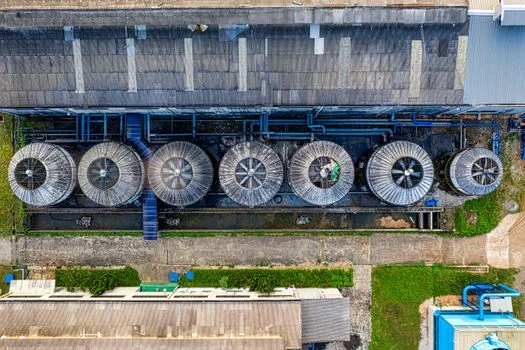
The following HydropureWater products are engineered for the wastewater challenges discussed above:
- PLC-controlled chemical dosing for precise pH adjustment and CaCl₂ addition in HF wastewater treatment — view specifications, capacity range, and technical data
- lamella clarifiers for SiC particle and CaF₂ sludge removal in semiconductor HF wastewater — view specifications, capacity range, and technical data
- filter presses for dewatering CaF₂ sludge to 30–40% solids content — view specifications, capacity range, and technical data
- RO systems for polishing EDR permeate to ultrapure water standards in semiconductor fabs — view specifications, capacity range, and technical data
- DAF systems for removing SiC particles and silica from HF wastewater before membrane treatment — view specifications, capacity range, and technical data
Need a customized solution? Request a free quote with your specific flow rate and pollutant parameters.