Display Panel HF Wastewater Treatment: 2025 Engineering Specs, 99.9% Fluoride Removal & Zero-Risk ZLD Systems
Display panel manufacturing (TFT-LCD, OLED) generates hydrofluoric acid (HF) wastewater with fluoride concentrations up to 5,000 ppm, requiring specialized treatment to meet discharge limits (<15 mg/L fluoride, per EPA 40 CFR Part 469). Proven systems combine chemical precipitation (e.g., calcium hydroxide dosing at 1.2–1.5x stoichiometric ratio) with membrane separation (RO/NF) to achieve 99.9% fluoride removal and enable zero liquid discharge (ZLD). CapEx ranges from $250K–$1.2M for 10–100 m³/h systems, with OpEx of $0.80–$2.50/m³ treated.
Why Display Panel Plants Need Specialized HF Wastewater Treatment
Hydrofluoric acid is the primary etchant used in TFT-LCD and OLED glass thinning and cleaning processes. Unlike generic industrial wastewater, display panel HF streams present a high fluoride load (500–5,000 ppm) coupled with high concentrations of dissolved silica (SiO₂) from glass dissolution. Generic precipitation systems often fail because they do not account for silica interference, which competes with fluoride for calcium ions and coats calcium fluoride crystals, preventing them from settling efficiently.
Regulatory frameworks are tightening globally. The EPA 40 CFR Part 469 (Electrical and Electronic Components Point Source Category) mandates fluoride discharge limits of <15 mg/L. In the European Union, the Industrial Emissions Directive often requires limits as low as <10 mg/L. For plant managers, the risk of non-compliance is significant; EPA enforcement cases have shown fines reaching $50,000 per day for repeated violations. Beyond fines, untreated HF discharge causes severe environmental damage, as fluoride ions are bioaccumulative and toxic to aquatic life.
A real-world example of these risks occurred during a 2023 audit of a major Korean OLED plant. The facility's HF wastewater stream averaged 3,200 ppm of fluoride. Without a specialized treatment system, the untreated discharge would have exceeded regulatory limits by 213 times, risking immediate plant shutdown. display manufacturing wastewater often contains organic additives like surfactants and photoresists. These organics act as dispersants, stabilizing fluoride in solution and necessitating a robust coagulation/flocculation pre-treatment stage before the primary precipitation occurs.
HF Wastewater Treatment Mechanisms: Chemical Precipitation to ZLD
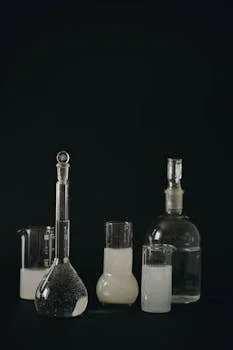
Achieving 99.9% removal requires a multi-stage approach that transitions from bulk chemical removal to fine membrane polishing. The process begins with Stage 1: Chemical Precipitation. Calcium hydroxide (lime) is dosed at a 1.2–1.5x stoichiometric ratio. This reaction converts soluble fluoride into insoluble calcium fluoride (CaF₂) sludge. To optimize this, pH adjustment systems for HF wastewater neutralization must maintain a pH range of 8.5–9.5, with a reaction time of 30–60 minutes to ensure complete crystal growth.
Stage 2: Sedimentation and Clarification follows the reaction. High-efficiency lamella clarifiers for rapid sludge separation in HF wastewater are utilized to achieve surface loading rates of 20–40 m/h. This stage reduces Total Suspended Solids (TSS) to <50 mg/L, removing the bulk of the CaF₂ precipitate. The resulting sludge is then processed by filter presses for dewatering calcium fluoride sludge, which reduces sludge volume by 70–80% and produces a dry cake with 25–35% solids for safe disposal.
Stage 3: Polishing and ZLD Integration is where compliance is secured. RO systems for polishing HF wastewater to <1 mg/L fluoride use membranes with 0.001–0.01 μm pore sizes. These systems achieve recovery rates of 75–90%. To reach Zero Liquid Discharge (ZLD), the RO reject is sent to a Mechanical Vapor Recompression (MVR) evaporator. The MVR concentrates the reject to 20–30% solids, requiring only 0.05–0.1 kWh of energy per kilogram of water evaporated, effectively eliminating liquid discharge entirely.
| Treatment Stage | Key Mechanism | Engineering Parameter | Target Efficiency |
|---|---|---|---|
| Pre-treatment | Coagulation/Flocculation | PAC Dosing: 50–100 ppm | Silica Removal >60% |
| Primary Precipitation | Ca(OH)₂ Reaction | pH 8.5–9.5; 45 min RT | Fluoride 15–30 ppm |
| Clarification | Gravity Separation | Loading Rate: 30 m/h | TSS <50 mg/L |
| Membrane Polishing | Reverse Osmosis | Flux: 15–20 LMH | Fluoride <1 mg/L |
| ZLD Concentration | MVR Evaporation | Heat Transfer: 2500 W/m²K | 100% Liquid Recovery |
Engineering Specs for Display Panel HF Wastewater Systems
Designing a system for a TFT-LCD or OLED facility requires precise engineering specifications to handle the aggressive nature of HF and the high volume of rinse water. Influent characteristics typically involve flow rates of 10–100 m³/h, fluoride levels up to 5,000 ppm, and a highly acidic pH of 1–3. Additionally, silica levels of 50–200 ppm and Chemical Oxygen Demand (COD) of 100–500 mg/L must be addressed to protect downstream membranes.
Chemical dosing is the heart of the system. PLC-controlled chemical dosing systems for HF wastewater neutralization are required to manage lime dosing (1.5–2.0 kg/m³), soda ash (0.2–0.5 kg/m³) for hardness removal, and Polyaluminum Chloride (PAC) for silica coagulation. These systems must be automated to respond to real-time fluctuations in influent fluoride concentration, preventing both chemical waste and discharge violations.
Equipment sizing is determined by these loading rates. A typical 50 m³/h system requires a clarifier surface area of approximately 1.5 m² per m³/h of flow and a filter press area of 0.2 m² per m³/h. For the ZLD component, the MVR evaporator must be sized to handle the 10–25% RO reject stream. The final effluent quality consistently meets or exceeds global standards, with fluoride levels <1 mg/L and TSS <10 mg/L, making the water suitable for reuse in non-critical plant processes such as cooling tower makeup or initial glass rinsing.
| Parameter | Influent Range | Effluent (ZLD System) | Design Requirement |
|---|---|---|---|
| Fluoride (F-) | 500–5,000 ppm | <1 mg/L | Two-stage precipitation + RO |
| pH | 1.0–3.0 | 6.5–8.5 | Automated acid/base dosing |
| Silica (SiO₂) | 50–200 ppm | <5 mg/L | PAC dosing + Ultrafiltration |
| Total Suspended Solids | 200–1,000 mg/L | <10 mg/L | Lamella clarifier + Multi-media filter |
| Energy Consumption | N/A | 0.8–1.2 kWh/m³ | VFD-driven pumps and MVR |
Treatment Technology Comparison: Precipitation vs. Membrane Systems vs. Hybrid ZLD
When evaluating system design, procurement teams must balance CapEx against long-term OpEx and compliance security. Chemical precipitation only is the traditional approach. It has the lowest CapEx ($150K–$500K) but often fails to meet ZLD requirements, as it rarely reduces fluoride below 15 ppm without massive chemical over-dosing. Its OpEx is relatively low ($0.50–$1.50/m³), but it leaves the plant vulnerable to tightening regulations.
Membrane systems (RO/NF) offer superior removal, reaching <1 mg/L fluoride. The CapEx is moderate ($300K–$800K), and the OpEx is slightly higher ($1.00–$2.50/m³) due to energy and membrane replacement costs. However, these systems are highly susceptible to fouling from calcium fluoride scaling if the pre-treatment is not perfectly managed. This makes them a high-performance but high-maintenance option.
The Hybrid ZLD system (Precipitation + RO + Evaporator) is the gold standard for modern display plants. While the CapEx is the highest ($500K–$1.2M), it provides the most robust ROI. By enabling 90% water reuse in etching and rinsing processes, these systems typically pay for themselves within 3–5 years. For example, a 50 m³/h hybrid ZLD system at a Chinese TFT-LCD plant recently reported a reduction in fresh water consumption by 85% and avoided an estimated $2.1M in discharge fees and environmental taxes over a five-year period. This system also integrates well with TMAH wastewater treatment for display panel and PCB plants, allowing for a centralized wastewater hub.
| Technology | Removal Efficiency | CapEx (Relative) | OpEx (per m³) | ZLD Ready? |
|---|---|---|---|---|
| Precipitation Only | 95–98% | Low | $0.50–$1.50 | No |
| Membrane Only | 99.0–99.5% | Medium | $1.00–$2.50 | Partial |
| Hybrid ZLD | >99.9% | High | $1.50–$3.00 | Yes |
Common HF Wastewater Treatment Failures and How to Prevent Them
Operational failures in HF treatment can lead to rapid membrane destruction or discharge spikes. Scaling in RO membranes is the most frequent issue, caused by residual calcium fluoride or calcium sulfate precipitation. This is prevented by maintaining a strict pH of 6.5–7.5 in the RO feed and dosing antiscalants at 5–10 ppm. Regular cleaning with citric acid (pH 2–3) every 3–6 months is also essential for longevity.
Incomplete fluoride precipitation often stems from pH drift or insufficient lime dosing. Because HF wastewater flow can be erratic, manual dosing is insufficient. Plants must use PLC-controlled chemical dosing systems for HF wastewater neutralization equipped with ion-selective electrodes for real-time fluoride monitoring. If the fluoride level in the reaction tank exceeds the setpoint, the system should automatically increase the lime feed and trigger a recycle loop.
Sludge dewatering issues, such as poor cake release from filter presses, are usually caused by incorrect polymer dosing. Operators should optimize flocculant type (typically anionic for CaF₂) and maintain a dosage of 0.5–2.0 kg per ton of dry solids. Finally, ZLD evaporator fouling is often caused by silica. Pre-treating the influent with PAC at 100–200 ppm to "drop out" silica before it reaches the evaporator is the most effective way to prevent glass-like scaling on heat exchanger surfaces.
How to Select the Right HF Wastewater Treatment System for Your Plant
Selecting a system requires a structured decision framework. Step 1 is to characterize your wastewater through a 24-hour composite sampling protocol, measuring fluoride, silica, COD, and flow variability. Step 2 involves defining your goals: is the priority simple discharge compliance, or is the plant moving toward 100% water reuse and ZLD? This will dictate whether you choose a standalone precipitation unit or a hybrid system.
Step 3 is to evaluate technologies using the comparison data provided above. For plants with flow rates over 20 m³/h, hybrid ZLD systems usually offer the best long-term ROI. Step 4 involves a pilot test. A 1–3 month pilot protocol is essential to validate chemical consumption rates and removal efficiencies specific to your plant's unique chemical mix. Many display plants also benefit from integrating PCB etching wastewater treatment systems with ZLD integration if they have multi-purpose production lines.
Finally, Step 5 is vendor selection. Prioritize suppliers with specific experience in the display panel industry. A vendor who understands the interference of glass-derived silica and the precision required for PLC-controlled chemical dosing systems for HF wastewater neutralization will be far more effective than a generalist. Ensure the vendor provides comprehensive automation and real-time monitoring to safeguard against regulatory violations.
Frequently Asked Questions
Q: What is the most cost-effective HF wastewater treatment for a 20 m³/h TFT-LCD plant?
A: A two-stage chemical precipitation system using lime and soda ash, followed by a lamella clarifier, is the most cost-effective for simple discharge compliance. It can achieve <15 mg/L fluoride at an OpEx of approximately $0.80/m³, though it does not allow for water reuse.
Q: How do I prevent RO membrane fouling in HF wastewater treatment?
A: Prevention requires three steps: maintaining pH between 6.5–7.5, dosing 5–10 ppm of a high-quality antiscalant, and ensuring the pre-treatment clarifier reduces TSS to <10 mg/L before the water reaches the RO unit.
Q: What are the discharge limits for fluoride in display panel wastewater?
A: Under EPA 40 CFR Part 469, the limit is <15 mg/L. Many regional authorities and EU standards are stricter, requiring <10 mg/L. ZLD systems are the only way to ensure zero risk of exceeding these limits.
Q: Can HF wastewater be reused in display panel manufacturing?
A: Yes. Effluent treated by RO typically has <1 mg/L fluoride and low conductivity, making it suitable for reuse in glass rinsing or as cooling tower makeup, which can reduce total plant water consumption by up to 90%.
Q: What is the typical CapEx for a 50 m³/h HF wastewater ZLD system?
A: A full ZLD system including precipitation, clarification, RO, and an MVR evaporator typically ranges from $800K–$1.2M. The investment is usually offset by water savings and the elimination of discharge fees within 3 to 5 years.