Why Meat Processing Wastewater Challenges Conventional Treatment
Meat processing effluent routinely runs at COD 2,000–10,000 mg/L, BOD 1,000–5,000 mg/L, FOG 200–1,000 mg/L, and TSS 500–3,000 mg/L — values that sit at the top of the EPA food-processing category envelope and push conventional activated-sludge basins past their loading envelope on a daily basis. Hydraulic flow is just as punishing: batch slaughter, evisceration, and clean-down cycles stack into 4–8 hour peaks that can drive instantaneous flow to 1.6–2.0× the daily mean, the same peaking factor documented in the Veolia AnoxKaldnes case at Valley Pride Pack, where the system holds 643 m³/d average against 1,060 m³/d surges. Warm effluent (30–40°C) cuts mixed-liquor viscosity, raises the saturation DO, and roughly doubles the nitrification rate per 10°C of temperature rise, but it also keeps FOG emulsified and forces operators to size dissolved-air flotation (DAF) ahead of any biological stage. A layout that bolts an MBBR onto an existing equalization basin without first removing FOG fails within 60–90 days: grease coats the carrier media, biofilm sloughs unevenly, and ammonia breaks through.
How an MBBR Process Flow Works in a Meat Plant
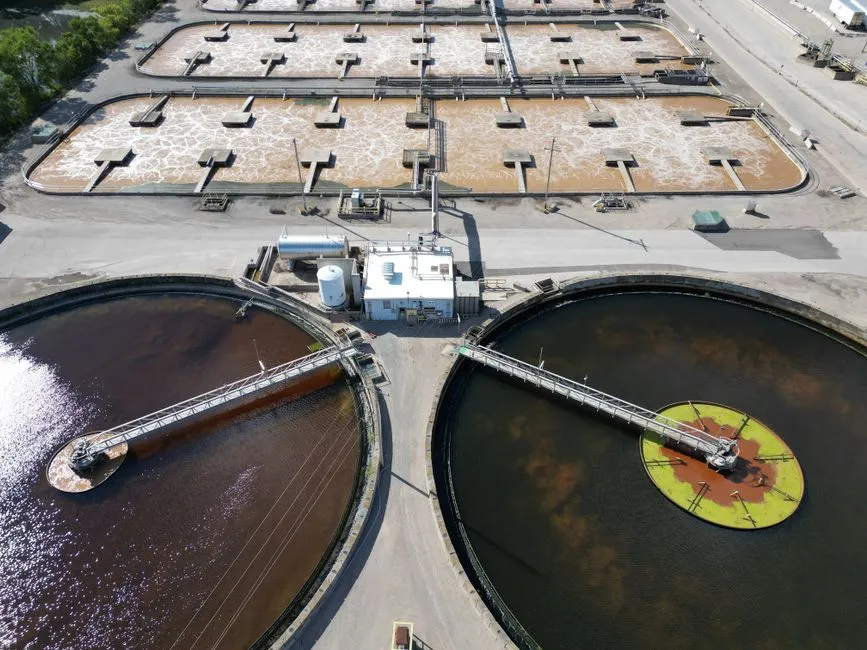
A defensible meat-plant MBBR train runs in a fixed sequence: rotary bar screen → grit chamber → DAF for FOG → equalization basin → anoxic MBBR → aerobic MBBR → secondary clarifier (or integrated MBR system as a polishing option) → ClO₂ or UV disinfection → sludge dewatering. Headworks protection starts with a GX series rotary bar screen for headworks, typically 6 mm aperture, with a downstream grit chamber sized for a 60-second retention at peak flow. DAF comes next — a properly tuned DAF system for FOG removal strips 70–90% of FOG and 50–80% of TSS; without that step, biofilm carriers foul in weeks rather than months because the lipids mask the HDPE surface and prevent colonization. Equalization then dampens hydraulic surges to roughly ±20% of the daily mean before flow enters the anoxic MBBR, where nitrate from the downstream aerobic stage is reduced using either methanol dosing or raw influent BOD as the carbon source at a recirculation ratio of 2:1 to 4:1 aerobic-to-anoxic. The aerobic MBBR runs at 2–4 mg/L DO with coarse-bubble diffusers; biofilm thickness self-regulates through shear from aeration and carrier-against-carrier contact, so the reactor rarely needs manual wasting. Disinfection is handled by a ClO₂ disinfection generator for treated effluent, and surplus sludge is dewatered on a plate and frame filter press for MBBR surplus sludge downstream.
Core MBBR Design Parameters for Meat Processing Effluent
Carrier fill fraction is the first decision: 30–60% of reactor volume, with 40% typical for the anoxic zone and 40–50% for the aerobic zone, using HDPE media with a specific surface area of 500–800 m²/m³ (standard food-industry MBBR practice). Total HRT runs 6–12 hours — split as 2–3 h anoxic and 4–9 h aerobic — and the design should bias toward the upper end when influent COD variability exceeds 2:1. Dissolved oxygen targets 2–4 mg/L aerobic and <0.5 mg/L anoxic; temperature compensation matters because meat effluent typically arrives at 30–40°C, where the standard nitrification rate roughly doubles per 10°C of temperature rise, allowing HRT to be trimmed by ~30% versus a 20°C baseline design. Sludge retention time is decoupled from HRT — biomass lives on the carrier — so surplus sludge yield drops to 0.2–0.4 kg TSS/kg COD removed, roughly half of conventional activated sludge. pH should be held at 6.5–8.5; if DAF chemistry (polyaluminum chloride or ferric chloride) pulls pH below 6.5, install caustic dosing between DAF and the anoxic MBBR. These numbers are summarized in the table below.
| Parameter | Anoxic MBBR | Aerobic MBBR | Design basis / source |
|---|---|---|---|
| Carrier fill (% of reactor volume) | 30–40% | 40–50% (up to 60% peak) | Standard MBBR practice, food-industry wastewater |
| Carrier specific surface area | 500–800 m²/m³ | 500–800 m²/m³ | HDPE media, typical engineering range |
| HRT | 2–3 h | 4–9 h | Bias high for COD variability >2:1 |
| Dissolved oxygen | <0.5 mg/L | 2–4 mg/L | Coarse-bubble aeration |
| Temperature correction | — | −30% HRT vs. 20°C | 30–40°C meat effluent, 2× rate per 10°C |
| Sludge yield | — | 0.2–0.4 kg TSS/kg COD | ~50% of conventional AS |
| pH window | 6.5–8.5 | 6.5–8.5 | Caustic trim after DAF if pH <6.5 |
| Recirculation (aerobic → anoxic) | 2:1 to 4:1 | — | Drives denitrification |
MBBR vs SBR vs MBR for Meat Processing Plants
Footprint is the first differentiator: MBBR runs 30–50% smaller than SBR for the same organic load, and MBR achieves the best effluent quality at roughly the same footprint as MBBR but with significantly more auxiliary equipment. Shock-load tolerance is where MBBR earns its keep — biofilm carriers absorb 1.5–2× hydraulic surges without biomass washout, a behavior directly validated by the Valley Pride Pack MBBR handling a 1.65× peaking factor between 643 m³/d average and 1,060 m³/d surge. FOG sensitivity favors MBBR over MBR: MBR membranes foul rapidly on residual FOG and demand routine chemical cleaning, whereas MBBR tolerates trace FOG as long as DAF holds to its 70–90% removal target; SBR handles FOG worst because the decant phase concentrates scum. CAPEX ranks as SBR (lowest) < MBBR (moderate) < MBR (highest, driven by membrane modules and cassette skids). OPEX flips the order on aeration energy — MBBR is the lowest at 0.3–0.5 kWh/m³ — but MBR carries the highest lifetime cost because of membrane scouring air, chemical cleans, and periodic replacement. The comparison table consolidates these differences.
| Criterion | MBBR | SBR | MBR |
|---|---|---|---|
| Footprint (relative, same load) | 0.5–0.7× | 1.0× (baseline) | ~0.6× with high-quality effluent |
| Shock-load tolerance (hydraulic) | 1.5–2× surge, no upset | 1.2–1.4×, decant risk | 1.2–1.4×, membrane stress |
| FOG sensitivity | Moderate (DAF pre-treatment required) | High (scum accumulation) | Very high (membrane fouling) |
| Surplus sludge yield | 0.2–0.4 kg TSS/kg COD | 0.4–0.6 | 0.3–0.5 (higher SRT) |
| Aeration energy | 0.3–0.5 kWh/m³ | 0.4–0.6 kWh/m³ | 0.5–0.7 kWh/m³ (incl. scour) |
| CAPEX (equipment, 500–1,000 m³/d) | Moderate | Low–moderate | Highest |
| OPEX drivers | Blower power, low sludge hauling | Decant control, high sludge | Membrane replacement, chemical cleans |
Real-World Benchmark: Veolia AnoxKaldnes MBBR at Valley Pride Pack
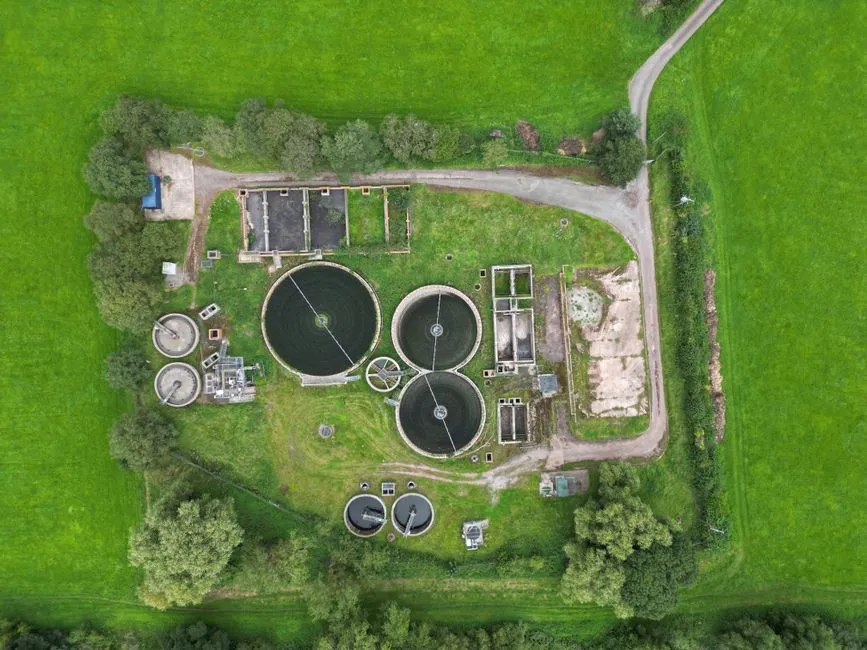
Valley Pride Pack, a U.S. meat processing facility, selected a Veolia AnoxKaldnes MBBR after a plant-side search for a cost-effective, reliable replacement for an overstretched activated-sludge system, with the head treatment operator driving the decision. The hydraulic profile is the headline data point: 643 m³/d average flow against surge peaks of 1,060 m³/d, a 1.65× peaking factor that mirrors typical batch-slaughter scheduling where a single 6–8 hour shift can discharge more wastewater than the remaining 16 hours combined. The engineering takeaway for specifiers is straightforward: biofilm carriers tolerate a 60%+ flow surge with no measurable loss of nitrification or COD removal, which is the core MBBR advantage over suspended-growth systems. The case is also useful for procurement — the driver here was OPEX reduction, not capacity expansion — and that framing often resonates with plant managers facing a tight capex window. For context on similar food-industry retrofits and zero-discharge compliance, the food processing wastewater treatment in 2026 reference and a tube settler clarifier for food processing wastewater guide are useful adjacent reads.
| Parameter | Value | Source |
|---|---|---|
| Site | Valley Pride Pack (meat processing) | Veolia AnoxKaldnes / Water Online |
| Average hydraulic flow | 643 m³/d | Veolia case study |
| Surge hydraulic flow | 1,060 m³/d | Veolia case study |
| Peaking factor | 1.65× | Derived (surge ÷ average) |
| Stated driver | OPEX reduction, process reliability | Veolia case study |
2026 Compliance Targets and ROI for MBBR Meat Plant Upgrades
Three regulatory envelopes govern MBBR meat-plant design in 2026: China GB 13457-92 sets COD <100 mg/L and ammonia <30 mg/L for meat-industry discharge, EU meat-industry permits typically enforce BOD <25 mg/L and total nitrogen <40 mg/L, and the U.S. EPA meat products effluent guidelines at 40 CFR 432 establish Best Practicable Control Technology (BPT) limits for BOD, TSS, FOG, and ammonia that vary by subcategory (slaughterhouse, renderer, further processor). A correctly designed MBBR train (anoxic + aerobic MBBR + ClO₂ disinfection) clears all three envelopes; a downstream automatic chemical dosing system for pH or nutrient trim or an high-efficiency sedimentation tank for polishing is recommended where the permit sits at the lower end of the BOD/TSS range. Energy use settles at 0.3–0.5 kWh/m³ treated, about 30% below MBR and comparable to SBR. CAPEX for a 500–1,000 m³/d MBBR meat plant — equipment only, excluding civil works — typically falls within $300–$800 per m³/d of daily capacity (engineering estimate, 2026), and OPEX drops 40–60% on surplus-sludge handling compared with conventional AS because the lower yield directly cuts filter press cycles and sludge-hauling fees. For denitrification carbon-source economics, the denitrification carbon source dosing cost reference benchmarks methanol against alternative carbon sources, and a broader SBR process design for high-strength industrial wastewater comparison is useful when MBBR is being weighed against sequencing-batch options.
Frequently Asked Questions
What carrier fill fraction should an MBBR for meat processing wastewater use?
Aerobic zones typically run 40–50% HDPE carrier fill (up to 60% at peak loading), and anoxic zones run 30–40%, with media specific surface area in the 500–800 m²/m³ range. The exact value should be confirmed against the carrier manufacturer's published effective surface area and the design FOG/COD load.
What HRT should I design for in a meat-plant MBBR?
Total HRT of 6–12 hours split as 2–3 h anoxic and 4–9 h aerobic is standard; bias toward the upper end when influent COD variability exceeds 2:1. At 30–40°C meat effluent, HRT can be reduced roughly 30% versus a 20°C baseline because nitrification kinetics double per 10°C rise.
How does MBBR compare to MBR for meat processing wastewater?
MBBR delivers comparable effluent at lower CAPEX and lower OPEX — 0.3–0.5 kWh/m³ versus 0.5–0.7 kWh/m³ for MBR, no membrane replacement, and 40–60% less surplus sludge. MBR wins only when the permit requires very low suspended solids (<5 mg/L) or when a downstream reuse loop demands RO-quality feed.
Can MBBR handle residual FOG after DAF pre-treatment?
Yes, but only because DAF has already removed 70–90% of FOG; without that pre-treatment, grease coats the carriers and biofilm sloughs within 60–90 days. Trace FOG after DAF (<50 mg/L) is generally tolerated.
Which 2026 discharge limits apply to MBBR meat-plant effluent?
China GB 13457-92 (COD <100 mg/L, ammonia <30 mg/L), EU meat-industry permits (typically BOD <25 mg/L, total nitrogen <40 mg/L), and U.S. EPA 40 CFR 432 BPT limits (subcategory-dependent BOD, TSS, FOG, ammonia). A correctly designed MBBR + ClO₂ disinfection train clears all three envelopes.