What Drives the Cost of Lithium Extraction Wastewater Treatment
Three feed streams dominate the lithium-recovery-from-wastewater market, and they price out at an order-of-magnitude spread. Produced water from oil and gas operations typically carries 0.5–15 mg/L Li at 50,000–200,000 mg/L total dissolved solids (TDS). Geothermal brines run 5–300 mg/L Li with TDS from 1,000 to 350,000 mg/L. Landfill and impoundment leachate, the cheapest of the three to process, sits at 0–4.7 mg/L Li and 1,000–10,000 mg/L TDS per NREL's CoDaRT influent dataset (NREL 2023).
The variables that bend the cost curve are influent TDS (which sets RO pumping energy and evaporation thermal load), Mg:Li and Ca:Li molar ratios (which set selective-sorbent loading and lime/soda ash dose), sulfate concentration (which sets antiscalant consumption and scaling frequency on membranes), and flow rate (which sets every unit operation's hydraulic sizing). Nikfar et al. (2026) found that for solvent-extraction + nanofiltration trains operating on a raw brine feed, the wastewater-treatment line item is reported as "negligible" — but that only holds when the brine is the feed, not when produced water must first be de-oiled, softened, and clarified. In produced-water service, distillate-side treatment cost is dominated by thermal and crystallization energy, not by the DLE step itself.
NREL's 2023 baseline cost analysis remains the most defensible public anchor for U.S. project economics. The figures are reported in 2023 USD and must be escalated to 2026 USD — at approximately 6% annual chemical-process inflation over three years, the compounded factor is roughly 1.19×. Every 2026 figure cited below applies that factor explicitly so the reader can re-derive the 2023 baseline and substitute their own regional CPI.
2026 Cost Benchmarks by Wastewater Type
The four feed categories below cover roughly 90% of lithium-bearing wastewater projects in scoping. Each range is sourced to the NREL 2023 baseline, with the 2026 USD escalation applied. Use the table as the first input to your capex model, then layer in pretreatment line items from the next section.
| Feed stream | Li range (mg/L) | 2023 USD baseline (per m³) | 2026 USD (per m³) | Dominant cost driver |
|---|---|---|---|---|
| Landfill leachate | 0.41–4.7 | $0.11–$1.13 permeate | $0.13–$1.36 permeate | RO energy + membrane replacement |
| Impoundment leachate | 0–0.035 | $0.11–$0.22 permeate | $0.13–$0.26 permeate | RO energy only; no recovery justified |
| Produced water distillate | 0.5–15 | $8.28–$42.10 distillate | $10–$50 distillate | Thermal/crystallization for ZLD |
| Solvent extraction + NF DLE train (direct OPEX) | Brine feed (50–500+) | $5.05/kg Li₂CO₃ (chem + util, 2023) | $5.26/kg Li₂CO₃ chemicals + utilities (Nikfar 2026) | Organic phase + NF membrane replacement |
The Nikfar 2026 paper breaks the DLE direct OPEX into $2.30/kg Li₂CO₃ for chemicals and consumables, plus $2.96/kg Li₂CO₃ for utilities — a combined $5.26/kg Li₂CO₃ at the point of lithium carbonate precipitation, with wastewater-treatment OPEX on the feed side reported as negligible (Nikfar 2026, cited 2×). The landfill-leachate and impoundment-leachate figures are sensitive to the Li spot price assumption baked into the NREL model; the produced-water range is sensitive to whether zero-liquid-discharge (ZLD) is mandated by the disposal regulator. All 2026 USD figures above apply the 1.19× escalation factor; substitute your finance team's CPI if the regional rate differs materially.
Pretreatment Unit Operations and Their Cost Contribution
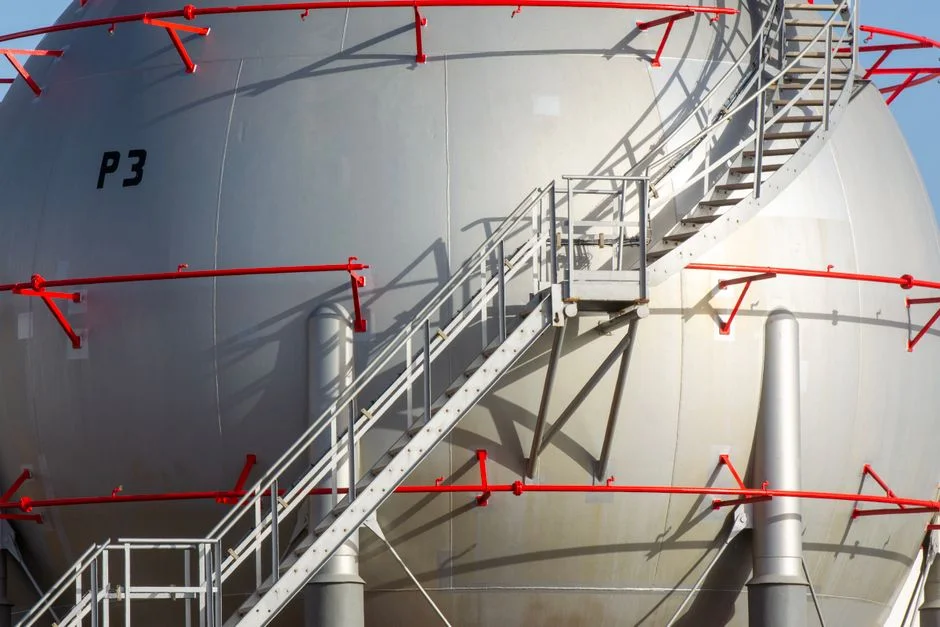
The head-of-plant train typically represents 20–30% of total installed capex and is the single largest source of downstream membrane-fouling OPEX overruns when undersized. Four unit operations do most of the work in lithium-brine service.
| Unit operation | Function | Typical capex range | Typical opex ($/m³) | Trigger condition |
|---|---|---|---|---|
| DAF system | Oil/grease and colloidal TSS removal | $25,000–$400,000 (4–300 m³/h) | $0.05–$0.20 | Produced water with O&G > 50 mg/L |
| Lamella clarifier | High-rate TSS and metal-hydroxide settling | $40,000–$250,000 | $0.02–$0.08 | Surface loading 20–40 m/h; TSS > 500 mg/L |
| Multi-media filter | SDI reduction before RO | $15,000–$120,000 per vessel | $0.03–$0.10 | RO feed SDI > 5 |
| Automatic chemical dosing | pH, antiscalant, Mg/Ca softening | $10,000–$60,000 per skid | $0.08–$0.35 | Ca 234–720 mg/L, SO₄ 1,249–2,100 mg/L |
The NREL landfill-leachate dataset flags the warning chemistry: Ca at 234–720 mg/L (median 450) and SO₄ at 1,249–2,100 mg/L (median 1,600) are high enough to precipitate CaSO₄ on RO membranes within hours of operation if antiscalant and softening are not dosed correctly (NREL 2023). A properly sized DAF system for oil and TSS removal in produced water drops downstream chemical demand by 10–25% simply by removing the emulsified oil that would otherwise consume antiscalant. A lamella clarifier for high-rate metal-hydroxide settling operating at 20–40 m/h surface loading cuts downstream chemical consumption by up to 30% versus a conventional clarifier at the same TSS load (manufacturer data, 2025). A multi-media filter for SDI reduction before RO is non-negotiable when feed SDI exceeds 5 — and produced water routinely hits SDI 15–25 without it. Finally, automatic chemical dosing for pH and antiscalant control at $0.08–$0.35/m³ opex is the smallest line item on paper but the largest when mis-tuned. A 1,000 m³/d plant running 90% uptime spends $26,000–$115,000/year on this skid alone.
Selective Lithium Recovery vs. Full Treatment: Where the Cost Curve Breaks
The strategic fork in any lithium-wastewater project is whether to treat-and-discharge, treat-and-recover, or outsource the recovery loop entirely. Each branch produces a fundamentally different capex/opex profile and a different balance-sheet treatment.
DLE trains — adsorption (manganese-oxide, titanium-oxide, aluminum-based sorbents), ion-exchange resins, or solvent extraction — convert a treatment cost into a revenue line when influent Li exceeds roughly 50 mg/L. NREL's influent dataset sits well below that threshold (0–4.7 mg/L), which is why their baseline is framed as treatment, not recovery. The Nikfar 2026 solvent-extraction + NF train breaks even on direct OPEX at approximately $5.26/kg Li₂CO₃ (chemicals $2.30 + utilities $2.96, cited 2×); at a battery-grade Li₂CO₃ price band that has hovered around $12–$15/kg in 2026, the gross margin is tight but real.
The revenue-offset argument is sharper for high-Li produced water. NREL's 2023 analysis found that the maximum value of critical minerals (Li + Mg) contained in produced water exceeds the maximum treatment cost by up to $17.80/m³ distillate — meaning a 1,000 m³/d plant could net roughly $6.5M/year in recovered metal value before DLE capex amortization (NREL 2023). The DBOO (design-build-own-operate) model offered by operators such as Lithium Harvest shifts that capex off the operator's balance sheet and converts it to a per-m³ service fee, which is the right structure for producers who don't want to underwrite DLE technology risk.
A defensible decision rule, framed as an engineering estimate rather than a guarantee: if Li in feed exceeds 50 mg/L, evaluate a DLE train; if 5–50 mg/L, evaluate NF + selective sorbent; if below 5 mg/L, focus on a low-cost treatment-only train with RO/NF discharge. The industrial RO system for brine concentration and water reuse is the workhorse in all three branches — and RO system process and stage design for industrial brine details the staging logic that determines whether the RO sits before or after the DLE loop. Operators scoping parallel pretreatment chemistry should also review the landfill leachate treatment process for organic and ammonia removal for organic-loading scenarios that complicate DLE sorbent life.
How to Build a 2026 Lithium Wastewater Treatment Cost Estimate
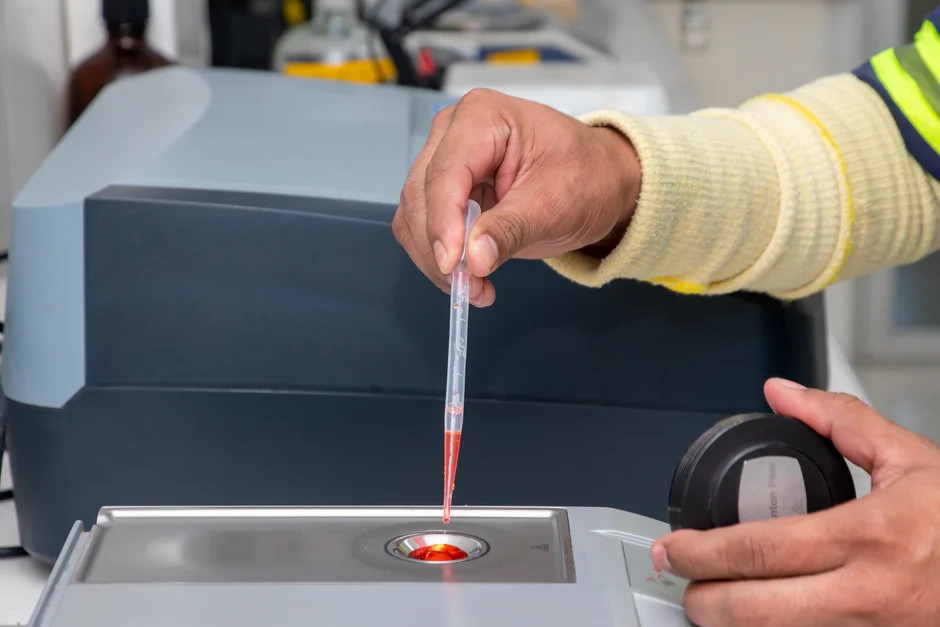
Five steps convert the public data above into a defensible capex/opex model. The method is portable across DLE, NF/RO, and solvent-extraction trains.
- Characterize the feed. Measure TDS, Li, Mg, Ca, SO₄, TSS, and oil & grease. Compare against NREL's landfill-leachate and impoundment ranges (Li 0–4.7 mg/L, Ca 234–720 mg/L, SO₄ 1,249–2,100 mg/L) to pick a baseline feed class.
- Select the $/m³ baseline from the cost-benchmark table in §2. Apply the 1.19× 2023→2026 escalation factor, or substitute your finance team's regional CPI.
- Add pretreatment line items at $0.05–$0.35/m³ opex for the DAF, lamella, multi-media filter, and chemical dosing skid combined, scaled by influent TSS and hardness.
- Add DLE or NF capex separately. DLE adsorbent-loop capex runs $1,500–$4,000 per m³/day of Li-recovery capacity as an engineering estimate; NF capex is roughly half that on a like-for-like basis.
- Net out lithium-recovery revenue at Li spot price × recovery efficiency. NREL's $17.80/m³ distillate upside is the upper bound for high-Li produced water; a more conservative $4–$8/m³ distillate is typical for the 5–50 mg/L feed class.
The methodology mirrors the OPEX breakdown methodology for industrial wastewater plants used in adjacent process industries, with the lithium-revenue offset line item as the differentiating factor.
Frequently Asked Questions
What is the typical 2026 cost to treat lithium-bearing wastewater? Treatment cost in 2026 runs $0.13–$1.36/m³ permeate for landfill-leachate-style streams and $10–$50/m³ distillate for high-TDS produced water, both escalated from the NREL 2023 baseline at approximately 6% annual inflation (NREL 2023, escalated 2026).
How much does direct lithium extraction cost per kg of Li₂CO₃? Solvent-extraction + NF DLE trains report direct OPEX of $2.30/kg Li₂CO₃ for chemicals plus $2.96/kg Li₂CO₃ for utilities, totaling $5.26/kg Li₂CO₃ at the precipitation step, with feed-side wastewater treatment reported as negligible (Nikfar 2026).
At what influent lithium concentration does DLE become economic? As an engineering rule of thumb, evaluate DLE above 50 mg/L Li, NF + selective sorbent between 5–50 mg/L, and treatment-only RO/NF below 5 mg/L — though the precise threshold depends on Li spot price, recovery efficiency, and DLE capex amortization.
What pretreatment is required before RO in a lithium-brine system? DAF for oil and colloidal TSS, lamella clarification for metal-hydroxide carryover, multi-media filtration for SDI reduction to below 5, and automatic chemical dosing for pH, antiscalant, and Ca/Mg softening — typically $0.05–$0.35/m³ combined opex.
Can lithium-recovery revenue offset treatment cost? NREL's 2023 analysis found that the value of critical minerals (Li + Mg) in produced water exceeds treatment cost by up to $17.80/m³ distillate at peak Li and Mg spot prices, translating to roughly $6.5M/year of upside for a 1,000 m³/d plant before DLE capex amortization.