Qatar’s sewage treatment equipment market is projected to grow at 8.2% CAGR through 2027, driven by Kahramaa’s strict effluent standards (TSS < 30 mg/L, COD < 125 mg/L) and industrial expansion. Leading suppliers offer MBR, DAF, and conventional STP systems, with costs ranging from $50K for small-scale units to $2M+ for municipal plants. This guide compares technical specs, compliance requirements, and vendor selection criteria to help buyers navigate Qatar’s $120M wastewater treatment equipment sector in 2025.
Qatar’s Wastewater Treatment Landscape: Regulations, Challenges, and Opportunities
Kahramaa Decree 2023/45 mandates that all industrial and commercial effluent discharged into Qatar’s municipal network must meet strict quality thresholds, including Total Suspended Solids (TSS) below 30 mg/L and Chemical Oxygen Demand (COD) below 125 mg/L. These regulations are part of a broader push under Qatar’s 2025–2030 National Water Strategy, which targets 100% wastewater reuse for irrigation and industrial processes. Selecting a sewage treatment equipment supplier in qatar is no longer just about price; it is about guaranteed compliance and equipment longevity in a harsh desert climate.
The demand for advanced equipment is largely driven by the oil and gas sector (45% of the market), followed by food processing (20%), hospitals (15%), and municipal projects (20%). A 2024 Ministry of Municipality report highlighted that approximately 30% of industrial facilities still lack adequate on-site treatment systems, creating a significant infrastructure gap. Equipment operating in Doha or Mesaieed must contend with high salinity levels (TDS reaching 40,000–50,000 ppm in some coastal areas) and temperature extremes ranging from 10°C in winter to 50°C in summer.
| Parameter | Kahramaa Discharge Standard (2025) | Industrial Pre-treatment Requirement |
|---|---|---|
| Total Suspended Solids (TSS) | < 30 mg/L | < 150 mg/L |
| Chemical Oxygen Demand (COD) | < 125 mg/L | < 250 mg/L |
| Biochemical Oxygen Demand (BOD) | < 25 mg/L | < 100 mg/L |
| pH Level | 6.0 – 9.0 | 6.5 – 8.5 |
| Oil & Grease (FOG) | < 10 mg/L | < 50 mg/L |
Sewage Treatment Equipment Types for Qatar: Technical Specs and Use Cases
Membrane Bioreactor (MBR) systems currently dominate Qatar’s decentralized sewage treatment market due to their ability to produce effluent quality that meets the Ministry of Municipality’s standards for unrestricted irrigation. MBR systems utilize PVDF membranes with a typical pore size of 0.1 μm, achieving TSS removal rates of 99.9% and COD removal of 95–98%. For facilities with limited space, such as urban hospitals or labor camps, MBR systems for near-reuse-quality effluent in Qatar’s water-scarce environment offer a footprint roughly 60% smaller than conventional activated sludge plants.
In contrast, Dissolved Air Flotation (DAF) systems are the preferred solution for Qatar’s food processing and oil/gas sectors, where high concentrations of Fats, Oils, and Grease (FOG) can foul biological membranes. Modern high-efficiency DAF systems for Qatar’s food processing and oil/gas industries generate micro-bubbles sized 30–50 μm to float solids to the surface, achieving FOG removal rates of 95% and TSS removal of 92–97%. Many industrial operators now deploy hybrid systems, using DAF as a pre-treatment stage before an MBR or a compact underground STP systems for Qatar’s urban projects to ensure the biological stage remains protected from hydrocarbon or lipid shocks.
| Equipment Type | TSS Removal | Energy Use (kWh/m³) | Footprint | Primary Use Case |
|---|---|---|---|---|
| MBR (Membrane Bioreactor) | 99.9% | 0.8 – 1.2 | Very Small | Hospitals, High-end Irrigation |
| DAF (Dissolved Air Flotation) | 92 – 97% | 0.3 – 0.5 | Medium | Food Processing, Oil/Gas |
| Conventional STP (A/O) | 85 – 90% | 0.4 – 0.6 | Large | Labor Camps, Municipal |
| Hybrid (DAF + MBR) | 99.9% | 1.1 – 1.5 | Medium | Slaughterhouses, Refineries |
Cost Breakdown for Sewage Treatment Equipment in Qatar: CAPEX, OPEX, and ROI

The average Capital Expenditure (CAPEX) for a 500 m³/day sewage treatment plant in Qatar ranges from $400,000 to $650,000. Smaller, containerized units (10–50 m³/day) typically start at $50,000, while large-scale municipal installations can exceed $2M. When evaluating quotes, procurement teams must look beyond the initial price tag; a detailed cost breakdown for Qatar’s wastewater treatment projects reveals that energy consumption and chemical dosing account for 65% of the total lifecycle cost.
Operating Expenditure (OPEX) in Qatar is influenced by subsidized but rising electricity costs and the high price of imported specialty chemicals. For an MBR system, OPEX typically sits between $0.60 and $1.50 per m³ treated, with membrane replacement every 5–7 years representing 15% of that cost. However, the Return on Investment (ROI) is often realized through water reuse. With desalinated water costs in Qatar ranging from $1.50 to $2.00 per m³, substituting this with treated sewage effluent (TSE) for cooling towers or landscaping can result in a payback period of 3 to 5 years. avoiding Kahramaa non-compliance penalties, which can range from $10,000 to $50,000 per violation, provides a significant financial incentive for high-performance equipment.
| Cost Component | Conventional STP ($/m³) | MBR System ($/m³) | DAF System ($/m³) |
|---|---|---|---|
| Energy Consumption | $0.15 – $0.25 | $0.35 – $0.55 | $0.12 – $0.20 |
| Chemical Dosing | $0.05 – $0.10 | $0.08 – $0.15 | $0.20 – $0.45 |
| Maintenance/Labor | $0.10 – $0.20 | $0.15 – $0.30 | $0.08 – $0.15 |
| Membrane Replacement | N/A | $0.10 – $0.50 | N/A |
| Total OPEX/m³ | $0.30 – $0.80 | $0.60 – $1.50 | $0.40 – $1.00 |
How to Select a Sewage Treatment Equipment Supplier in Qatar: Vendor Checklist
When evaluating a potential sewage treatment equipment supplier in qatar, the first priority should be their local presence. A vendor without a Doha-based technical team cannot meet the < 4-hour emergency response time required for critical infrastructure like hospitals or food production plants.Procurement regulations in Qatar’s industrial zones often require equipment suppliers to maintain a minimum of 15% of the contract value in local spare parts inventory to ensure operational continuity. Technical due diligence should include a review of the supplier’s experience with high-salinity wastewater, which is a common challenge in the GCC. For instance, an industrial wastewater treatment solutions for GCC markets guide emphasizes that equipment must be rated for ambient temperatures of 50°C to prevent control panel overheating and biological sludge bulking.
- Local Support: Does the vendor have an office in Doha or Al Rayyan with 24/7 service capability?
- Inventory: Are critical spare parts (membranes, blowers, sensors) stocked locally in Qatar?
- Compliance: Can the supplier provide 3+ case studies showing effluent meeting Kahramaa 2023/45 standards?
- Materials: Is the equipment constructed from corrosion-resistant materials (e.g., SS316L or GRP) suitable for Qatar’s salinity?
- Monitoring: Does the system include remote PLC monitoring for real-time troubleshooting?
- Financial Stability: Can the vendor provide a performance bond and proof of professional liability insurance ($1M+)?
Case Study: Industrial STP for a Doha Food Processing Plant
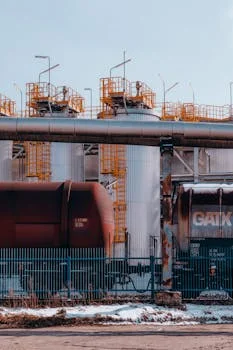
A 150 m³/day industrial sewage treatment system installed at a Doha-based food processing facility achieved a 95% reduction in Fats, Oils, and Grease (FOG) within the first 30 days of commissioning. Before the upgrade, the facility struggled with frequent Kahramaa violations due to FOG levels exceeding 1,200 mg/L, which caused blockages in the municipal sewer line.
The solution involved a multi-stage treatment train. A high-efficiency DAF systems for Qatar’s food processing and oil/gas industries was installed for primary solids and grease removal, followed by an MBR systems for near-reuse-quality effluent in Qatar’s water-scarce environment for biological polishing. The project, completed in 2023, cost approximately $450,000 in CAPEX. Post-installation data showed effluent TSS at 12 mg/L and FOG at 5 mg/L, well within regulatory limits.
Frequently Asked Questions
What are Kahramaa’s wastewater discharge standards for 2025?
Under Decree 2023/45, effluent must maintain TSS < 30 mg/L, COD < 125 mg/L, BOD < 25 mg/L, and pH between 6.0 and 9.0.