Quick Answer: DAF or Clarifier for a Long Prairie Food & Beverage Plant?
Food and beverage factories in Long Prairie, Minnesota should choose a Dissolved Air Flotation (DAF) system over a gravity clarifier in 2026 whenever the wastewater contains more than ~200 mg/L of fats, oils, and grease (FOG) or more than ~500 mg/L of total suspended solids (TSS) — which covers virtually all dairy, meat, and beverage lines. DAF delivers 92–97% TSS and over 95% FOG removal in a 4–300 m³/h footprint, produces 3–5% dry-solids sludge (versus ~1% for sedimentation), and typically pays back in 1.5–3 years through surcharge elimination. The Ecologix 2026 case study confirms the gap: 95% oil removal on a DAF versus 70% on a clarifier treating the same high-FOG food stream (per Ecologix 2026 selection guide).
Two named exceptions still favor a clarifier. First, low-FOG produce washwater under 100 mg/L FOG — typical of potato or root-vegetable lines — where DAF chemical dosing cannot be justified. Second, plants already running a primary clarifier upstream of an existing biological train, where the hybrid configuration protects downstream biology. For any new installation at a Long Prairie dairy, meat, or beverage plant that has to meet the 40 CFR Part 405 dairy TSS benchmark of <30 mg/L or the analogous Part 409 (beverage) and Part 432 (meat products) limits, DAF is the defensible 2026 choice.
Why Long Prairie Food & Beverage Wastewater Is Different
Long Prairie sits in the Long Prairie River watershed, a tributary system draining into the Crow River basin in central Minnesota. Industrial discharge from the city's food and beverage processors flows to the City of Long Prairie POTW, which enforces a local sewer-use ordinance and applies monthly surcharges on TSS, BOD, FOG, and excess flow. Because Minnesota is an NPDES-delegated state, the Minnesota Pollution Control Agency (MPCA) requires industrial users to demonstrate compliance with the federal categorical standards: 40 CFR Part 405 for dairy products, 40 CFR Part 409 for beverage processing, and 40 CFR Part 432 for meat and meat products. These subparts set numeric limits on TSS, BOD, FOG, and pH that flow through into the local discharge permit.
Typical Long Prairie F&B influent runs 500–5,000 mg/L TSS and 200–2,000 mg/L FOG (per HydropureWater 2026 engineering guide) — concentrations that would trigger surcharges at virtually any POTW. Winter ambient temperatures in Long Prairie regularly drop below -20°C, and cold influent raises viscosity, slowing both settling and bubble rise. The 1978 EPA Symposium paper by Fulton, Mulyk, and Haskill documents exactly this failure mode: at Plant A, an uncovered integral clarifier in a northern U.S. food plant experienced turbulence and freezing shortly after start-up, and the operators only resolved it by enclosing the clarifier in a metal structure and blowing warm air across the liquid surface (Fulton et al., EPA-600/2-78-188, 1978). Any 2026 technology decision that ignores freeze protection is not complete.
How a DAF System Actually Treats Food & Beverage Waste
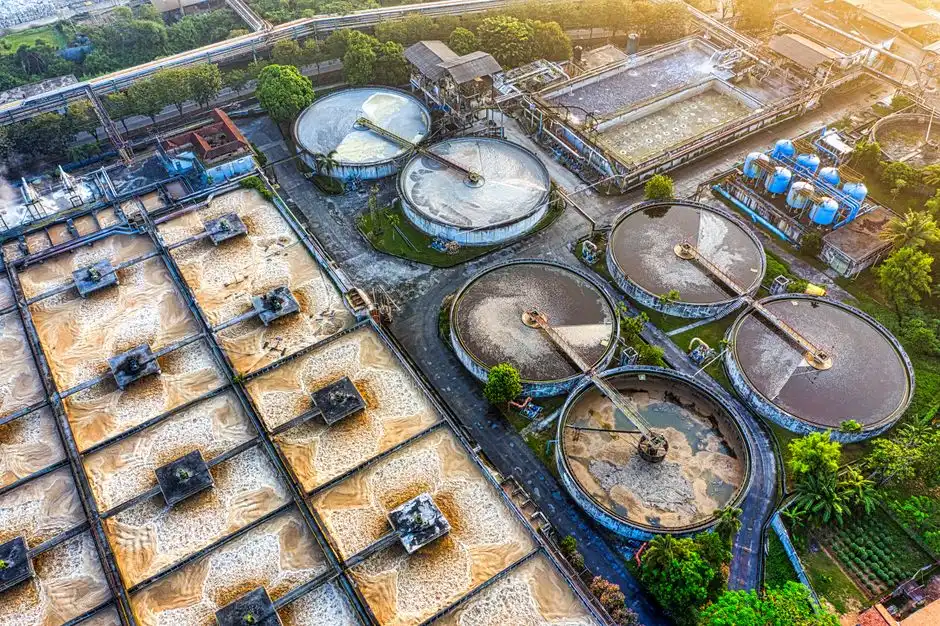
A DAF unit generates micro-bubbles by saturating a pressurized recycle stream with air at 4–6 bar and then releasing that stream at atmospheric pressure into the main flotation tank. Bubble diameters fall in the 10–80 μm range per the HydropureWater 2026 engineering guide; SigmaDAF's commercial literature quotes 30–50 μm, which sits in the same window and is the range where bubble-particle collision efficiency peaks. Bubbles larger than ~100 μm rise too quickly and break fragile flocs; bubbles smaller than ~10 μm lack the buoyancy to lift heavy solids (HydropureWater 2026 engineering guide).
Chemical conditioning runs ahead of the flotation cell. Polyaluminum Chloride (PAC) is dosed at 50–200 mg/L to neutralize particle surface charge, followed by an anionic or cationic polymer at 1–5 mg/L to bridge particles into larger flocs in a pipe flocculator. From the flocculator, the stream enters an equalization tank, then the DAF cell where the "whitewater" recycle is introduced. Key process parameters: A/S ratio 0.02–0.06, hydraulic loading 2–10 m/h, flotation-zone retention 20–30 min, sludge blanket 0.3–0.6 m, skimmer speed timed for 3–5% dry solids (HydropureWater 2026 engineering guide). Standard construction is 304SS, with 316SS specified for CIP-corrosive dairy and beverage service. PLC-controlled chemical dosing adjusts for variable influent — a feature that is now standard in 2026 turnkey packages. For plant managers evaluating a DAF system, the relevant design envelope is 4–300 m³/h at 92–97% TSS removal and >95% FOG removal.
Real-world performance: a Midwest cheese plant processing 500,000 lb of milk per day was paying $250,000/year in surcharges at 1,200 mg/L raw FOG. After DAF pretreatment, FOG dropped to 8 mg/L and TSS to 25 mg/L, returning the full CAPEX in 18 months through surcharge avoidance alone (HydropureWater field data, 2025).
| Parameter | Typical 2026 Operating Range | Source |
|---|---|---|
| Bubble diameter | 10–80 μm (30–50 μm typical) | HydropureWater 2026; SigmaDAF 2026 |
| Saturation pressure | 4–6 bar | HydropureWater 2026 engineering guide |
| A/S ratio | 0.02–0.06 | HydropureWater 2026 engineering guide |
| Hydraulic loading | 2–10 m/h | HydropureWater 2026 engineering guide |
| Retention time | 20–30 min | HydropureWater 2026 engineering guide |
| Sludge blanket | 0.3–0.6 m | HydropureWater 2026 engineering guide |
| PAC dose | 50–200 mg/L | HydropureWater 2026 engineering guide |
| Polymer dose | 1–5 mg/L | HydropureWater 2026 engineering guide |
| Sludge dry solids | 3–5% | HydropureWater 2026 engineering guide |
| TSS removal | 92–97% | HydropureWater 2026 engineering guide |
| FOG removal | >95% | HydropureWater 2026 engineering guide |
How a Gravity Clarifier Treats the Same Stream
A gravity clarifier — including the lamella plate variant — relies on differential settling. Heavier solids drop to the bottom under quiescent conditions; floating FOG is captured by scum boards and skimmers at the surface. The 1978 EPA case at Plant A documented an integral clarifier that consistently achieved clarifier-effluent BOD <30 mg/L and suspended solids <40 mg/L on a 318 m³/day poultry stream with average influent BOD 600 mg/L and SS 400 mg/L (Fulton et al., EPA-600/2-78-188, 1978). On the FOG fraction, however, the same technology class only achieves roughly 70% removal on a high-oil food stream (per Ecologix 2026 selection guide) — well below the >95% a DAF delivers.
Sludge output is the second penalty. A conventional clarifier generates sludge at ~1% dry solids, versus 3–5% for DAF (HydropureWater 2026 engineering guide). That is roughly a 4× volume penalty in hauling and disposal cost. Lamella clarifiers improve the surface-loading rate to 20–40 m/h, but the tank footprint for a 50 m³/h F&B stream is still materially larger than an equivalently rated DAF, and the technology does not address the FOG deficit. The cold-climate limit is decisive in Long Prairie: the Plant A clarifier had to be enclosed in a metal structure with warm air blown across the surface to prevent freezing, a retrofit that added capex and ongoing heating cost (Fulton et al., EPA-600/2-78-188, 1978). For a fair comparison of footprint options, the lamella clarifier specification should be reviewed alongside any DAF quote.
DAF vs Clarifier: 2026 Comparison Matrix
The matrix below consolidates the nine decision variables a procurement manager or compliance lead needs to evaluate side-by-side. CAPEX figures are sized to a representative 50 m³/h F&B unit. Numbers are drawn from the HydropureWater 2026 engineering guide, the Ecologix 2026 selection guide, and the 1978 EPA Symposium case histories (Fulton et al., 1978).
| Decision Variable | DAF | Gravity / Lamella Clarifier |
|---|---|---|
| Removal mechanism | Micro-bubble flotation (10–80 μm) | Gravity settling + scum boards |
| TSS removal | 92–97% | 60–80% (up to 90% on heavy sediment) |
| FOG removal | >95% | ~70% on high-oil streams |
| Sludge dryness | 3–5% DS | ~1% DS |
| Footprint (per m³/h) | 0.5–2 m² | 2–4 m² (lamella 1–2 m²) |
| CAPEX, 50 m³/h unit | $150K–$200K | $80K–$120K |
| OPEX (energy) | $0.10–$0.30/m³ | $0.05–$0.15/m³ |
| Cold-climate suitability | Good with heat-traced saturation vessel and enclosed skimmer | Poor unless enclosed with heated airspace (Fulton 1978) |
| Typical 2026 use case | High-FOG dairy, meat, beverage; FOG >200 mg/L or TSS >500 mg/L | Low-FOG produce washing (<100 mg/L FOG); hybrid upstream of biological train |
2026 Costs and ROI for a Typical 50 m³/h Long Prairie Plant
The baseline ROI example published in the HydropureWater 2026 engineering guide uses a 50 m³/h cheese plant: $150,000 CAPEX, $50,000 annual OPEX, $120,000 per year in surcharges avoided, yielding net $70,000 per year and a 2.1-year payback. That math is directly portable to a Long Prairie dairy, meat, or beverage plant of equivalent size.
Local surcharge mechanics adjust the picture. The City of Long Prairie POTW applies surcharges on TSS, BOD, and FOG above ordinance limits, with rates typically running $0.10–$0.40 per pound of TSS and $0.05–$0.20 per pound of FOG in excess of the cap — well within the range quoted in municipal sewer-use ordinances across the upper Midwest. For a 50 m³/h plant running two shifts at 1,000 mg/L FOG and 2,000 mg/L TSS, the surcharge exposure easily reaches $100,000–$150,000 per year, which lines up with the HydropureWater baseline. Sludge-hauling adds a second savings line: 4× lower volume than clarifier sludge at $80–$150 per wet ton disposal = $15,000–$40,000 per year for a 50 m³/h plant. Installation typically adds 20–30% on top of equipment cost for civil works and electrical, and 2026 turnkey PLC automation is now standard rather than an option.
| Cost / Benefit Line Item | 50 m³/h DAF (Long Prairie, 2026) | Notes |
|---|---|---|
| Equipment CAPEX | $150,000–$200,000 | DAF line, 304/316SS, PLC-controlled |
| Installation (civil + electrical) | +20–30% of CAPEX | 2026 turnkey norm |
| Annual OPEX | $50,000 | Chemicals 50–60%, energy, maintenance |
| Surcharges avoided | $100,000–$150,000/yr | POTW $0.10–$0.40/lb TSS; $0.05–$0.20/lb FOG |
| Sludge hauling savings | $15,000–$40,000/yr | 4× lower volume vs clarifier at $80–$150/wet ton |
| Net annual benefit | $70,000–$140,000/yr | After OPEX |
| Simple payback | 1.5–3 years | HydropureWater 2026 engineering guide baseline: 2.1 yr |
When a Clarifier Still Beats a DAF in 2026
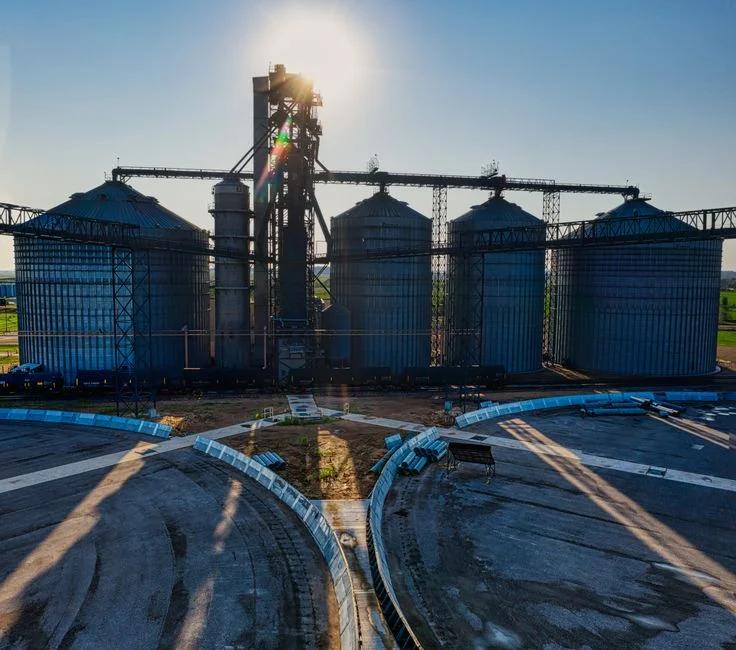
Three real exceptions favor a clarifier. First, low-FOG, high-inorganic-solids produce washwater — potato, carrot, or root-vegetable lines running under 100 mg/L FOG — where the DAF's $50K/year chemical program cannot be justified and gravity settling handles the dense soil load cheaply. Second, plants already running a primary clarifier as part of a biological train; the existing infrastructure can be retained and a DAF added on the clarifier underflow if FOG spikes occur. Third, tight CAPEX situations where a $60K lamella clarifier plus a small polymer program can buy 12–18 months of compliance while a DAF is being budgeted and permitted. Very small flows under 5 m³/h also favor a packaged lamella unit: the DAF 4 m³/h minimum is over-spec, and the lamella clarifier footprint is friendlier at that scale. None of these exceptions applies to a typical Long Prairie dairy, meat, or beverage line with FOG above 200 mg/L.
Four-Step Selection Framework for a Long Prairie Factory
Step 1 — Pull two weeks of grab-sample data: TSS, FOG, BOD, and hourly flow. Plot the daily averages against the 200 mg/L FOG and 500 mg/L TSS thresholds from this article. If the median FOG exceeds 200 mg/L or TSS exceeds 500 mg/L, DAF is the default technology.
Step 2 — Confirm the regulatory pathway. Check whether 40 CFR Part 405 (dairy), 40 CFR Part 409 (beverage), or 40 CFR Part 432 (meat products) applies to the SIC code, then read the local POTW sewer-use ordinance for surcharge triggers and discharge limits. The MPCA industrial discharge permit will reference both. A PLC-controlled chemical dosing skid sized to the flow band is part of most 2026 turnkey DAF quotes.
Step 3 — Build a 5-year cost model. Use the CAPEX, OPEX, sludge, and surcharge numbers from this article as the baseline and adjust for site-specific hauling cost and electricity rate. A DAF typically pays back in 1.5–3 years (HydropureWater 2026 engineering guide); a clarifier has lower CAPEX but no comparable FOG removal. Side-by-side scenarios with realistic surcharge avoidance are what the CFO needs.
Step 4 — Confirm freeze protection before signing the PO. Specify heat-traced saturation vessels, an enclosed skimmer housing, and a heated or insulated building enclosure. The 1978 EPA case at Plant A only resumed reliable operation after the integral clarifier was enclosed in a metal structure with warm air blown across the surface (Fulton et al., EPA-600/2-78-188, 1978) — a retrofit any 2026 DAF or clarifier spec should build in up front, not after a January freeze event. For a deeper cost benchmark on a comparable food-and-beverage stream, the DAF system for brewery wastewater cost in 2026 buyer's guide applies the same 50 m³/h framework to a different F&B sub-sector.
Frequently Asked Questions
When should a Long Prairie food or beverage plant pick DAF over a clarifier?
Choose DAF whenever raw wastewater exceeds ~200 mg/L FOG or ~500 mg/L TSS — which covers essentially all dairy, meat, and beverage lines. DAF delivers >95% FOG and 92–97% TSS removal versus ~70% FOG and 60–80% TSS for a clarifier on the same stream (HydropureWater 2026; Ecologix 2026).
What is the typical 2026 CAPEX and payback for a 50 m³/h Long Prairie plant?
CAPEX runs $150,000–$200,000 for a 50 m³/h DAF unit, plus 20–30% for installation. With $100,000–$150,000 per year in surcharges avoided and $15,000–$40,000 per year in sludge-hauling savings against $50,000 annual OPEX, simple payback lands at 1.5–3 years (HydropureWater 2026 engineering guide baseline: 2.1 years).
Which 40 CFR Part applies, and what TSS/FOG limit must be met?
Dairy processors fall under 40 CFR Part 405, beverage processors under Part 409, and meat products under Part 432. The dairy category sets a TSS benchmark of <30 mg/L; analogous BOD, TSS, and FOG limits apply to the other subparts and are flowed into the MPCA-issued industrial discharge permit and the local POTW sewer-use ordinance.
How do you keep a DAF running through a Long Prairie winter?
Specify heat-traced saturation vessels and recycle lines, an enclosed skimmer housing, and either a heated building or an insulated enclosure around the DAF cell. The 1978 EPA Plant A case only resumed reliable operation after the clarifier was enclosed in a metal structure with warm air blown across the surface (Fulton et al., EPA-600/2-78-188, 1978) — the same principle applies to DAF saturation vessels in central Minnesota.
Can a DAF and a clarifier be combined on the same line?
Yes. A hybrid configuration — clarifier first to settle heavy inorganic solids, DAF second to lift FOG and fine suspended matter — is common in plants already running a primary clarifier upstream of an existing biological train, and in mining or produce-wash applications where the solids fraction is bimodal. Ecologix 2026 also flags hybrid systems as the answer for complex streams with both high oil and high sediment loads.