What 'Sewage Treatment Plant Supplier' Means in Johor Bahru in 2026
A sewage treatment plant supplier in Johor Bahru in 2026 is typically a Malaysian system integrator (often acting as agent for a Chinese OEM) who delivers packaged, MBR, or conventional activated-sludge plants meeting DOE Standard A — BOD ≤20 mg/L, SS ≤50 mg/L, NH3-N ≤10 mg/L — at typical CAPEX of MYR 350–1,200 per m³/day for 10–2,000 m³/day capacities. Qualification should be on reference plants in Pasir Gudang or Senai, not brochures.
Three supplier tiers are active in the JB market. The first is the Malaysian system integrator based in Johor Bahru or Senai, who handles design, installation, commissioning, and after-sales; the reactor tanks and mechanical equipment are often sub-OEM from China. The second is the Chinese OEM factory exporting under FOB or CIF to Port of Tanjung Pelepas (PTP) or Pasir Gudang, typically 25–40% cheaper on CAPEX but requiring a competent Malaysian partner for civil interface and DOE paperwork. The third is the European or Japanese brand representative for premium pharmaceutical, electronics, or semiconductor projects where validation cycles are long and price sensitivity is low.
The Johor–Singapore Special Economic Zone (JS-SEZ), formalised through 2024–2025 bilateral agreements, is pulling new industrial STP demand into Pasir Gudang, Tanjung Pelepas, and Sedenak. Local fabricators are scaling up, but the biological reactor cores, blowers, and membrane modules still come predominantly from China or Europe. A "supplier in Johor Bahru" is therefore usually a hybrid: a Malaysian front company for warranty and after-sales, backed by a Chinese OEM factory for fabrication. Buyers should verify both legs — visit the integrator's office in JB, then ask for the OEM factory audit report and the SIRIM test certificates on a comparable plant.
The Made-in-China and DirectIndustry listings that dominate the top of the SERP are catalog pages, not qualified Malaysian project suppliers. They list product specifications and FOB prices, but none of them address DOE Standard A effluent numbers, the JS-SEZ corridor, or the logistics chain into PTP. Local engineering support and familiarity with the JB District DOE office are the actual differentiators.
DOE Standard A and Other 2026 Compliance Anchors You Must Hit
DOE Malaysia Standard A sets the binding discharge numbers for industrial effluent in Johor: BOD ≤20 mg/L, SS ≤50 mg/L, NH3-N ≤10 mg/L, with stricter limits on heavy metals depending on the industry (per the Environmental Quality (Industrial Effluent) Regulations 2009, as enforced by DOE in 2025–2026). Standard B — BOD 50 mg/L, SS 100 mg/L, NH3-N 20 mg/L — applies to discharge into sub-tributaries; most JB industrial parks require Standard A or stricter.
For any factory near the Singapore border — Senoko-adjacent sites in Sedenak, or any plant whose treated effluent eventually reaches a Singapore-bound watercourse — Singapore PUB's Used Water Quality limits also apply: COD ≤250 mg/L and TSS ≤30 mg/L for trade effluent discharging to the public sewer (PUB, 2025-09 update). A Malaysian supplier who has never navigated PUB cross-border coordination will stall the project at the discharge permit stage.
The 2026 regulatory trend is tighter. DOE is tightening heavy-metal and total nitrogen limits in Johor because of the JS-SEZ industrial influx, with site audits in Pasir Gudang running 2–3× more frequently than in 2023 (per DOE enforcement summaries, 2025). The supplier must be able to upgrade the biological stage to A2O or add an MBR polishing step without redesigning the tank farm. Ask the supplier to show, on a recent project in Johor, how the upgrade was executed and what the incremental CAPEX was.
Require a third-party effluent test report — SIRIM or an ISO 17025-accredited lab — on a comparable plant, dated within 24 months, not a process simulation. The report should include influent characterisation, operating parameters (MLSS, DO, SRT), and 7-day composite effluent values across all regulated parameters.
The Four Process Trains You Will Be Quoted
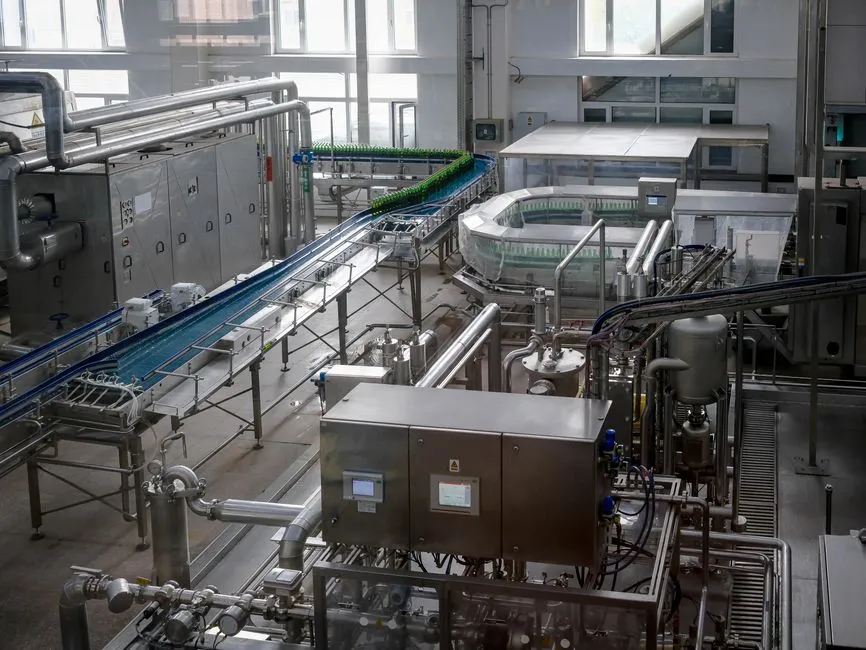
Process mis-selection causes more JB project failures than bad equipment. The four process trains quoted in Johor each fit a different influent and footprint profile.
Conventional Activated Sludge (CAS) with a secondary clarifier is the baseline, dominant for 50–5,000 m³/day municipal and light-industrial plants. On its own it achieves 60–80% BOD removal and needs a tertiary polishing stage — sand filter, disc filter, or MBR — to reliably hit Standard A. CAS is the cheapest per m³ but has the largest footprint of the four trains.
The WSZ underground package STP combines A/O biological contact oxidation, sedimentation, and disinfection in a single buried unit rated 1–80 m³/h, fully automated on PLC, with no full-time operator required. It is the right pick for hotels, hospitals, residential townships, and small factories with limited above-grade site area; for a packaged buried plant the WSZ underground package STP (1–80 m³/h) delivers Standard A effluent with chlorination and zero above-grade visual impact.
SBR / CASS (sequencing batch or cyclic activated sludge) is flexible for variable influent, common in food processing and palm oil mills across Johor. A CASS train can handle BOD swings of 200–800 mg/L without equalisation. Published maintenance OPEX benchmarks for CASS in Malaysian palm oil and food installations run MYR 0.06–0.18/m³ (see the CASS process maintenance cost in 2026 breakdown).
MBR membrane bioreactor couples activated sludge with a submerged PVDF membrane at <1 μm filtrate, giving a footprint roughly 60% smaller than CAS for the same throughput. It is the right pick when effluent must hit Standard A consistently, when water reuse is intended, or when site area is constrained — typical of Pasir Gudang inner-zone factories. An integrated MBR system (10–2,000 m³/day) can be delivered in a skid-mounted containerised format that drops onto a prepared slab. For a deeper process walkthrough see the how an MBR system for sewage works in 2026 engineering guide.
The MBR membrane module itself is worth specifying carefully. The DF series 0.1 μm PVDF flat-sheet module runs 80–225 m² active area per cassette, 32–135 m³/day per module depending on configuration, stainless steel frame, individually replaceable elements, and consumes 10–20× less energy than external cross-flow designs because the membrane sits directly in the aeration tank. For palm oil mill effluent specifically, see the MBR for palm oil mill wastewater design in 2026 reference design.
Side-by-Side Comparison: Which Process Fits Your JB Site
Use this table as the first filter in your supplier evaluation. If the supplier recommends a process that does not match your capacity and footprint constraints, push back before discussing price.
| Process | Capacity range | Typical effluent (BOD / SS / NH3-N) | Footprint | Operator skill needed |
|---|---|---|---|---|
| CAS + tertiary | 50–5,000 m³/day | ~20–30 / ~20 / ~8 mg/L after polishing | Largest (4–6× the MBR area) | 1–2 trained operators |
| WSZ package (buried) | 1–80 m³/h | Meets Standard A with disinfection | Zero above-grade footprint | PLC auto, no resident operator |
| SBR / CASS | 20–2,000 m³/day | Standard A achievable | Moderate | 1 part-time operator |
| MBR | 10–2,000 m³/day | <5 / <1 / <1 mg/L (comfortably Standard A) | ~60% smaller than CAS | PLC auto + monthly membrane CIP |
Decision logic for a JB factory: small commercial or residential scope with tight above-grade area → WSZ; food or palm oil variable load with available land → CASS; tight industrial footprint or reuse intent → MBR; large municipal or 2,000+ m³/day → CAS with tertiary polishing.
Pretreatment and Sludge Equipment That Comes with the Package
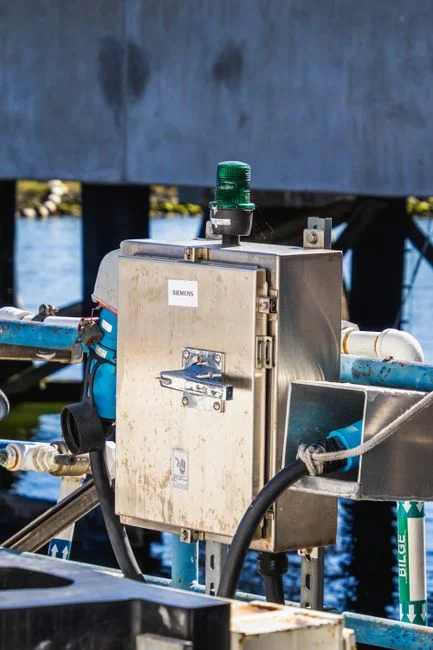
A "sewage treatment plant" is more than the biological tank. Bundling the headworks, primary clarification, sludge dewatering, and disinfection correctly saves 15–25% on the RFQ and avoids interface problems at commissioning.
Headworks starts with a GX series rotary bar screen for headworks — continuous-duty fine screening with stainless rake teeth, sized to protect the downstream pumps and biological stage from ragging. This should be line-itemed, not buried inside a "civil works" allowance.
For high-FOG industrial influent such as food processing or slaughterhouse, a DAF for FOG and high-SS industrial influent (4–300 m³/h, micro-bubble, 13 standard models) typically achieves 92–97% TSS removal on DAF effluent and protects the downstream biological stage from hydraulic shock.
The sludge line needs a lamella clarifier thickener (20–40 m/h surface loading, ~30% chemical savings versus circular clarifier) followed by a plate-and-frame filter press (1–500 m², hydraulic or automatic PLC) to dewater to ≥22% DS cake. A cake at 22% DS passes the DOE sludge-handling threshold for offsite disposal; below 20% you trigger additional handling fees.
Disinfection: for sites that do not want chlorine gas handling, a chlorine dioxide generator (50 g/h manual to 20,000 g/h industrial) covers the range. Hospital and medical effluent typically requires the ozone-based compact medical wastewater system for 99%+ kill on resistant organisms.
2026 Cost Reality in Johor Bahru: CAPEX, OPEX, and the OEM Question
Packaged STP CAPEX benchmark for 2026: MYR 350–1,200 per m³/day for 10–2,000 m³/day plants, with MBR at the upper end and WSZ package at the lower end (HydropureWater field data, 2026). The wide range reflects influent complexity, automation level, and tank material (HDPE vs concrete vs carbon-steel epoxy).
OPEX benchmark: MYR 0.25–0.60 per m³ treated for power, chemicals, and routine maintenance. Membrane replacement on MBR adds MYR 0.08–0.15 per m³ over a 5–8 year membrane life. CASS runs cheaper on routine OPEX but more on sludge hauling if waste activated sludge is not well stabilised.
Chinese OEM + Malaysian integrator versus fully local fabrication: roughly 25–40% CAPEX saving on equal effluent quality. The trade-off is 12–16 weeks sea freight to PTP plus the need for a competent local commissioning partner. For projects above MYR 2 million CAPEX, the saving typically pays for the integrator's scope several times over.
Hidden costs that supplier quotes routinely miss and that you must explicitly exclude or include to make the RFQ apples-to-apples: import duty (5–10% on HS 8421 for filtration and separating equipment), Sales and Service Tax (SST 6–10%), site civil works (MYR 80–200 per m³ of tank volume), and SIRIM third-party effluent testing (MYR 8,000–25,000 per test campaign, typically 2–3 campaigns during the defects liability period).
7-Point Supplier Qualification Checklist Before You Sign
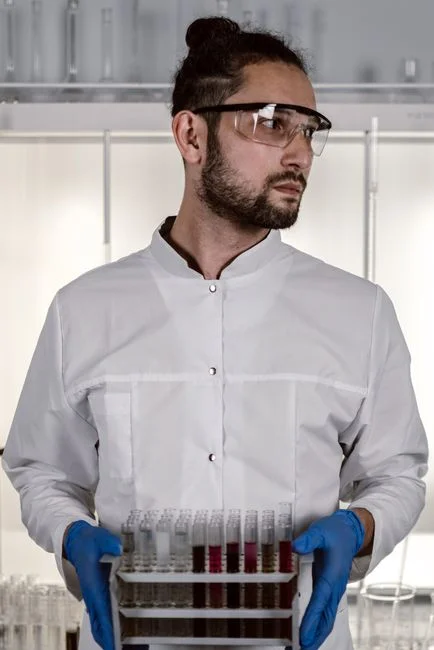
- Reference plants: minimum two running plants in Johor or Singapore within the last 36 months, with contactable plant manager names. Visit one in person — walk the tank farm, check for algae growth, listen to the blowers, look at the SCADA trend.
- Effluent compliance evidence: in-house or contracted SIRIM / DOE test reports on a comparable plant, dated within 24 months, showing Standard A compliance across BOD, SS, NH3-N, and the relevant heavy metals.
- Warranty terms in writing: minimum 24 months covering membrane modules, blowers, control panel, and PLC software. Clarify whether membrane replacement is pro-rata or full replacement at no cost for manufacturing defects.
- Spares inventory in Malaysia: confirm the supplier stocks at least 12 months of consumables — membrane cleaning chemicals (NaOCl, citric acid), aerator diffusers, UV lamps, DO probes — in a JB or KL warehouse, not shipped from China on request.
- Local commissioning team: at least two factory-trained Malaysian engineers based in JB for the SAT (Site Acceptance Test), not flown in from China. Ask for their names and site-project history.
- Process guarantees tied to liquidated damages: failure to meet Standard A in the first 90 days triggers a free upgrade (additional stage or membrane swap), not just a service visit. Put a monetary LD in the contract — MYR 5,000–15,000 per non-compliant parameter per month is typical.
- Remote monitoring: PLC with 4G/SCADA telemetry so the supplier can troubleshoot from KL or JB. This is table stakes in 2026 and should not be priced as an optional extra.
Logistics and After-Sales: What Changes When You Import the Plant
The standard sea-freight route is Shanghai or Qingdao to Port of Tanjung Pelepas (PTP) or Pasir Gudang, with 12–16 days transit and CIF Johor as the typical Incoterm. On-site work splits: civil works and tank erection are local (Malaysian subcontractor), while equipment mounting, wiring, and commissioning are the OEM's responsibility, executed through their Malaysian integrator partner.
After-sales is where projects succeed or fail. Get three things in the contract: 24/7 phone support in Bahasa Malaysia or English, a 48-hour on-site response commitment inside Johor Bahru (96 hours for outside JB), and spares lead times of 7–14 days air for common wear items versus 30–45 days sea for major items like blowers or full membrane modules. Plan a 6-month safety stock of critical spares for the first year of operation; this is cheaper than a single emergency air-freight shipment of a blower from Shanghai.
Frequently Asked Questions
How much does a sewage treatment plant cost in Johor Bahru in 2026? Packaged STP CAPEX runs MYR 350–1,200 per m³/day for 10–2,000 m³/day plants, with MBR at the upper end and WSZ at the lower end. OPEX is MYR 0.25–0.60 per m³ treated, plus MYR 0.08–0.15 per m³ for membrane replacement on MBR trains. Sourcing the biological core from a Chinese OEM with a Malaysian integrator typically saves 25–40% CAPEX versus fully local fabrication.
Which process is best for a palm oil mill or food factory in Johor? CASS or MBR, with DAF pretreatment to strip FOG. CASS handles the high BOD and variable load at lower CAPEX; MBR gives a smaller footprint and reuse-quality effluent but higher membrane OPEX.
Can a Chinese STP supplier be used for a DOE-regulated JB project? Yes, provided the project uses a qualified Malaysian integrator for the front-end engineering, the warranty, and the commissioning, and the supplier delivers a third-party SIRIM effluent test on a comparable plant. The integrator's local presence is what carries the DOE compliance risk, not the OEM's country of origin.
What is the typical lead time from purchase order to commissioning? 14–18 weeks for a packaged STP (12–16 weeks sea freight + 2–3 weeks site work), 20–26 weeks for an MBR system that includes the membrane modules. Add 4–6 weeks if the tank farm is concrete and cast in situ.
How long do MBR membranes last in Malaysian tropical conditions? 5–8 years with proper cleaning (typically weekly maintenance CIP and quarterly recovery CIP). PVDF flat-sheet modules like the DF series at 0.1 μm pore size handle the 28–32°C JB ambient temperature without significant flux loss, provided MLSS stays in the 8,000–12,000 mg/L range and fouling is monitored via transmembrane pressure trending.