Why POME Breaks Standard MBR Design Assumptions
MBR palm oil mill design uses a two-stage train: high-rate anaerobic pretreatment removes 80–90% of COD as biogas, then a submerged PVDF aerobic MBR polish. Design flux stays at 8–15 L/m²·h with MLSS held at 8,000–12,000 mg/L. A standalone aerobic MBR on raw POME fouls within 48–72 h and still misses BOD targets.
Raw POME leaves the sterilizer condensate stream at 60–90 °C with COD between 25,000 and 80,000 mg/L and BOD₅/COD ratios of 0.45–0.55 (Springer 2024 chapter; Hwang 1978, Planter 54:749–756; Ma 1999). Oil and grease sit at 4,000–8,000 mg/L, with TSS ranging 15,000–50,000 mg/L. At those concentrations, a municipal MBR flux table collapses on contact. Dissolved oxygen saturation drops below 6 mg/L at 60 °C, raising aerobic blower power. Residual oil blinds PVDF surfaces within hours. High TSS raises mixed-liquor viscosity and pushes the critical flux ceiling down to a third of municipal values. The 250 mg/L phenol background documented by Chaipetch et al. (2022, BioResources 17(2):3398–3412) is biotoxic to methanogens above the 13% hydrolysis ratio threshold observed in their pilot.
A standalone aerobic MBR sized for POME will consume roughly three times the energy of a municipal unit, foul in 48–72 h, and still miss BOD targets because the FOG skim never reaches the membranes. The configuration that has emerged in 2024–2026 commercial work is a two-stage train. A high-rate anaerobic stage (UASB, CSTR, or covered lagoon) takes 80–90% of the COD load and converts it to biogas. A submerged PVDF aerobic MBR polish then lifts effluent to 20 mg/L BOD / 50 mg/L COD territory. Chaipetch et al. (2022) proved the concept at OLR 50–98 kg COD/m³·d on Surat Thani POME, with 70% total COD removal and a membrane contribution of 23.9–34.7%. The membrane is not a primary digester—it is a polishing barrier, and designing it as anything else is the first mistake most retrofits make.
What is POME treatment for palm oil mills?
POME treatment for palm oil mills is a sequenced train that cools and de-oils raw effluent, digests most COD anaerobically, then polishes with an aerobic barrier such as MBR. Mills that skip the anaerobic stage and send sterilizer condensate straight to membranes burn energy and replace cassettes early. Most plants we size for run the anaerobic stage to 80–90% COD cut before the MBR sees the stream.
MBR Palm Oil Mill Design Parameters: Practitioner Ranges
Commercial design ranges for POME MBRs are based on 2024–2026 engineering practice and the Chaipetch et al. (2022) pilot envelope. Use the table below as a starting point for P&ID review and vendor FAT. Site-specific jar tests and bench-scale AnMBR runs should be commissioned before final sizing.
| Stage | HRT | SRT | OLR (kg COD/m³·d) | MLSS (mg/L) | DO (mg/L) | Temperature (°C) | Flux / TMP |
|---|---|---|---|---|---|---|---|
| Pretreatment (oil trap, cooling tower, equalization) | 2–4 h | — | — | — | — | Cool to 35–40 | — |
| High-rate anaerobic (UASB / CSTR / covered lagoon) | 5–10 d | 30–60 d | 10–20 (pilot-proven 50–98, document risk) | 10,000–25,000 | < 0.1 | 35–38 (mesophilic) | — |
| MBR aerobic polish | 6–10 h | 30–60 d | 1.5–4.0 | 8,000–12,000 | 1.5–2.5 | 30–38 | 8–15 L/m²·h; TMP < 30 kPa at start of cycle |
| Post-polish (UF / RO if reuse, or UV/chlorine for discharge) | — | — | — | — | — | Ambient | — |
Three numbers in the table are the ones most often mis-set. First, design flux at 8–15 L/m²·h is 40–60% of municipal MBR (20–25 L/m²·h)—drop below 8 only if equalization is poor and slug loads of FOG are reaching the membranes. Second, hold the MBR MLSS between 8,000 and 12,000 mg/L. Above 14,000, EPS-driven fouling accelerates faster than the extra biodegradation is worth. Below 6,000, the mixed liquor loses the buffer to absorb OLR swings. Third, scouring aeration at 0.3–0.5 m³ air per m² membrane area per minute is the cross-flow equivalent panel vendors price into the cassette. Under-aerating to save blower power is the fastest path to a 90-day membrane replacement.
Membrane area is sized at 65–110 m² per 1,000 m³/d of POME feed for a submerged flat-sheet stack, depending on the anaerobic effluent quality upstream. Most plants we size for MBR palm oil mill design run at the lower end of the 8–15 L/m²·h flux band when equalization is weak. On what the membrane itself will and will not do, the Chaipetch et al. (2022) data provide the cleanest guidance: across the 23.9–34.7% membrane contribution range, the biology carries the rest. The MBR is bought to polish and to disinfect by physical retention, not to do the heavy lifting on COD.
Membrane Selection for POME: Flat-Sheet vs. Hollow-Fiber vs. External Cross-Flow
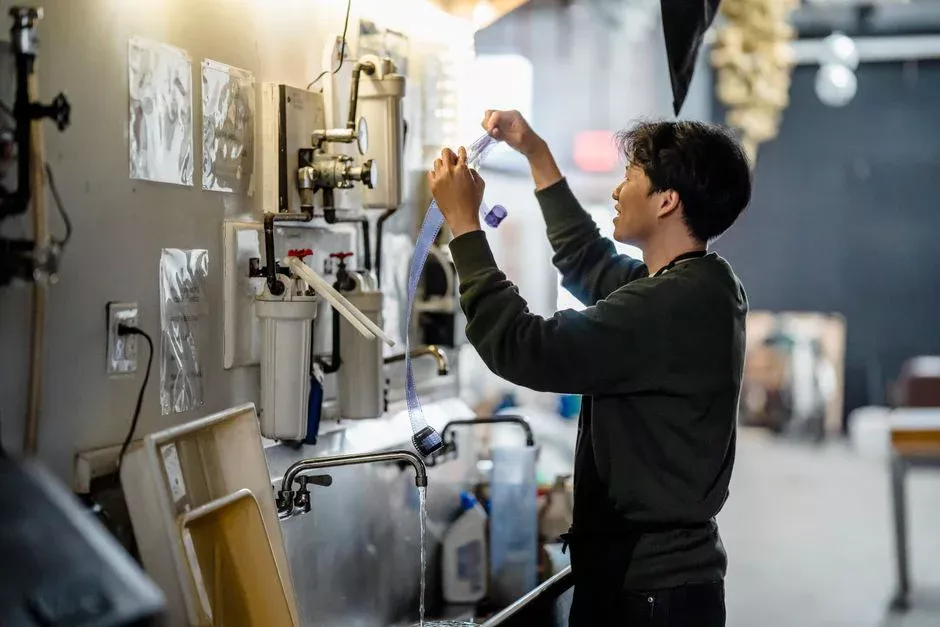
Membrane geometry determines capex, opex, and fouling behavior for the 10–15 year lifecycle of the plant. Compare these options on the five axes that drive POME service before talking to vendors.
| Axis | Submerged PVDF flat-sheet (e.g., DF series cassettes) | Submerged PVDF hollow-fiber | External cross-flow tubular / UF |
|---|---|---|---|
| Oil & grease tolerance | High — individual cassettes lifted and hosed offline | Medium — fibers clump, irreversible blinding risk | High — open channel handles TSS to 30,000 mg/L |
| Cleanability (CIP frequency) | 30–90 d with NaOCl + citric acid | 20–60 d, often requires soak tank | 30–60 d, can re-route loops independently |
| Energy (kWh/m³ permeate) | 0.2–0.5 (integrated aeration) | 0.2–0.5 | 2–5 (recirculation pumps dominate) |
| Footprint | Medium (cassette pitch 6–10 mm) | Low (high packing density) | High (external skid + loop) |
| Capital cost per m² membrane | Medium | Low–medium | High |
Flat-sheet PVDF at 0.1 μm nominal pore size is the 2024–2026 default for POME polishing. When residual oil fouls a panel, the cassette lifts out and gets hosed on the deck while the rest of the train stays online. A DF series PVDF flat-sheet cassette with an integrated aeration box delivers cross-flow equivalent at 10–20× lower specific energy than a tubular sidestream, as scouring air replaces the recirculation pump. Hollow-fiber offers 30–50% smaller membrane-tank footprint and lower capex per m², but once oil blinds a fiber bundle, recovery requires chemical soak rather than physical wash, shortening membrane life in POME service. External cross-flow tubular UF (Ahmad, Ismail & Bhatia 2003, Desalination 157:87–95) handles the highest TSS loads and is still specified on some anaerobic effluent lines. Its 2–5 kWh/m³ energy penalty has pushed it out of new POME polishing skids in favor of submerged geometries.
Fouling Control: The Real Reason POME MBRs Fail
Four POME-specific foulants dominate the cleaning schedule. Residual oil and grease, even after anaerobic treatment, carries into the MBR at 200–600 mg/L and wets out hydrophobic PVDF surfaces within hours of upset. Lignin and tannin complexes from fruit bunch leachate polymerize on the membrane and resist routine backwash. Extracellular polymeric substances (EPS) accumulate above MLSS 12,000 mg/L and form the gel layer that drives the secondary TMP rise. Calcium and magnesium hardness in the recycle stream, especially when the anaerobic stage runs at high alkalinity, scale the membrane surface and force early CIP. The Chaipetch et al. (2022) pilot concluded that "suspended solids concentration, proteins, polysaccharides, and volatile fatty acids were the substantial parameters that influenced the fouling"—that single sentence should sit on every POME MBR operator's whiteboard.
Operational controls should be prioritized by leverage. Hold MLSS at 8,000–12,000 mg/L; the additional 2,000 mg/L above 12,000 buys no removal rate and doubles the EPS load. Run sub-critical flux at 8–12 L/m²·h, never the 15 L/m²·h ceiling, so the membrane stays below the fouling threshold even at peak diurnal load. Schedule intermittent backwash every 15–30 min (filtrate + NaOCl dose on a 1-in-6 cycle is a common pattern). Plan chemical CIP every 30–90 days: 1,000–2,000 mg/L NaOCl soak for organic fouling followed by 1–2% citric acid for scale, then a permeability check before returning the cassette to service. Track the propionic-to-acetic acid ratio in the anaerobic stage as the early-warning indicator—Chaipetch et al. (2022) showed that a ratio above 0.7 reliably preceded AnMBR failure. A MBR Membrane Bioreactor Wastewater Treatment System with online TMP, permeability, and VFA trending on SCADA shortens the time between upset and corrective action from days to hours.
What oil does an MBR compressor need?
MBR compressor oil for scouring blowers must match the OEM viscosity grade on the nameplate, typically ISO VG 32 or VG 46 for warm tropical mill rooms. Many submerged MBR trains now specify oil-free Roots or turbo blowers so lubricant never contacts the aeration path. If the unit is oil-lubricated, change oil on the OEM hour interval and never substitute hydraulic fluid or used motor oil. Hot POME rooms above 35 °C push viscosity down—verify the grade against the compressor's ambient derating chart before bid.
Retrofit Economics and 2026 Compliance Targets
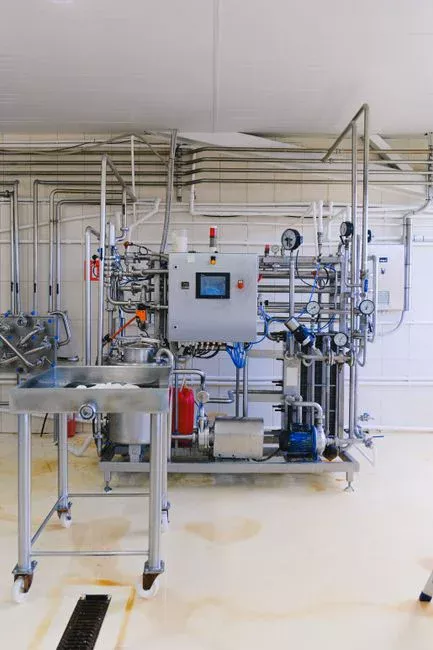
An MBR polish stage retrofitted onto an existing pond or lagoon system cuts the aeration-tank and clarifier footprint by roughly 60% versus a conventional activated-sludge train at the same throughput. This is a critical lever for land-constrained mills in Sarawak, Sumatra, and southern Thailand. Capex for the MBR polish portion typically falls in the $80–$250 per m³/d band (order-of-magnitude, 2025–2026 SE Asia market, site-specific), with the range driven by influent variability, equalization requirements, and biogas capture integration. Confirm the latest 2026 thresholds from the regulator's current gazette before bid: Malaysia DOE Standard B targets roughly 20 mg/L BOD and 50 mg/L COD for POME after membrane polish; Indonesian PP No. 22/2021 sets effluent quality for palm oil processing; EU BAT-AEL applies where the mill discharges to a watercourse feeding EU-bound vegetable oil supply chains.
The biogas co-benefit frequently tips the ROI calculation. The Chaipetch et al. (2022) pilot measured 0.23–0.38 m³ CH₄ per kg COD removed. On a 60 t/d COD load, that is 1,400–2,300 m³ CH₄/d. Biogas displacing diesel or natural gas in the mill boiler typically pays back the MBR retrofit within 3–5 years on energy alone. Solids handling on the waste-activated sludge side is best done with a plate-frame filter press to drive cake dryness above 22% TS for composting or boiler co-firing. Mills evaluating POME pretreatment cost in the region should also reference a 2026 industrial wastewater treatment pricing in Thailand guide for current market benchmarks.
Who This Is For, Checklist, and Next Step
Mill process engineers, EPC contractors, and procurement teams use this guide when sizing or retrofitting a POME polish stage. Look elsewhere if you need a municipal sewage MBR flux table or a food-grade ultrapure water skid—those duty points do not transfer. Before you freeze the P&ID, run this checklist:
- Cool and equalize POME to 35–40 °C with oil trap upstream of biology.
- Confirm anaerobic COD removal of 80–90% before MBR feed.
- Set MBR flux at 8–15 L/m²·h and MLSS at 8,000–12,000 mg/L.
- Specify scouring air at 0.3–0.5 m³/m²·min and CIP every 30–90 days.
- Size membrane area at 65–110 m² per 1,000 m³/d of POME feed.
- Verify BOD/COD discharge limits in the current national gazette.
- Decide flat-sheet vs hollow-fiber against residual FOG risk, not footprint alone.
If your mill is comparing cassette layouts or retrofit footprints, request a site-specific duty sheet through our POME MBR design inquiry form with flow, COD, and FOG data attached.
Frequently Asked Questions
What flux should I design for a POME MBR?
Design flux for a POME aerobic MBR polish is 8–15 L/m²·h at 30–38 °C with TMP below 30 kPa at the start of the filtration cycle. That range is 40–60% of typical municipal MBR flux (20–25 L/m²·h). Most plants we size for hold 8–12 L/m²·h in service so diurnal FOG spikes stay below the fouling threshold. Drop below 8 L/m²·h only when equalization is weak and residual oil still reaches the cassettes.
Can an aerobic MBR treat raw POME alone?
No. A standalone aerobic MBR on raw POME consumes roughly three times municipal energy, fouls in 48–72 h, and still misses BOD targets when FOG and phenol loads arrive unbuffered. Commercial 2024–2026 trains put a high-rate anaerobic stage first to remove 80–90% of COD as biogas, then use the MBR only as a polish barrier. Chaipetch et al. (2022) showed membrane contribution of just 23.9–34.7% of total COD removal on Surat Thani POME.
Flat-sheet or hollow-fiber for POME polishing?
Flat-sheet PVDF is the 2024–2026 default for POME polish because fouled panels lift out for deck hose-down while the train stays online. Hollow-fiber cuts footprint 30–50% and can lower capex per m², but oil-blinded fiber bundles need chemical soak rather than physical wash. External tubular UF still handles TSS to 30,000 mg/L, yet its 2–5 kWh/m³ penalty keeps it off most new polishing skids.
How often is CIP needed on a POME MBR?
Plan chemical CIP every 30–90 days on flat-sheet POME duty: 1,000–2,000 mg/L NaOCl for organics, then 1–2% citric acid for scale, followed by a permeability check. Pair that with intermittent backwash every 15–30 min and a 1-in-6 NaOCl filtrate cycle. Hold MLSS at 8,000–12,000 mg/L; above 14,000 mg/L, EPS fouling accelerates faster than the extra biodegradation is worth.
What BOD and COD targets apply after MBR polish?
Malaysia DOE Standard B targets roughly 20 mg/L BOD and 50 mg/L COD for POME after membrane polish; confirm the current gazette before bid. Indonesian PP No. 22/2021 sets palm oil processing effluent quality, and EU BAT-AEL can apply on supply chains feeding EU-bound vegetable oil. Capex for the MBR polish portion typically sits in the $80–$250 per m³/d band (2025–2026 SE Asia, site-specific).